

Femoral Hernia: A Complete Medical Overview

A femoral hernia appears lower in the groin, near the upper thigh, and is different from a more common inguinal hernia. Some femoral hernias cause little or no pain, but a new groin lump should still be assessed by a doctor.
Key Takeaways
- A femoral hernia appears lower in the groin, near the upper thigh, and is different from a more common inguinal hernia.
- Some femoral hernias cause little or no pain, but a new groin lump should still be assessed by a doctor.
- This hernia has a relatively higher risk of incarceration or strangulation, which can become an emergency.
- Diagnosis is often based on examination and may be supported by ultrasound, CT, or MRI if the lump is small or unclear.
- Treatment is usually surgical repair, especially for symptomatic hernias or those at risk of complications.
A femoral hernia is a type of groin hernia that develops when tissue pushes through a weak spot in the femoral canal, just below the groin crease. It may cause a small lump or discomfort, but it is medically important because it has a higher risk of becoming trapped than some other hernias.
What Is a Femoral Hernia?
A femoral hernia is a protrusion of abdominal tissue, such as fat or part of the intestine, through the femoral canal. This canal is a naturally occurring space in the lower abdomen and upper thigh region, just below the inguinal ligament. When the tissues in this area weaken or are placed under repeated pressure, tissue can bulge through and form a hernia.
Compared with other groin hernias, a femoral hernia is less common but clinically important. It tends to occur more often in women, especially older women, because of differences in pelvic anatomy. Unlike some hernias that remain soft and reducible for years, femoral hernias are more likely to become stuck, a complication called incarceration. If the blood supply is cut off, this becomes strangulation, which requires urgent treatment.
Patients sometimes confuse femoral hernia with inguinal hernia, another groin hernia that occurs slightly higher up. The exact location matters because it helps doctors identify the type of hernia and choose the most suitable treatment. A careful clinical evaluation can distinguish among these conditions and also rule out other causes of groin swelling.
Signs and Symptoms
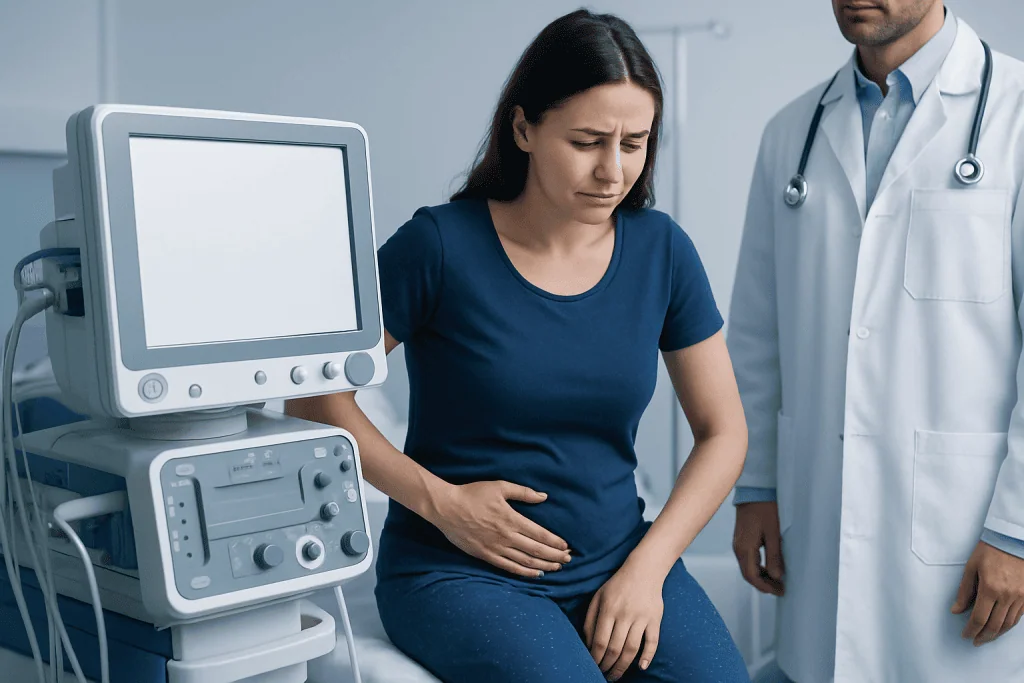
The most common sign of a femoral hernia is a small lump or bulge in the groin or upper thigh, usually just below the groin crease. The lump may become more noticeable when standing, coughing, lifting, or straining, and it may flatten when lying down. Some people feel only a sense of heaviness or pressure rather than obvious pain.
Symptoms vary from person to person. A small femoral hernia may cause no symptoms at all and be found during a physical examination or imaging test. Others may notice aching, tenderness, or discomfort when walking, bending, or exercising. Because the bulge can be subtle, it is not unusual for the condition to be mistaken for a swollen lymph node, cyst, or muscle strain.
Warning symptoms can suggest that the hernia has become trapped or strangulated. These include sudden or severe groin pain, redness over the lump, nausea, vomiting, abdominal bloating, or a lump that cannot be gently pushed back in. These features need prompt medical assessment because the affected tissue may be losing its blood supply.
Causes and Risk Factors

A femoral hernia develops when pressure inside the abdomen acts on a naturally weaker point in the femoral canal. This can happen gradually over time rather than from a single event. In many cases, the cause is a combination of tissue weakness and repeated strain.
Several factors can increase the chance of developing a femoral hernia. These include aging, previous pregnancy, chronic cough, chronic constipation, frequent heavy lifting, obesity, and any condition that raises pressure in the abdomen. Previous groin surgery or an underlying weakness of connective tissue may also contribute.
Femoral hernias are less common than inguinal hernias but are seen more often in women. The wider female pelvis changes the anatomy around the femoral canal, which may partly explain this pattern. However, men can also develop femoral hernias, especially if they have long-term strain, physical exertion, or a history of another abdominal hernia.
- Chronic coughing from lung disease or smoking
- Repeated straining during bowel movements or urination
- Pregnancy-related abdominal pressure
- Heavy lifting at work or during exercise
- Age-related weakening of tissues
How Doctors Diagnose Femoral Hernia
Diagnosis usually begins with a medical history and physical examination. A doctor will ask when the lump appears, whether it changes with standing or coughing, and whether there is pain, nausea, or difficulty passing stool. During the examination, the groin is checked in standing and lying positions because some hernias are easier to feel when abdominal pressure increases.
In straightforward cases, the diagnosis can be made clinically. However, femoral hernias are often small and can be difficult to distinguish from other groin masses. Doctors may consider enlarged lymph nodes, lipomas, vascular swelling, or an inguinal hernia as part of the differential diagnosis.
If the findings are uncertain, imaging can be helpful. Ultrasound is often used first because it is noninvasive and can identify a hernia during movement or straining. CT or MRI may be used when the anatomy is unclear, symptoms are ongoing without an obvious bulge, or complications are suspected. These tests also help with planning for hernia repair when needed.
Treatment Options
Treatment for a femoral hernia is usually surgical because of the relatively higher risk of incarceration and strangulation. Even when symptoms are mild, doctors often recommend repair rather than long-term observation. The goal is to return the protruding tissue to its normal position and close or reinforce the weakness in the femoral canal.
Surgery may be performed as an open procedure or with a minimally invasive approach such as laparoscopic surgery, depending on the patient’s health, the hernia’s size and location, and whether it is recurrent or complicated. Surgeons may use sutures, mesh, or both to strengthen the area. In emergency situations, surgery is more urgent because trapped bowel may be damaged.
Patients who have symptoms from multiple hernias or complex groin anatomy may benefit from review by teams experienced in general surgery and minimally invasive techniques. Recovery varies, but many people gradually return to walking and light daily activity within a short time, while heavy lifting is restricted until healing is further along. The surgical team gives individualized guidance on wound care, pain control, and safe return to work or exercise.
Recovery, Prevention, and Self-care
After treatment, most patients are encouraged to stay gently active, as walking supports circulation and recovery. At the same time, strenuous activity and heavy lifting usually need to be limited for a period advised by the surgeon. Following postoperative instructions carefully can reduce discomfort and support proper healing.
Although not all femoral hernias can be prevented, reducing repeated abdominal strain may lower risk and may help protect the repair after surgery. Maintaining a healthy weight, treating chronic cough, avoiding smoking, and managing constipation are practical steps. Learning proper lifting technique is also helpful for people whose work involves physical effort.
Self-care should not replace medical review if a new groin lump appears. Hernia belts or supports are not a long-term solution for a femoral hernia, and they do not remove the risk of complications. If a person has ongoing digestive symptoms, bloating, or concern about another hernia type, a doctor may also assess related conditions and discuss whether laparoscopic surgery is appropriate.
When to Seek Medical Care
A person should arrange a medical evaluation for any new groin lump, upper thigh swelling, or unexplained groin discomfort, even if symptoms seem mild. Early assessment helps confirm whether the swelling is a femoral hernia or another condition and allows treatment to be planned before complications develop.
Urgent medical care is needed if the lump becomes suddenly painful, firm, tender, red, or impossible to push back in. Nausea, vomiting, abdominal swelling, fever, or inability to pass gas or stool can suggest bowel obstruction or strangulation. These symptoms should not be watched at home.
For people seeking specialist evaluation, Acibadem International’s multidisciplinary specialists and JCI-accredited hospitals diagnose and treat femoral hernia for international patients. A surgical consultation can clarify the diagnosis, discuss the safest timing for repair, and explain the expected recovery plan in an individualized way.
Frequently asked questions
Is a femoral hernia serious?
A femoral hernia can be serious because it is more likely than some other hernias to become trapped or strangulated. That does not mean every case is an emergency, but it does mean medical assessment is important and surgery is commonly recommended.
What does a femoral hernia feel like?
It may feel like a small lump or fullness low in the groin or at the top of the thigh. Some people notice aching, pressure, or discomfort when standing, walking, coughing, or lifting, while others have very few symptoms.
Can a femoral hernia go away on its own?
No, a true femoral hernia does not usually heal on its own. Symptoms may come and go, especially if the bulge slips back when lying down, but the weakness in the tissue remains.
How is a femoral hernia different from an inguinal hernia?
A femoral hernia occurs lower in the groin, passing through the femoral canal, while an inguinal hernia occurs slightly higher in the inguinal canal. The difference matters because femoral hernias are less common and carry a higher risk of incarceration or strangulation.
Does every femoral hernia need surgery?
Many femoral hernias are treated with surgery because of the risk of complications, even if symptoms are not severe. The exact recommendation depends on the patient's symptoms, overall health, examination findings, and imaging results.
What are emergency warning signs of a femoral hernia?
Emergency warning signs include sudden severe pain, a bulge that becomes hard or cannot be reduced, redness over the area, nausea, vomiting, or abdominal bloating. These symptoms can suggest incarceration or strangulation and need urgent medical care.
References
- National Institute of Diabetes and Digestive and Kidney Diseases
- American College of Surgeons
- National Health Service
- European Hernia Society
- MedlinePlus
This article is for general information only and is not a substitute for professional medical advice. Please consult a qualified doctor about your individual situation.
Persistent digestive symptoms? Get evaluated in Turkey
JCI-accredited · board-certified surgeons · reply within 24h

More from the Health Library



Related Specialists

Dyt. Burcu Akbeyaz
Nutrition & Diet
Asst. Prof. Dr. Deniz Demircioğlu
Dermatology
Dr. Başak Bolluk Kılıç
Neurology
Prof. Dr. Sabahattin Umman
Cardiology