What Muscles Do Push Ups Work? Here Is What the Evidence Says
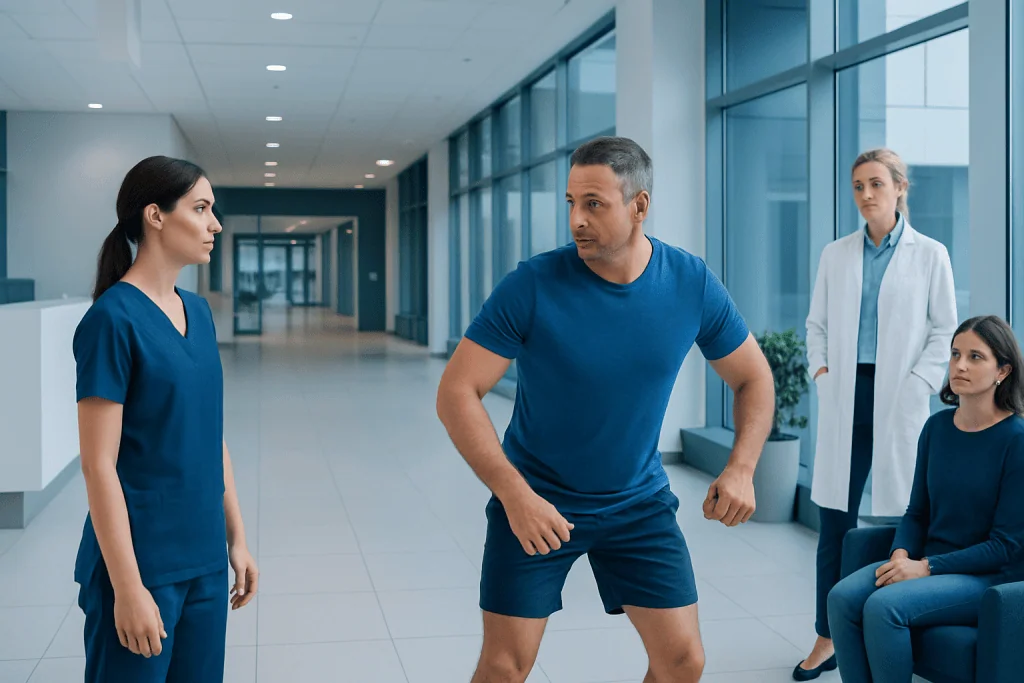
Push ups primarily target the pectoral muscles, anterior deltoids, triceps, and abdominal wall. The core, gluteal muscles, and legs help keep the body rigid and aligned during the movement.
Key Takeaways
- Push ups primarily target the pectoral muscles, anterior deltoids, triceps, and abdominal wall.
- The core, gluteal muscles, and legs help keep the body rigid and aligned during the movement.
- Hand position, body angle, depth, and tempo can shift which muscles work harder.
- Mild muscle fatigue after push ups is common, but sharp pain in the shoulder, wrist, chest, or neck should be assessed.
- Good technique and gradual progression help improve results while lowering injury risk.
Push ups mainly work the chest, front of the shoulders, triceps, and core. They also recruit muscles in the upper back, hips, and legs to stabilize the body, which is why a well-performed push up is a full-body exercise rather than an arm exercise alone.
Overview: which muscles push ups really train
For most healthy people, push ups are a safe, effective strength exercise that works several muscle groups at the same time. In the simplest answer to what muscles do push ups work, the main movers are the chest, front of the shoulders, and triceps, while the core and lower body help stabilize the body throughout the exercise.
Evidence from exercise science shows that push ups are a closed-chain upper-body movement. That means the hands stay in contact with the ground or another surface while multiple joints and muscles work together. Because of this, push ups do more than train the arms. They challenge coordinated movement, trunk stiffness, shoulder control, and posture.
This matters because many people think of push ups as mainly a chest or arm exercise. In reality, a technically sound push up behaves more like a moving plank. The body should rise and lower as one unit, which places an important demand on the abdominal wall, spinal stabilizers, gluteal muscles, and even the legs.
Most soreness after starting or increasing push ups is harmless and settles with rest, recovery, and improved form. However, pain that is sharp, one-sided, or persistent may point to a strain, joint irritation, or another problem that deserves medical review.
Primary muscles worked in a push up
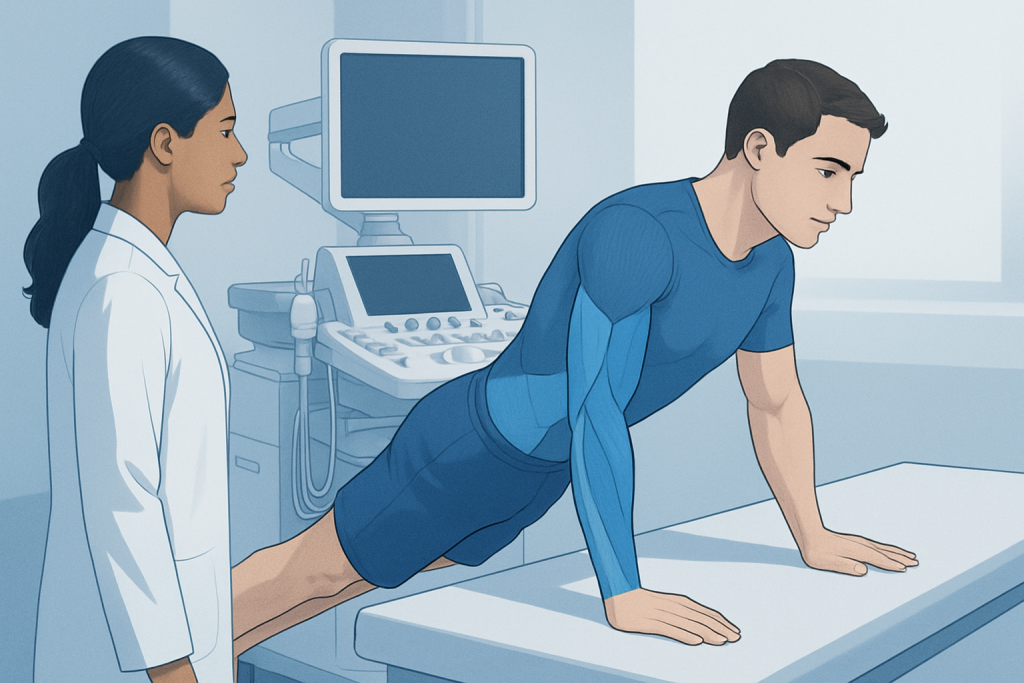
The pectoralis major, the large chest muscle, is one of the main muscles used in push ups. It helps bring the upper arm across the body and assists with pressing away from the floor. This is why many people feel the exercise most strongly across the front of the chest, especially during the pushing phase.
The triceps brachii, located at the back of the upper arm, works to extend the elbow. During a push up, the triceps helps straighten the arms as the body rises. People often notice greater triceps demand when they use a narrower hand position, although this can also increase wrist and shoulder stress if form is poor.
The anterior deltoid, the front part of the shoulder, also contributes significantly. It helps control the shoulder joint as the body lowers and pushes back up. Because the shoulder is a highly mobile joint, nearby stabilizing muscles are also active to keep movement controlled.
- Main movers: pectoralis major, triceps, anterior deltoids
- Important assistants: serratus anterior, pectoralis minor, rotator cuff muscles
- Stabilizers: abdominal muscles, spinal stabilizers, gluteal muscles, quadriceps
The serratus anterior deserves special mention. This muscle wraps around the rib cage and helps the shoulder blade move and stay stable against the chest wall. Good serratus function is important for healthy push mechanics and can support shoulder comfort during pressing exercises.
How the core, back, hips, and legs support the movement

Although push ups are often described as an upper-body exercise, the trunk has a major role. The rectus abdominis, transverse abdominis, and obliques help prevent the lower back from sagging and reduce unnecessary twisting. In practical terms, they help the body move in a straight line from shoulders to heels.
The muscles along the spine, including the erector spinae, help maintain posture and resist collapse. At the same time, the upper back and shoulder blade muscles coordinate to keep the shoulder complex stable. This can make push ups useful for whole-body control when they are done with proper alignment.
The gluteal muscles and quadriceps are also active. They keep the hips extended and the legs firm, which supports a stable plank position. If these muscles relax too much, the hips may drop or pike, shifting force away from the intended muscles and increasing strain on the lower back or shoulders.
Because so many areas work together, a push up can reveal weaknesses in more than one region. For example, someone may stop a set not because the chest is fully fatigued, but because the core loses stiffness or the shoulder blades become unstable.
What changes which muscles work harder
The muscles used in push ups stay broadly similar, but exercise variation changes emphasis. A wider hand position may increase the contribution of the chest, while a narrower position often increases triceps demand. Incline push ups usually reduce the amount of body weight being pressed, making them easier for beginners, while decline push ups often place more demand on the shoulders and upper chest.
Depth and tempo matter as well. Lowering under control generally increases time under tension and can make the chest, shoulders, and triceps work harder. Partial repetitions may be useful temporarily for people rebuilding strength, but full, pain-free range of motion often provides more balanced muscle recruitment when tolerated.
Surface and equipment can also influence muscle activity. For example, push ups performed on unstable surfaces may increase stabilizer demand, but they are not necessary for most people and may reduce the quality of force production. In many cases, simple floor push ups with good technique are enough.
Technique is especially important if a person is recovering from an upper-body problem or has recurrent pain with exercise. In those cases, a clinician may evaluate whether symptoms relate to overuse, muscle imbalance, or a condition such as shoulder impingement syndrome or another shoulder disorder.
Benefits of push ups and signs of overuse
Push ups can help build upper-body strength, muscular endurance, trunk stability, and movement coordination. They require little equipment and can be adapted for different ability levels, from wall push ups and incline versions to more advanced variations. For many people, this makes them a practical part of a home or gym routine.
They may also support posture and shoulder control when performed correctly. Because the shoulder blade and core must work together, push ups can complement a balanced program that includes pulling exercises, mobility work, and lower-body training. They are not a complete fitness plan on their own, but they can be an effective component of one.
Still, overuse can happen. Common complaints include wrist discomfort, front-of-shoulder pain, neck tension, and soreness at the chest or elbow. Mild, symmetrical muscle soreness after new training is common and usually improves within a few days. Pain that builds during every session, limits daily activities, or alters form should not be ignored.
Persistent symptoms sometimes need structured assessment and rehabilitation. Depending on the cause, a doctor may recommend rest, form correction, physical therapy, or targeted care such as physical therapy and rehabilitation to restore strength, mobility, and movement control.
How doctors evaluate pain related to push ups
If push ups cause pain rather than normal exercise fatigue, a doctor usually starts by asking where the pain is felt, when it began, what movements trigger it, and whether there was a sudden injury. They may ask about training volume, recent changes in exercise, previous shoulder or wrist issues, and whether pain also occurs at rest or at night.
A physical examination often looks at posture, shoulder range of motion, muscle strength, joint tenderness, and the way the shoulder blades move. The wrist, elbow, neck, and upper back may also be examined because pain during push ups is not always coming from the chest muscles themselves. In some cases, weakness or poor control in one area changes the load on another.
Imaging is not always needed, especially when the problem appears to be a mild overuse injury. However, if symptoms are severe, follow a trauma, or do not improve, a doctor may consider tests such as MRI or X-ray to assess bones, joints, tendons, or soft tissues. These tests are chosen based on the suspected cause, not used routinely for every case.
Less commonly, pain that feels like it is in the chest during exercise may need a broader medical assessment to rule out non-musculoskeletal causes. This is especially important if symptoms are accompanied by breathlessness, dizziness, or radiating discomfort.
Prevention, self-care, and safer progression
For most people, the best way to make push ups safer and more effective is to focus on technique before intensity. The body should stay in a straight line, the hands should be placed in a comfortable position under or slightly wider than shoulder width, and the elbows should not flare excessively. A controlled lowering phase and steady breathing can help maintain form.
Progression should be gradual. Someone who cannot yet do a floor push up with good alignment may start with wall push ups, countertop push ups, or another incline. This allows the same movement pattern with less load. As strength improves, the angle can be lowered over time. Sudden spikes in volume, especially daily high-repetition sets, can increase the risk of overuse pain.
Warm-up and recovery also matter. Gentle mobility work for the shoulders and wrists, balanced pulling exercises for the back, and rest days between harder sessions can support joint health. If discomfort develops, reducing load temporarily and checking technique is often helpful. Pain should not be pushed through if it changes movement quality.
People with ongoing joint problems, prior surgery, or repeated training-related injuries may benefit from individualized advice. Near the end of the care pathway, some patients seek assessment at centers such as Acibadem International, where multidisciplinary specialists in JCI-accredited hospitals diagnose and treat musculoskeletal and sports-related problems for international patients.
When to seek medical care
In many cases, mild soreness after push ups is normal and improves with rest, hydration, sleep, and a temporary reduction in training. Medical care is more important when the problem feels different from ordinary post-exercise fatigue. Red flags include sudden severe pain, a popping sensation, visible swelling, major weakness, numbness, or pain that prevents normal arm use.
Review by a clinician is also advisable if pain continues for more than a short period despite rest, keeps returning when push ups are retried, or is associated with reduced shoulder movement. Chest pain during exercise should be taken seriously if it is accompanied by shortness of breath, nausea, sweating, dizziness, or pain spreading to the jaw, back, or arm. In those situations, prompt medical evaluation is appropriate.
People with previous injuries, known heart disease, connective tissue disorders, or inflammatory joint conditions should be especially cautious if new symptoms appear with exercise. Seeking timely assessment can help clarify whether the issue is simple overload, a tendon or joint problem, or a less common condition that needs specific treatment.
When in doubt, it is reasonable to stop the exercise and ask a qualified doctor or physical therapist for guidance. Early assessment often helps people return to activity more safely and with better form.
Frequently asked questions
Do push ups only work the chest?
No. Push ups mainly train the chest, shoulders, and triceps, but they also rely on the core, shoulder blade stabilizers, gluteal muscles, and legs. This is why they are often considered a compound, full-body exercise.
Are push ups good for the core?
Yes, when they are performed with proper alignment. The abdominal muscles and other trunk stabilizers work to keep the body straight and prevent sagging or twisting. They do not replace all core exercises, but they can contribute meaningfully to core strength and control.
Why do I feel push ups more in my shoulders than my chest?
This can happen because of hand placement, elbow position, limited shoulder mobility, or reduced chest engagement. It may also occur if the shoulders roll forward or the shoulder blades do not move well. If discomfort is sharp or persistent, technique review and medical advice may help.
Are incline push ups effective?
Yes. Incline push ups work the same general muscle groups as floor push ups but with less body weight, making them a useful option for beginners or people returning after a break. They can also help improve form before progressing to harder versions.
Can push ups cause injury?
They can if volume increases too quickly, technique is poor, or a person trains through pain. Common problems include wrist irritation, shoulder pain, elbow discomfort, and muscle strains. Most are preventable with gradual progression, rest, and attention to form.
How can someone make push ups safer?
Starting with an easier variation, using a controlled tempo, and keeping the body aligned are good first steps. A balanced program that includes back strengthening, shoulder mobility, and recovery days can also help. Anyone with recurring pain should speak with a qualified clinician.
References
- American College of Sports Medicine
- National Strength and Conditioning Association
- American Academy of Orthopaedic Surgeons
- National Institute of Arthritis and Musculoskeletal and Skin Diseases
- MedlinePlus
This article is for general information only and is not a substitute for professional medical advice. Please consult a qualified doctor about your individual situation.
Joint and spine care in Turkey — expert assessment & treatment
JCI-accredited · board-certified surgeons · reply within 24h

More from the Health Library



Related Specialists

Dr. Zeynep Kuzu
Pediatrics
Prof. Dr. Tolga Tüzüner
Orthopedic Surgery & Traumatology
Assoc. Prof. Dr. Keramettin Yanık
Clinical Laboratory
Prof. Dr. İftahar Köksal
Infectious Diseases & Clinical Microbiology