Understanding Caudal Regression Syndrome: A Complete Patient Guide

Caudal regression syndrome is present at birth and mainly affects the lower spine and structures that develop nearby. Symptoms vary widely, from mild sacral changes to significant mobility, bladder, bowel, and orthopedic challenges.
Key Takeaways
- Caudal regression syndrome is present at birth and mainly affects the lower spine and structures that develop nearby.
- Symptoms vary widely, from mild sacral changes to significant mobility, bladder, bowel, and orthopedic challenges.
- Diagnosis may begin during pregnancy with ultrasound and is confirmed after birth with physical examination and imaging.
- Treatment usually involves a multidisciplinary team and focuses on function, development, and quality of life rather than a single cure.
- Early follow-up with pediatric specialists can help prevent complications and support mobility, continence, and daily independence.
Caudal regression syndrome is a rare congenital condition in which the lower spine does not develop fully before birth. Its effects can range from mild differences in the tailbone area to more complex changes involving the legs, bladder, bowel, hips, and nearby organs, so care is tailored to the child’s specific needs.
Overview
Caudal regression syndrome is a rare condition that happens during early fetal development, when the lower end of the spine does not form completely. The word “caudal” refers to the lower part of the body, so the condition can affect the sacrum, tailbone region, lower limbs, pelvis, and sometimes the organs and nerves that support bladder and bowel function.
The condition exists on a spectrum. Some children have a relatively mild form, such as partial absence of the sacrum, while others may have more extensive changes in the lower spine and legs. Because the spinal cord, nerves, bones, and organs in the lower body develop close together, several body systems can be involved at the same time.
Another term often used is sacral agenesis, which refers to partial or complete absence of the sacrum. Sacral agenesis may be part of caudal regression syndrome, but the broader diagnosis can include additional differences in the lower spine and surrounding structures. The outlook depends largely on which body systems are affected and how early supportive care begins.
How Caudal Regression Syndrome Can Affect the Body

Caudal regression syndrome does not look the same in every child. In some, the main issue is an abnormality in the lower spine seen on imaging. In others, the condition affects walking, posture, continence, growth of the legs, or the development of the kidneys, digestive tract, or genital structures.
The lower spinal nerves play an important role in movement and sensation in the legs and in controlling the bladder and bowel. When these nerves are underdeveloped or affected by spinal differences, a child may have weakness, altered reflexes, foot deformities, or difficulty emptying the bladder fully. Some children also develop spine curvature or joint contractures over time.
Doctors often assess the condition by looking at several areas together rather than focusing only on the spine. These can include:
- Lower back and sacrum development
- Hip and leg alignment
- Foot position and mobility
- Bladder and kidney function
- Bowel control and constipation risk
- Growth, sitting balance, and walking potential
This whole-body approach helps families understand why follow-up may involve more than one specialty, including pediatrics, orthopedics, neurology, urology, rehabilitation, and imaging.
Symptoms and Possible Complications
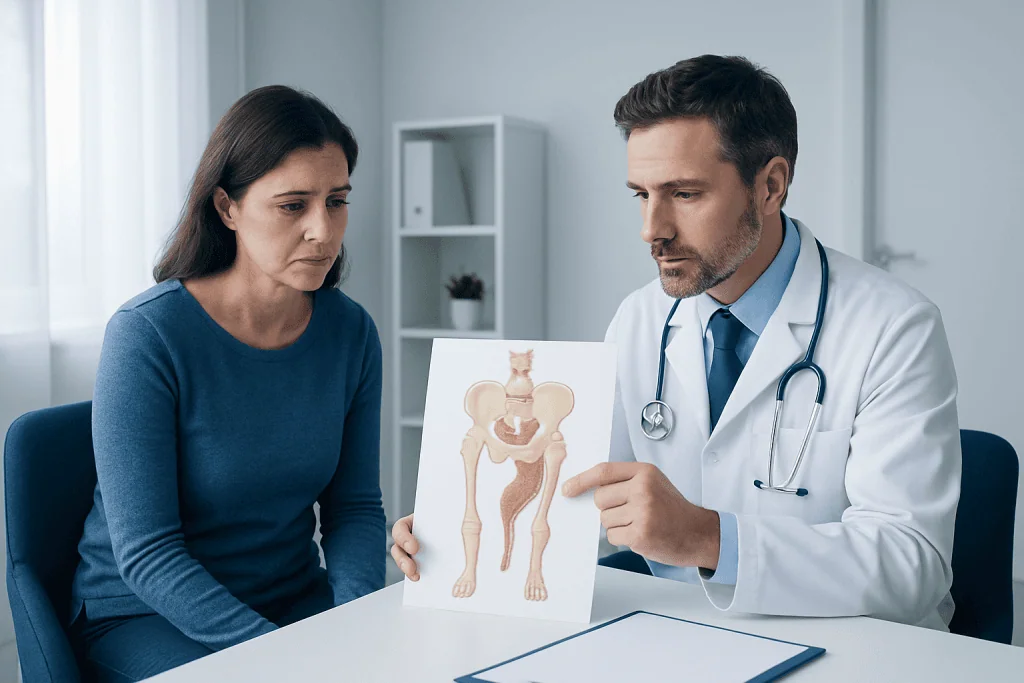
Signs of caudal regression syndrome may be noticed before birth on ultrasound or after birth during the physical examination. The lower back or buttock area may appear flatter than usual, the legs may be positioned differently, or the feet may turn inward or outward. Some babies have one leg that is shorter than the other, reduced movement in the lower limbs, or limited range of motion at the hips and knees.
As a child grows, symptoms may become more noticeable in daily activities. These can include delayed motor milestones, difficulty standing or walking, repeated urinary tract infections, constipation, stool leakage, or reduced sensation in the lower body. Children with milder forms may walk independently, while those with more extensive involvement may need braces, assistive devices, or mobility support.
Potential complications depend on the structures involved. Common concerns include bladder dysfunction, kidney damage from urine retention or reflux, skin breakdown in areas with decreased sensation, orthopedic deformities, and spinal imbalance. Some children may also have related congenital conditions, such as anorectal abnormalities or changes affecting the kidneys and reproductive organs.
Because symptoms can overlap with other spinal conditions, specialists may also evaluate for disorders such as spina bifida or other congenital abnormalities of the spinal cord and vertebrae. A careful assessment helps guide the right long-term care plan.
Causes and Risk Factors
Caudal regression syndrome develops very early in pregnancy, during the period when the spine and lower body structures are forming. In many cases, the exact cause is not known. Current understanding suggests that it is likely linked to a combination of developmental and environmental factors rather than a single cause in every pregnancy.
One recognized risk factor is maternal diabetes, especially if blood sugar is not well controlled in early pregnancy. However, not all babies with caudal regression syndrome are born to mothers with diabetes, and many pregnancies affected by maternal diabetes do not result in this condition. This means diabetes is an important association, but it does not fully explain all cases.
Researchers have also considered genetic influences, changes in blood supply during development, and disruptions in normal embryologic formation of the lower spine. For most families, there is no clear action during pregnancy that caused the condition, and parents should not assume they are at fault. When needed, a genetics professional can help explain whether additional testing or counseling is appropriate.
How Diagnosis Is Made
Diagnosis may begin before birth if a prenatal ultrasound shows shortening of the lower spine, unusual leg positioning, or other structural differences. In some pregnancies, fetal MRI can provide more detail about the spine, spinal cord, and surrounding anatomy. Prenatal detection can help families prepare for delivery planning and specialist evaluation after birth.
After birth, diagnosis usually starts with a physical examination and review of movement, reflexes, limb position, and bowel or bladder concerns. Imaging is important to define the anatomy. Doctors may use X-rays to assess the sacrum and pelvis, MRI to evaluate the spinal cord and nerves, and ultrasound or other tests to check the kidneys and urinary tract.
Because bladder function can be affected even when outward symptoms seem mild, children may need urologic testing over time. This can include kidney imaging and studies that measure how the bladder stores and empties urine. If orthopedic issues are present, the care team may also assess the hips, knees, and feet in detail to plan treatment and monitor growth.
Some children benefit from advanced imaging or coordinated specialty care through services such as MRI evaluation and pediatric orthopedic care. The goal is not only to confirm the diagnosis, but also to understand how the condition affects function now and what support may be needed later.
Treatment Options and Long-Term Care
There is no single cure for caudal regression syndrome, so treatment is individualized. The main goals are to protect kidney and bladder health, improve mobility and posture, support bowel function, prevent complications, and help the child participate in everyday life as fully as possible. A multidisciplinary plan often changes as the child grows.
Orthopedic treatment may include stretching, casting, bracing, mobility aids, or surgery for joint contractures, hip instability, or significant foot deformities. Rehabilitation specialists and physical therapists work on strength, transfers, balance, and independence. Depending on the level of lower limb involvement, some children walk independently, some walk with support, and others use wheelchairs for part or all of their mobility.
Bladder and bowel care are also central. A pediatric urology team may recommend timed voiding, catheterization, medicines, or procedures to protect the kidneys and improve continence. Constipation and stool leakage can often be managed with a structured bowel program, diet adjustments, and close follow-up. When needed, families may be referred for pediatric urology treatment and physical therapy and rehabilitation.
For international patients who need coordinated evaluation, Acibadem International’s multidisciplinary specialists and JCI-accredited hospitals diagnose and treat complex congenital conditions including caudal regression syndrome. What matters most is ongoing follow-up with a qualified team that can adapt treatment to the child’s growth, development, and changing goals.
Daily Living, Prevention, and Self-Care
Because caudal regression syndrome is congenital, it cannot be prevented after it has formed. In future pregnancies, preconception care and early prenatal care may help reduce some risk factors, particularly careful diabetes management before and during the first weeks of pregnancy. Families planning another pregnancy can discuss individualized guidance with an obstetrician or maternal-fetal medicine specialist.
For children living with the condition, self-care focuses on protecting function and preventing complications. Regular skin checks are important if there is reduced sensation in the lower body. Families are often taught how to watch for pressure areas, monitor urinary symptoms, support bowel routines, and use braces or mobility devices safely.
At home and school, practical adjustments can make a meaningful difference. These may include accessible seating, bathroom planning, scheduled bladder and bowel routines, and exercises recommended by therapists. Emotional support matters too, especially as children become more aware of physical differences and independence challenges.
Parents and caregivers do not need to manage everything alone. Ongoing communication with the child’s healthcare team can help address concerns early and make day-to-day care more manageable.
When to Seek Medical Care
Medical review is important whenever a baby or child has unusual leg positioning, poor movement in the lower limbs, a flat or abnormal lower back appearance, delays in motor milestones, or repeated problems with urination or constipation. Even mild spinal differences deserve assessment if they are linked to weakness, altered sensation, or orthopedic concerns.
Urgent medical attention is needed if a child has fever with urinary symptoms, vomiting with severe constipation, worsening weakness, new loss of bladder or bowel control, skin sores, or signs of pain that the child cannot explain clearly. These symptoms do not always mean a serious emergency, but they should not be ignored because they can signal complications affecting the kidneys, nerves, or skin.
Families who already know their child has caudal regression syndrome should keep regular follow-up visits, even when things seem stable. Growth can change posture, joint alignment, and bladder function over time, so ongoing review helps catch problems early and supports the best possible long-term outcome.
Frequently asked questions
Is caudal regression syndrome the same as sacral agenesis?
They are closely related, but they are not always exactly the same term. Sacral agenesis refers specifically to partial or complete absence of the sacrum, while caudal regression syndrome is a broader diagnosis that can include additional changes in the lower spine, legs, nerves, and nearby organs.
Can caudal regression syndrome be seen before birth?
Yes, it can sometimes be detected during pregnancy with prenatal ultrasound. In some cases, fetal MRI is used to give more detail about the spine and surrounding structures, although milder forms may not be fully recognized until after birth.
Will a child with caudal regression syndrome be able to walk?
Walking ability varies widely and depends on how much the lower spine, nerves, hips, and legs are affected. Some children walk independently, some use braces or walkers, and others rely on wheelchairs for some or all mobility.
Does caudal regression syndrome affect intelligence?
Caudal regression syndrome primarily affects the lower spine and related body systems, not intelligence itself. Many children have typical learning ability, although their overall development can be influenced by medical needs, mobility challenges, or time spent in treatment.
Is maternal diabetes the cause of caudal regression syndrome?
Maternal diabetes is a known risk factor, especially when blood sugar is not well controlled early in pregnancy, but it is not the only explanation. Many affected children are born without this risk factor, and the exact cause is often unclear.
Can adults live independently with caudal regression syndrome?
Many people with caudal regression syndrome can lead active and independent lives, especially with early support and the right adaptive strategies. Independence depends on the severity of mobility, bladder, bowel, and orthopedic issues, as well as access to ongoing care and rehabilitation.
References
- National Institute of Neurological Disorders and Stroke
- National Organization for Rare Disorders
- American Academy of Pediatrics
- Cleveland Clinic
- MedlinePlus
This article is for general information only and is not a substitute for professional medical advice. Please consult a qualified doctor about your individual situation.
Persistent digestive symptoms? Get evaluated in Turkey
JCI-accredited · board-certified surgeons · reply within 24h