Wheezing Humidifier: A Complete Medical Overview

A humidifier may ease dryness-related irritation, but it can also worsen wheezing if humidity is too high or the device is not cleaned properly. Wheezing is a symptom, not a diagnosis; common causes include asthma, allergies, viral infections, irritants, and occasionally more serious breathing problems.
Key Takeaways
- A humidifier may ease dryness-related irritation, but it can also worsen wheezing if humidity is too high or the device is not cleaned properly.
- Wheezing is a symptom, not a diagnosis; common causes include asthma, allergies, viral infections, irritants, and occasionally more serious breathing problems.
- Indoor humidity is generally most comfortable when kept in a moderate range, rather than making the room feel damp.
- Mineral dust, mold, bacteria, and fragrances from a humidifier can trigger breathing symptoms in sensitive people.
- Persistent, severe, or sudden wheezing should be assessed by a qualified doctor, especially in children, older adults, or anyone with asthma.
A wheezing humidifier concern usually points to a mismatch between indoor moisture and the person’s airway needs. Humidifiers can help some people with dry air irritation, but too much humidity, poor cleaning, or contaminated mist can worsen wheezing, allergies, or asthma.
Overview: What “wheezing humidifier” usually means
When people search for “wheezing humidifier,” they are usually asking whether a humidifier is helping or harming breathing. The short answer is that it can do either. A humidifier may soothe dryness in the nose and throat, but if the air becomes too damp or the device releases irritants, it can make wheezing worse.
Wheezing is a high-pitched whistling sound that often happens when air moves through narrowed or inflamed airways. It is most commonly linked with asthma, allergies, respiratory infections, and exposure to irritants such as smoke or strong scents. In some people, especially those with sensitive lungs, humidified air may feel relieving at first but still aggravate symptoms if the environment is not well controlled.
It is also important to separate the humidifier itself from the underlying condition. A machine does not usually create wheezing on its own unless it contributes to triggers such as excess moisture, mold growth, mineral particles, or contaminated water droplets. For people with known asthma or recurrent breathing symptoms, the best approach is to manage indoor air carefully and seek medical guidance if wheezing continues.
How humidity affects the airways

The breathing passages are lined with delicate tissue that works best in balanced conditions. Air that is very dry can irritate the nose, throat, and larger airways, sometimes causing cough, throat discomfort, or a feeling of chest tightness. In that situation, gentle moisture may make breathing feel more comfortable.
However, more humidity is not always better. Air that is too moist can make a room feel heavy and may encourage dust mites and mold to grow. These are common allergy triggers and can worsen wheezing in people with allergic airways, asthma, or chronic sinus symptoms.
The humidifier type can matter as well. Some devices may disperse tiny mineral particles from hard water into the air, sometimes called “white dust.” Others can harbor bacteria or mold if they are not emptied and cleaned regularly. In sensitive individuals, inhaling these particles may irritate the lungs and lead to cough or wheezing.
For this reason, a humidifier is best seen as one small part of symptom control rather than a cure. If a person notices that wheezing starts only when the humidifier is running, improves when it is turned off, or worsens in damp rooms, the indoor environment deserves close review.
Symptoms to watch for when wheezing seems linked to a humidifier
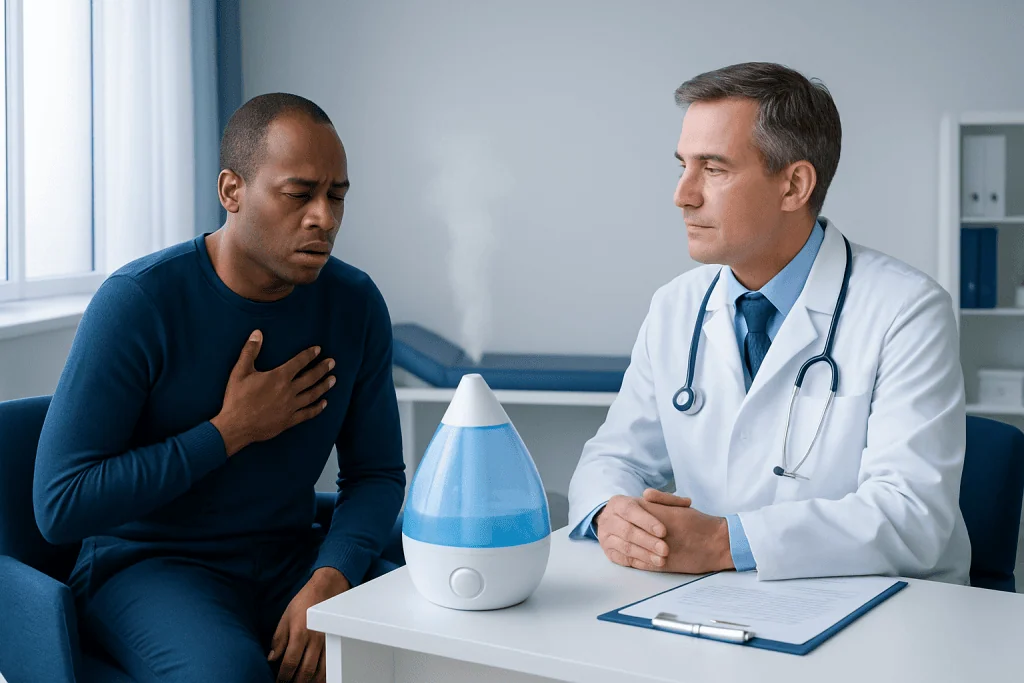
Wheezing may occur alone or together with other respiratory symptoms. These may include cough, shortness of breath, chest tightness, noisy breathing, a blocked or runny nose, sneezing, itchy eyes, or throat irritation. In children, parents may notice fast breathing, difficulty feeding, restless sleep, or pulling in of the skin between the ribs.
Timing often provides helpful clues. If symptoms appear mainly at night in a bedroom where a humidifier is used, after the machine has not been cleaned for some time, or during periods of heavy indoor dampness, humidity-related triggers become more likely. If symptoms occur with exercise, seasonal pollen, pets, cold air, or viral illness, another cause may be contributing.
Some people also develop signs of allergic irritation rather than deep lung symptoms. These can include sinus pressure, congestion, watery eyes, or repeated sneezing. In that case, the issue may be exposure to mold, dust mites, or fragrance additives rather than humidity alone.
- Wheezing or whistling during breathing
- Cough, especially at night
- Chest tightness or breathlessness
- Nasal congestion, sneezing, or itchy eyes
- Symptoms that worsen in damp rooms or with a poorly maintained humidifier
Common causes and risk factors
There are several reasons a humidifier may be associated with wheezing. One is excessive indoor humidity, which can support mold growth and increase dust mites. Another is poor device hygiene, allowing bacteria, mold, or biofilm to accumulate in the water tank and internal parts. A third is use of hard tap water, which may release fine mineral particles into the air.
People with pre-existing airway conditions are more likely to be affected. This includes those with asthma, allergies, chronic sinus disease, or a tendency toward bronchial sensitivity after colds. Infants, young children, older adults, and people with weakened immune systems may also be more vulnerable to poor indoor air quality.
Environmental exposures can add to the problem. Cigarette smoke, vaping aerosols, cleaning sprays, scented oils, incense, pet dander, and cold outdoor air can all irritate the airways. When these are present, it may seem as though the humidifier is the only cause, when in reality several triggers are acting together.
Wheezing should not automatically be blamed on the humidifier. Viral infections, lower respiratory inflammation, and other lung conditions can also cause noisy breathing. If symptoms are frequent or unexplained, doctors may evaluate for related problems such as bronchitis or other respiratory disorders.
Diagnosis: finding the real reason for wheezing
Diagnosis begins with a careful history. A clinician will usually ask when the wheezing started, whether it happens only in certain rooms or seasons, what type of humidifier is used, how often it is cleaned, and whether there are other symptoms such as fever, cough, or allergies. Details about smoking exposure, pets, mold, and family history of asthma can also be important.
The physical examination often focuses on the lungs, nose, throat, and signs of allergic inflammation. Depending on age and symptoms, further testing may include breathing tests, oxygen level measurement, allergy evaluation, or imaging when another diagnosis is suspected. In children, the history and examination are especially important because many causes of wheezing can look similar at first.
When asthma is suspected, clinicians may recommend lung function testing and a structured treatment plan. If wheezing is persistent or severe, specialist assessment may be appropriate through pulmonology or an allergy and immunology service. Identifying the trigger matters because treatment differs for dryness, infection, allergy, and asthma.
Keeping a simple symptom diary can be useful. Recording when the humidifier is used, the room conditions, cleaning schedule, and any wheezing or nighttime cough may help a doctor see patterns that are otherwise easy to miss.
Treatment and safer humidifier use
Treatment depends on the cause. If dry air is the main problem, careful humidifier use may help along with good hydration and avoidance of smoke or harsh fragrances. If the humidifier is contributing to symptoms, the first step is often to stop using it temporarily, clean it thoroughly, and assess the room for excess moisture, condensation, or mold.
For people with asthma or allergies, the main treatment is directed at the airway condition rather than the machine itself. This may include prescribed inhaled medicines, allergy management, and reducing exposure to triggers. People who frequently wheeze should not rely on a humidifier as their only strategy, especially if they already have an asthma action plan or physician guidance.
Safer humidifier practices include using the device only when truly needed, following the manufacturer’s cleaning instructions, changing water daily, and avoiding additives unless specifically advised by a clinician. Distilled or demineralized water may reduce airborne mineral particles in some devices. If there is visible mold in the room, the priority is moisture control and remediation rather than adding more humidity.
When symptoms are persistent, an evaluation by respiratory specialists may be helpful. In some cases, treatment plans involve airway testing or tailored care through chest diseases services. Near the end of the care pathway, patients seeking international evaluation may also choose centers such as Acibadem International, where multidisciplinary specialists in JCI-accredited hospitals diagnose and treat respiratory and allergy-related conditions.
Prevention and self-care at home
The goal at home is balanced indoor air. Rooms should not feel extremely dry, but they also should not feel damp or develop window condensation, musty odors, or visible mold. If a humidifier is used, it should be placed where mist does not settle on bedding, carpets, or walls, as wet surfaces can promote microbial growth.
Regular maintenance is essential. Water should be replaced daily, and the tank and parts should be cleaned as directed by the manufacturer. Filters should be changed on schedule. It also helps to keep the room well ventilated and to clean other sources of indoor allergens such as dusty fabrics and HVAC filters.
People who notice coughing or wheezing after using fragranced oils, vapor pads, or cleaning sprays may benefit from removing these exposures. Avoiding tobacco smoke is especially important, because smoke can inflame the airways and make any humidity-related irritation more noticeable. Families with children who wheeze should be particularly cautious about indoor air quality.
- Use a humidifier only when air is clearly dry or a clinician has suggested it
- Change water every day and clean the device regularly
- Avoid over-humidifying the room
- Do not ignore mold, damp patches, or musty smells in the home
- Seek medical advice if wheezing keeps returning
When to seek medical care
Medical care is important if wheezing is new, keeps coming back, or does not improve after the humidifier is stopped and the environment is cleaned. A doctor should also assess wheezing accompanied by fever, worsening cough, chest discomfort, disturbed sleep, or reduced exercise tolerance. In babies and young children, prompt assessment is wise because breathing problems can worsen quickly.
Urgent care is needed if there is severe shortness of breath, blue lips, confusion, difficulty speaking, marked chest retractions, or signs that a child is struggling to breathe. These symptoms are not typical “humidifier issues” and may indicate significant airway narrowing or another serious breathing problem.
People with known asthma should follow their clinician’s action plan if wheezing increases. If rescue medicines are needed more often than usual, or symptoms are interrupting sleep or daily activities, medical review is recommended. A clinician can help determine whether the main issue is humidity, allergy, infection, or uncontrolled asthma.
Frequently asked questions
Can a humidifier cause wheezing?
Yes, in some situations it can. Wheezing may develop if the humidifier is dirty, if the room becomes too humid, or if the device disperses irritants such as mineral particles or mold-related contaminants.
Can a humidifier help with wheezing from dry air?
It may help if dry air is irritating the nose, throat, or larger airways. However, it will not treat the underlying cause of wheezing if the problem is asthma, infection, or allergies.
Why does wheezing get worse at night when the humidifier is on?
Nighttime symptoms may be related to prolonged exposure in a closed room, too much humidity, or allergens in bedding and carpets. A poorly cleaned humidifier can also contribute if it runs for many hours overnight.
Should a child with wheezing sleep with a humidifier?
Sometimes, but only with caution. A humidifier is not a substitute for medical evaluation, especially if a child has recurrent wheezing, fast breathing, or signs of distress, and the device must be cleaned carefully to avoid contamination.
What type of humidifier is safest for people with sensitive lungs?
No single type is right for everyone, and safe use matters more than the label on the device. The key points are regular cleaning, daily water changes, avoiding over-humidifying, and reducing mineral dust and mold exposure.
When should wheezing be checked by a doctor?
A doctor should evaluate wheezing that is new, persistent, recurrent, or associated with shortness of breath, chest tightness, fever, or poor sleep. Emergency care is needed for severe breathing difficulty, bluish lips, confusion, or visible struggle to breathe.
References
- American Academy of Allergy, Asthma & Immunology
- Centers for Disease Control and Prevention
- National Heart, Lung, and Blood Institute
- American Lung Association
- Environmental Protection Agency
This article is for general information only and is not a substitute for professional medical advice. Please consult a qualified doctor about your individual situation.
Explore treatments in Turkey — costs, top hospitals & a free quote
JCI-accredited · board-certified surgeons · reply within 24h