Spitz Nevus: What Patients Need to Know
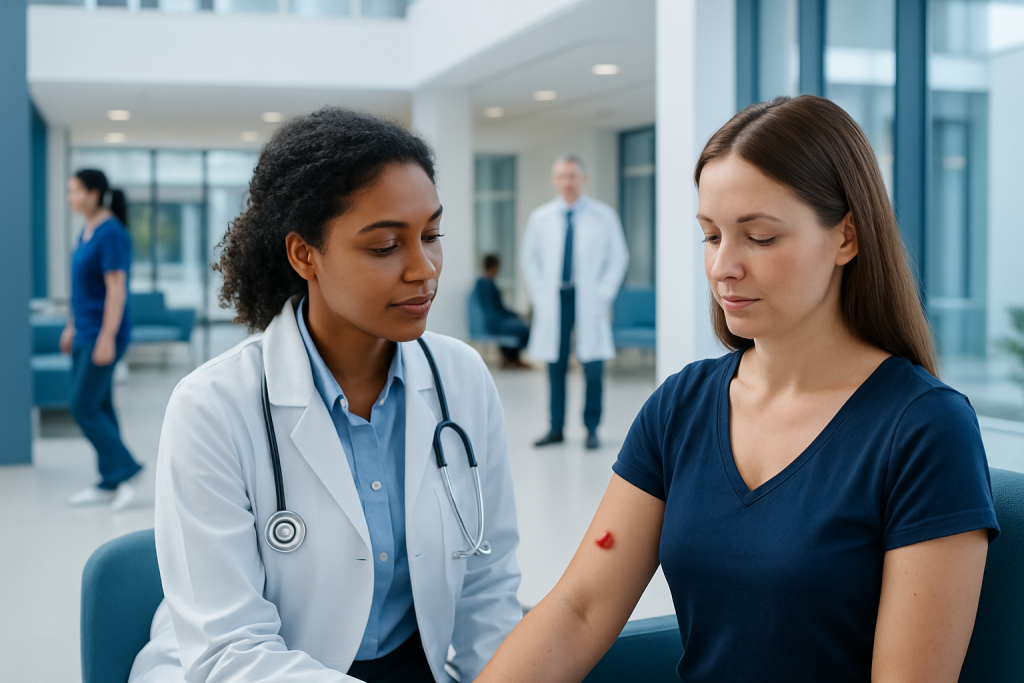
A Spitz nevus is usually a noncancerous mole, but it can closely resemble melanoma. It often appears suddenly and may grow quickly over weeks to months.
Key Takeaways
- A Spitz nevus is usually a noncancerous mole, but it can closely resemble melanoma.
- It often appears suddenly and may grow quickly over weeks to months.
- Dermatologists use skin examination, dermoscopy, and sometimes biopsy to make the diagnosis.
- Treatment depends on age, appearance, location, and how certain the diagnosis is.
- Any changing, bleeding, painful, or unusual skin lesion should be checked by a doctor.
Spitz nevus is a usually benign skin growth that often appears as a pink, red, brown, or black mole, most commonly in children and young adults. Because it can look similar to melanoma, it should be assessed by a dermatologist, and some cases need biopsy or removal to confirm the diagnosis.
Overview: what a Spitz nevus is
A spitz nevus is a type of mole made up of melanocytes, the pigment-producing cells in the skin. In most cases, it is benign, meaning it is not cancer. However, it often attracts medical attention because it can look very similar to melanoma, a serious form of skin cancer.
These lesions are seen more often in children, teenagers, and young adults, although they can occur at any age. A Spitz nevus may appear as a dome-shaped bump or flat lesion and can be pink, red, tan, brown, or darkly pigmented. Some develop quickly, which can be worrying even when the lesion is harmless.
Doctors sometimes also use related terms such as atypical Spitz tumor when a lesion has some unusual features under the microscope. This does not automatically mean cancer, but it does mean the lesion needs careful evaluation. The key point for patients is that a Spitz nevus is usually manageable, yet it should not be self-diagnosed because visual appearance alone may not be enough to distinguish it from melanoma.
How it looks and common symptoms
Many Spitz nevi do not cause symptoms such as pain or itching. Most people notice them because a new spot appears or an existing spot changes. A classic Spitz nevus often looks round, smooth, well defined, and slightly raised. It may be firm to the touch and can sometimes bleed after minor friction or injury.
Color and size can vary. Some lesions are pink or red because they have little visible pigment, while others are brown, blue-black, or mixed in color. They are often found on the face, legs, or trunk, but they can develop almost anywhere on the skin.
Features that may be seen include:
- A new, rapidly appearing mole
- A smooth, dome-shaped bump
- Pink, red, tan, brown, or black color
- Symmetry or near symmetry in some cases
- Occasional bleeding, crusting, or irritation
Although these features can fit a benign Spitz nevus, no single sign can confirm the diagnosis at home. Any lesion that is changing, very dark, irregular, or different from other moles should be examined by a qualified clinician.
Why Spitz nevi develop and who is at risk

The exact cause of a Spitz nevus is not always clear. Like other moles, it results from a localized growth of melanocytes. Researchers have identified certain genetic changes in some Spitz lesions, but these findings are mainly used by specialists and do not mean that a patient has inherited a dangerous condition.
Spitz nevi are more common in children and adolescents, and many appear before middle age. Fair skin may make lesions easier to notice, but Spitz nevi can occur in people of any skin tone. Unlike some other skin lesions, there is no single lifestyle factor that clearly causes them.
Sun exposure may play a role in overall skin health and can affect the appearance of pigmented lesions, but it is not considered the sole explanation for Spitz nevi. Patients with many moles, a personal history of unusual moles, or concern about a changing lesion may already be under dermatology follow-up for skin monitoring, including for conditions such as skin cancer.
How doctors diagnose Spitz nevus
Diagnosis begins with a careful medical history and skin examination. The doctor will ask when the spot appeared, whether it has changed, and whether there has been bleeding, itching, or irritation. Age, family history, and personal history of skin cancer or atypical moles also help guide the assessment.
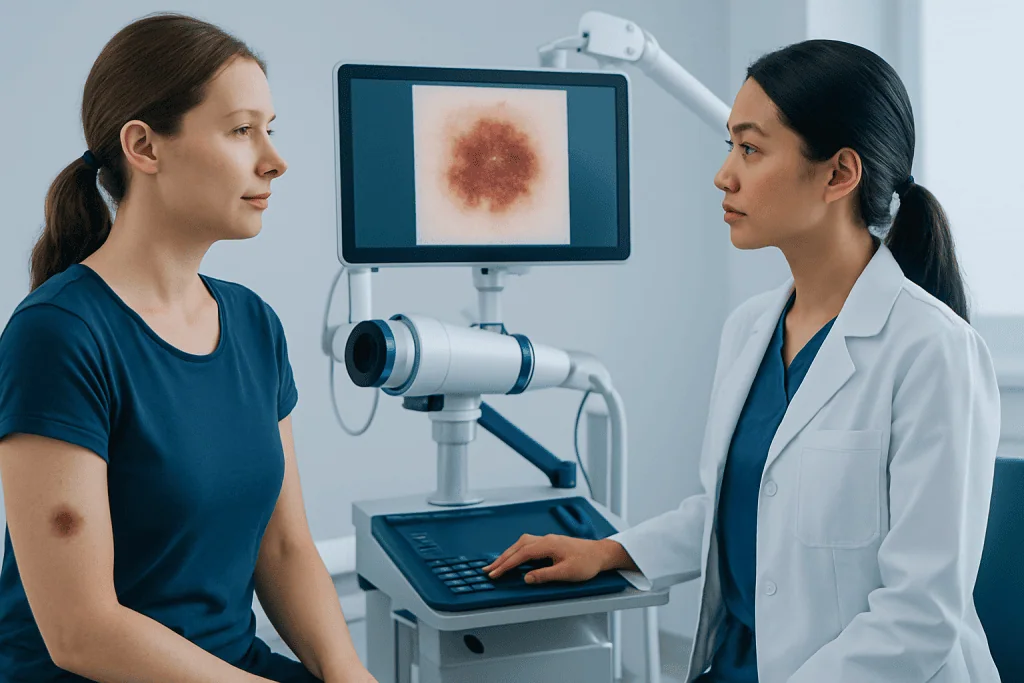
A dermatologist often uses dermoscopy, a handheld tool that magnifies the lesion and helps reveal structures not visible to the naked eye. Dermoscopy can improve accuracy, but it still may not fully distinguish a Spitz nevus from melanoma in every case. For this reason, some lesions are photographed and monitored over time, while others are sampled or removed.
When the diagnosis is uncertain, a biopsy is usually the most important next step. This may involve removing part or all of the lesion so a pathologist can examine it under the microscope. In selected cases, additional laboratory testing may be used to better classify the lesion. If a suspicious mole needs full evaluation, doctors may recommend mole removal or a more formal skin biopsy to clarify whether the growth is benign, atypical, or malignant.
Treatment options and follow-up
Treatment depends on how typical the lesion looks, the patient’s age, the location of the spot, and how confident the medical team is about the diagnosis. In some children with classic features, close observation may be considered. In many adolescents and adults, or when the lesion is atypical, complete removal is often advised so the entire growth can be examined.
If the lesion is removed and confirmed to be a benign Spitz nevus, no further treatment may be needed beyond routine skin checks. If the pathology report shows atypical features, the dermatologist may recommend a wider excision or regular follow-up visits. This plan is individualized and based on the pathology findings rather than appearance alone.
It is understandable for patients to feel anxious when terms such as atypical or uncertain are used. These words describe how carefully the lesion needs to be assessed; they do not automatically mean cancer. Management often involves collaboration between dermatology, pathology, and sometimes surgical teams. When a lesion requires excision, dermatologic surgery may be used to remove it completely while aiming for a good cosmetic result.
Skin monitoring, prevention, and self-care
There is no guaranteed way to prevent a Spitz nevus from forming. However, good skin awareness can help people notice new or changing lesions early. Regular self-checks are especially helpful for those with many moles or a history of atypical skin lesions.
Sun protection is an important part of overall skin care even though it does not specifically prevent every Spitz nevus. Protective clothing, shade, and broad-spectrum sunscreen can reduce cumulative sun damage and make skin examinations easier by limiting other pigment changes over time.
Useful self-care steps include:
- Checking the skin regularly in good light
- Taking note of any spot that looks new or different
- Avoiding picking, scratching, or repeatedly irritating a lesion
- Using sun protection consistently
- Keeping scheduled dermatology follow-up visits
Parents who notice a fast-growing mole on a child may find it helpful to photograph the spot with a date for comparison, but home monitoring should not replace medical review. If there is uncertainty, a dermatologist can decide whether observation is reasonable or whether biopsy is the safer option.
When to seek medical care
Medical review is appropriate for any new or changing mole that stands out from the rest of the skin. A lesion that grows quickly, changes color, becomes uneven, bleeds without clear injury, forms a crust, or does not heal should be assessed. While many of these lesions are benign, it is important not to rely on appearance alone.
Children can develop benign Spitz nevi, but even in younger patients, an expert examination is worthwhile if a spot is unusual or changing. Adults with a new pigmented lesion generally need prompt dermatology assessment because melanoma is more common with increasing age. Patients who have had previous atypical moles or skin cancer should seek review sooner rather than later.
Near the end of the care pathway, patients may also want coordinated specialist assessment if pathology is complex or treatment planning is not straightforward. Acibadem International’s multidisciplinary specialists in JCI-accredited hospitals diagnose and treat skin lesions for international patients, including cases that need dermatology, pathology, and surgical input.
Frequently asked questions
Is a Spitz nevus cancer?
A Spitz nevus is usually benign, which means it is not cancer. The reason it is important is that it can resemble melanoma, so a doctor may need to examine it closely or perform a biopsy.
Can a Spitz nevus turn into melanoma?
Most Spitz nevi do not become melanoma. The main challenge is that some lesions are difficult to classify based on appearance alone, which is why doctors sometimes recommend removal or specialist pathology review.
Who gets Spitz nevus most often?
Spitz nevi are most commonly seen in children, teenagers, and young adults, but they can occur at any age. A new suspicious mole in an adult is more likely to need prompt assessment because the range of possible diagnoses is broader.
Does every Spitz nevus need to be removed?
Not always. Some lesions with very typical features, especially in children, may be monitored, while others are removed to confirm the diagnosis and exclude melanoma. The decision depends on the lesion’s appearance, the patient’s age, and the doctor’s level of concern.
What does a Spitz nevus look like?
It often appears as a round, smooth, pink, red, brown, or black spot or bump. Some are dome-shaped and grow relatively quickly, which is why they can attract medical attention even when they are benign.
How is Spitz nevus diagnosed?
Doctors usually begin with a skin examination and dermoscopy. If the lesion looks unusual or the diagnosis is uncertain, a biopsy or complete removal may be needed so a pathologist can examine the tissue under a microscope.
References
- American Academy of Dermatology
- National Cancer Institute
- DermNet
- British Association of Dermatologists
- World Health Organization
This article is for general information only and is not a substitute for professional medical advice. Please consult a qualified doctor about your individual situation.
Oncology care in Turkey — second opinion and treatment plan
JCI-accredited · board-certified surgeons · reply within 24h