Kayser Fleischer Rings — Explained by Medical Evidence, Not Myths

Kayser Fleischer rings are caused by copper deposits in the cornea, not by poor eye hygiene or normal aging. They are strongly linked to Wilson disease, a condition that affects how the body handles copper.
Key Takeaways
- Kayser Fleischer rings are caused by copper deposits in the cornea, not by poor eye hygiene or normal aging.
- They are strongly linked to Wilson disease, a condition that affects how the body handles copper.
- The rings may not cause vision problems, so they are often found during a slit-lamp eye exam.
- Diagnosis usually involves both an eye examination and tests that look for copper buildup elsewhere in the body.
- Treatment focuses on the underlying cause, especially reducing excess copper in Wilson disease.
- Early medical assessment can help protect liver, brain, and overall health.
Kayser Fleischer rings are brown, greenish, or golden rings at the outer edge of the cornea caused by copper buildup. They are most commonly associated with Wilson disease and are an important medical clue that should be evaluated by a qualified doctor.
What Kayser Fleischer Rings Are
Kayser Fleischer rings are colored rings that appear around the outer part of the cornea, the clear front surface of the eye. They develop when copper is deposited in a layer of the cornea called Descemet membrane. The rings are often described as brown, golden, greenish, or bronze in color and usually start near the top and bottom edges before becoming more complete.
These rings are medically important because they can be a visible sign of abnormal copper handling in the body. The best-known cause is Wilson disease, an inherited disorder in which copper builds up in tissues such as the liver, brain, and eyes. In many people, the rings themselves do not hurt and may not change sight, but they can help doctors identify a larger health problem.
Although Kayser Fleischer rings are strongly associated with Wilson disease, they are not a disease by themselves. They are a clinical finding, meaning a sign that can point to an underlying condition. This distinction matters because treatment is aimed at the cause of the copper buildup rather than the cornea alone.
How They Look and Whether They Affect Vision
Kayser Fleischer rings usually appear as a thin band of pigment near the limbus, the border where the cornea meets the white of the eye. In early stages, they may be subtle and only visible with magnification. As copper accumulates, the ring can become more obvious and may eventually circle most or all of the cornea.
Many people are surprised to learn that these rings often do not cause noticeable eye symptoms. Vision may remain normal, especially when the deposits are limited to the outer edge of the cornea. Because of this, a person may have Kayser Fleischer rings without realizing it until an ophthalmologist or neurologist investigates symptoms elsewhere in the body.
When symptoms do occur, they are more often related to the underlying disease than to the ring itself. People with Wilson disease may have fatigue, tremor, stiffness, speech changes, mood changes, or liver-related symptoms. A complete medical evaluation helps place the eye finding in the broader context of the person’s health.
Why Kayser Fleischer Rings Happen

The main reason Kayser Fleischer rings form is excess copper in the body. Normally, copper from food is processed by the liver and excreted in bile. In Wilson disease, this process is impaired because of an inherited gene change, so copper accumulates over time. Once copper levels rise, deposits can appear in several organs, including the eyes.
Kayser Fleischer rings are especially common in people with Wilson disease who have neurologic or psychiatric symptoms, though they may also be seen in those with liver involvement. Less commonly, similar corneal copper deposits can occur in other settings of severe liver disease or unusual copper exposure, but Wilson disease remains the most important diagnosis to consider.
It is helpful to separate Kayser Fleischer rings from other eye findings that may look similar. They are not the same as arcus senilis, a pale or gray ring linked to cholesterol deposits and aging. They are also different from pigment changes caused by medications or inflammation. Accurate identification matters because the treatment pathways are very different.
How Doctors Diagnose Them
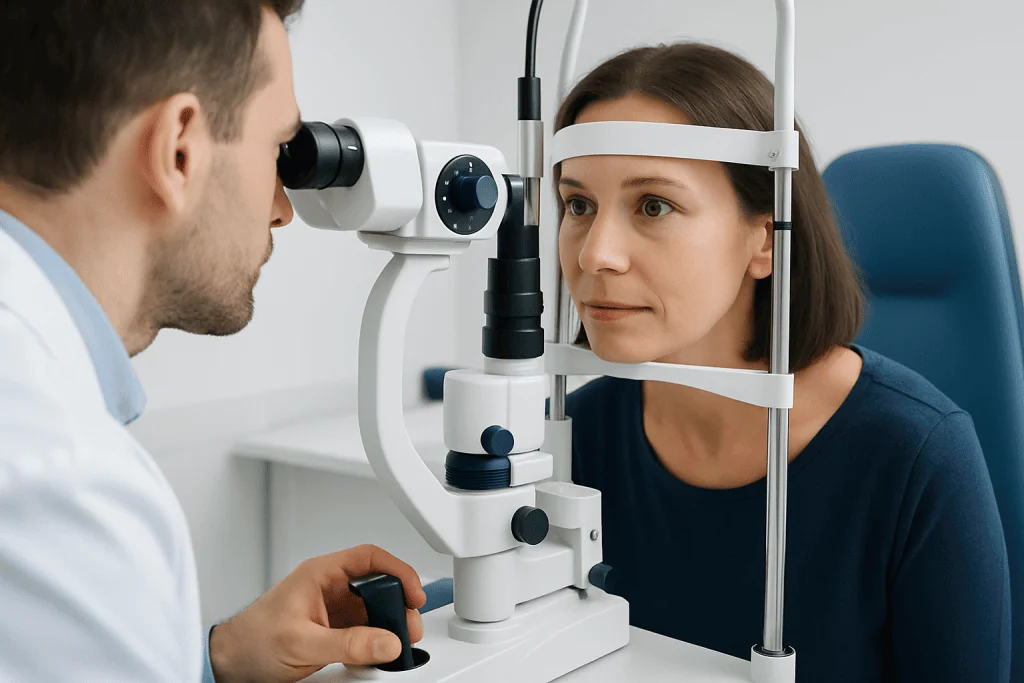
Diagnosis usually begins with a medical history, physical examination, and a detailed eye examination. An ophthalmologist often uses a slit lamp, a microscope with a bright light, to look closely at the cornea. This is the standard way to detect Kayser Fleischer rings, especially when they are faint and not visible to the naked eye.
If the rings are seen, doctors usually investigate for Wilson disease and related copper overload. Testing may include blood tests such as ceruloplasmin, liver function tests, and serum copper studies, as well as a 24-hour urine copper test. In some cases, imaging, genetic testing, or liver assessment may be recommended to confirm the diagnosis and understand how much the body is affected.
The diagnostic process often involves more than one specialty because Wilson disease can affect several organs. Eye specialists, hepatologists, neurologists, and laboratory teams may all contribute. When needed, advanced assessment may include a comprehensive eye examination and a broader medical check-up to identify the full pattern of symptoms and organ involvement.
What Treatment Involves
Treatment focuses on lowering excess copper and managing the underlying condition. In Wilson disease, doctors commonly use medicines that remove copper from the body or reduce copper absorption from the digestive tract. Dietary advice may also be given to limit foods especially high in copper, though this does not replace medical treatment.
As copper levels improve, Kayser Fleischer rings may become less noticeable over time. However, their fading can be gradual, and eye appearance does not always reflect how well the liver or nervous system is recovering. Regular follow-up is important so the medical team can monitor symptoms, laboratory values, and treatment response.
Management is usually long term and should be supervised by experienced clinicians. Depending on the person’s needs, care may involve neurology evaluation for movement or cognitive symptoms and liver-focused care if there is evidence of hepatitis, scarring, or liver dysfunction. In complex cases, Acibadem International’s multidisciplinary specialists and JCI-accredited hospitals diagnose and treat this condition for international patients.
Self-Care, Monitoring, and Living With the Condition
People diagnosed with Kayser Fleischer rings due to Wilson disease usually benefit most from consistent follow-up and adherence to treatment. Missing medication can allow copper to accumulate again, even if symptoms had improved before. Follow-up visits may include blood and urine tests, review of neurologic symptoms, and periodic eye examinations.
Self-care may include asking a doctor or dietitian about foods that are naturally high in copper, such as shellfish, liver, nuts, chocolate, and mushrooms. The aim is not extreme restriction for everyone, but a practical plan tailored to the person’s condition and treatment. Patients should also discuss any supplements or alternative remedies before use, since some may contain minerals that are not appropriate.
Emotional and practical support also matters. Because Wilson disease can affect energy, mood, and concentration, people may need help with daily routines, school, or work during diagnosis and treatment. A clear plan and regular communication with the healthcare team can make long-term management more manageable.
- Take prescribed medicines exactly as directed.
- Attend scheduled lab tests and specialist appointments.
- Report new neurologic, psychiatric, or liver-related symptoms promptly.
- Ask before starting over-the-counter supplements.
When to Seek Medical Care
Medical care should be sought if a doctor suspects Kayser Fleischer rings or if a person has unexplained liver problems, tremor, stiffness, balance changes, speech changes, or mood and behavior changes. These symptoms do not always mean Wilson disease, but they deserve proper evaluation because early diagnosis can prevent complications.
Prompt care is especially important when symptoms are progressing, when jaundice or abdominal swelling appears, or when new neurologic changes develop. Family history also matters. If a close relative has Wilson disease, screening may be advised even before symptoms become noticeable.
Anyone told they have an unusual ring around the cornea should avoid self-diagnosis from photographs alone. A slit-lamp examination and medical assessment are needed to distinguish Kayser Fleischer rings from other benign or unrelated corneal findings. If concerns arise, starting with an ophthalmologist, internist, or neurologist is a sensible next step.
Frequently asked questions
Are Kayser Fleischer rings always caused by Wilson disease?
Not always, but Wilson disease is the classic and most important cause. Similar copper-related corneal deposits can occasionally appear in other settings, especially severe liver disorders, so doctors usually investigate the broader medical picture.
Can Kayser Fleischer rings affect eyesight?
In many cases, they do not noticeably affect vision because they sit at the edge of the cornea. The bigger concern is usually the underlying condition causing copper buildup elsewhere in the body.
Can Kayser Fleischer rings go away with treatment?
They may fade gradually when copper levels are brought under control, especially with proper long-term treatment. However, improvement in the ring does not always happen quickly, and doctors monitor overall health rather than eye appearance alone.
How are Kayser Fleischer rings found?
They are usually identified during a slit-lamp eye exam performed by an eye specialist. Because early rings can be subtle, they may not be visible in a mirror or routine photograph.
Do Kayser Fleischer rings mean someone has liver disease?
They can be a clue to a disorder that affects the liver, especially Wilson disease, but they are not a diagnosis by themselves. Further testing is needed to find out whether the liver, nervous system, or other organs are involved.
Should family members be tested if one person has Wilson disease?
Often yes, because Wilson disease is inherited. A doctor can advise which relatives should be screened and what tests are most appropriate based on age, symptoms, and family history.
References
- National Institute of Diabetes and Digestive and Kidney Diseases
- National Eye Institute
- Merck Manual Professional Edition
- American Academy of Ophthalmology
- National Organization for Rare Disorders
This article is for general information only and is not a substitute for professional medical advice. Please consult a qualified doctor about your individual situation.
Explore treatments in Turkey — costs, top hospitals & a free quote
JCI-accredited · board-certified surgeons · reply within 24h
Check your numbers in seconds
BMI, calories, due date, blood pressure and 30+ more clinical calculators — free, instant, doctor-reviewed ranges.