

Tick with White Dot: A Complete Medical Overview

A tick with white dot is commonly the female lone star tick. Most bites cause mild redness or itching, but some can lead to infection or allergic reactions.
Key Takeaways
- A tick with white dot is commonly the female lone star tick.
- Most bites cause mild redness or itching, but some can lead to infection or allergic reactions.
- Prompt, careful tick removal lowers the chance of prolonged attachment and irritation.
- A spreading rash, fever, severe headache, breathing problems, or unusual reactions after eating red meat should be medically assessed.
- Prevention includes protective clothing, repellents, and full-body tick checks after outdoor exposure.
A tick with white dot is most often the female lone star tick, identified by a single pale or white spot on its back. While many bites cause only local irritation, this tick can also be associated with tick-borne infections and, in some people, alpha-gal syndrome, so correct removal and follow-up matter.
Overview: What a Tick with White Dot Usually Means
A tick with white dot usually refers to the female lone star tick, a species recognized by a single silvery-white spot on the back. It is found in parts of the United States and can attach to people, pets, and wild animals. This tick is different from a deer tick or dog tick, so the appearance can offer a useful clue, although exact identification is not always simple without expert review.
Most lone star tick bites cause local skin irritation such as redness, itching, or a small swollen area. However, the main medical concern is not the bite itself but what may follow. Like other ticks, lone star ticks can be linked to certain infections, and they have also been associated with alpha-gal syndrome, a delayed allergic reaction to a sugar molecule found in mammalian meat.
Because many people search online after finding an attached tick, the first priorities are practical: remove the tick correctly, clean the skin, note the date of the bite, and watch for symptoms over the next days to weeks. Medical care is not always needed immediately, but changes such as fever, expanding rash, body aches, or breathing difficulty should not be ignored.
How to Recognize the Lone Star Tick
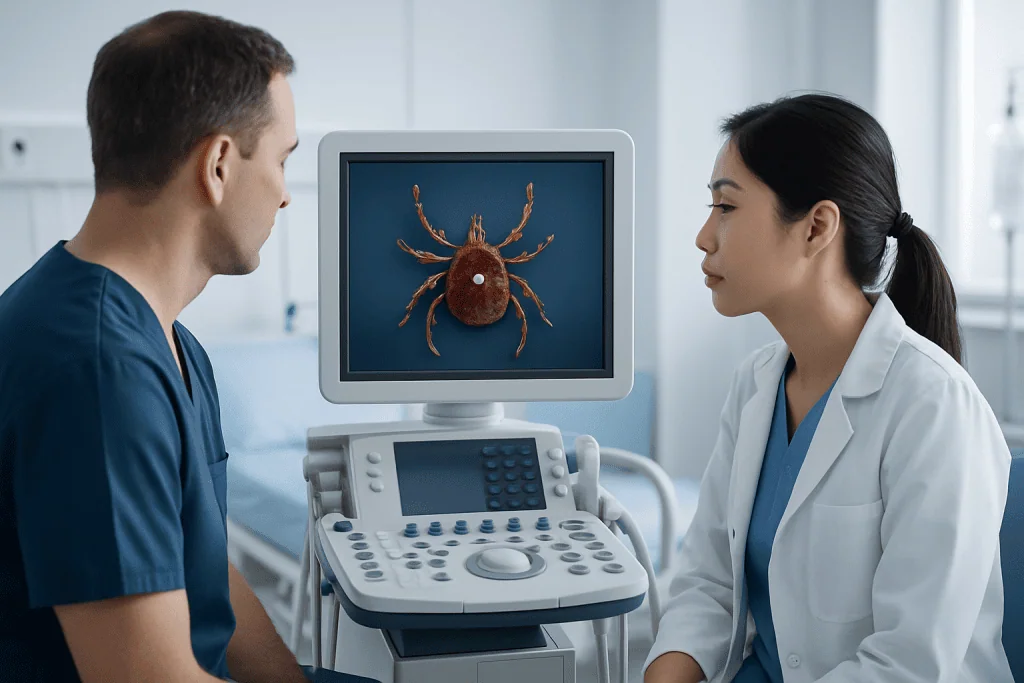
The lone star tick gets its name from the single pale mark on the back of the adult female. Adult males usually do not have one central white dot; instead, they may show lighter markings around the body edge. Nymphs and larvae are smaller and harder to identify, so a tiny biting tick may still be a lone star tick even if the classic white spot is not obvious.
Ticks change in size depending on whether they have fed. Before feeding, they may look small and flat; after feeding, they can appear larger and more rounded. Color can range from brown to reddish-brown, with the white or silvery marking standing out most clearly on an unfed adult female.
Identification matters because different tick species carry different risks. Even so, visual recognition has limits, especially if the tick is damaged during removal or already engorged. If there is uncertainty and symptoms later develop, a doctor will focus more on the person’s symptoms, exposure history, and examination than on a photo alone.
Symptoms After a Bite: What Is Normal and What Is Not
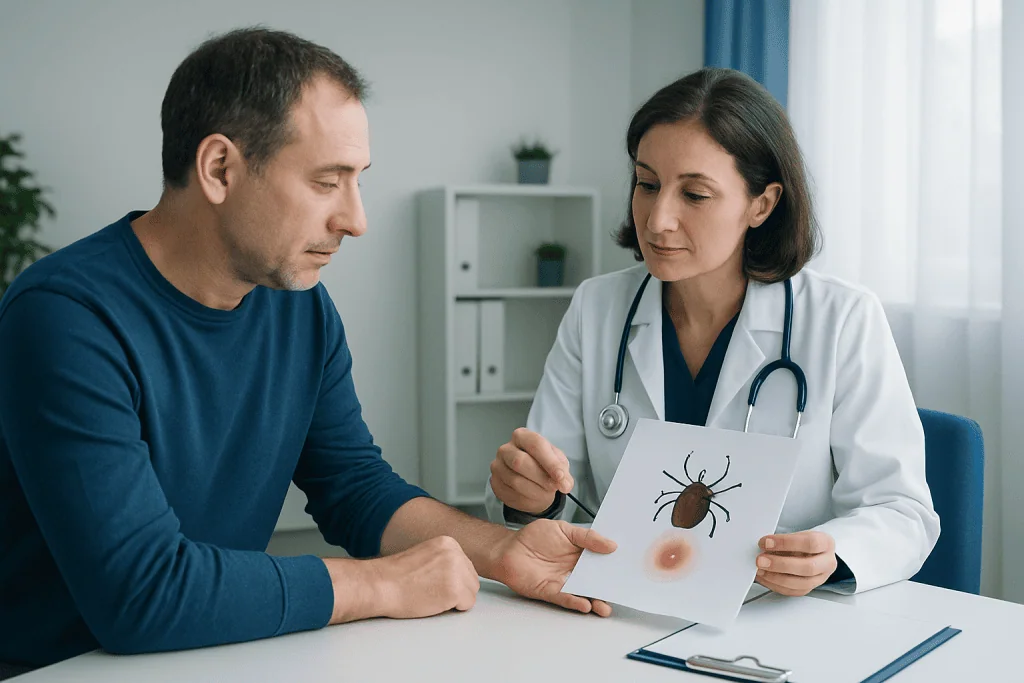
A mild reaction at the bite site is common. This may include a small red bump, tenderness, itching, or slight swelling for a few days. Some people notice no symptoms at all at first, especially if the tick was removed early.
Symptoms that deserve more attention include fever, chills, headache, unusual fatigue, muscle aches, joint pain, or a rash that expands or changes over time. These symptoms do not prove a tick-borne illness, but they can suggest that a medical evaluation is needed. In some people, scratched or irritated bites can also become secondarily infected, causing increasing pain, warmth, pus, or worsening redness.
One unique concern with a lone star tick is alpha-gal syndrome. In this condition, a person may develop an allergic reaction hours after eating red meat or other mammalian products. Symptoms can include hives, stomach cramps, nausea, diarrhea, swelling, or in severe cases trouble breathing. If this pattern appears after a tick bite, an allergy-focused medical assessment is important.
- Common local symptoms: itching, mild redness, small bump
- Possible infection-related symptoms: fever, headache, body aches, rash
- Possible allergic symptoms: hives, stomach upset, lip or throat swelling, wheezing
Health Risks Linked to a Tick with White Dot
The lone star tick is associated with several health concerns. It has been linked to bacterial illnesses such as ehrlichiosis and can occasionally be involved in other tick-related syndromes depending on region and exposure. Not every bite causes disease, and many people recover without complications, but risk increases when a tick remains attached for longer or when symptoms appear after outdoor exposure.
Another important issue is alpha-gal syndrome, which is not an infection but an allergy. Researchers believe that substances introduced during the bite can trigger sensitization in some people. Later, when the person eats beef, pork, lamb, or other mammalian products, they may develop a delayed reaction. Because the reaction often occurs several hours after eating, the connection is easy to miss.
Some skin rashes after tick bites may resemble other conditions, and not every rash means Lyme disease. In fact, the lone star tick is not considered the primary carrier of Lyme disease, though bites can still produce a round or expanding rash that confuses the picture. Doctors may consider other causes such as Lyme disease or local skin inflammation based on the person’s symptoms, travel area, and timing.
Diagnosis and When Testing Is Considered
Diagnosis starts with a careful history. A doctor may ask where the tick exposure happened, how long the tick may have been attached, when symptoms started, and whether there were recent outdoor activities such as hiking, gardening, hunting, or pet contact. A skin examination and review of any fever, rash, body aches, or allergic symptoms help guide next steps.
There is no single test that is needed for every tick bite. If a person has only mild local irritation and no other symptoms, testing is often unnecessary. If signs point to infection, blood tests may be considered depending on the suspected illness and how long symptoms have been present. For suspected alpha-gal syndrome, a doctor may refer the person for allergy evaluation and targeted testing.
Imaging is rarely required for a simple tick bite. However, if a bite area becomes severely inflamed, or if a patient develops symptoms involving the nervous system, heart, or other organs, doctors may broaden the workup. In some settings, laboratory assessment may be part of a wider evaluation for infectious diseases when symptoms are not straightforward.
Treatment Options and Tick Removal
The first treatment step is correct tick removal. Fine-tipped tweezers are used to grasp the tick as close to the skin surface as possible and pull upward with steady, even pressure. Twisting, crushing, burning, or covering the tick with petroleum jelly is not recommended, because these methods may irritate the skin and do not improve safe removal.
After removal, the bite area should be cleaned with soap and water. A small amount of local irritation can often be managed with simple skin care and avoiding scratching. If a doctor suspects a bacterial tick-borne illness, treatment may involve prescription antibiotics. These should only be used when medically appropriate, since not every tick bite benefits from preventive medication.
If symptoms suggest alpha-gal syndrome, treatment focuses on allergy assessment, guidance on avoiding triggers, and emergency planning for severe reactions. For persistent skin symptoms, a clinician may recommend supportive care or evaluate for a secondary infection. If symptoms are complex or prolonged, further evaluation may include allergy tests or specialist input through infectious diseases treatment.
In some cases, a doctor may ask the patient to monitor symptoms rather than start immediate medication. This watchful approach is common when the bite is recent and there are no signs of systemic illness. Patients should keep track of fever, rash changes, digestive reactions after eating meat, and any breathing problems, and share these details promptly if they occur.
Prevention and Self-Care After Outdoor Exposure
Preventing tick bites starts before going outdoors. Wearing long sleeves, long pants, and closed shoes can reduce skin exposure in grassy, wooded, or brushy areas. Light-colored clothing may make ticks easier to spot. EPA-registered insect repellents and permethrin-treated clothing can also help when used as directed.
After spending time outside, a full-body tick check is one of the most effective habits. Ticks may hide behind the knees, in the groin, under the arms, around the waist, behind the ears, or along the scalp line. Showering soon after outdoor activity may help remove unattached ticks, and clothing should be washed and dried according to care instructions.
Pets can carry ticks indoors, so regular pet checks are also useful. Around the home, keeping grass trimmed, removing leaf litter, and creating barriers between lawns and wooded areas may reduce exposure. People who have repeated bites or unexplained reactions should discuss prevention strategies with a healthcare professional, especially if they have a history of allergies or prior tick-borne illness.
When to Seek Medical Care
Medical care should be sought if a person develops fever, worsening headache, widespread rash, severe fatigue, joint pain, confusion, or signs of skin infection after a tick bite. Emergency care is needed for trouble breathing, fainting, throat swelling, or other symptoms of a serious allergic reaction. These symptoms may be unrelated to the tick, but they should still be assessed promptly.
It is also reasonable to speak with a doctor if the tick could not be fully removed, if the bite area continues to worsen after a few days, or if unusual symptoms appear after eating red meat. Pregnant people, young children, older adults, and people with weakened immune systems may benefit from earlier medical advice because symptoms can be harder to interpret.
Near the end of evaluation, some patients may need coordinated care from allergy, dermatology, infectious disease, or internal medicine specialists. Acibadem International’s multidisciplinary specialists and JCI-accredited hospitals diagnose and treat tick-related conditions for international patients, including assessment through services such as comprehensive check-up when clinically appropriate.
Frequently asked questions
What is a tick with white dot?
A tick with white dot is most commonly the female lone star tick. The white or silvery spot on its back helps distinguish it from some other tick species, although small or partially fed ticks can still be difficult to identify.
Is a lone star tick bite dangerous?
Many lone star tick bites cause only mild skin irritation and do not lead to serious illness. However, this tick can be associated with certain infections and with alpha-gal syndrome, so new symptoms after a bite should be monitored carefully.
How should a tick be removed safely?
The safest method is to use fine-tipped tweezers, grasp the tick close to the skin, and pull upward steadily. Afterward, the area should be cleaned with soap and water, and the person should watch for symptoms over the next several days or weeks.
Can a tick with white dot cause Lyme disease?
The lone star tick is not considered the main carrier of Lyme disease. Still, a bite can cause a rash or other symptoms that resemble Lyme disease, so medical evaluation may be needed if fever, body aches, or an expanding rash develops.
What is alpha-gal syndrome and why is it linked to this tick?
Alpha-gal syndrome is a delayed allergic reaction to a sugar molecule found in mammalian meat and some related products. In some people, a lone star tick bite may trigger this sensitivity, leading to symptoms hours after eating foods such as beef, pork, or lamb.
When should someone see a doctor after a tick bite?
A doctor should be consulted if there is fever, a spreading rash, severe headache, increasing redness or pus at the bite site, or unusual reactions after eating red meat. Emergency care is needed for breathing difficulty, throat swelling, fainting, or other signs of a severe allergic reaction.
References
- Centers for Disease Control and Prevention
- American Academy of Allergy, Asthma & Immunology
- Mayo Clinic
- Johns Hopkins Medicine
- World Health Organization
This article is for general information only and is not a substitute for professional medical advice. Please consult a qualified doctor about your individual situation.
Explore treatments in Turkey — costs, top hospitals & a free quote
JCI-accredited · board-certified surgeons · reply within 24h

More from the Health Library



Related Specialists

Fzt. Melis Eda Erkanlı
Physical Medicine and Rehabilitation
Prof. Dr. Mehmet E. Erdil
Orthopedic Surgery & Traumatology
Dr. Teoman Şen
Pediatric Surgery
Prof. Dr. Ethem Kumbay
Cardiology