Braless: What Patients Need to Know

Going braless does not generally harm breast health. Comfort, breast size, activity level, pregnancy, and skin sensitivity can affect whether support feels helpful.
Key Takeaways
- Going braless does not generally harm breast health.
- Comfort, breast size, activity level, pregnancy, and skin sensitivity can affect whether support feels helpful.
- A bra may reduce movement-related discomfort during exercise or long periods of standing.
- Breast pain, a new lump, nipple discharge, or skin changes are not normal effects of being braless and need medical review.
- Supportive clothing, skin care, posture, and well-fitted bras when desired can improve day-to-day comfort.
Going braless is usually a matter of comfort, preference, and activity level rather than a health risk. Most people can safely choose whether or not to wear a bra, but breast pain, skin changes, lumps, or discharge should be assessed by a doctor.
Overview
Going braless is usually safe and, for many people, comfortable. There is no strong medical evidence that not wearing a bra causes breast disease, breast sagging to suddenly worsen, or other direct harm. In most cases, the choice depends on personal comfort, breast size, daily activity, clothing, and skin sensitivity.
Breasts are supported naturally by skin, connective tissue, and the chest wall. Some people feel no difference without a bra, while others notice movement-related discomfort, shoulder strain, or skin irritation depending on breast size and routine. This means the decision to go braless is often practical rather than medical.
It is also helpful to separate normal variation from symptoms that need attention. Tenderness after exercise, pressure marks from clothing, or occasional discomfort can happen with or without a bra. However, a new lump, persistent pain in one area, nipple discharge, or changes in the skin should not be dismissed as simply a result of going braless.
What Happens to the Body When Someone Goes Braless?
Without a bra, the breasts move more during walking, climbing stairs, and exercise. For some people, this feels natural and comfortable. For others, especially those with larger breasts, the increased motion can lead to pulling sensations in the chest, upper back, shoulders, or neck.
Support needs vary greatly. A person with smaller breasts may be comfortable braless all day, while another may prefer support during work, commuting, or sports. Hormonal changes, pregnancy, breastfeeding, and weight changes can also alter breast sensitivity over time.
Skin can also play a role. Tight clothing, sweat, and friction under the breasts may cause irritation whether or not a bra is worn. For some, skipping a bra reduces pressure and rubbing. For others, a soft, well-fitted bra or supportive camisole helps reduce friction and improves comfort.
- Going braless may feel more comfortable at rest or at home.
- Support is often more useful during exercise or high-movement activities.
- Breast discomfort is related more to movement and fit than to the simple absence of a bra.
Common Concerns: Sagging, Pain, Posture, and Skin
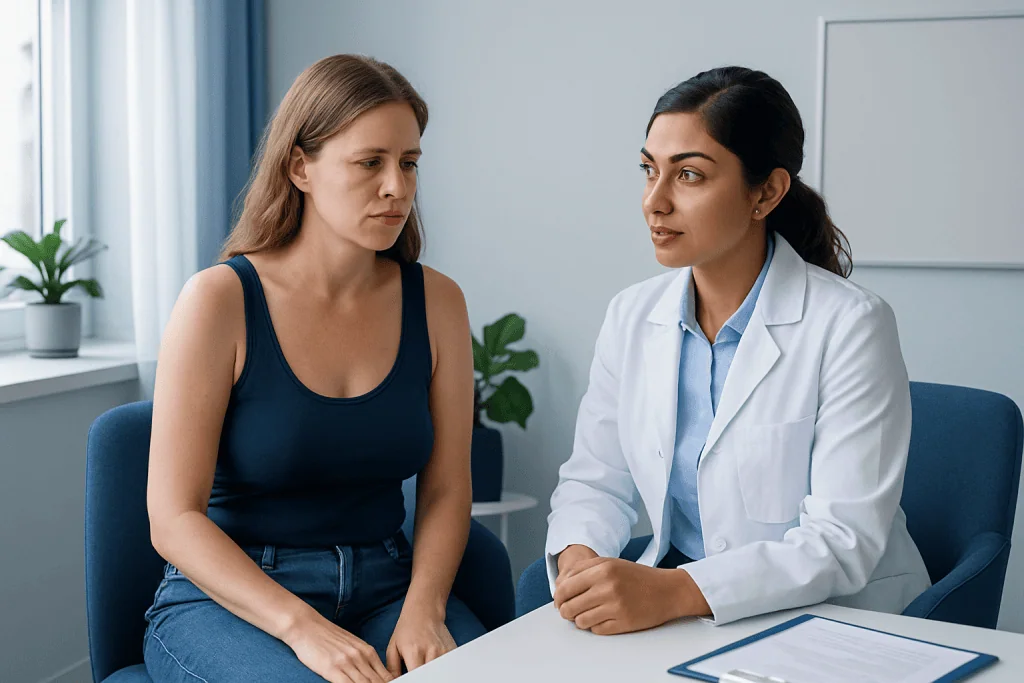
A common question is whether going braless causes breast sagging. Breast shape changes over time mainly because of age, genetics, pregnancy, weight changes, and the natural stretching of connective tissue. Wearing or not wearing a bra does not reliably prevent these changes.
Breast pain is another frequent concern. Mild soreness can be related to menstrual cycles, exercise, muscle strain, or poor support during movement. If pain improves with a supportive bra during activity, that does not mean going braless is unhealthy; it simply suggests that the breasts need more support in that setting. Persistent or one-sided pain should be evaluated, especially if it occurs with other symptoms.
Some people worry that going braless will harm posture. In reality, posture is influenced by core strength, back muscles, ergonomics, and body mechanics more than bra use alone. However, people with larger breasts may feel more comfortable and less fatigued when wearing a supportive bra for long periods.
Skin issues can include chafing, heat rash, sweat retention, and irritation along the fold under the breast. These problems are often manageable with breathable fabrics, good hygiene, and reducing friction. If there is an itchy rash, redness, soreness, or broken skin under the breast, a clinician may consider common skin conditions such as intertrigo.
Who May Benefit From More Support?
There is no single rule for who should or should not go braless. Even so, some situations make extra support more helpful. Larger breasts, high-impact exercise, physically demanding jobs, and long days spent standing or walking can all increase movement-related discomfort.
Support may also be useful during pregnancy or breastfeeding, when the breasts can become fuller and more tender. People recovering from breast procedures or chest surgery should follow their surgeon’s guidance about support garments, activity, and healing. In these cases, support may be part of comfort and recovery rather than a lifelong requirement.
Those with chronic neck, shoulder, or upper back discomfort may benefit from an assessment of both breast support and musculoskeletal health. Sometimes the issue is not the breasts themselves but muscle tension, poor workstation setup, or an underlying spine problem. If symptoms are significant, a doctor may suggest evaluation for conditions linked with posture or strain, including back pain.
When Symptoms Are Not Just About Going Braless
It is important not to blame all breast or chest symptoms on clothing choices. A bra that fits poorly can certainly cause pressure marks, skin indentation, or discomfort. But a new breast symptom should be considered on its own merits, especially if it persists, worsens, or affects only one side.
Warning signs include a new lump, thickening in the breast or underarm, spontaneous nipple discharge, dimpling of the skin, a nipple that turns inward unexpectedly, or redness that does not settle. Persistent focal pain, especially in one spot, also deserves medical review. These symptoms do not necessarily mean a serious problem, but they should be checked.
Some symptoms may come from the chest wall rather than the breast tissue itself. Muscle strain, rib irritation, costochondritis, or referred pain can mimic breast discomfort. A clinical exam helps distinguish between breast-related causes and pain arising from muscles, joints, or the skin.
Diagnosis and Medical Evaluation
When a person seeks care for breast discomfort or a new change, the first step is usually a medical history and physical examination. The doctor may ask when symptoms started, whether they change with menstrual cycles, whether there was trauma or exercise strain, and whether there is a family history of breast disease. They may also ask about pregnancy, breastfeeding, skin products, and current bras or clothing.
If needed, imaging tests can help clarify the cause. Depending on age, symptoms, and examination findings, the doctor may recommend breast ultrasound or mammography. These tests are used to investigate concerning symptoms; they are not required simply because someone prefers to go braless.
For skin irritation under the breasts, the examination may focus on moisture, friction, fungal overgrowth, or contact irritation from fabrics and detergents. If pain seems musculoskeletal, the clinician may assess posture, range of motion, and tenderness in the chest wall and shoulders. The goal is to identify the true source of symptoms rather than assume they are caused by bra habits alone.
Comfort Strategies, Treatment Options, and Self-Care
If going braless feels comfortable, no treatment is needed. When support is desired, options include soft bras, sports bras for exercise, bralettes, shelf-support tops, or fitted camisoles. The best choice is one that reduces discomfort without digging into the shoulders, ribs, or skin.
For skin care, breathable fabrics, changing out of sweaty clothing promptly, and keeping the skin folds dry can help. People prone to rubbing under the breasts may benefit from moisture-wicking materials or barrier products recommended by a clinician. If a rash or fungal irritation develops, treatment depends on the cause and may include topical medication and improved skin care.
When pain is due to breast movement, reducing bounce during activity often helps. For chest wall or muscle-related pain, doctors may suggest rest, posture correction, gentle stretching, or assessment by a specialist. If symptoms point to a breast condition, further evaluation in a breast clinic may be appropriate.
Near the end of the care pathway, some patients also want coordinated evaluation across imaging, breast health, dermatology, and musculoskeletal medicine. Acibadem International’s multidisciplinary specialists and JCI-accredited hospitals diagnose and treat breast- and chest-related concerns for international patients when a more detailed assessment is needed.
When to Seek Medical Care
Medical care is recommended if there is a new lump in the breast or underarm, persistent pain in one area, nipple discharge that is spontaneous or bloody, or visible skin or nipple changes. These signs should be assessed even if the person suspects they are related to clothing, exercise, or going braless.
A doctor should also be consulted for a rash under the breast that does not improve, repeated skin breakdown, fever, marked redness, or severe tenderness. Pregnant or breastfeeding patients should seek advice for significant pain, redness, swelling, or symptoms that suggest infection.
Urgent medical attention is appropriate for sudden chest pain, shortness of breath, or severe symptoms that may not be breast-related at all. In day-to-day life, a practical rule is simple: if a symptom is new, persistent, one-sided, or worrying, it deserves professional evaluation.
Frequently asked questions
Is it unhealthy to go braless?
For most people, no. Going braless is usually a comfort and lifestyle choice, not a health risk. Some people prefer more support during exercise or long periods of activity, but there is no general medical requirement to wear a bra.
Does going braless cause sagging?
Breast shape changes mostly because of age, genetics, pregnancy, and weight changes. There is no strong evidence that going braless alone causes harmful sagging. A bra may change how the breasts look in clothing, but it does not stop natural tissue changes over time.
Can going braless cause breast pain?
It can contribute to discomfort in some people because the breasts move more without support. This is more common during exercise or with larger breasts. However, persistent, one-sided, or focal pain should not be assumed to be from going braless and should be checked by a doctor.
Is it better to wear a bra during exercise?
Many people find that a supportive sports bra improves comfort during exercise by reducing breast movement. This is especially helpful with running, jumping, or other high-impact activities. The best choice depends on breast size, activity type, and personal preference.
Can going braless cause skin problems?
Not directly, but friction, sweat, and trapped moisture under the breasts can lead to irritation or rash with or without a bra. Breathable fabrics and good skin care can help. If redness, itching, soreness, or cracking does not improve, medical advice is sensible.
When should a breast symptom be checked by a doctor?
A new lump, nipple discharge, skin dimpling, nipple changes, or pain that persists in one spot should be evaluated. These symptoms do not always mean something serious, but they should not be blamed on bra use alone. A doctor can decide whether an exam or imaging test is needed.
References
- World Health Organization
- American College of Obstetricians and Gynecologists
- American Cancer Society
- National Health Service
- Centers for Disease Control and Prevention
This article is for general information only and is not a substitute for professional medical advice. Please consult a qualified doctor about your individual situation.
Joint and spine care in Turkey — expert assessment & treatment
JCI-accredited · board-certified surgeons · reply within 24h

More from the Health Library


Related Specialists

Fzt. Busenur Sezer
Physical Medicine and Rehabilitation
Dr. Abdullah Boğa
General Surgery
Asst. Prof. Dr. Tuğana Akbaş
Radiology
Dr. Etem Aytaç Yazar
Orthopedic Surgery & Traumatology