Wall Angels: An Evidence-Based Guide for Patients

Wall angels are a low-impact exercise that may support posture, shoulder motion, and upper-back coordination. The exercise should feel controlled, not forced; pain, numbness, or sharp pinching are signs to stop and seek guidance.
Key Takeaways
- Wall angels are a low-impact exercise that may support posture, shoulder motion, and upper-back coordination.
- The exercise should feel controlled, not forced; pain, numbness, or sharp pinching are signs to stop and seek guidance.
- Many people benefit from modified wall angels if full wall contact is not possible at first.
- Wall angels are not a treatment for every cause of shoulder, neck, or back pain, so persistent symptoms should be assessed medically.
- Best results usually come from consistent practice combined with strengthening, stretching, and ergonomic habits.
Wall angels are a simple bodyweight exercise used to improve posture awareness, shoulder mobility, and upper-back muscle control. They are most helpful when performed slowly, with good form, and as part of a broader plan for movement, strength, and symptom-guided care.
What are wall angels?
Wall angels are a posture and movement exercise performed standing against a wall with the arms moving up and down in a controlled arc. They are designed to encourage coordination between the upper back, shoulder blades, shoulders, and neck while helping a person notice how the body aligns during movement. In practical terms, wall angels are often used to support posture training and shoulder mobility, especially in people who spend long periods sitting or working at screens.
They are not a cure-all, and they are not meant to be painful. A well-performed wall angel should feel like a gentle challenge to mobility and muscular control rather than a forced stretch. Many people cannot keep every part of the body fully against the wall at first, and that is common. The goal is quality of movement, not perfect contact.
Wall angels differ from many general stretching exercises because they combine mobility with awareness and muscle control. Instead of simply lengthening a muscle, they ask the body to move through a pattern while maintaining a stable rib cage, neck, and pelvis. This is why they are often included in rehabilitation and conditioning programs for the upper body.
How wall angels may help
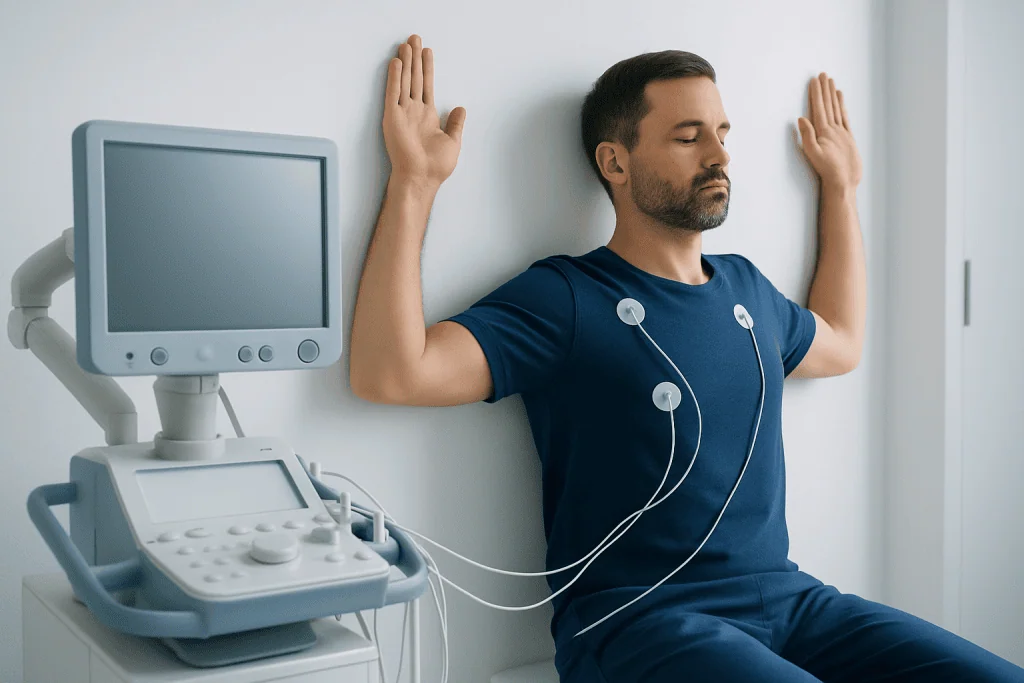
Wall angels may help improve posture awareness by teaching the body to move the arms without excessive arching of the lower back or shrugging of the shoulders. This can be useful for people who develop rounded shoulders, forward head posture, or upper-back stiffness from desk work, driving, or reduced physical activity. Better awareness does not automatically fix posture, but it can make healthy movement patterns easier to repeat.
They may also support shoulder mobility and scapular control. The shoulder depends on smooth coordination between the upper arm bone, shoulder blade, rib cage, and thoracic spine. When one part is stiff or weak, the motion can become less efficient. Wall angels can gently expose these limitations and, over time, help improve control if used appropriately.
Some clinicians also use wall angels as part of exercise programs for mild, non-acute neck and upper-back discomfort related to muscle imbalance or deconditioning. However, symptoms such as persistent pain, weakness, tingling, or loss of range of motion can have several causes, including shoulder pain syndromes or spinal problems, and these need individual evaluation rather than self-diagnosis.
- Posture awareness during arm movement
- Gentle shoulder and chest mobility work
- Upper-back and shoulder blade muscle activation
- A simple screen for movement restrictions
- Home exercise support between supervised sessions
Who may benefit and who should be cautious
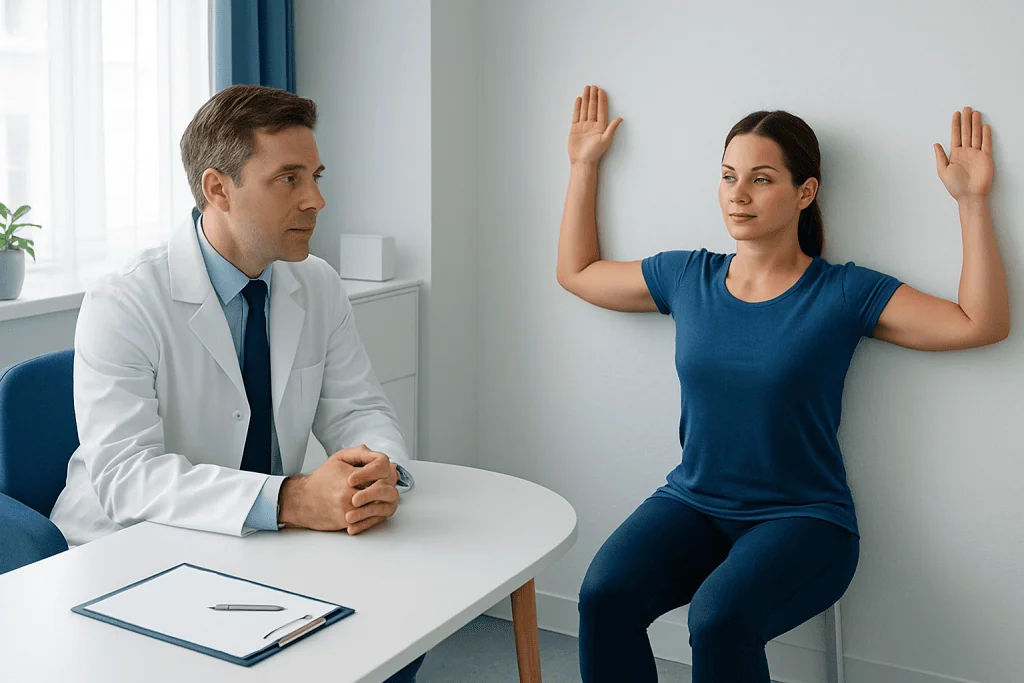
Wall angels may be helpful for adults and older adolescents who want to improve upper-body mobility, reduce stiffness from sedentary habits, or add a low-impact posture exercise to their routine. They are commonly used by office workers, students, and people returning to movement after a period of low activity. They can also be useful as part of a warm-up before strength training or sports that involve the shoulders.
At the same time, wall angels are not suitable for everyone in the same way. People with recent shoulder injury, severe neck pain, acute upper-back pain, shoulder instability, recent surgery, or symptoms such as numbness, burning pain, or radiating weakness should be cautious. In these situations, a clinician may first need to rule out a rotator cuff problem, nerve irritation, frozen shoulder, or issues involving the cervical spine such as herniated disc-related symptoms.
Pregnant individuals, older adults with balance concerns, and people with marked thoracic kyphosis or limited shoulder motion may still be able to do the exercise, but they often need modifications. Working with a physiotherapist or rehabilitation specialist can help make the movement safer and more productive, especially if symptoms are already present.
How to do wall angels with correct form
To perform a basic wall angel, a person stands with the back close to a wall, feet a short distance forward for comfort, and knees soft rather than locked. The head, upper back, and pelvis are gently aligned without straining to flatten the lower back completely. The arms begin in a bent position, often called a goalpost or “W” shape, with elbows and backs of the hands moving toward the wall as tolerated.
From this start, the arms slide slowly upward and then back down, like making a snow angel while standing. The movement should be smooth and within a comfortable range. The neck stays relaxed, the chin level, and the rib cage controlled so that the lower back does not arch excessively. It is normal if the wrists or elbows do not touch the wall fully at first.
Common mistakes include pushing through pain, shrugging the shoulders, jutting the head forward, flaring the ribs, or turning the exercise into a forced stretch. Slow repetitions are usually more helpful than many fast ones. If full wall angels are difficult, a person can reduce the range, perform them lying on the floor, or practice shoulder blade setting and thoracic mobility first. Those in rehabilitation may benefit from a structured program that includes physical therapy and rehabilitation.
- Move slowly and stay within a pain-free range
- Keep the neck relaxed and shoulders away from the ears
- Avoid forcing the hands or elbows to the wall
- Stop if there is sharp pain, numbness, or tingling
Why wall angels can feel difficult or uncomfortable
Wall angels often feel harder than they look because they require several body regions to work together. Tight chest muscles, limited thoracic extension, reduced shoulder external rotation, weak mid-back muscles, or poor scapular control can all make the movement feel restricted. Even people who exercise regularly may notice that one side moves more easily than the other.
Discomfort does not always mean injury, but the type of discomfort matters. A mild stretching sensation around the chest or upper arms can be expected in some people. Sharp pinching at the front or top of the shoulder, pain traveling down the arm, tingling, dizziness, or headache are not expected responses. These symptoms suggest the exercise may be unsuitable in its current form or that another condition needs evaluation.
In some cases, difficulty with wall angels can reflect an underlying musculoskeletal issue rather than simple stiffness. Shoulder impingement, rotator cuff irritation, neck-related nerve symptoms, or postural adaptations after pain may all interfere with the movement pattern. If symptoms continue despite reducing the range or modifying the exercise, a clinician may recommend assessment and, when needed, imaging such as MRI to clarify the cause.
Using wall angels as part of a broader exercise plan
Wall angels tend to work best when they are not the only exercise. Posture and shoulder function usually improve through a combination of mobility, strength, endurance, and daily movement habits. For example, chest stretching, thoracic extension work, rows, lower trapezius strengthening, and rotator cuff exercises may complement wall angels depending on a person’s needs.
Ergonomics also matter. If someone spends many hours at a computer with the head forward and shoulders rounded, a few repetitions of wall angels may not offset the overall load on the neck and upper back. Regular standing breaks, screen-height adjustment, varied movement during the day, and general physical activity are often just as important.
People recovering from injury or surgery should not add wall angels without checking their plan first. A tailored program may include supervised exercises, pain-management strategies, and occasionally additional interventions guided by an orthopedics, sports medicine, or rehabilitation team. When symptoms are complex or persistent, evaluation through orthopedics and traumatology may help identify the most appropriate next steps.
When to seek medical care
A person should seek medical advice if wall angels cause sharp pain, repeated pinching in the shoulder, numbness, tingling, visible weakness, or pain that radiates into the arm or hand. Medical review is also important if shoulder or neck symptoms started after trauma, a fall, sports injury, or lifting incident. These features can point to a condition that needs diagnosis before home exercise continues.
It is also sensible to seek care if there is persistent stiffness that does not improve, significant loss of range of motion, night pain, or symptoms that interfere with daily tasks such as reaching overhead, dressing, or sleeping comfortably. These patterns can occur with several conditions, including frozen shoulder, rotator cuff disease, cervical spine disorders, or inflammatory joint problems.
Assessment may include a physical examination, review of posture and movement, and selected imaging or rehabilitation referral when needed. Near the end of the care pathway, some people benefit from multidisciplinary support. Acibadem International’s specialists at JCI-accredited hospitals diagnose and treat musculoskeletal and rehabilitation-related conditions for international patients.
Frequently asked questions
Are wall angels good for posture?
Wall angels can support posture awareness and upper-back control, especially in people with rounded shoulders or prolonged sitting habits. They work best as one part of a broader routine that also includes strengthening, mobility work, and ergonomic changes.
How often should wall angels be done?
Frequency depends on the person's goals, symptoms, and overall exercise plan. Many people use them several times a week or as a brief daily mobility exercise, but the movement should stay controlled and symptom-free. A physiotherapist can help decide what amount is appropriate.
Should the hands and elbows touch the wall the whole time?
Not necessarily. Many people do not have enough shoulder or upper-back mobility to keep full contact at first, and forcing it can cause strain. It is usually better to use a smaller range and maintain good alignment than to push into pain.
Can wall angels cause shoulder pain?
They can aggravate symptoms if done too aggressively or if an underlying shoulder or neck problem is present. Sharp pain, pinching, tingling, or weakness are not normal responses and should prompt stopping the exercise and seeking medical advice if symptoms persist.
Are wall angels enough to fix rounded shoulders?
Wall angels alone are rarely enough to change long-standing movement habits or muscle imbalances. Lasting improvement usually comes from a combination of posture awareness, strengthening, stretching, and changes to daily sitting and working positions.
Can beginners do wall angels?
Yes, but many beginners need modifications. A reduced range of motion, slower tempo, or alternative starting position can make the exercise more comfortable and effective while the body adapts.
References
- American Academy of Orthopaedic Surgeons
- National Institute of Arthritis and Musculoskeletal and Skin Diseases
- American Physical Therapy Association
- National Health Service
- MedlinePlus
This article is for general information only and is not a substitute for professional medical advice. Please consult a qualified doctor about your individual situation.
Joint and spine care in Turkey — expert assessment & treatment
JCI-accredited · board-certified surgeons · reply within 24h

More from the Health Library


Related Specialists

Assoc. Prof. Dr. Mine Yavuz Taşlipinar
Clinical Laboratory
Dr. Nezih Özdemir
Ophthalmology
Dr. Ayşe Çakmakçı
Internal Medicine
Assoc. Prof. Dr. Emine Acar Akkaya
Nuclear Medicine