Philtrum Piercing: An Evidence-Based Guide for Patients

A philtrum piercing passes through tissue above the upper lip and usually heals over several weeks to months. Good aftercare lowers the risk of infection, irritation, gum damage, and jewelry-related problems.
Key Takeaways
- A philtrum piercing passes through tissue above the upper lip and usually heals over several weeks to months.
- Good aftercare lowers the risk of infection, irritation, gum damage, and jewelry-related problems.
- Swelling, mild tenderness, and light crusting can be normal early on, but worsening pain, pus, fever, or spreading redness are not.
- Jewelry fit matters because pressure, friction, and poor placement can injure teeth, gums, or surrounding skin.
- People with certain medical conditions, immune problems, or healing concerns should speak with a clinician before getting pierced.
Philtrum piercing is a piercing placed in the groove between the upper lip and the nose, often called a medusa piercing. It can be done safely, but patients should understand healing time, oral and skin risks, aftercare, and warning signs that need medical attention.
Overview
A philtrum piercing is a type of oral-facial piercing placed in the vertical groove between the upper lip and the base of the nose. It is commonly known as a medusa piercing. For many people, the main questions are whether it is safe, how long it takes to heal, and what problems to watch for. In general, it can heal without major issues when performed by an experienced professional and cared for properly, but it is not risk-free.
Because the jewelry sits close to the mouth, teeth, gums, and facial skin, this piercing has a different risk profile than an earlobe piercing. It can be affected by oral bacteria, repeated movement from talking and eating, and pressure from jewelry against the gums or teeth. Understanding these factors helps patients make informed decisions before getting pierced and recognize when a normal healing response may be turning into a complication.
This guide focuses on evidence-based, practical information rather than trends. It explains what a philtrum piercing involves, typical healing patterns, common complications, and when professional care is needed. It also outlines simple steps that support healing and reduce preventable harm.
What to Expect Before and After the Piercing
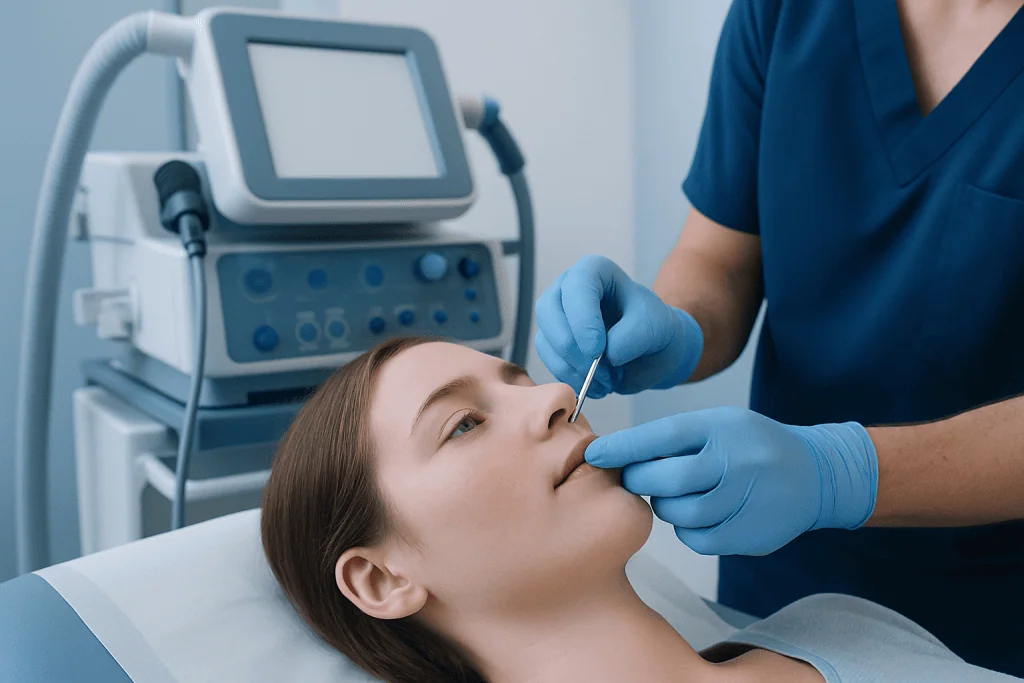
Before the procedure, a reputable piercer should review hygiene practices, mark the placement carefully, and discuss jewelry material and fit. Clean technique matters because the philtrum area contains skin and oral bacteria that can enter the wound during or after piercing. Patients should expect brief pain, followed by swelling and sensitivity for several days.
During early healing, the area may look slightly red and feel firm or tender. A small amount of clear or pale yellow fluid that dries into crust can be normal. These changes do not always mean infection. However, increasing pain, thick discharge, a bad odor, or worsening redness deserve closer attention.
Jewelry is often fitted with extra length at first to allow for swelling. Once swelling settles, downsizing may be recommended to reduce friction and pressure. This matters because jewelry that is too long can rub against the gums and teeth, while jewelry that is too tight can become embedded in tissue or slow healing.
Healing Time and Normal Symptoms

Philtrum piercing healing varies from person to person. Many people see the surface settle within several weeks, but deeper healing often takes longer, commonly several months. Healing may be slower if the area is frequently touched, bumped, exposed to smoke, or irritated by unsuitable jewelry.
Normal early symptoms can include mild swelling, tenderness, brief throbbing, and light crusting around the entry point. Eating, smiling, and speaking may feel uncomfortable at first because the upper lip moves often. Most symptoms should gradually improve rather than intensify.
Healing is not always linear. The piercing may seem calm for days and then become irritated after accidental trauma, makeup exposure, oral contact, or sleeping pressure. A temporary flare of redness or soreness can happen, but persistent symptoms suggest that the area needs reassessment. Patients who are prone to thick or raised scars may also want to discuss scarring risk with a clinician, especially if they have a history of keloids.
Risks and Possible Complications
The most important medical risks of philtrum piercing are infection, irritation, allergic reaction, gum injury, tooth damage, and embedding of jewelry. Infection can occur when bacteria enter the fresh piercing or when aftercare is inconsistent. Irritation is also common and may result from frequent touching, harsh cleaning products, poorly fitting jewelry, or repeated movement.
Because the inner backing of the jewelry sits against the inside of the upper lip, long-term friction may wear away gum tissue or chip tooth enamel in some people. This risk is one reason careful placement and timely jewelry adjustment are important. Patients who already have sensitive gums, dental work, or a habit of chewing on jewelry may be at higher risk. Dental complications may need review by a clinician or dentist, and in some cases removal is advised.
Some people react to certain metals, especially if the jewelry contains allergenic components. Ongoing itching, rash-like irritation, or delayed healing can suggest sensitivity. More serious but less common problems include an abscess, tissue overgrowth, migration, and traumatic tearing if the jewelry catches on clothing or objects. If a lump forms, medical assessment can help distinguish irritation from infection or other causes, including skin cancer in unusual cases where a persistent lesion is not behaving like a simple piercing problem.
- Higher infection risk if the piercing is touched often or cleaned improperly
- Higher gum and tooth risk if jewelry is too long or repeatedly strikes the teeth
- Higher healing difficulty in smokers and people with certain chronic conditions
- Higher scarring risk in people with a personal or family history of keloids
Who Should Take Extra Caution
Not everyone has the same risk from a philtrum piercing. People with diabetes, immune suppression, poor wound healing, active skin disease, or a history of severe metal allergy may need medical advice before proceeding. Patients taking medicines that affect immunity or bleeding should also ask whether a piercing is wise and whether extra precautions are needed.
Existing oral health matters too. Gum disease, frequent mouth sores, braces, and certain dental restorations can make a philtrum piercing more problematic. If there is ongoing oral inflammation or an untreated dental infection, it is better to address that first. In some cases, clinicians may recommend delaying the piercing until oral tissues are healthy.
People prone to cold sores should know that trauma around the lip can sometimes trigger an outbreak. Those with recurring lip or facial skin conditions may benefit from evaluation by a dermatologist, especially if there is confusion between irritation, allergy, and eczema. When skin symptoms are persistent, specialist assessment through services such as dermatology care can help guide safe management.
Aftercare and Self-Care Tips
Good aftercare supports healing, but overcleaning can irritate the tissue. Gentle cleansing of the outside of the piercing as advised by the piercer, plus rinsing the mouth after eating with a suitable alcohol-free rinse or saline approach recommended by a professional, is often enough. Hands should be washed before any contact, and unnecessary touching or turning of the jewelry should be avoided.
During healing, it helps to avoid smoking, harsh facial products, makeup directly on the piercing, and oral contact that could introduce bacteria or cause trauma. Hot, spicy, or acidic foods may sting in the first days. Patients should also be mindful of habits such as lip biting, playing with the jewelry, or sleeping face-down, as these can prolong swelling and irritation.
Jewelry should not be removed during a suspected infection unless a qualified clinician advises it, because premature removal may trap infection under the skin. If there are signs of an allergic reaction, severe swelling, embedding, or repeated trauma, timely review is important. If a wound becomes more complex or is not healing as expected, general wound care support, including wound care services when appropriate, may be helpful.
- Wash hands before touching the area
- Use gentle, consistent cleaning rather than aggressive scrubbing
- Avoid sharing cups, lip products, or anything that contacts the mouth area
- Return for jewelry downsizing if advised after swelling decreases
When to Seek Medical Care
Medical care is appropriate if symptoms suggest more than normal healing. Warning signs include fever, rapidly increasing swelling, spreading redness, severe or worsening pain, thick yellow or green discharge, a foul smell, or red streaking away from the site. Trouble breathing, swallowing, or opening the mouth should be treated urgently.
Patients should also seek care if the jewelry becomes embedded, the skin starts to tear, the backing presses deeply into the inside of the lip, or there is ongoing bleeding that does not settle. Dental review is sensible if the jewelry repeatedly hits the teeth, if there is gum recession, or if a chipped tooth is suspected. Infections or injuries affecting the mouth and facial soft tissues may overlap with issues managed in oral and dental health or ENT care, depending on the symptoms.
When concerns are not urgent but healing is clearly off track, an assessment can prevent a minor issue from becoming more difficult to treat. Near the end of the care pathway, some international patients may choose evaluation through Acibadem International, where multidisciplinary specialists in JCI-accredited hospitals diagnose and treat skin, oral, and soft-tissue complications in a coordinated way.
Diagnosis and Treatment of Complications
Diagnosis usually begins with a history and physical examination. A clinician will ask when the piercing was done, what jewelry was used, how the area has been cleaned, and whether there are dental or skin symptoms. They will look for signs of localized irritation, infection, allergic reaction, abscess formation, gum trauma, or a non-healing lesion that needs a broader evaluation.
Treatment depends on the cause. Mild irritation often improves with changes in aftercare, avoidance of trauma, and adjustment of jewelry by a qualified professional. Suspected infection may need medical treatment, and more serious infections can require drainage or closer follow-up. If a metal allergy is suspected, switching to more suitable jewelry material may be advised once a professional has assessed the piercing.
When gum recession, tooth wear, or repeated oral trauma is present, the safest option may be to remove the piercing after professional evaluation. Persistent lumps, tissue overgrowth, or unusual skin changes may need review by dermatology, dentistry, or surgery. The goal is not only to treat the current problem but also to protect long-term oral and facial health.
Frequently asked questions
What is a philtrum piercing?
A philtrum piercing is placed in the groove above the upper lip and below the nose. It is often called a medusa piercing. The jewelry usually has an outer decorative end and a flat backing inside the mouth.
How long does a philtrum piercing take to heal?
Initial healing often improves over several weeks, but full healing commonly takes a few months. The exact timeline depends on aftercare, jewelry fit, general health, and whether the piercing is irritated during healing. If symptoms worsen instead of improving, a professional review is important.
Is swelling normal after a philtrum piercing?
Yes, mild to moderate swelling is common in the first days after the piercing. Tenderness, slight redness, and light crusting can also be part of normal healing. Swelling that rapidly worsens or affects breathing, swallowing, or speech needs urgent medical attention.
Can a philtrum piercing damage teeth or gums?
Yes, it can. Repeated contact between the jewelry and the teeth or gums may chip enamel or contribute to gum recession over time. Proper placement, suitable jewelry, and timely downsizing can help reduce this risk.
How can someone tell if a philtrum piercing is infected?
Possible signs of infection include increasing pain, warmth, spreading redness, thick pus, a foul odor, or fever. Normal healing usually gets gradually better, while infection tends to become more painful and inflamed. A clinician can help distinguish infection from irritation or allergy.
Should jewelry be removed if there is a problem?
Not always. If infection is suspected, removing jewelry too soon may trap drainage and can sometimes make the situation worse. It is safer to seek advice from a qualified clinician or experienced piercer before removing it, unless emergency care recommends otherwise.
References
- American Dental Association
- Association of Professional Piercers
- American Academy of Dermatology
- National Health Service
- Mayo Clinic
This article is for general information only and is not a substitute for professional medical advice. Please consult a qualified doctor about your individual situation.
Explore treatments in Turkey — costs, top hospitals & a free quote
JCI-accredited · board-certified surgeons · reply within 24h