Em Waves: What Patients Need to Know

EM waves are a broad family of energy, not a single exposure or disease. Visible light, radio waves, microwaves, infrared, ultraviolet, X-rays, and gamma rays are all EM waves.
Key Takeaways
- EM waves are a broad family of energy, not a single exposure or disease.
- Visible light, radio waves, microwaves, infrared, ultraviolet, X-rays, and gamma rays are all EM waves.
- Lower-energy EM waves are generally non-ionizing, while X-rays and gamma rays are ionizing and can damage cells at high enough doses.
- Health effects depend on the kind of EM wave, the dose, and how long exposure lasts.
- Many medical tests and treatments use EM waves in controlled ways under professional supervision.
- A doctor can help if a person has symptoms after a specific exposure or has concerns about radiation-related risk.
EM waves are electromagnetic waves: forms of energy that move through space as linked electric and magnetic fields. They include everything from radio waves and visible light to X-rays, and their health effects depend mainly on the wave type, energy level, intensity, and duration of exposure.
Overview: What EM Waves Are
EM waves are electromagnetic waves, meaning energy that travels in the form of linked electric and magnetic fields. They move at the speed of light and do not need a material medium, such as air or water, to travel. This is why sunlight can reach Earth through space and why wireless communication works across long distances.
The term “EM waves” covers a wide range of energy types rather than one single substance or hazard. The electromagnetic spectrum includes radio waves, microwaves, infrared, visible light, ultraviolet (UV), X-rays, and gamma rays. These types differ in wavelength, frequency, and energy, and those differences matter when discussing safety and health.
For patients, the most helpful point is that EM waves are part of normal life. People encounter them from sunlight, household devices, mobile communications, airport systems, and medical technology. Some forms are low energy and mainly associated with heating effects, while others are high energy and can directly damage DNA if exposure is high enough.
The Main Types of EM Waves and Why They Matter
EM waves are often described along a spectrum from low energy to high energy. Radio waves have the longest wavelengths and lowest frequencies; they are used for broadcasting, communication, and many wireless technologies. Microwaves are used in communication systems and microwave ovens, while infrared is associated with heat and is used in remote controls, thermal imaging, and some medical devices.
Visible light is the part of the spectrum the human eye can detect. Ultraviolet light sits just beyond visible light and comes mainly from the sun, though it can also come from tanning devices and some industrial or medical equipment. Higher up the spectrum are X-rays and gamma rays, which carry much more energy and can pass through tissues more easily.
A key distinction is between non-ionizing and ionizing radiation. Non-ionizing EM waves, such as radio waves, microwaves, infrared, and visible light, do not usually have enough energy to remove tightly bound electrons from atoms. Ionizing EM waves, including X-rays and gamma rays, do have enough energy to ionize atoms and may damage cells or genetic material if exposure is excessive.
- Non-ionizing: radio waves, microwaves, infrared, visible light, most ultraviolet
- Ionizing: X-rays, gamma rays, and the highest-energy portion of ultraviolet in certain contexts
How EM Waves Affect Health

The health effects of EM waves depend on several factors: the type of wave, its energy, how intense it is, how long exposure lasts, and which body part is exposed. It is not accurate to treat all EM waves as equally harmful or equally harmless. A brief chest X-ray, for example, is very different from repeated unprotected sun exposure or occupational exposure without appropriate safeguards.
Non-ionizing EM waves mainly interact with the body through heating or surface effects when the intensity is high enough. For example, very strong microwave exposure can heat tissue, and infrared can contribute to heat-related skin or eye effects in some settings. Visible light can also affect the eyes, especially from extremely bright sources such as lasers.
Ultraviolet light deserves special attention because it can damage skin and eyes, even though it is not discussed in the same way as X-rays and gamma rays. Too much UV exposure is linked to sunburn, premature skin aging, eye injury, and increased skin cancer risk over time. In contrast, X-rays and gamma rays are ionizing and can increase cancer risk if exposure is unnecessary or cumulative, which is why their medical use is carefully controlled.
When there is concern about high-energy radiation and cancer, doctors may assess symptoms, exposure history, and imaging findings in relation to broader cancer evaluation pathways. This does not mean that common everyday exposure causes cancer, but it highlights the importance of discussing significant or repeated exposures with a qualified clinician.
Common Sources in Daily Life and in Healthcare
Everyday sources of EM waves include sunlight, Wi-Fi, mobile phones, radio and television signals, Bluetooth devices, household appliances, and screens. Most common daily exposures are low level and fall into the non-ionizing part of the spectrum. In ordinary use, these exposures are generally managed through public safety standards and product regulations.
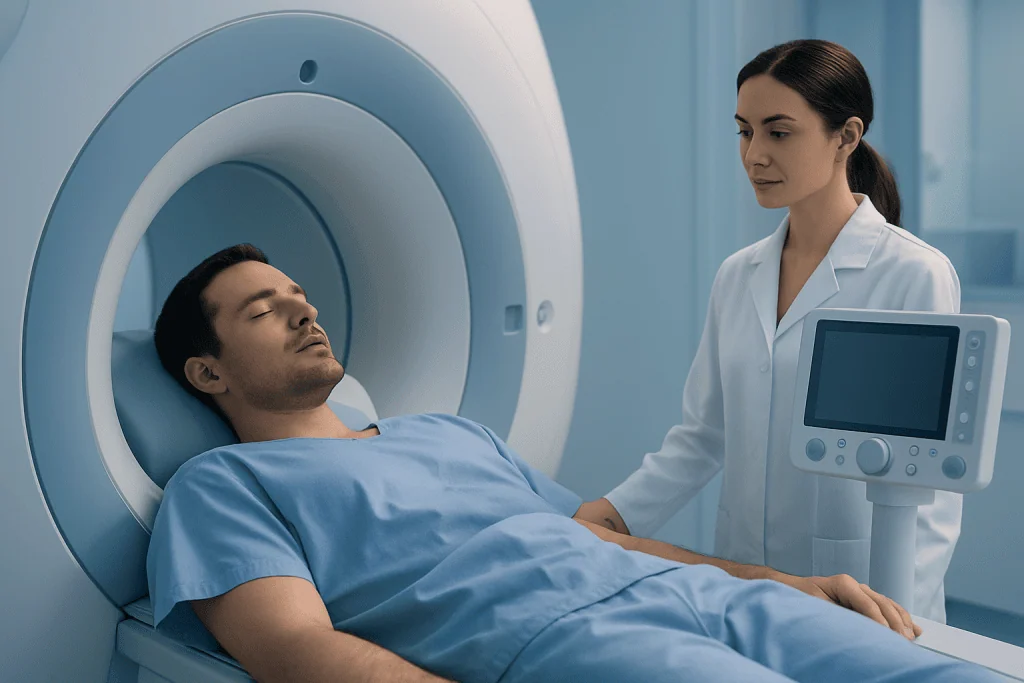
Healthcare also uses EM waves in important ways. X-rays are used to look at bones, lungs, and many internal structures. Mammography, fluoroscopy, and CT scans use ionizing radiation, while other tests such as MRI scans use magnetic fields and radiofrequency energy rather than ionizing X-rays. Ultrasound, although often discussed alongside imaging, is not an EM wave at all; it uses sound waves.
Treatment can also involve electromagnetic energy. Radiation therapy uses carefully targeted high-energy radiation to treat some cancers, while certain laser procedures use focused light for surgical or therapeutic purposes. In modern care, these tools are selected because their benefits can outweigh their risks when used appropriately and under professional supervision.
Diagnosis and treatment planning sometimes combine several technologies. For example, physicians may use PET-CT scanning in oncology evaluation, while interventional teams may rely on angiography and other imaging-guided techniques that use controlled radiation exposure for clear clinical reasons.
Understanding Risk, Safety, and Exposure Limits
Risk from EM waves is not simply about whether exposure exists; it is about dose and context. A low-level environmental exposure is different from prolonged occupational exposure, repeated medical imaging, or direct exposure to an intense source. This is why scientists and regulators focus on measurable limits, shielding, device standards, and appropriate use.
In medicine, teams follow the principle of using the lowest radiation dose needed to answer the clinical question. This may involve choosing an imaging test with no ionizing radiation when suitable, repeating scans only when medically necessary, and using protective measures for both patients and staff. Pregnant patients, children, and people who need frequent imaging often receive extra consideration because cumulative exposure matters more for them.
Patients can also take practical steps in daily life. Sun protection is one of the most important because UV exposure is common and clearly linked to health effects. Following product instructions, avoiding staring at bright light sources, using workplace protective equipment, and discussing any unusual exposure history with a doctor are all sensible measures.
- Use sunscreen, protective clothing, and shade to reduce UV exposure.
- Ask whether a scan is necessary and whether a non-ionizing alternative is appropriate.
- Follow workplace safety rules around lasers, radiation equipment, and industrial heat sources.
- Keep routine concern in perspective; not all EM exposure carries the same risk.
How Doctors Evaluate Possible EM Wave Exposure Problems
There is no single test for “EM wave exposure.” Evaluation depends on the source involved and the symptoms a person has. A doctor will usually ask about the type of exposure, when it happened, how long it lasted, whether protective equipment was used, and whether there were any immediate effects such as skin redness, eye pain, headache, or burns.
The physical examination is guided by the body systems most likely to be affected. For UV exposure, the focus may be on the skin and eyes. For suspected high-dose ionizing radiation exposure, clinicians may assess the skin, blood counts, and general symptoms, though these situations are uncommon and often linked to industrial, accidental, or treatment-related settings rather than everyday life.
Tests are chosen only when medically indicated. A skin examination may be appropriate for concerning UV damage, and an eye exam may be needed for pain, vision changes, or light sensitivity. If a person has persistent symptoms after significant exposure, doctors may coordinate care with dermatology, ophthalmology, occupational medicine, radiology, or oncology specialists depending on the concern.
Prevention, Self-Care, and When to Seek Medical Care
Prevention starts with understanding the source. For sunlight, practical protection includes sunscreen, sunglasses with UV protection, hats, and limiting strong midday exposure. At work, prevention may involve shielding, monitored exposure limits, eye protection, and formal training. For medical imaging, patients should keep a record of major scans and discuss benefits and risks openly with their care team.
Self-care after mild sun-related exposure may include cooling the skin, staying hydrated, and avoiding further UV exposure until the skin recovers. However, severe sunburn, blistering, eye pain, or symptoms that do not improve should be reviewed by a doctor. People should not self-diagnose radiation-related illness based only on general symptoms such as fatigue or headache, because many common conditions can cause the same complaints.
Medical care is important if a person has significant sunburn, a suspected burn from a strong heat or light source, vision changes after UV or laser exposure, or symptoms after a known industrial or medical radiation incident. Urgent assessment is also appropriate for chest pain, breathing difficulty, confusion, fainting, or severe skin injury, as these symptoms need prompt evaluation regardless of the cause.
Patients who need specialist evaluation may benefit from multidisciplinary care. Acibadem International’s JCI-accredited hospitals support international patients with coordinated assessment and treatment across radiology, dermatology, ophthalmology, oncology, and related specialties when concerns about EM-wave-related exposure or diagnosis arise.
Frequently asked questions
Are EM waves harmful to everyone?
Not all EM waves are harmful in the same way. Their effects depend on the type of wave, its energy, the intensity, and how long exposure lasts. Many everyday exposures are low level, while some forms such as excessive UV or unnecessary ionizing radiation deserve more caution.
What is the difference between ionizing and non-ionizing EM waves?
Non-ionizing EM waves, such as radio waves, microwaves, infrared, and visible light, generally do not carry enough energy to ionize atoms. Ionizing EM waves, such as X-rays and gamma rays, can damage cells at high enough doses. This is why ionizing radiation is used carefully in medicine.
Is sunlight an EM wave exposure?
Yes. Sunlight includes visible light, infrared, and ultraviolet radiation, all of which are part of the electromagnetic spectrum. UV is the component most closely linked to sunburn, skin aging, eye damage, and skin cancer risk over time.
Do medical scans using EM waves always pose a risk?
Medical scans are used because they can provide important information for diagnosis and treatment. Some, like X-rays and CT scans, use ionizing radiation and are ordered when the expected benefit outweighs the risk. Others, such as MRI, do not use ionizing radiation.
Can EM wave exposure cause symptoms right away?
Some exposures can cause immediate effects, depending on the source. Examples include sunburn after too much UV, eye irritation after intense light exposure, or tissue heating from unusually strong non-ionizing sources. Many routine daily exposures do not cause noticeable symptoms.
When should someone talk to a doctor about EM waves?
A doctor should be consulted if there has been a clear, significant exposure followed by symptoms such as skin injury, eye pain, vision changes, or ongoing concern after a workplace or medical incident. It is also reasonable to ask about prior imaging exposure when planning future scans. A clinician can help put the exposure into context and decide whether testing is needed.
References
- World Health Organization
- U.S. Food and Drug Administration
- Centers for Disease Control and Prevention
- International Commission on Non-Ionizing Radiation Protection
- International Atomic Energy Agency
This article is for general information only and is not a substitute for professional medical advice. Please consult a qualified doctor about your individual situation.
Explore treatments in Turkey — costs, top hospitals & a free quote
JCI-accredited · board-certified surgeons · reply within 24h

More from the Health Library



Related Specialists

Prof. Dr. Hakan Coşkun
Otorhinolaryngology
Assoc. Prof. Dr. Hikmet Aktaş
Liver Transplant Center
Dr. Nesrin Karakaya
Anesthesiology
Dr. Mustafa Barış Kemahli
Cardiovascular Surgery