Pedunculated — Explained by Medical Evidence, Not Myths

Pedunculated means a structure is attached by a narrow stalk or stem. The term can describe harmless skin tags as well as polyps or other tissue growths in different parts of the body.
Key Takeaways
- Pedunculated means a structure is attached by a narrow stalk or stem.
- The term can describe harmless skin tags as well as polyps or other tissue growths in different parts of the body.
- A pedunculated growth is not automatically dangerous, but it should be evaluated if it is new, bleeding, painful, fast-growing, or changing.
- Diagnosis usually depends on location and may include physical examination, imaging, endoscopy, or biopsy.
- Treatment ranges from simple monitoring to removal, depending on symptoms, size, appearance, and pathology results.
Pedunculated describes a growth, lesion, or polyp that is attached to nearby tissue by a narrow stalk. It is a descriptive medical term rather than a diagnosis, so the meaning depends on where the growth appears and what it is made of.
What pedunculated means in medicine
Pedunculated is a medical description, not a disease name. It refers to a growth, lump, or tissue structure that is attached to the surface beneath it by a narrow stalk, sometimes called a stem. This appearance can be seen on the skin, in the colon, inside the uterus, in the nose, or in other organs.
The word helps doctors describe shape. A pedunculated growth is different from a sessile one, which lies flatter and has a broad base. This difference matters because shape can affect symptoms, how a lesion is removed, and whether additional testing is needed.
Many pedunculated growths are benign. Common examples include skin tags and some types of polyps. However, because the term only describes form, not cause, a pedunculated lesion may also represent inflammation, overgrowth of normal tissue, or less commonly a precancerous or cancerous change.
For patients, the most helpful way to understand the term is this: pedunculated means “hanging by a stalk.” The next important question is what the growth actually is, where it is located, and whether it needs monitoring or treatment.
Where pedunculated growths can occur
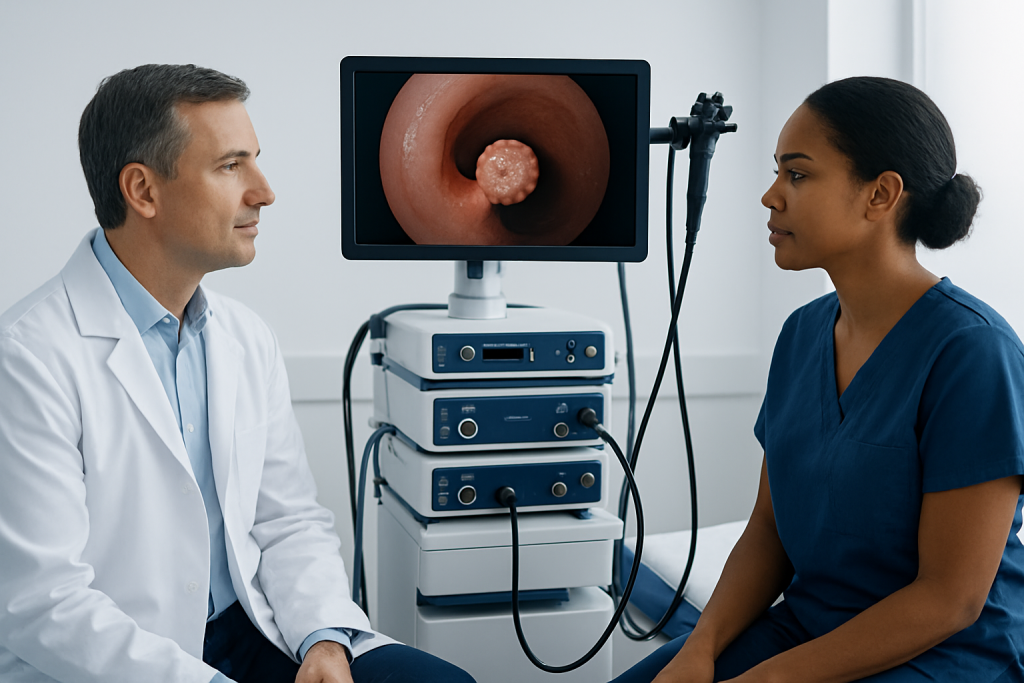
Pedunculated growths can appear in several parts of the body. On the skin, a soft, flesh-colored growth on a thin stalk is often a skin tag. In the digestive tract, a pedunculated polyp may be found during colonoscopy or upper endoscopy. In gynecology, some uterine fibroids can become pedunculated when they grow on a stalk from the uterus.
Doctors may also use the term when describing lesions in the nasal passages, mouth, bladder, gallbladder, or other organs. Because the same shape can occur in very different tissues, the medical significance varies. A pedunculated skin lesion and a pedunculated colon polyp are not evaluated in exactly the same way.
Examples of conditions in which this description may be used include:
- Skin tags and some benign skin growths
- colon polyps and colon cancer evaluation findings
- Pedunculated uterine fibroids
- Nasal or sinus polyps
- Certain benign tumors or inflammatory polyps
The location of the growth often determines which specialist is involved. A dermatologist may assess a skin lesion, while a gastroenterologist may evaluate a pedunculated polyp in the colon. This is why a clear diagnosis usually needs more than the descriptive word alone.
Symptoms and possible concerns

A pedunculated growth may cause no symptoms at all. Many are found incidentally during a skin check, routine examination, imaging test, or screening procedure. When symptoms do happen, they usually relate to size, location, or irritation of the stalk.
On the skin, a pedunculated lesion may rub against clothing or jewelry, leading to tenderness, twisting, swelling, or bleeding. In the digestive tract, a pedunculated polyp may occasionally cause bleeding, changes in bowel habits, anemia, or abdominal discomfort, although many polyps cause none of these problems.
Potential warning signs include:
- Bleeding without obvious injury
- Rapid growth or change in shape
- Persistent pain or repeated irritation
- Color change, ulceration, or crusting
- Symptoms related to blockage, such as nasal congestion or bowel symptoms
One concern with stalked growths is torsion, meaning the stalk twists and cuts off blood supply. This can happen with some skin lesions or pedunculated fibroids and may cause sudden pain or dark discoloration. Although not every pedunculated lesion is serious, new or changing growths should be assessed by a qualified doctor.
Causes and risk factors
The causes of pedunculated growths depend on the tissue involved. Skin tags are associated with friction, skin folds, age, weight, and sometimes insulin resistance. Colon polyps may develop because of age-related cell changes, family history, inflammatory conditions, smoking, alcohol use, obesity, or diet patterns. Fibroids arise from muscular tissue in the uterus and are influenced by hormones and genetics.
Some growths form because tissue simply overgrows in a localized way. Others arise from chronic irritation, inflammation, or changes in the lining of an organ. In a smaller number of cases, the growth reflects precancerous or cancerous change, which is why doctors may recommend removal or biopsy even when the lesion does not hurt.
Risk factors vary by setting but may include:
- Increasing age
- Family history of polyps, cancers, or fibroids
- Chronic friction or irritation
- Inflammation in the affected organ
- Metabolic risk factors such as obesity or diabetes
- Smoking and some lifestyle exposures
Because pedunculated is a shape-based term, it does not point to a single cause. Care focuses on identifying the exact type of growth and understanding whether it is harmless, likely to cause symptoms, or in need of closer follow-up.
How doctors diagnose a pedunculated lesion
Diagnosis starts with the lesion’s location, appearance, and clinical history. A doctor may ask when it first appeared, whether it has grown, and whether there has been pain, bleeding, discharge, weight loss, bowel changes, or other associated symptoms. Physical examination often gives important clues, especially for skin lesions.
Further testing depends on where the growth is found. Skin lesions may be examined with dermoscopy and sometimes removed for pathology. A colon polyp is usually identified and often removed during colonoscopy. Uterine or pelvic growths may be assessed with ultrasound or MRI, while nasal lesions may be examined with endoscopy.
Possible diagnostic tools include:
- Physical examination and medical history
- Dermoscopy for skin lesions
- Endoscopy or colonoscopy for digestive tract growths
- Ultrasound, CT, or MRI when internal anatomy needs assessment
- Biopsy or complete removal for microscopic examination
Pathology is often the key step when there is uncertainty. Looking at tissue under the microscope helps determine whether the lesion is benign, inflammatory, precancerous, or malignant. This result guides whether observation is enough or whether additional treatment is needed.
Treatment options and what they depend on
Treatment is based on the diagnosis rather than the word pedunculated itself. Some harmless lesions can simply be observed, especially if they are small, stable, and not causing symptoms. Others are removed because they bleed, get irritated, affect function, raise cosmetic concerns, or carry a risk of future problems.
For skin lesions, treatment may include simple office removal using sterile techniques. For colon polyps, removal during colonoscopy is common because it both confirms the diagnosis and can help prevent future disease. If a lesion appears suspicious, a doctor may recommend excision, biopsy, or additional imaging before choosing the best approach.
In some cases, treatment addresses an underlying condition rather than just the visible growth. For example, if a pedunculated uterine fibroid causes bleeding or pressure symptoms, management may range from monitoring to medication or myomectomy. If a lesion is found to be cancerous, care may involve surgery and other therapies tailored to the specific diagnosis, such as evaluation through colon cancer treatment.
Patients should avoid trying to cut off or tie off a growth at home. Self-removal can lead to bleeding, infection, incomplete removal, and delay in diagnosing a lesion that needs medical attention. A clinician can decide whether watchful waiting or removal is safest.
Self-care, prevention, and follow-up
There is no single way to prevent all pedunculated growths because they have different causes. Still, general health habits can lower risk for some of the conditions in which they occur. These include maintaining a healthy weight, avoiding smoking, following recommended cancer screening, and seeking care for persistent symptoms rather than ignoring them.
For skin growths, reducing repeated friction may help in people prone to skin tags, although it does not prevent every case. For colon polyps, routine screening is important because many cause no symptoms and can be removed before they become more serious. Patients with a personal or family history of polyps may need earlier or more frequent follow-up based on medical advice.
Helpful self-care steps include:
- Do not pick, twist, or cut a growth
- Keep irritated skin lesions clean and protected from friction
- Attend recommended follow-up after removal or biopsy
- Report any recurrence, bleeding, or rapid change
- Keep up with age-appropriate screening tests
When specialty care is needed, multidisciplinary assessment can be useful, especially for internal lesions or uncertain pathology. Near the end of the care pathway, patients may benefit from centers with coordinated imaging, endoscopy, pathology, and surgical services. Acibadem International’s multidisciplinary specialists and JCI-accredited hospitals diagnose and treat these conditions for international patients.
When to seek medical care
Medical review is appropriate for any new growth that is unexplained, especially if it persists or changes over time. Even when a pedunculated lesion looks harmless, a clinician can help determine whether it is a simple skin tag, a polyp, a fibroid, or another condition that needs monitoring or removal.
Patients should seek prompt care if the growth bleeds repeatedly, becomes painful, turns dark, enlarges quickly, or interferes with normal function. Internal symptoms such as rectal bleeding, unexplained anemia, change in bowel habits, pelvic pressure, or ongoing nasal blockage also deserve assessment.
Urgent evaluation is especially important when there are signs such as:
- Heavy bleeding
- Severe or sudden pain
- Blackening or twisting of the stalk
- Fever or signs of infection
- Weight loss or other unexplained systemic symptoms
When in doubt, it is safest not to assume a stalked lesion is benign based on appearance alone. Timely medical advice can clarify the diagnosis, relieve symptoms, and identify the small number of cases that need more specialized treatment.
Frequently asked questions
What does pedunculated mean?
Pedunculated means attached by a narrow stalk or stem. Doctors use the term to describe the shape of a growth, polyp, or lesion rather than to name a specific disease.
Is a pedunculated growth always cancerous?
No. Many pedunculated growths are benign, such as skin tags or some polyps. However, because the term only describes appearance, some lesions still need biopsy or removal to confirm what they are.
What is the difference between pedunculated and sessile?
A pedunculated lesion hangs from a stalk, while a sessile lesion has a broader base and sits flatter against the tissue. This distinction can affect how a doctor removes it and how it is monitored.
Can a pedunculated polyp be removed during a colonoscopy?
Often, yes. Many pedunculated colon polyps can be removed during colonoscopy, which allows both treatment and tissue testing. The exact approach depends on the size, location, and appearance of the polyp.
Should a pedunculated skin lesion be removed?
Not always. If it is clearly benign and not bothersome, a doctor may recommend monitoring. Removal may be suggested if it catches on clothing, bleeds, causes discomfort, changes in appearance, or is uncertain in diagnosis.
Can a pedunculated lesion twist or lose blood supply?
Yes, in some cases the stalk can twist, a problem called torsion. This may cause sudden pain, swelling, or dark discoloration and should be assessed promptly by a medical professional.
References
- American Cancer Society
- National Cancer Institute
- American Academy of Dermatology
- American College of Gastroenterology
- Mayo Clinic
This article is for general information only and is not a substitute for professional medical advice. Please consult a qualified doctor about your individual situation.
Persistent digestive symptoms? Get evaluated in Turkey
JCI-accredited · board-certified surgeons · reply within 24h