Bump Under Eyelid — Explained by Medical Evidence, Not Myths

A bump under eyelid is commonly a chalazion, stye, cyst, or irritation of an eyelid gland. Pain, redness, and tenderness suggest active inflammation or infection, while a firm painless lump often suggests a blocked gland.
Key Takeaways
- A bump under eyelid is commonly a chalazion, stye, cyst, or irritation of an eyelid gland.
- Pain, redness, and tenderness suggest active inflammation or infection, while a firm painless lump often suggests a blocked gland.
- Warm compresses may help many simple eyelid bumps, but squeezing or popping them can worsen the problem.
- Medical care is important if the bump lasts more than a few weeks, affects vision, keeps returning, or is associated with significant swelling or fever.
- Diagnosis is usually based on an eye examination, and treatment depends on the underlying cause.
A bump under eyelid is usually caused by a blocked oil gland, inflammation, or a small infection rather than a dangerous eye disease. Many eyelid bumps improve with warm compresses and gentle eyelid care, but some need an eye specialist’s evaluation and treatment.
Overview: what a bump under eyelid usually means
A bump under eyelid usually means there is a small blocked gland, local inflammation, or less commonly an infection involving the eyelid. In many people, the cause is benign and treatable, especially when the bump is small and vision remains normal. The most common explanations are a chalazion, which develops from a blocked oil gland, and a stye, which is a tender inflamed bump that may involve infection.
People often use the same phrase for several different problems, so the exact location matters. A bump can form on the inner surface of the eyelid, within the lid tissue, or along the eyelash line. It may feel like a pea-sized lump, a sore spot, or a subtle area of swelling that becomes more noticeable when blinking.
Although online advice often treats all eyelid lumps as the same, they are not identical. Some resolve with simple home care, while others need medical assessment to confirm the diagnosis and rule out other conditions. A careful, evidence-based approach focuses on the bump’s duration, pain level, appearance, and whether there are symptoms such as discharge, eyelid crusting, or changes in vision.
Common causes of an eyelid bump
A chalazion is one of the most common reasons for a bump under eyelid. It happens when a meibomian gland, which normally produces oil to protect the eye surface, becomes blocked. This often creates a firm, rounded lump inside the eyelid or deeper in the lid tissue. It may start with mild tenderness but often becomes painless over time.
A stye, also called a hordeolum, usually causes a red, tender, localized swelling. It may form near the base of an eyelash or deeper inside the eyelid and can feel sore to the touch. Because styes and chalazia can look similar early on, a painful bump may later settle into a more chronic blocked gland.
Other possible causes include small cysts, inflammation from blepharitis, contact lens irritation, allergic reactions, or skin conditions such as rosacea or seborrheic dermatitis that affect the eyelids. Less often, a bump can be related to trauma, foreign material, or a growth that needs specialist assessment. Recurrent or unusual eyelid lumps deserve a closer look, especially if they bleed, distort the eyelid, or keep returning in the same place.
- Chalazion: blocked oil gland, often firm and less painful
- Stye: inflamed or infected gland, usually tender and red
- Cyst: smooth lump that may slowly enlarge
- Blepharitis-related swelling: linked to eyelid margin inflammation
- Allergic or irritative swelling: often itchy or associated with redness
Symptoms and signs that help tell the difference

The way a bump feels can offer useful clues. A painful, warm, red bump often suggests a stye or acute inflammation. A painless, firm bump that has been present for days to weeks more often fits a chalazion. Some people notice a sensation of pressure, heaviness, or mild discomfort when blinking rather than sharp pain.
Associated symptoms also matter. Tearing, crusting around the lashes, sensitivity of the eyelid margin, and mild eye irritation may point to underlying eyelid inflammation. If the bump is larger, it can press on the eye surface and temporarily blur vision or cause a sense that something is in the eye.
Symptoms that are less typical for a simple blocked gland include marked vision loss, severe light sensitivity, pain deep in the eye, rapidly spreading swelling, or significant discharge. These features suggest that the problem may not be just a routine eyelid bump and should be evaluated promptly. In some cases, an eyelid lump can appear together with broader eye inflammation such as conjunctivitis, though these are different conditions.
Risk factors and why eyelid bumps recur
Some people are more prone to developing a bump under eyelid because their oil glands block more easily or their eyelids are chronically inflamed. This is common in blepharitis, rosacea, and conditions that thicken the oily secretions of the eyelid glands. Poor eyelid hygiene is not the only reason these bumps occur, and recurrence does not mean a person has done something wrong.
Use of eye makeup, incomplete makeup removal, frequent eye rubbing, and contact lens wear can sometimes contribute to irritation or blockage. Dry eye disease may also coexist, because the meibomian glands help maintain a healthy tear film. Inflammatory skin conditions and a history of previous styes or chalazia make recurrence more likely.
Children and adults can both develop eyelid bumps. In children, repeated rubbing, minor infections, or gland blockage may play a role. In adults, persistent or repeatedly recurring lumps, especially in the same spot, should be assessed to make sure they are not masking a less common underlying problem.
How doctors diagnose a bump under eyelid
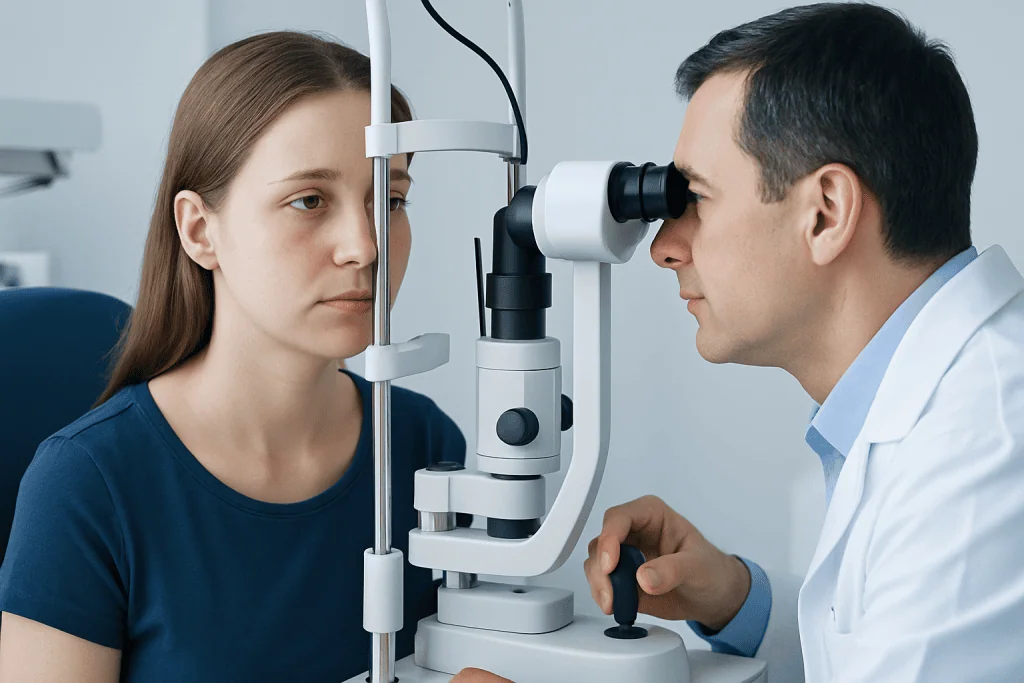
Diagnosis usually starts with a clinical eye examination. A doctor asks when the bump appeared, whether it hurts, whether it has changed size, and whether there are symptoms such as discharge, fever, or visual disturbance. The eyelid is then examined from the outside and sometimes by gently everting the lid to look at the inner surface.
In many cases, no special testing is needed because the appearance is typical of a chalazion or stye. The doctor may also check the eyelid margins, tear film, and surrounding eye structures to look for blepharitis, dry eye, or signs of a wider infection. If there is concern about a persistent, atypical, or recurrent lesion, referral to an ophthalmologist is appropriate.
Occasionally, additional evaluation is needed if the diagnosis is uncertain or the bump does not improve as expected. This is particularly important when the lump repeatedly returns in one area, has irregular borders, causes lash loss, or has an unusual surface. In such situations, specialist assessment helps distinguish a common eyelid bump from more complex eyelid disease.
Treatment options: from home care to specialist procedures
Treatment depends on the cause. For many simple eyelid bumps, a warm compress applied gently to the closed eyelid several times a day can help soften thickened oil and encourage drainage. Gentle eyelid hygiene may also support recovery, especially when blepharitis is contributing. It is best not to squeeze, puncture, or aggressively massage the lump, because this can irritate the eyelid or spread infection.
If the bump is painful, inflamed, or associated with notable redness, a doctor may recommend targeted treatment based on the findings. That may include medication for infection or inflammation, along with advice on eyelid care. Some persistent chalazia do not clear on their own and may need a minor in-office procedure such as chalazion surgery to drain or remove the blocked material.
When there is ongoing eyelid gland dysfunction, treatment may also focus on the underlying cause to reduce recurrence. Managing associated dry eye or lid inflammation can be part of this plan, and some patients benefit from a broader eye examination to evaluate the tear film, eyelid margins, and overall eye health. If surgery is considered, the decision is based on size, duration, symptoms, and whether the diagnosis is clear.
For international patients who need specialist assessment, Acibadem International’s multidisciplinary eye specialists in JCI-accredited hospitals diagnose and treat eyelid conditions with an individualized plan.
Self-care and prevention
Preventing future eyelid bumps often centers on reducing gland blockage and eyelid irritation. Regular eyelid hygiene may be helpful for people who have crusting along the lashes, recurrent chalazia, or chronic blepharitis. A clinician can advise the safest method, but in general this involves gentle cleaning rather than harsh rubbing.
Warm compresses may also be used preventively in people who frequently develop blocked glands, especially if recommended by an eye doctor. Contact lenses should be used carefully and cleaned as instructed, and eye makeup should be removed fully before sleep. Shared makeup and expired eye products should be avoided.
General skin and eye health matters too. Treating rosacea, controlling dandruff-like skin conditions, and managing dry eye may lower the chance of recurrence. People who repeatedly experience eyelid swelling or irritation should seek a professional evaluation rather than relying only on home remedies.
- Keep hands away from the eyes when possible
- Remove makeup gently every day
- Do not share eye cosmetics
- Replace old eye makeup regularly
- Follow contact lens hygiene instructions closely
When to seek medical care
Medical care is appropriate if a bump under eyelid does not improve within a few weeks, becomes larger, or keeps returning. An eye specialist should also assess any bump that affects vision, causes significant eyelid distortion, or produces persistent discomfort. Early evaluation can help confirm whether the bump is a chalazion, a stye, or another eyelid condition that needs a different approach.
Prompt medical attention is important if there is severe pain, fever, rapidly increasing redness or swelling, spreading skin tenderness, or trouble opening the eye. These features can suggest a more significant infection or inflammation beyond a simple blocked gland. New visual changes, marked light sensitivity, or pain inside the eye also deserve urgent review.
A persistent, unusual, or recurrent eyelid lump should not be ignored, especially in older adults. In these cases, doctors may recommend specialist care through ophthalmology services to examine the eyelid closely and decide whether further treatment or testing is needed.
Frequently asked questions
Is a bump under eyelid usually serious?
Most bumps under the eyelid are not serious and are commonly caused by a blocked oil gland or a stye. However, a persistent, unusual, or recurrent lump should be checked by a qualified doctor, especially if it changes vision or appearance.
How can someone tell the difference between a chalazion and a stye?
A stye is usually more painful, red, and tender, especially early on. A chalazion often feels firmer and may become painless as it settles into a blocked gland. Because they can overlap, an eye examination may be needed if the diagnosis is unclear.
Can a bump under eyelid go away on its own?
Yes, many simple eyelid bumps improve over time, especially with warm compresses and gentle eyelid care. Still, some persist for weeks or months and may require medical treatment or a minor procedure.
Should an eyelid bump be squeezed or popped?
No. Squeezing or popping an eyelid bump can worsen inflammation, irritate delicate tissue, and potentially spread infection. It is safer to use warm compresses and seek medical advice if the bump is not improving.
When should someone worry about an eyelid lump?
A person should seek medical care if the lump is very painful, causes fever, grows quickly, affects vision, or keeps coming back. Concern is also appropriate if the lesion has an unusual shape, bleeds, causes loss of eyelashes, or does not improve after several weeks.
Are recurrent eyelid bumps linked to other conditions?
Yes, repeated eyelid bumps can be associated with blepharitis, rosacea, dry eye, or meibomian gland dysfunction. Treating the underlying eyelid or skin condition may help reduce recurrences.
References
- American Academy of Ophthalmology
- National Eye Institute
- Mayo Clinic
- Merck Manual Professional Edition
This article is for general information only and is not a substitute for professional medical advice. Please consult a qualified doctor about your individual situation.
Explore treatments in Turkey — costs, top hospitals & a free quote
JCI-accredited · board-certified surgeons · reply within 24h

More from the Health Library



Related Specialists

Asst. Prof. Dr. Tarkan İkizoğlu
Pediatrics
Assoc. Prof. Dr. Emrullah Hayta
Physical Medicine & Rehabilitation
Deniz Beyza Kılıç
Physical Medicine & Rehabilitation
Dr. Fatma Seçil Kirdök
Gastroenterology