Blepharitis
Blepharitis is eyelid inflammation causing redness, crusting and irritation. Learn symptoms, causes, diagnosis and treatment options.
Quick answer
Blepharitis is inflammation of the eyelid margins that can cause redness, irritation, crusting, and a gritty feeling in the eyes. Treatment focuses on careful eyelid hygiene, artificial tears, and medicines such as antibiotic or anti-inflammatory drops or ointments when needed, with evaluation by Acibadem specialists in Turkey to identify contributing causes and plan care.
What is blepharitis?
Blepharitis is inflammation of the eyelids, most often affecting the edges of the eyelids where the eyelashes grow. The word comes from the Greek term “blepharon,” meaning eyelid, and the suffix “-itis,” meaning inflammation. In everyday terms, blepharitis makes the eyelid margins red, swollen, irritated, and often crusty or flaky, especially around the base of the lashes. For anyone asking “what is blepharitis,” the simplest answer is this: it is a common, usually chronic (long-lasting) eyelid condition that causes discomfort and irritation but rarely causes permanent damage to sight when it is managed appropriately.
Blepharitis is one of the most frequent reasons people visit an eye specialist. It can affect people of any age, from children to older adults, and it occurs in both men and women. It is often a long-term condition that flares up from time to time rather than an infection that appears once and disappears for good. Many people live with mild blepharitis for years, sometimes without realizing there is a specific name for their symptoms.
Doctors often divide blepharitis into two main types based on where the inflammation sits:
- Anterior blepharitis affects the outer front edge of the eyelid, where the eyelashes attach. It is commonly linked to bacteria on the skin or to a skin condition called seborrheic dermatitis (a flaky, dandruff-like skin problem).
- Posterior blepharitis affects the inner edge of the eyelid, the part that touches the eye. It usually involves the meibomian glands (tiny oil-producing glands inside the eyelid that help keep the tear film stable). When these glands become blocked or work poorly, doctors may call this meibomian gland dysfunction.
Many people have features of both types at the same time. Blepharitis is not contagious, meaning you cannot pass it to another person through contact.
Symptoms of blepharitis
Blepharitis symptoms tend to affect both eyes and are often worse in the morning, after crusts and debris have built up along the lash line overnight. Symptoms typically come and go, with quieter periods followed by flare-ups. Common blepharitis symptoms include:
- Red, swollen, or irritated eyelid edges
- Itching or burning of the eyelids
- Crusts, flakes, or greasy scales at the base of the eyelashes, especially on waking
- A gritty or sandy feeling, as if something is in the eye
- Watery eyes, or the opposite, a dry and scratchy feeling
- Eyelids that stick together in the morning
- Sensitivity to light in some cases
- Blurry vision that often improves with blinking
- Frequent styes (painful lumps caused by a blocked, infected gland) or chalazia (firm, usually painless lumps from a blocked oil gland)
The pattern of symptoms can differ depending on the type. In anterior blepharitis, crusting and flaking at the lash roots are usually the most noticeable features, and the lashes may look matted or misdirected. In long-standing cases, lashes can thin out, fall out, or grow in the wrong direction. In posterior blepharitis, symptoms often center on the eye’s surface: dryness, burning, fluctuating vision, and foam or oily debris in the tear film, because the blocked meibomian glands no longer supply the oil that stops tears from evaporating too quickly.
In early or mild disease, symptoms may be limited to occasional itching and slight redness. In more advanced or chronic disease, the eyelid margin can become thickened, notched, or scarred, and the surface of the eye (the cornea and conjunctiva) may become inflamed as well. If the cornea, the clear front window of the eye, becomes involved, pain, marked light sensitivity, and reduced vision can develop, and this needs prompt medical attention.
Causes and risk factors
There is usually no single cause of blepharitis. Instead, several factors often combine, which is one reason the condition tends to be chronic. Recognized blepharitis causes and contributing factors include:
- Bacterial overgrowth: Bacteria that normally live harmlessly on the skin, especially staphylococcal species, can multiply along the lash line and trigger inflammation. The bacteria themselves and the substances they release can irritate the eyelid.
- Seborrheic dermatitis: This common skin condition causes flaky, greasy scaling of the scalp (dandruff), eyebrows, and face, and it frequently involves the eyelids as well.
- Meibomian gland dysfunction: When the oil glands inside the eyelid become blocked or produce thickened, poor-quality oil, the eyelid margin becomes inflamed and the tear film becomes unstable, causing dry eye symptoms.
- Rosacea: This chronic skin condition, which causes facial redness and visible blood vessels, is strongly associated with posterior blepharitis and meibomian gland problems. Eye involvement in rosacea is sometimes called ocular rosacea.
- Demodex mites: These microscopic mites live in hair follicles, including eyelash follicles, in many people. In some individuals they multiply excessively and contribute to eyelid inflammation, often producing distinctive cylindrical dandruff-like sleeves around the lash bases.
- Allergies and irritants: Reactions to eye makeup, contact lens solutions, or certain eye drops can inflame the eyelids in some people.
Risk factors that make blepharitis more likely or more persistent include older age, dandruff or oily skin, rosacea, dry eye disease, diabetes, contact lens wear, and inconsistent eyelid or makeup hygiene. Importantly, blepharitis is not caused by poor personal cleanliness in the everyday sense; even people with excellent hygiene can develop it. However, regular eyelid cleaning is a central part of keeping it under control.
Diagnosis
Blepharitis diagnosis is usually clinical, meaning it is based on your symptoms and what the doctor sees during an eye examination, rather than on laboratory tests or imaging. An ophthalmologist (a medical doctor specializing in eye care) or another qualified eye care professional will typically:
- Take a medical history: The doctor will ask about your symptoms, how long you have had them, whether they come and go, and whether you have related conditions such as rosacea, dandruff, allergies, or dry eyes. Questions about contact lens wear and cosmetic use are also common.
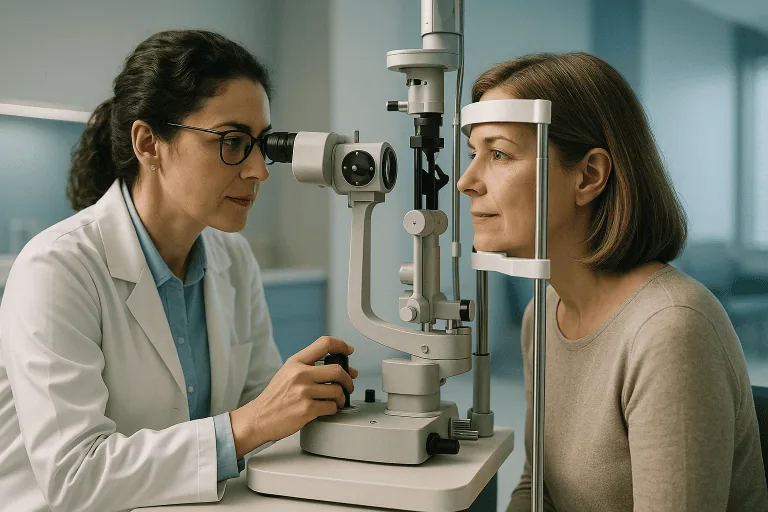
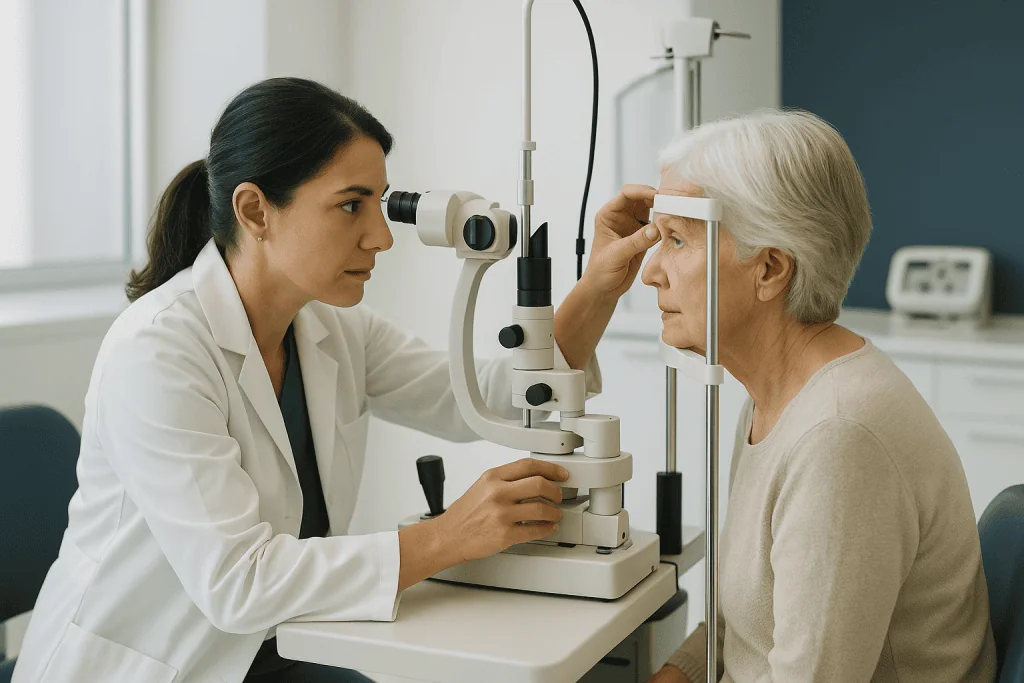
- Examine the eyelids and eyes with a slit lamp: A slit lamp is a special microscope with a bright light that lets the doctor examine the eyelid margins, eyelashes, meibomian gland openings, tear film, and the surface of the eye in fine detail. This examination usually shows the redness, crusting, gland blockage, or debris typical of blepharitis and helps identify the type.
- Assess the tear film: Because blepharitis and dry eye often occur together, the doctor may check how quickly your tears evaporate or use gentle dye drops to highlight dry or damaged areas on the eye’s surface.
In most cases, no further testing is needed. In selected situations, the doctor may take a swab of eyelid secretions to look for bacteria, examine plucked eyelashes under a microscope to check for Demodex mites, or, rarely, take a small tissue sample (biopsy) if an eyelid abnormality does not respond to treatment or looks unusual, in order to rule out other conditions. Some clinics also use specialized imaging of the meibomian glands, though this is not required to make the diagnosis. In hospital settings such as Acibadem, blepharitis is evaluated and managed within the ophthalmology department.
Treatment options for blepharitis
There is currently no single cure that permanently eliminates blepharitis in most people. Instead, blepharitis treatment aims to control inflammation, relieve symptoms, and prevent flare-ups and complications. Because the condition is usually chronic, ongoing daily care is generally more important than any single medication or procedure. Treatment is typically stepped, starting with simple measures and adding others if needed.
Eyelid hygiene: the foundation of treatment
Consistent eyelid hygiene is the mainstay of care for nearly all forms of blepharitis. A typical routine, which your doctor can tailor to you, includes:
- Warm compresses: Applying a clean, comfortably warm compress to closed eyelids for several minutes helps soften crusts and loosen the thickened oil in blocked meibomian glands.
- Gentle eyelid massage: After warming, lightly massaging the eyelids toward the lash line can help express oil from the glands. Your doctor can show you the correct technique.
- Lid cleansing: Gently cleaning the eyelid margins with diluted baby shampoo, a doctor-recommended lid cleanser, or pre-moistened eyelid wipes removes crusts, debris, and excess bacteria.
Many people notice meaningful improvement with this routine alone, though it usually takes several weeks of consistent daily care, and symptoms often return if the routine is stopped.
Medications
When hygiene measures are not enough, your doctor may add medication:
- Topical antibiotics: Antibiotic ointments or drops applied to the eyelid margins may be used for a limited period to reduce bacterial overgrowth, particularly in anterior blepharitis.
- Oral antibiotics: For posterior blepharitis or blepharitis linked to rosacea, doctors sometimes prescribe certain oral antibiotics for weeks to months. At the doses used, these medicines act partly by reducing inflammation and improving the quality of gland oil, not only by killing bacteria.
- Anti-inflammatory drops or ointments: Short courses of steroid eye drops or ointments may be prescribed for significant inflammation. These are used cautiously and under supervision, because long-term steroid use can raise eye pressure or cause other side effects.
- Artificial tears: Lubricating drops can relieve the dryness and grittiness that often accompany blepharitis.
- Treatments for Demodex mites: If mites are contributing, your doctor may recommend specific cleansers or treatments, such as products containing tea tree oil derivatives, used according to professional guidance.
In-office procedures
For persistent meibomian gland dysfunction, some clinics offer in-office procedures, such as professional expression of blocked glands, thermal treatments that warm and clear the glands, or microblepharoexfoliation (a professional deep cleaning of the eyelid margin). Evidence and availability vary, and your doctor can advise whether any of these are appropriate for you. Surgery is not a treatment for blepharitis itself, although a chalazion (a persistent blocked-gland lump) that does not settle may occasionally be treated with a minor procedure.
Blepharitis is generally managed by eye specialists; you can read more about the relevant specialty on the ophthalmology department page. Because blepharitis often coexists with skin conditions such as rosacea or seborrheic dermatitis, treating the underlying skin problem, sometimes with the help of a dermatologist (skin specialist), can also improve eyelid symptoms.
Living with blepharitis and outlook
For most people, blepharitis is a manageable long-term condition rather than a threat to sight. The outlook is generally good when eyelid hygiene is maintained: symptoms often become mild or barely noticeable, though flare-ups can still occur, particularly during periods of stress, illness, dry weather, or lapses in the care routine. It is honest to say that blepharitis rarely disappears permanently, so the goal for many patients is long-term control rather than a one-time cure.
Practical steps that often help in daily life include:
- Keeping up your eyelid hygiene routine even when symptoms are quiet, since stopping often leads to relapse
- Removing eye makeup thoroughly every day and replacing eye cosmetics regularly, and avoiding sharing them
- Pausing contact lens wear during flare-ups if your doctor advises it
- Managing related conditions such as dandruff, rosacea, and dry eye
- Avoiding rubbing your eyes, which can worsen irritation
- Using a humidifier or taking regular screen breaks if dryness is a problem, since blinking less during screen use can worsen symptoms
Complications are uncommon with good management but can include recurrent styes and chalazia, eyelash loss or misdirection, eyelid margin scarring, and, in more severe cases, inflammation of the cornea that can affect vision. Regular follow-up with your eye doctor helps catch and treat these problems early. No routine or treatment can guarantee that blepharitis will never return, but most people achieve comfortable, well-controlled eyes with consistent care.
Frequently asked questions
What is blepharitis in simple terms?
Blepharitis is inflammation of the eyelid edges, usually where the eyelashes grow. It makes the lids red, itchy, and crusty and often causes a gritty or burning feeling in the eyes. It is very common, is not contagious, and usually affects both eyes. It tends to be a long-term condition that flares up from time to time rather than a one-off infection.
Can blepharitis go away on its own?
Mild flare-ups sometimes settle without treatment, but blepharitis is usually a chronic condition, and in many cases symptoms return without ongoing eyelid care. Most people find that a daily routine of warm compresses and gentle lid cleaning keeps symptoms under control, while stopping the routine often allows symptoms to come back. Your doctor can advise on a routine suited to your situation.
How serious is blepharitis? Can it damage my vision?
Blepharitis is uncomfortable but is rarely serious. It does not usually cause permanent vision loss. However, if it is left uncontrolled for a long time, it can occasionally lead to complications such as corneal inflammation, eyelid scarring, or repeated styes, and severe corneal involvement can affect vision. Prompt evaluation of any eye pain, marked light sensitivity, or vision change is important.
What is the best treatment for blepharitis?
There is no single best blepharitis treatment for everyone. The foundation for most people is daily eyelid hygiene: warm compresses, gentle massage, and cleansing of the lid margins. Depending on the type and severity, your doctor may add antibiotic ointments or drops, a course of oral antibiotics, short-term anti-inflammatory medication, artificial tears, or, in selected cases, in-office gland treatments. Consistency over weeks to months usually matters more than any single product.
Is blepharitis contagious or caused by poor hygiene?
No. Blepharitis is not contagious, so you cannot catch it from or pass it to another person. It is also not a sign of poor personal cleanliness; it results from a combination of factors such as skin conditions, gland dysfunction, and the normal bacteria and mites that live on everyone’s skin. That said, regular eyelid cleaning is one of the most effective ways to keep it controlled.
How long does it take for blepharitis to improve with treatment?
Improvement is usually gradual. Many people begin to notice relief after a few weeks of consistent eyelid hygiene, though some cases take longer, especially when the meibomian glands are involved or when rosacea or Demodex mites are contributing. Because the condition is chronic, ongoing maintenance is generally needed even after symptoms improve. If you see no benefit after several weeks, your doctor may adjust the treatment plan.
Can I wear contact lenses or eye makeup with blepharitis?
Often yes, but with care. During active flare-ups, doctors frequently recommend pausing contact lens wear and minimizing eye makeup until the inflammation settles, since both can worsen irritation. When symptoms are controlled, many people return to lenses and cosmetics, taking care to remove makeup completely each day, replace eye products regularly, and follow good lens hygiene. Ask your eye doctor what is appropriate for you.
When to see a doctor
You should arrange a routine appointment with an eye care professional if you have persistent eyelid redness, crusting, itching, or grittiness that does not improve with gentle eyelid hygiene after a couple of weeks, or if you keep getting styes or eyelid lumps. Seek medical attention promptly, on the same day if possible, if you experience any of the following red-flag warning signs:
- Eye pain that is more than mild irritation, or pain that is getting worse
- Reduced or blurred vision that does not clear with blinking
- Marked sensitivity to light
- Intense redness of the eye itself, not just the eyelid margin
- Spreading redness, warmth, or swelling of the eyelid or surrounding skin, especially with fever, which can indicate a deeper infection needing urgent treatment
- An eyelid lump that grows steadily, bleeds, ulcerates, or does not heal, since rare eyelid tumors can occasionally resemble chronic blepharitis
- Symptoms in only one eye that are severe or rapidly worsening
These features are not typical of ordinary blepharitis and may point to another condition that needs different treatment. A timely examination allows your doctor to confirm the diagnosis, rule out other causes, and adjust your care plan so that your eyes stay as comfortable and healthy as possible.
Medically reviewed by the Acıbadem International Medical Board September 2, 2026
See our medical review board →
Update history
- PublishedJune 8, 2026
- Medical review approvedSeptember 2, 2026
- Last content updateSeptember 2, 2026