Dry Eye Disease
Dry Eye Disease symptoms, causes and treatment options explained in patient-friendly language, including diagnosis and when to see an ophthalmologist.
Quick answer
Dry eye disease is a common condition in which the eyes do not make enough tears or the tears evaporate too quickly, leading to irritation, burning, blurred vision, and discomfort. At Acibadem in Turkey, dry eye disease is evaluated with a detailed eye examination and tear function tests, and treatment is tailored to the cause with options such as lubricating…
What is dry eye disease?
Dry eye disease is a common, long-lasting condition in which the eyes do not stay properly lubricated. This happens either because the eyes do not produce enough tears, or because the tears they do produce evaporate too quickly or are of poor quality. When the tear film, the thin layer of moisture that coats the front surface of the eye, becomes unstable, the surface of the eye can become irritated and, over time, inflamed or damaged.
Many people ask what is dry eye disease and how it differs from ordinary, occasional eye dryness. The key difference is persistence. Almost everyone experiences temporary dryness now and then, after a long day at a computer screen, on an airplane, or in windy weather. Dry eye disease, by contrast, is an ongoing condition in which symptoms occur regularly and the tear film is chronically unstable. Doctors sometimes call it keratoconjunctivitis sicca, a term that simply means inflammation of the cornea (the clear front window of the eye) and conjunctiva (the thin membrane covering the white of the eye) due to dryness.
Dry eye disease can affect people of any age, but it becomes more common with advancing age, particularly after age 50. It affects women more often than men, in part because hormonal changes, such as those during pregnancy, while using certain contraceptives, or after menopause, can influence tear production. People who spend long hours on digital screens, contact lens wearers, and people with certain autoimmune conditions are also affected more often. The condition is usually managed by an eye doctor within an ophthalmology department.
Symptoms of dry eye disease
Dry eye disease symptoms can vary from person to person and often fluctuate during the day. Somewhat counterintuitively, watery eyes can be a symptom too: when the eye surface is irritated, it may trigger a flood of reflex tears that are poor in quality and do not actually lubricate the eye well.
Common dry eye disease symptoms include:
- A stinging, burning, or scratchy sensation in the eyes
- A gritty feeling, as if sand or a foreign object is in the eye
- Redness of the eyes
- Watery eyes, caused by reflex tearing in response to irritation
- Stringy mucus in or around the eyes
- Sensitivity to light (photophobia)
- Blurred vision that often improves briefly after blinking
- Eye fatigue, especially after reading or screen use
- Difficulty wearing contact lenses comfortably
- Difficulty driving at night or in bright conditions
Symptoms often depend on the underlying type of dry eye. In aqueous-deficient dry eye, where the lacrimal glands (the glands that produce the watery part of tears) do not make enough fluid, people often describe a constant dryness and grittiness. In evaporative dry eye, which is more common and is usually linked to problems with the meibomian glands (small oil-producing glands along the eyelid edges), symptoms often worsen in wind, low humidity, or air-conditioned environments, and burning or fluctuating vision may be more prominent. Many people have a mixture of both types.
In early or mild stages, symptoms may come and go and appear mainly after triggers such as prolonged screen use. In more advanced stages, discomfort can become constant, vision may fluctuate throughout the day, and the surface of the eye can develop small areas of damage that an eye doctor can see during an examination. Severe, untreated dry eye disease can, in some cases, lead to complications such as corneal ulcers (open sores on the cornea) or scarring, which is one reason persistent symptoms deserve medical attention.
Causes and risk factors
A healthy tear film has three main components: an oily outer layer that slows evaporation, a watery middle layer that hydrates the eye, and a mucus inner layer that helps tears spread evenly. Dry eye disease causes generally fall into two groups: the eyes do not make enough tears, or the tears evaporate too quickly because one of these layers, most often the oily layer, is deficient.
Common causes and risk factors include:
- Aging: tear production naturally declines with age, and dry eye becomes more common after 50.
- Hormonal changes: menopause, pregnancy, and hormonal medications can affect tear production, which helps explain why women are affected more often.
- Meibomian gland dysfunction: blockage or degeneration of the eyelid oil glands is the most common cause of evaporative dry eye. It is often associated with blepharitis, an inflammation of the eyelid margins.
- Autoimmune and systemic diseases: conditions such as Sjögren’s syndrome (an autoimmune disease that attacks moisture-producing glands), rheumatoid arthritis, lupus, thyroid disorders, and diabetes are associated with dry eye.
- Medications: antihistamines, decongestants, some antidepressants, some blood pressure medicines, hormone therapies, and acne treatments containing isotretinoin can reduce tear production or quality.
- Environmental factors: dry climates, wind, smoke, air conditioning, and heating can all speed up tear evaporation.
- Screen use: people blink less often, and less completely, when concentrating on screens or reading, allowing the tear film to evaporate.
- Contact lens wear: long-term lens use can disturb the tear film and contribute to dryness.
- Eye surgery: refractive procedures such as LASIK, and some other eye operations, can cause temporary or, less often, longer-lasting dry eye.
- Eyelid problems: conditions that prevent the eyelids from closing fully or blinking normally can leave parts of the eye surface exposed.
- Vitamin A deficiency: uncommon in many countries but a recognized cause of severe dry eye where nutrition is poor.
In many people, several of these factors act together. For example, an older adult taking antihistamines who works long hours at a computer in an air-conditioned office combines several risk factors at once.
Diagnosis
There is no single test that confirms the condition on its own; dry eye disease diagnosis is usually based on a combination of your symptoms, a careful eye examination, and specific tests of tear quantity and quality. Your eye doctor will typically begin by asking about your symptoms, your general health, the medications you take, and your environment and habits, such as screen use and contact lens wear. Standardized symptom questionnaires are often used to measure how much dryness affects daily life and to track changes over time.
Tests your doctor may use include:
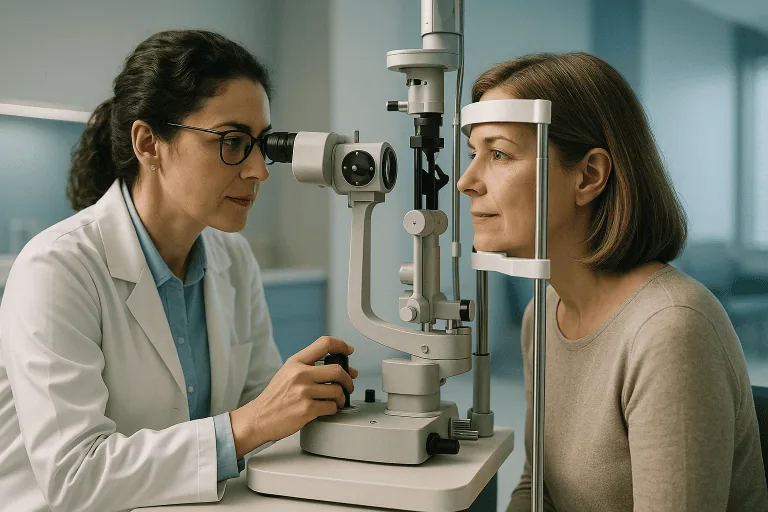
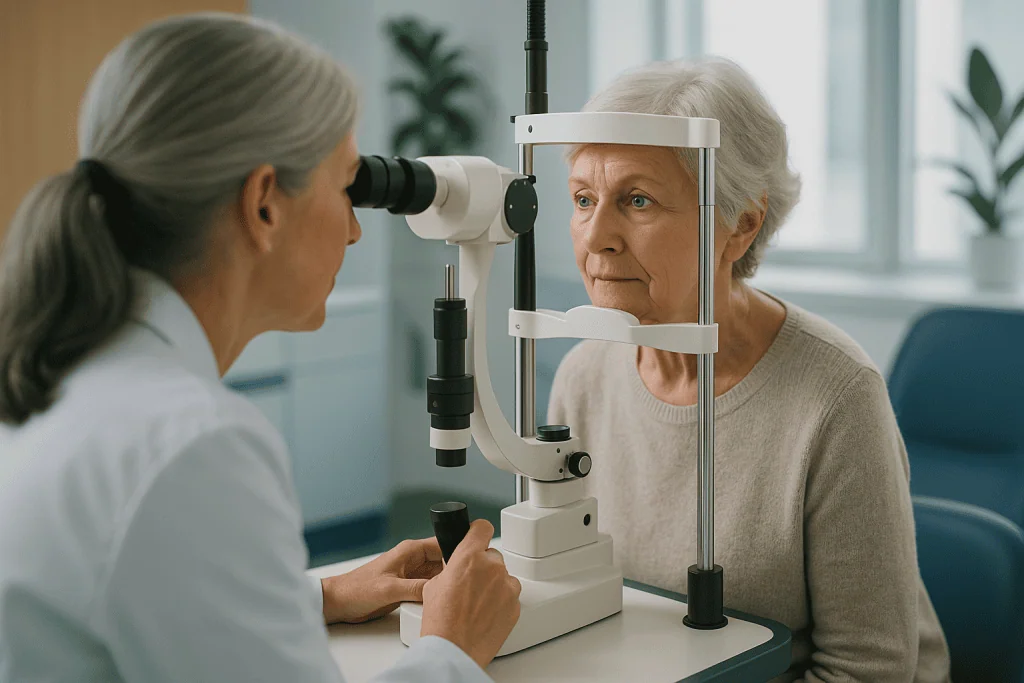
- Slit-lamp examination: a special microscope with a bright light lets the doctor examine the tear film, the cornea, the conjunctiva, and the eyelid margins, including the openings of the meibomian glands.
- Tear break-up time (TBUT): a small amount of harmless dye (fluorescein) is placed on the eye, and the doctor measures how quickly dry spots appear in the tear film after a blink. A short break-up time suggests an unstable tear film, typical of evaporative dry eye.
- Ocular surface staining: dyes such as fluorescein or lissamine green highlight damaged or unprotected areas on the cornea and conjunctiva, helping the doctor judge how severe the surface damage is.
- Schirmer test: a thin strip of paper is placed under the lower eyelid for a few minutes to measure how much tear fluid the eye produces. Low wetting of the strip suggests aqueous-deficient dry eye.
- Tear osmolarity testing: where available, this measures the salt concentration of the tears; overly concentrated tears are a hallmark of dry eye disease.
- Meibomian gland imaging (meibography): specialized imaging can show whether the eyelid oil glands are blocked, shortened, or lost.
- Blood tests: if an underlying autoimmune condition such as Sjögren’s syndrome is suspected, your doctor may order blood tests or refer you to a rheumatologist (a specialist in autoimmune and joint diseases).
Because symptoms and test results do not always match, some people have significant discomfort with relatively mild findings, and others have visible surface damage with few complaints, doctors usually combine several of these measures before confirming the diagnosis and deciding on treatment.
Treatment options
Dry eye disease treatment aims to restore a stable tear film, relieve symptoms, and protect the surface of the eye from damage. Treatment is usually stepwise: doctors generally start with simple measures and add stronger options only if needed. Dry eye disease is typically a chronic condition, so the goal in most cases is good long-term control rather than a one-time cure. Care is usually coordinated through an ophthalmology service; within the Acibadem network, for example, this condition is managed by the ophthalmology department.
Self-care and environmental changes
For mild dry eye, your doctor may first recommend watchful waiting combined with practical adjustments: taking regular breaks during screen work and making an effort to blink fully, using a humidifier in dry indoor environments, avoiding smoke and direct airflow from fans or vents, wearing wraparound glasses outdoors, staying well hydrated, and reviewing, with your doctor, never on your own, whether any of your medications might be contributing. Warm compresses applied to closed eyelids, followed by gentle eyelid massage and lid hygiene, can help unblock the meibomian glands in evaporative dry eye. Some doctors also discuss dietary omega-3 fatty acids, although evidence on how much they help is mixed.
Artificial tears and lubricants
Over-the-counter artificial tears are the mainstay of treatment for most people. They come as drops, gels, and ointments; thicker gels and ointments last longer but can blur vision, so they are often used at night. If you need drops more than a few times a day, preservative-free formulations are usually recommended, because preservatives can irritate the eye surface with frequent use.
Prescription medications
If lubricants are not enough, your doctor may prescribe medication. Options include anti-inflammatory eye drops such as cyclosporine or lifitegrast, which target the inflammation that drives many cases of dry eye and may take weeks to months to show their full effect. Short courses of corticosteroid eye drops are sometimes used to calm flare-ups, under close supervision because of possible side effects with long-term use. If blepharitis or meibomian gland dysfunction is prominent, antibiotic eye ointments or, in some cases, oral antibiotics with anti-inflammatory properties may be prescribed. In selected patients, medications that stimulate tear production, or eye drops made from a patient’s own blood serum (autologous serum drops), may be considered for severe disease.
Procedures
Several office-based procedures can help when drops alone are insufficient. Punctal plugs are tiny devices inserted into the tear drainage openings in the eyelids to keep tears on the eye surface longer; they can be temporary or longer-lasting and are usually placed quickly in the clinic. For meibomian gland dysfunction, devices that apply controlled heat and gentle pressure to the eyelids can help clear blocked glands, and intense pulsed light (IPL) therapy is used in some centers, although evidence and availability vary. Specialized contact lenses, including large scleral lenses that vault over the cornea and hold a reservoir of fluid against the eye, can protect the surface in severe cases.
Surgery
Surgery is rarely needed for dry eye disease itself. It is generally reserved for severe cases or for correcting contributing problems, for example, permanent closure of the tear drainage ducts, or eyelid surgery to fix lids that do not close properly. Your doctor will discuss these options only if less invasive treatments have not controlled the condition.
Living with dry eye disease and outlook
Dry eye disease is usually a chronic condition, which means it tends to persist and may need ongoing management rather than a single course of treatment. The encouraging news is that, in many cases, symptoms can be controlled well with a combination of lifestyle adjustments, lubricants, and, when needed, prescription treatments or procedures. Many people find that once they identify their triggers, such as long screen sessions, dry indoor air, or certain seasons, they can plan around them and keep discomfort to a minimum.
The outlook depends partly on the underlying cause. Dry eye linked to a temporary factor, such as recent eye surgery or a medication that can be changed, may improve substantially or resolve. Dry eye related to aging, meibomian gland loss, or an autoimmune disease is more likely to be long-term, and treatment focuses on control and comfort. Severe, poorly controlled dry eye can affect quality of life, making reading, driving, and screen work harder, and, in a minority of cases, can damage the cornea. Regular follow-up with your eye doctor helps catch problems early and adjust treatment as your needs change. No treatment can be guaranteed to eliminate symptoms entirely, but most people achieve meaningful relief with a consistent, tailored plan.
Frequently asked questions
What is dry eye disease in simple terms?
Dry eye disease is a condition in which your eyes do not stay moist enough, either because they do not make enough tears or because the tears evaporate too quickly. This leaves the surface of the eye irritated and, over time, can cause inflammation. It is different from occasional dryness because the problem is persistent and tends to recur without ongoing care.
Can dry eye disease be cured?
In most cases, dry eye disease is a chronic condition that is managed rather than permanently cured. If the dryness is caused by a temporary or reversible factor, such as a medication that can be switched or recovery after eye surgery, it may improve significantly or go away. For most people, however, treatment focuses on controlling symptoms and protecting the eye surface over the long term, which is often achievable with consistent care.
How serious is dry eye disease?
For many people, dry eye disease is uncomfortable and inconvenient rather than dangerous, and it responds well to treatment. However, severe or untreated dry eye can damage the cornea, and in rare cases this can lead to ulcers, scarring, or lasting effects on vision. Because severity varies widely, persistent symptoms should be evaluated by an eye doctor rather than managed indefinitely with over-the-counter drops alone.
Why are my eyes watery if I have dry eye disease?
Watery eyes are a common and confusing symptom of dry eye. When the eye surface becomes irritated by dryness, it can trigger a reflex flood of tears. These reflex tears are mostly water and lack the oily and mucus components needed to coat the eye properly, so they run off quickly without relieving the underlying dryness. Treating the dry eye itself often reduces the watering.
How is dry eye disease diagnosed?
Dry eye disease diagnosis is based on your symptom history plus an eye examination and specific tests. Your doctor may measure how quickly your tear film breaks up after a blink, use harmless dyes to reveal damaged areas on the eye surface, measure tear production with a small paper strip (the Schirmer test), and examine your eyelid oil glands. If an autoimmune cause is suspected, blood tests may also be ordered.
Does screen time cause dry eye disease?
Screen use is a well-recognized contributing factor. When people concentrate on screens, they blink less often and less completely, which allows the tear film to evaporate and can trigger or worsen symptoms. Screen time alone is rarely the whole story, but regular breaks, conscious full blinks, and good screen positioning often help reduce symptoms, especially when combined with other treatments your doctor recommends.
Are artificial tears safe to use every day?
Artificial tears are generally safe for daily use, and they are the first-line treatment for most people with dry eye disease. If you need them more than a few times a day, preservative-free versions are usually preferred, because the preservatives in some bottled drops can irritate the eye surface with frequent use. If you find yourself relying on drops constantly without relief, that is a sign to see an eye doctor about additional treatment options.
When to see a doctor
Make an appointment with an eye doctor if you have dry, irritated, or gritty eyes that persist for more than a couple of weeks despite over-the-counter artificial tears, if your symptoms interfere with reading, driving, screen work, or sleep, or if you notice your vision fluctuating during the day. Early evaluation helps identify the type of dry eye you have and prevents avoidable damage to the eye surface.
Seek prompt medical attention, the same day, if possible, if you experience any of the following red-flag warning signs:
- Sudden or significant loss of vision, or vision that does not clear with blinking
- Severe eye pain, rather than the usual mild burning or grittiness
- Intense light sensitivity that makes it hard to keep the eye open
- A visible white or gray spot on the cornea, which can indicate an ulcer or infection
- Thick discharge or pus from the eye, or eyelids stuck together on waking
- Marked redness that is worsening, especially in one eye
- An eye injury or chemical exposure, or a foreign object you cannot flush out
- Symptoms in a contact lens wearer that include pain, redness, or discharge, remove the lenses and seek care, as lens-related infections can progress quickly
These signs can indicate infection, corneal damage, or other conditions that need urgent assessment. Even without red flags, ongoing dry eye symptoms deserve a proper evaluation, because effective, well-established treatments are available and work best when the condition is identified early.
Medically reviewed by the Acıbadem International Medical Board September 3, 2026
See our medical review board →
Update history
- PublishedJune 8, 2026
- Medical review approvedSeptember 3, 2026
- Last content updateSeptember 3, 2026