

Understanding Blood Transfusion for Anemia: A Complete Patient Guide

A blood transfusion for anemia is usually considered when anemia is severe, causing significant symptoms, or creating urgent health risks. Most transfusions for anemia use packed red blood cells to improve oxygen delivery throughout the body.
Key Takeaways
- A blood transfusion for anemia is usually considered when anemia is severe, causing significant symptoms, or creating urgent health risks.
- Most transfusions for anemia use packed red blood cells to improve oxygen delivery throughout the body.
- Doctors do not decide on transfusion by one number alone; symptoms, age, heart or lung disease, bleeding, and the cause of anemia also matter.
- A transfusion treats the low red blood cell level quickly, but the underlying cause of anemia still needs diagnosis and treatment.
- Blood transfusions are generally safe, but patients are monitored closely for reactions, fluid overload, and other complications.
Blood transfusion for anemia is used when the body needs faster support than diet, iron, vitamins, or medicines can provide. It can relieve symptoms and improve oxygen delivery, but doctors recommend it selectively based on symptoms, blood test results, the cause of anemia, and overall health.
Overview: What blood transfusion for anemia means
Blood transfusion for anemia is a treatment that replaces red blood cells when anemia is serious enough to reduce oxygen delivery to the body. In practice, this usually means a transfusion of packed red blood cells rather than whole blood. The aim is to raise hemoglobin, improve circulation of oxygen, and relieve symptoms such as marked fatigue, shortness of breath, dizziness, chest discomfort, or weakness.
Not every person with anemia needs a transfusion. Many types of anemia improve with treatment directed at the cause, such as iron replacement, vitamin B12 or folate treatment, management of kidney disease, treatment of bleeding, or care for chronic illness. A transfusion is usually reserved for situations where symptoms are significant, blood counts are very low, there is active bleeding, or the person has a medical condition that makes anemia more risky.
For patients, it can help to think of transfusion as supportive treatment rather than a complete cure. It can stabilize the body quickly, especially in urgent situations, but doctors still need to identify why anemia happened. That is why transfusion is often paired with blood tests, imaging, or other investigations to guide longer-term treatment.
How anemia causes symptoms and when transfusion may help
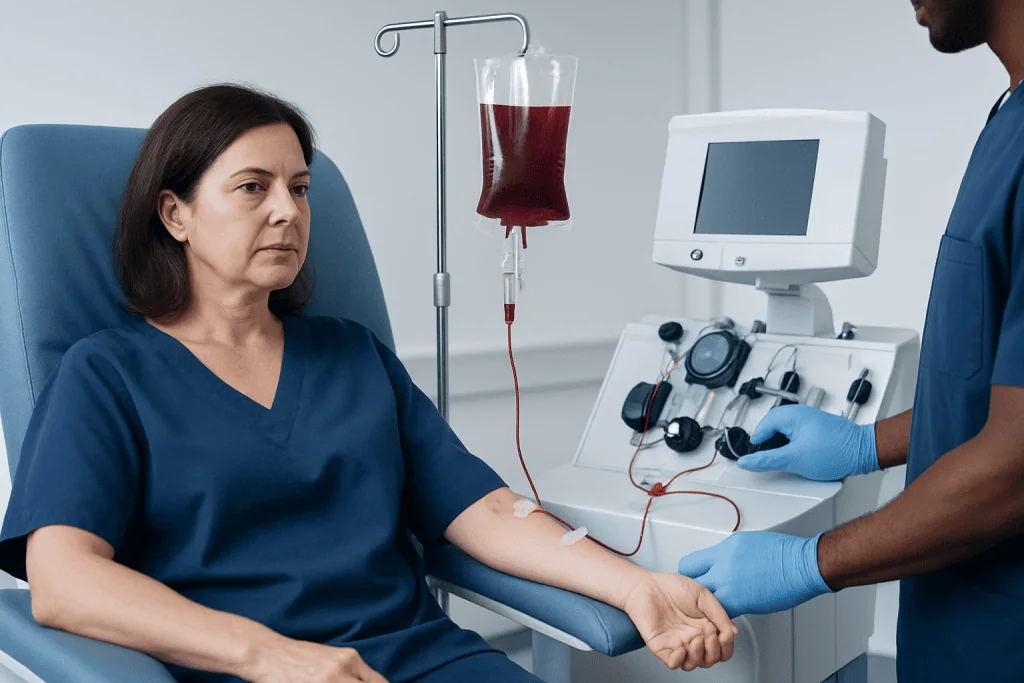
Anemia means there are too few healthy red blood cells or too little hemoglobin to carry oxygen efficiently. When tissues receive less oxygen, the body may respond with tiredness, reduced exercise tolerance, a fast heartbeat, headache, pale skin, dizziness, or feeling breathless during routine activity. If anemia becomes more severe, symptoms may appear even at rest.
A blood transfusion may help when symptoms are affecting daily function or when the body is under strain. This is especially relevant for older adults, people with heart or lung disease, patients who are actively bleeding, or those who develop severe anemia quickly. In these settings, a transfusion may reduce the immediate burden on the heart and other organs.
Doctors also look at how fast anemia developed. Someone whose hemoglobin dropped suddenly from blood loss may feel much worse than someone whose anemia developed slowly over time, even if the blood test numbers are similar. The decision is therefore based on the whole clinical picture rather than a single laboratory value.
- Common symptoms that may prompt urgent assessment include severe weakness, fainting, shortness of breath, chest pain, or a racing heartbeat.
- Possible underlying causes include iron deficiency, vitamin deficiency, chronic disease, kidney disease, bone marrow disorders, and blood loss.
- Transfusion can improve oxygen delivery quickly, but additional treatment is usually needed to prevent the anemia from returning.
When doctors consider blood transfusion for anemia

There is no single universal threshold that applies to every patient. In many hospitals, doctors use a restrictive transfusion approach for stable adults, meaning they avoid transfusion unless anemia is severe or symptoms justify it. However, individual decisions may differ depending on active bleeding, surgery, pregnancy, heart disease, lung disease, cancer treatment, or frailty.
Doctors generally weigh several factors together: hemoglobin level, symptoms, vital signs, oxygen needs, evidence of bleeding, and whether the anemia is acute or chronic. A person who feels well and is medically stable may not need a transfusion even with a relatively low hemoglobin, while another person with the same result but chest pain or severe breathlessness may need prompt treatment.
Transfusion is also more likely if anemia is not expected to improve quickly enough with medication alone. For example, iron therapy can be very effective for iron deficiency, but it does not restore red blood cells immediately. If symptoms are severe, doctors may combine faster support through transfusion with treatment of the cause, such as care for anemia or investigation of bleeding.
Some patients ask whether a transfusion is automatically needed whenever hemoglobin is low. Usually, the answer is no. Modern practice aims to use transfusions carefully because they can be lifesaving when truly needed, but they also carry risks and should be used thoughtfully.
What happens before, during, and after the transfusion
Before a transfusion, the medical team confirms the blood type and performs compatibility testing, often called crossmatching. Blood tests may also be repeated to verify hemoglobin and look for the cause of anemia. Clinicians review symptoms, medical history, medicines, and any prior transfusion reactions. Patients are usually asked to report fever, allergies, shortness of breath, or previous reactions to blood products.
During the transfusion, packed red blood cells are given through a vein. The blood is started slowly at first while nurses monitor temperature, pulse, blood pressure, and symptoms. If the patient remains well, the transfusion continues over a few hours. Some patients receive one unit and are reassessed; others may need more, depending on symptoms, ongoing blood loss, and follow-up blood results.
After the transfusion, doctors often repeat blood tests to see how much the hemoglobin has improved. They also assess whether symptoms such as dizziness, fatigue, or breathlessness have eased. Even if the patient feels better, the next step is to identify and treat the cause, which may include iron studies, gastrointestinal evaluation for bleeding, kidney assessment, or specialist review.
When needed, treatment may continue with medicines, iron infusions, or procedures aimed at the cause. In some cases, the care plan may involve hematology care to investigate difficult or recurrent anemia, especially when blood counts remain abnormal or the cause is unclear.
Benefits, risks, and possible side effects
The main benefit of blood transfusion for anemia is speed. It can raise red blood cell levels much faster than tablets, diet changes, or many other treatments. This may relieve severe symptoms, support recovery after blood loss, and protect vital organs when oxygen delivery is compromised. For patients with significant symptoms, the improvement can be noticeable within hours to a day.
Blood transfusions are generally safe, and donated blood is carefully tested. Even so, no medical treatment is completely risk-free. Possible complications include fever, mild allergic reactions, shortness of breath from fluid overload, and rare immune reactions. Infection risk from screened blood is very low in modern practice, but it is not considered zero.
Clinicians reduce risks by matching blood carefully, using the smallest amount needed, and monitoring closely throughout the transfusion. Patients should promptly mention chills, rash, itching, back pain, trouble breathing, or feeling suddenly unwell during or after the transfusion. Early recognition helps the team respond quickly and safely.
In some people, especially those who need repeated transfusions, doctors may also watch for iron overload or the development of antibodies that can make future matching more complex. This is one reason long-term management focuses on treating the cause of anemia whenever possible rather than relying on transfusion alone.
Treating the cause: why transfusion is only one part of care
Because anemia has many causes, treatment after a transfusion varies from person to person. Iron deficiency may be managed with dietary advice, oral iron, or iron infusion when replacement needs to work faster or tablets are not well tolerated. Blood loss from the digestive tract may require endoscopy or surgery. Vitamin B12 or folate deficiency calls for targeted replacement, while chronic kidney disease or inflammatory conditions may need longer-term medical management.
Some forms of anemia relate to inherited conditions, bone marrow disorders, or the effects of chemotherapy and other medical treatments. In these situations, specialist care is important to guide diagnosis and follow-up. Depending on symptoms and test results, doctors may recommend broader evaluation for conditions such as iron deficiency anemia or less common blood disorders.
Patients often feel reassured to know that a transfusion does not prevent other treatments from working; rather, it buys time and supports the body while the cause is addressed. A clear treatment plan usually includes follow-up blood tests, review of symptoms, and practical advice about medicines, diet, bleeding symptoms, and when to return for reassessment.
Near the end of the care pathway, some patients may need additional procedures or disease-specific therapy. Acibadem International’s multidisciplinary specialists and JCI-accredited hospitals diagnose and treat anemia and its causes for international patients, including advanced evaluation when standard treatment has not fully explained the problem.
Prevention, self-care, and when to seek medical care
Not all anemia can be prevented, but some cases can be reduced by addressing known causes early. A balanced diet with adequate iron, vitamin B12, and folate supports red blood cell production, though diet alone may not be enough when deficiency is significant. People with heavy menstrual bleeding, digestive symptoms, kidney disease, or long-term inflammatory conditions may benefit from periodic monitoring if advised by a doctor.
Self-care after transfusion usually includes rest as needed, staying hydrated, taking prescribed medicines, and attending follow-up appointments. Patients should not assume that feeling better means the problem is solved. Continuing evaluation matters because anemia can recur if bleeding, nutrient deficiency, inflammation, or another underlying condition remains untreated.
Medical care should be sought promptly if symptoms of anemia are severe or worsening. This includes chest pain, fainting, severe shortness of breath, confusion, very rapid heartbeat, black or bloody stools, vomiting blood, or ongoing heavy bleeding. A doctor should also be contacted after a transfusion if there is fever, rash, swelling, dark urine, or breathing difficulty.
For ongoing investigation, some people may need coordinated care with gastroenterology, gynecology, kidney specialists, or internal medicine depending on the suspected cause. Early assessment often makes treatment simpler and helps avoid emergency situations.
Frequently asked questions
Is a blood transfusion the standard treatment for all anemia?
No. Most anemia is treated by addressing the cause, such as iron deficiency, vitamin deficiency, chronic illness, or bleeding. A blood transfusion is usually reserved for severe anemia, major symptoms, or urgent situations where faster support is needed.
How quickly does a blood transfusion help anemia symptoms?
Many patients begin to feel some improvement within hours, especially if symptoms were caused mainly by low red blood cell levels. Full recovery depends on the cause of anemia, overall health, and whether additional treatment is also needed.
What hemoglobin level means a transfusion is needed?
There is no single number that applies to everyone. Doctors consider hemoglobin together with symptoms, age, bleeding, heart or lung disease, and whether the anemia developed suddenly or gradually.
Are blood transfusions safe for anemia?
They are generally safe when given in a monitored medical setting. Blood is carefully screened and matched, and patients are observed closely for side effects such as fever, allergic reactions, or fluid overload.
Can anemia come back after a blood transfusion?
Yes. A transfusion can correct low red blood cell levels temporarily, but anemia may return if the underlying cause is not treated. Follow-up testing and a clear treatment plan are important to prevent recurrence.
Does a blood transfusion cure iron deficiency anemia?
Not by itself. A transfusion may be used if iron deficiency anemia is severe or causing serious symptoms, but iron replacement and evaluation for the reason behind the deficiency are still needed.
References
- World Health Organization
- American Society of Hematology
- AABB
- National Heart, Lung, and Blood Institute
- Centers for Disease Control and Prevention
This article is for general information only and is not a substitute for professional medical advice. Please consult a qualified doctor about your individual situation.
Anemia in Turkey — costs, top hospitals & a free quote
JCI-accredited · board-certified surgeons · reply within 24h
Check your numbers in seconds
BMI, calories, due date, blood pressure and 30+ more clinical calculators — free, instant, doctor-reviewed ranges.

More from the Health Library



Related Specialists

Prof. Dr. Ersin Özaslan
Medical Oncology
Dr. Burcu Duran Tak
Acibadem Life Clinical Service
Dr. Fadil Havas
Intensive Care
Dr. Murat Alakuş
Physical Medicine & Rehabilitation