What’s a Cysts: An Evidence-Based Guide for Patients

A cyst is a sac that can form in many parts of the body and may contain fluid, air, or semi-solid material. Many cysts are harmless and may not need treatment unless they cause symptoms or complications.
Key Takeaways
- A cyst is a sac that can form in many parts of the body and may contain fluid, air, or semi-solid material.
- Many cysts are harmless and may not need treatment unless they cause symptoms or complications.
- Warning signs include pain, redness, rapid growth, drainage, fever, or pressure on nearby organs.
- Diagnosis may involve a physical exam, ultrasound, CT, MRI, or lab testing depending on location.
- Treatment ranges from watchful waiting to drainage, medication, or surgical removal.
A cyst is a closed sac-like pocket that contains fluid, air, or thicker material and can develop in the skin, organs, or other tissues. Many cysts are benign and cause few problems, but some need medical evaluation if they grow, hurt, become infected, or affect nearby structures.
What is a cyst?
For people asking “what’s a cysts,” the simplest answer is that a cyst is a small sac or pouch that forms in tissue and holds fluid, air, or thicker material such as keratin or debris. Cysts can appear almost anywhere in the body, including the skin, ovaries, kidneys, breasts, and joints. Many are noncancerous and are found only because they can be felt, seen on imaging, or cause mild discomfort.
A cyst is different from a solid tumor because it usually has a defined wall and contents inside it. Some cysts stay the same size for years, some go away on their own, and others slowly enlarge. Whether a cyst matters medically often depends less on the name itself and more on where it is, what is inside it, and whether it is causing symptoms.
Doctors describe cysts by their location and likely cause. For example, a sebaceous or epidermoid cyst may form under the skin, while an ovarian cyst develops on or in an ovary. A kidney cyst may be found incidentally during a scan done for another reason. This is why the same word, “cyst,” can refer to several different conditions with very different treatments and outlooks.
Where cysts can form and common types
Cysts are common and can affect people of many ages. Some of the better-known types include skin cysts, breast cysts, ovarian cysts, ganglion cysts near joints or tendons, kidney cysts, and cysts related to blocked glands or ducts. The body area involved often shapes the symptoms a person notices.
Skin cysts are often small, slow-growing lumps under the skin. Ovarian cysts may cause pelvic discomfort or no symptoms at all and are often discovered during an ultrasound. Ganglion cysts can appear on the wrist or hand and may feel firm or rubbery. Kidney cysts are frequently found by chance during imaging and may never cause problems, although some kidney cysts need closer assessment, especially if they have complex features or occur with other kidney conditions such as kidney cancer.
Breast cysts may feel smooth, movable, and tender, especially around hormonal changes. Cysts can also arise in the liver, pancreas, eyelids, scalp, and other tissues. Because the word “cyst” describes a structure rather than one single disease, the next step is usually to identify the exact type and decide whether monitoring or treatment is needed.
- Skin cysts: often under the surface of the skin
- Ovarian cysts: related to the ovaries and menstrual cycle in many cases
- Ganglion cysts: commonly near the wrist, hand, or foot
- Kidney and liver cysts: often seen on imaging
- Breast cysts: fluid-filled lumps within breast tissue
Symptoms and signs that can happen with a cyst

Many cysts cause no symptoms at all. A person may notice a visible lump, a feeling of fullness, or an abnormality found during a scan or routine exam. When symptoms do occur, they usually relate to size, inflammation, infection, or pressure on nearby tissues.
A skin cyst may appear as a round bump that moves slightly under the skin. It may become tender, red, warm, or drain material if it is inflamed or infected. A larger cyst inside the body may cause pressure, bloating, pain, or changes in normal function depending on the organ involved. For example, an ovarian cyst can sometimes lead to pelvic pain, while a ganglion cyst may make wrist motion uncomfortable.
Some symptoms should not be ignored. These include sudden severe pain, rapid swelling, fever, redness that spreads, foul-smelling drainage, or a cyst that repeatedly returns after prior treatment. In some body areas, doctors also pay close attention if the cyst appears complex on imaging or if it is associated with weight loss, abnormal bleeding, or persistent digestive or urinary symptoms.
Why cysts form: causes and risk factors
Cysts can form for several reasons. A blocked duct or gland is one common cause, especially in the skin and breasts. In other cases, inflammation, injury, chronic irritation, infection, or normal monthly hormonal changes can lead to a cyst. Some cysts are developmental, meaning they arise from changes in tissue growth that occurred earlier in life.
Risk factors vary by cyst type. Acne-prone skin, prior skin injury, and blocked hair follicles can increase the chance of some skin cysts. Hormonal changes may contribute to certain breast and ovarian cysts. Family history matters in some inherited conditions that cause multiple cysts, including polycystic kidney disease. Age can also influence how common some cysts are, and certain cysts are more often found during middle adulthood simply because imaging is used more often.
It is important to know that having a cyst does not automatically mean cancer. Most cysts are benign. However, some cyst-like findings require careful evaluation to tell them apart from abscesses, benign tumors, or cancers. That distinction is one reason doctors may recommend imaging or, less commonly, sampling or removal.
How doctors diagnose a cyst
Diagnosis usually begins with a medical history and physical examination. A clinician may ask how long the area has been present, whether it changes in size, whether it hurts, and if there are signs of infection such as redness, warmth, or drainage. The location of the cyst helps determine the next steps.
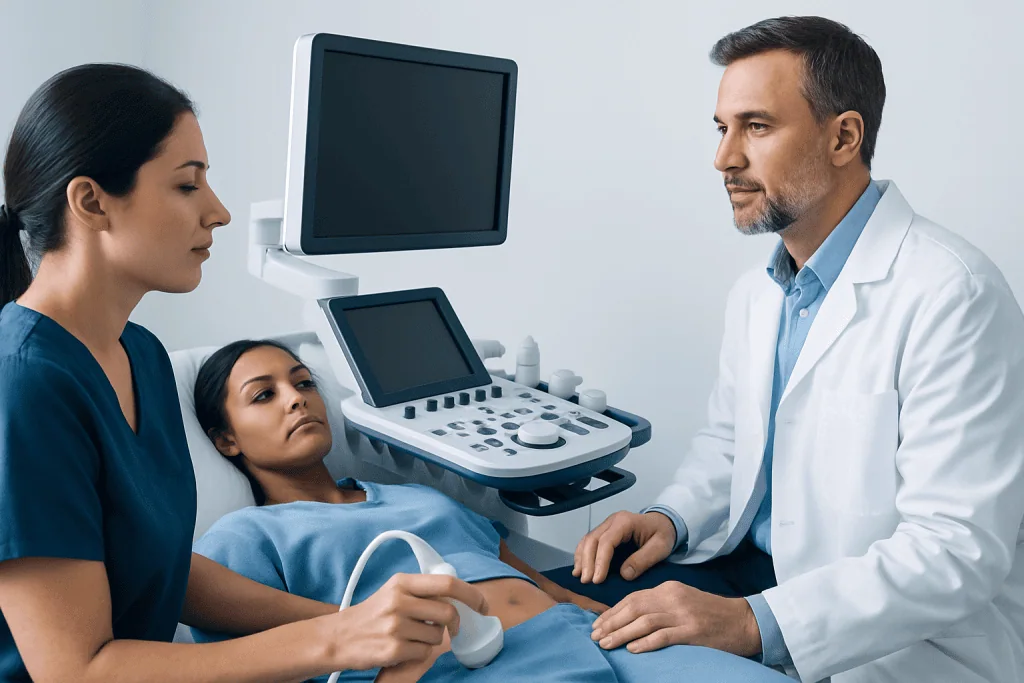
Imaging is often useful because it can show whether a lump is fluid-filled, solid, or mixed. Ultrasound is commonly used for ovarian, breast, soft tissue, and abdominal cysts because it is quick and does not use radiation. CT or MRI may be recommended when a deeper structure needs a closer look or when the appearance is more complex. In some situations, a doctor may arrange MRI imaging or ultrasound evaluation to better define the cyst and guide management.
Lab tests or procedures are sometimes needed. If infection is suspected, drained material may be sent for testing. If the diagnosis remains uncertain, a biopsy or surgical removal may be considered to confirm the exact type. When symptoms suggest another condition, doctors also consider nearby organ problems, including ovarian cancer or other causes of a mass, especially if imaging shows features that are not typical of a simple cyst.
Treatment options and when observation is enough
Treatment depends on the cyst’s type, size, location, and symptoms. Many simple, symptom-free cysts can be watched over time with repeat examination or imaging. This approach is common when the cyst appears benign and is not interfering with daily life or organ function. Observation helps avoid unnecessary procedures while still checking for changes.
If a cyst is painful, infected, growing, or causing pressure, treatment may be recommended. Options can include warm compresses for some superficial cysts, antibiotics when there is a clear infection, needle aspiration or drainage for selected cysts, and surgery to remove the cyst wall if recurrence is likely. Removal is more often advised when a cyst repeatedly comes back, causes functional problems, or cannot be confidently diagnosed by exam and imaging alone.
Doctors usually advise against squeezing or trying to pop a cyst at home. Doing so can increase inflammation, infection, scarring, or incomplete drainage. If a procedure is needed, care by a qualified clinician is safer and helps ensure the right diagnosis is not missed. In more complex cases, treatment planning may involve specialists in dermatology, gynecology, general surgery, urology, or radiology, and some patients may benefit from general surgical treatment when removal is the most appropriate option.
Self-care, prevention, and living with a cyst
Not all cysts can be prevented, but simple self-care can reduce irritation and help a person know when a change should be checked. For skin cysts, gentle cleansing and avoiding picking or squeezing are important. If a doctor has advised watchful waiting, keeping track of the cyst’s size, discomfort, and any drainage can be helpful for follow-up visits.
General health habits also matter. Managing acne or skin irritation, using protective equipment to reduce repeated friction, and attending regular health checks can support early detection and treatment of problems. For people with a history of ovarian, breast, or kidney cysts, follow-up imaging may be recommended based on the cyst’s appearance and personal risk factors.
Living with a cyst can be straightforward when the cyst is stable and benign. Many people never need treatment beyond reassurance and occasional monitoring. If the diagnosis is uncertain or the cyst is in a sensitive area, a specialist can explain whether simple observation, aspiration, or removal is the best course. Near the end of the care pathway, patients seeking international evaluation may also find support through Acibadem International, where multidisciplinary specialists at JCI-accredited hospitals diagnose and treat cyst-related conditions for international patients.
When to seek medical care
Medical care is advisable if a cyst is new, enlarging, painful, repeatedly returning, or causing pressure symptoms. A doctor should also assess any cyst that becomes red, hot, tender, or starts to drain, since these can be signs of inflammation or infection. Internal cysts may need prompt review if they are linked to pelvic pain, bloating, urinary changes, or digestive symptoms.
Urgent medical attention is important for sudden severe pain, fever, fainting, heavy bleeding, fast-growing swelling, or signs that a nearby organ is affected. These symptoms do not always mean something serious, but they should be evaluated quickly. Early assessment helps identify complications such as infection, rupture, torsion, or bleeding and helps rule out less common but more concerning causes.
It is also reasonable to seek medical advice when a person is unsure whether a lump is truly a cyst. Not every lump is a cyst, and some need a different type of treatment. A qualified clinician can clarify the diagnosis and recommend the safest next step.
Frequently asked questions
Is a cyst the same as a tumor?
No. A cyst is usually a sac filled with fluid, air, or semi-solid material, while a tumor is a broader term for an abnormal growth of tissue that may be benign or cancerous. Some masses can look similar at first, which is why imaging or examination is sometimes needed.
Are cysts usually cancerous?
Most cysts are not cancerous. Many are benign and may never cause major problems. Still, some cyst-like findings need evaluation to confirm what they are, especially if they are complex, growing, or causing symptoms.
Can a cyst go away on its own?
Yes, some cysts can shrink or disappear without treatment, depending on their type and cause. Others remain stable for a long time or slowly enlarge. A doctor can advise whether observation is appropriate.
Should a cyst be drained or removed?
Not always. Some cysts do not need any procedure if they are small, simple, and symptom-free. Drainage or removal may be considered if the cyst is painful, infected, recurrent, growing, or uncertain in diagnosis.
Is it safe to squeeze a cyst at home?
It is usually not recommended. Squeezing a cyst can cause infection, inflammation, pain, and scarring, and it may not remove the cyst wall. Medical treatment is safer if a cyst needs to be opened or removed.
What tests are used to check a cyst?
The first step is often a physical exam and medical history. Depending on the location, doctors may use ultrasound, CT, or MRI to learn whether the lump is fluid-filled or solid. In selected cases, they may also recommend drainage, lab testing, or biopsy.
References
- National Health Service
- Mayo Clinic
- MedlinePlus
- American College of Obstetricians and Gynecologists
- National Institute of Diabetes and Digestive and Kidney Diseases
This article is for general information only and is not a substitute for professional medical advice. Please consult a qualified doctor about your individual situation.
Joint and spine care in Turkey — expert assessment & treatment
JCI-accredited · board-certified surgeons · reply within 24h

More from the Health Library



Related Specialists

Prof. Dr. Kenan Hizel
Infectious Diseases & Clinical Microbiology
Assoc. Prof. Dr. Eser Çolak
Vitro Fertilization and Reproductive Medicine Center
Dr. Burak Sercan Erçin
Aesthetic Plastic & Reconstructive Surgery
Dr. Alper Gölpınar
Orthopedic Surgery & Traumatology