Understanding Idiopathic Scoliosis: A Complete Patient Guide
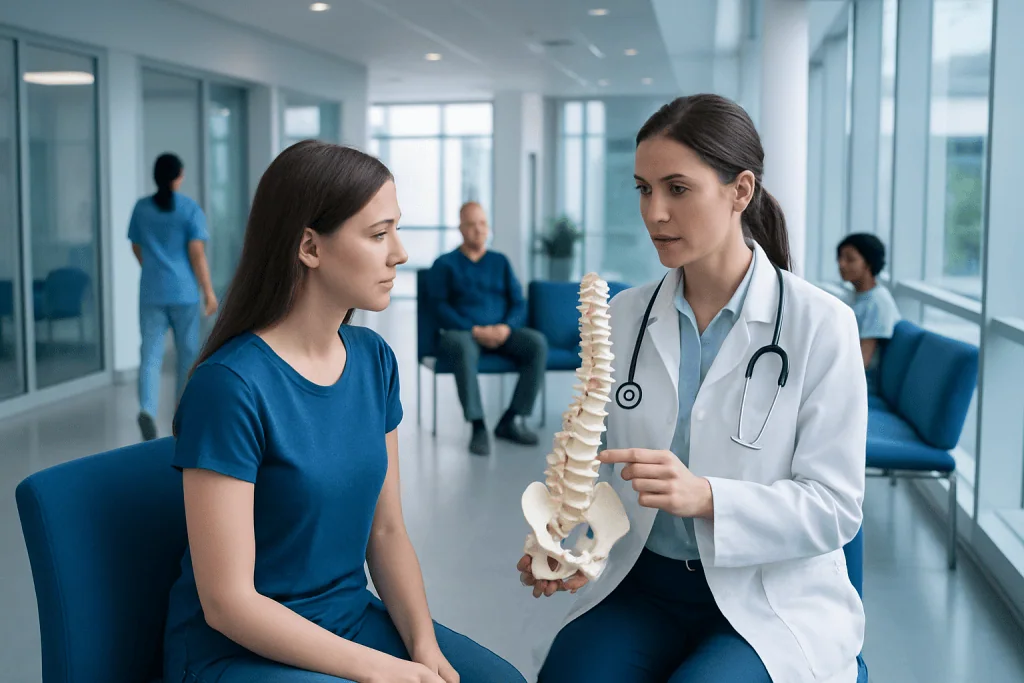
Idiopathic scoliosis means a sideways spinal curve with no single proven cause. It is most commonly diagnosed in children and teenagers during growth spurts.
Key Takeaways
- Idiopathic scoliosis means a sideways spinal curve with no single proven cause.
- It is most commonly diagnosed in children and teenagers during growth spurts.
- Treatment depends on curve severity, symptoms, and how much growth remains.
- Mild curves may only need regular follow-up, while larger curves may need bracing or surgery.
- Early assessment helps guide care and reduce the risk of progression.
Idiopathic scoliosis is a spinal curve that develops without a clearly identifiable cause, most often during childhood or adolescence. Many cases are mild and monitored over time, while others may need bracing or surgery depending on the degree of curvature, symptoms, and remaining growth.
Overview: what idiopathic scoliosis means
Idiopathic scoliosis is a condition in which the spine curves sideways and may also rotate, creating a three-dimensional change in spinal alignment. The word “idiopathic” means that no single definite cause has been identified. This distinguishes it from scoliosis linked to congenital spinal differences, neuromuscular conditions, or other underlying medical problems.
Idiopathic scoliosis can appear at different ages, but it is most often recognized in late childhood or adolescence, especially during periods of rapid growth. In many people, the curve is small, causes few symptoms, and is discovered during a routine examination, school screening, or when a parent notices uneven shoulders or hips.
Not every spinal curve is serious. Some curves remain stable and never interfere with daily life. Others may gradually increase over time, which is why doctors focus not only on the size of the curve but also on the patient’s age, growth potential, physical examination findings, and symptoms.
Because scoliosis can vary widely from person to person, care is individualized. The main goals are to understand the curve, watch for progression, support comfort and function, and choose treatment only when it is likely to be helpful. Related spinal conditions may also need to be distinguished from scoliosis caused by other factors.
How idiopathic scoliosis may affect the body
Idiopathic scoliosis does not affect everyone in the same way. In mild cases, a person may feel completely well and have no pain or movement problems. The most noticeable changes are often physical differences in posture, such as one shoulder appearing higher than the other, the waist looking uneven, or one side of the rib cage standing out more when bending forward.
As curves become larger, the spine’s rotation may make the back look asymmetrical. Some people notice that clothing hangs unevenly or that the torso seems shifted to one side. These changes can affect body image, especially in teenagers, even when the curve is not causing physical discomfort.
Back pain can occur, but idiopathic scoliosis itself is not always the direct cause of pain, especially in children. When pain is significant, persistent, or out of proportion to the curve, doctors may look for other explanations. In adults who had scoliosis from youth, symptoms may also reflect age-related wear in the discs and joints.
Very large curves can affect balance, posture, and, in uncommon advanced cases, chest shape and breathing mechanics. This is more likely when the curve is severe and untreated over time. Regular follow-up helps identify people who may be at risk of progression before these problems develop.
Signs, symptoms, and everyday clues
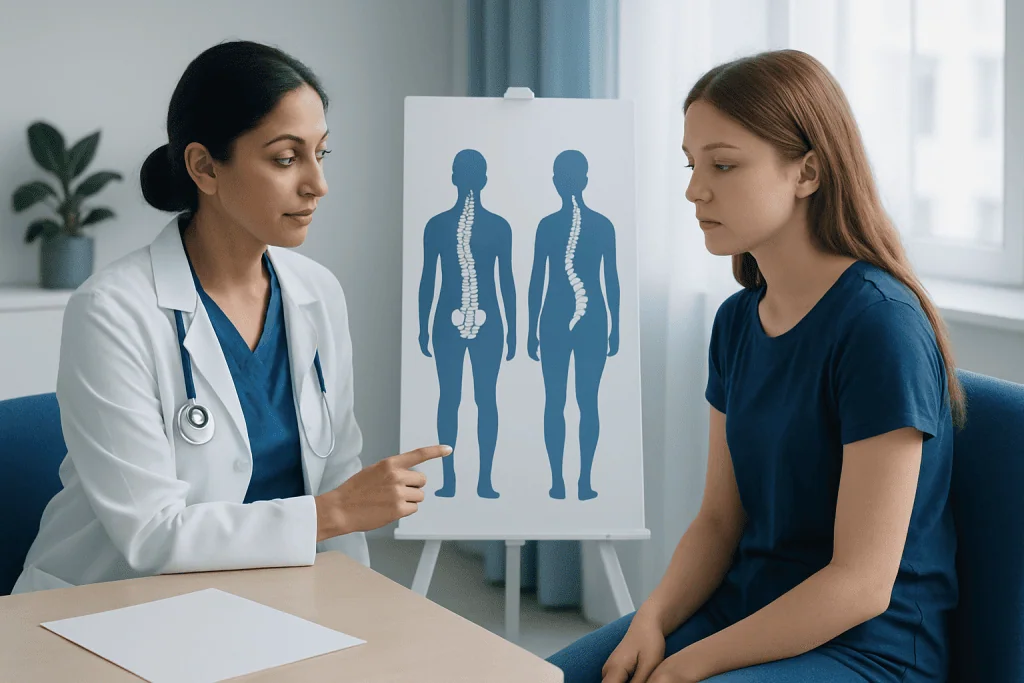
Idiopathic scoliosis is often first suspected because of visible asymmetry rather than pain. Common clues include uneven shoulders, one shoulder blade that appears more prominent, an uneven waistline, hips that look unlevel, or the head appearing slightly off-center above the pelvis. A rib hump on one side when bending forward is another classic sign.
In many children and teenagers, these changes are subtle at first. Because scoliosis usually develops gradually, family members may notice differences only when comparing photographs over time or when a child suddenly grows taller. School screenings and routine pediatric visits can also bring these changes to attention.
Symptoms that deserve careful evaluation include ongoing back pain, numbness, weakness, bowel or bladder changes, fever, or rapid worsening of the curve. These features are not typical of uncomplicated idiopathic scoliosis and may suggest another condition that needs prompt medical assessment.
- Uneven shoulders or hips
- One shoulder blade sticking out more than the other
- Uneven waist or trunk shift
- Rib prominence when bending forward
- Clothes fitting unevenly
- Back discomfort, especially in some older adolescents or adults
Causes and risk factors
The exact cause of idiopathic scoliosis remains uncertain. Research suggests it is likely multifactorial, meaning that several influences may contribute rather than one single trigger. These may include genetic tendencies, differences in growth patterns, and complex biomechanical factors that affect how the spine develops during growth.
Idiopathic scoliosis tends to run in families, which supports a hereditary component. However, having a relative with scoliosis does not mean a child will definitely develop it, and many people with idiopathic scoliosis have no known family history. It is best understood as a risk pattern rather than a simple inherited disorder.
Age is one of the most important factors. Curves that appear during a rapid growth phase are more likely to change than curves found after growth is nearly complete. This is why adolescent idiopathic scoliosis receives close attention during puberty. Sex also matters in practice: while small curves can occur in anyone, girls are more likely than boys to develop curves that progress enough to need treatment.
It is important for patients and families to know what does not cause idiopathic scoliosis. Poor posture, carrying a backpack, sleeping position, or playing sports do not cause this condition. Everyday activities may reveal the curve, but they are not considered the reason it develops.
How doctors diagnose and monitor idiopathic scoliosis
Diagnosis starts with a medical history and physical examination. The clinician will ask when the curve was first noticed, whether there is a family history, whether the patient has pain or neurologic symptoms, and whether growth is still ongoing. During the examination, posture, shoulder height, waist symmetry, and spinal alignment are assessed. A forward-bending test is commonly used to look for rib or back prominence caused by spinal rotation.
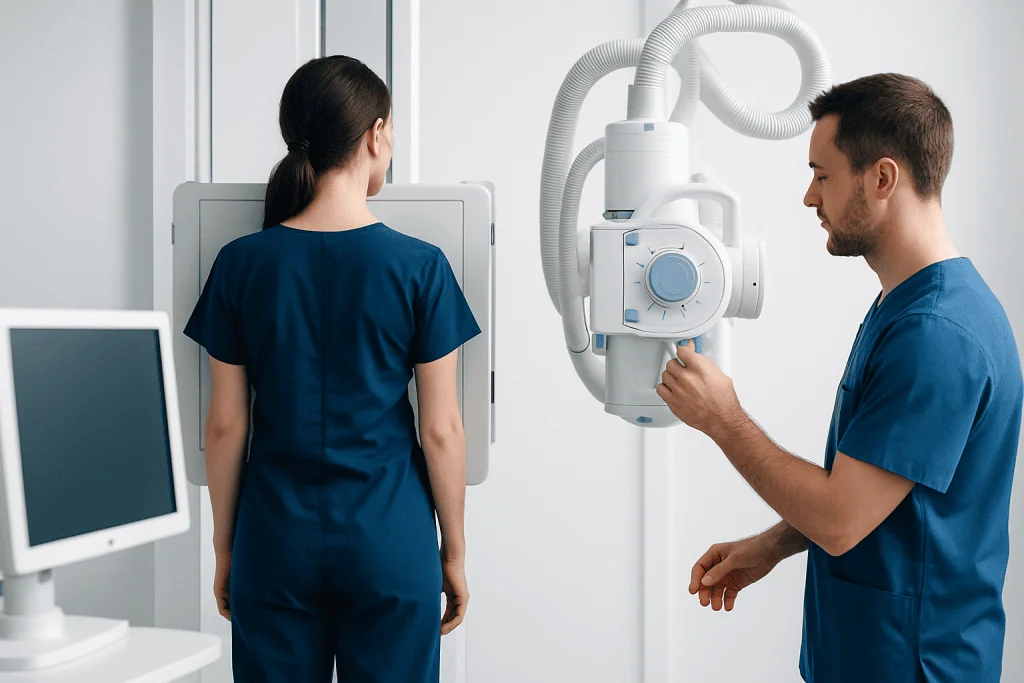
If scoliosis is suspected, imaging is used to confirm the diagnosis and measure the curve. Standard standing spine X-rays allow doctors to calculate the Cobb angle, which is the main measurement used to describe curve size. Imaging also helps identify where the curve is located and whether there is more than one curve.
Follow-up matters because treatment decisions are based not just on today’s curve but also on the likelihood of progression. Doctors consider several factors, including the patient’s age, signs of skeletal maturity, and whether the curve has changed on repeat imaging. Many mild curves are monitored at regular intervals rather than treated immediately.
In selected cases, additional tests may be recommended. For example, advanced imaging may be used if the curve pattern is unusual, neurologic findings are present, or symptoms do not fit typical idiopathic scoliosis. In broader spine assessment, MRI imaging can help look for other causes when needed, though it is not required for every patient.
Treatment options: observation, bracing, and surgery
Treatment is guided by the size of the curve, the patient’s age, symptoms, and how much growth remains. For small curves in growing children or stable curves in adults, observation is often the best first step. This means regular check-ups and repeat imaging at intervals chosen by the treating doctor to see whether the curve is changing.
Bracing may be recommended for some children and adolescents who are still growing and have curves in a range where progression is a concern. A brace does not usually “cure” scoliosis or make the spine completely straight, but it can help reduce the chance that the curve will worsen enough to require surgery. The exact type of brace and schedule depend on the person’s needs and the specialist’s plan.
Exercise and physical therapy can support strength, posture awareness, flexibility, and general well-being. These approaches are not a replacement for monitoring or bracing when progression risk is high, but they can be a useful part of overall care. Some patients may also benefit from physical therapy and rehabilitation to improve comfort, movement, and confidence in daily activities.
Surgery is considered when curves are large, continue to progress, or are likely to cause significant long-term problems. The aim is usually to correct the curve as much as safely possible and stabilize the spine. In selected patients, this may involve scoliosis surgery performed by spine specialists. If surgery is being planned or if there are related spinal issues, broader spine surgery expertise may be part of the care pathway.
Living with idiopathic scoliosis: self-care and long-term outlook
For most people, idiopathic scoliosis can be managed successfully with monitoring and the right treatment when needed. Many children with mild curves continue normal school, sports, and social activities. In general, staying active is encouraged unless a doctor recommends a specific restriction for an individual reason.
Good self-care includes attending follow-up appointments, using a brace as prescribed if one is recommended, and speaking openly about symptoms or concerns. Emotional support also matters, especially for adolescents who may feel self-conscious about body changes or brace wear. Honest, age-appropriate discussion can help reduce anxiety and improve confidence.
Long-term outlook depends mainly on the curve size and whether it progresses during growth. Many people with small or moderate curves live full, active lives without major limitations. Larger curves may need ongoing specialist review into adulthood, especially if there are symptoms or functional concerns.
Near the end of the care journey, some families also value coordinated specialist support. Acibadem International’s multidisciplinary teams in JCI-accredited hospitals diagnose and treat scoliosis and related spinal conditions for international patients when advanced evaluation or treatment is needed.
When to seek medical care
A medical evaluation is appropriate if a child, teenager, or adult is noticed to have uneven shoulders, an uneven waist, a rib prominence, or a visible curve in the back. Even when there is no pain, assessment is useful because early diagnosis helps determine whether simple monitoring is enough or whether closer follow-up is needed during growth.
Prompt medical care is especially important if the curve seems to be getting worse quickly, if there is significant or persistent back pain, or if symptoms such as weakness, numbness, walking changes, or bowel or bladder problems appear. These findings are not typical of uncomplicated idiopathic scoliosis and should not be ignored.
Adults who had scoliosis as children should also seek review if new pain, posture changes, or reduced function develop. A qualified doctor, often with expertise in orthopedics, spine care, or pediatrics, can guide next steps and explain which tests or treatments are appropriate.
Frequently asked questions
What is idiopathic scoliosis?
Idiopathic scoliosis is a sideways curve of the spine that develops without one clearly identifiable cause. It most often appears in children or teenagers, especially during growth spurts.
Can idiopathic scoliosis go away on its own?
A true structural scoliosis curve usually does not simply disappear on its own. However, many mild curves stay small and do not cause major problems, which is why regular monitoring is often the main approach.
Does idiopathic scoliosis always cause pain?
No. Many children and teenagers with idiopathic scoliosis have no pain at all, and the condition is often found because of visible posture changes. If pain is strong, persistent, or unusual, a doctor may look for another cause as well.
How is idiopathic scoliosis treated?
Treatment may include observation, bracing, exercise support, or surgery depending on the curve size, symptoms, and remaining growth. The goal is to monitor for progression and choose the least invasive treatment that is likely to help.
Can exercise fix idiopathic scoliosis?
Exercise can improve strength, flexibility, posture awareness, and overall well-being, but it does not usually correct a structural spinal curve by itself. It is best used as part of a broader treatment plan guided by a qualified clinician.
Is surgery necessary for all patients with idiopathic scoliosis?
No. Most patients do not need surgery, especially if the curve is mild or stable. Surgery is usually considered only for larger or progressive curves, or when there is a higher risk of long-term problems.
References
- Scoliosis Research Society
- American Academy of Orthopaedic Surgeons
- National Institute of Arthritis and Musculoskeletal and Skin Diseases
- National Health Service
- American Academy of Pediatrics
This article is for general information only and is not a substitute for professional medical advice. Please consult a qualified doctor about your individual situation.
Joint and spine care in Turkey — expert assessment & treatment
JCI-accredited · board-certified surgeons · reply within 24h