2 Year Old Milestones: A Complete Medical Overview

Most 2-year-olds make progress in language, movement, play, and social interaction at their own pace. Common milestones include running, using simple phrases, following basic directions, and copying adults.
Key Takeaways
- Most 2-year-olds make progress in language, movement, play, and social interaction at their own pace.
- Common milestones include running, using simple phrases, following basic directions, and copying adults.
- Variation is normal, but loss of skills or clear delays should be discussed with a pediatrician.
- Development is best supported through daily play, conversation, reading, and consistent routines.
- Milestones are screening guides, not a test of intelligence or future success.
2 year old milestones usually include stronger walking and climbing skills, simple pretend play, growing independence, and the use of short words or phrases. Development at this age can vary, but a child's progress across language, movement, learning, and social interaction helps show whether growth is on track.
Overview: What 2 Year Old Milestones Usually Mean
2 year old milestones are the developmental skills many children begin to show around their second birthday. These skills usually involve four broad areas: language and communication, movement, thinking and problem-solving, and social-emotional development. A 2-year-old may not master every skill at exactly the same time, and some healthy children progress earlier or later than others.
At this age, development often becomes easier for families to notice in daily life. A child may start combining words, running with more confidence, showing preferences, imitating routines, and becoming more interested in other people. These changes reflect rapid brain and body development rather than a strict checklist that every child must complete on one exact date.
Doctors use milestones as a practical way to monitor development over time. What matters most is the overall pattern: whether the child is steadily learning new skills, whether abilities fit the child’s age range, and whether there are any red flags such as loss of previously learned skills. If concerns arise, early discussion with a qualified clinician can help clarify whether a child is simply developing at an individual pace or may benefit from evaluation.
Language, Social, and Play Milestones at Age 2
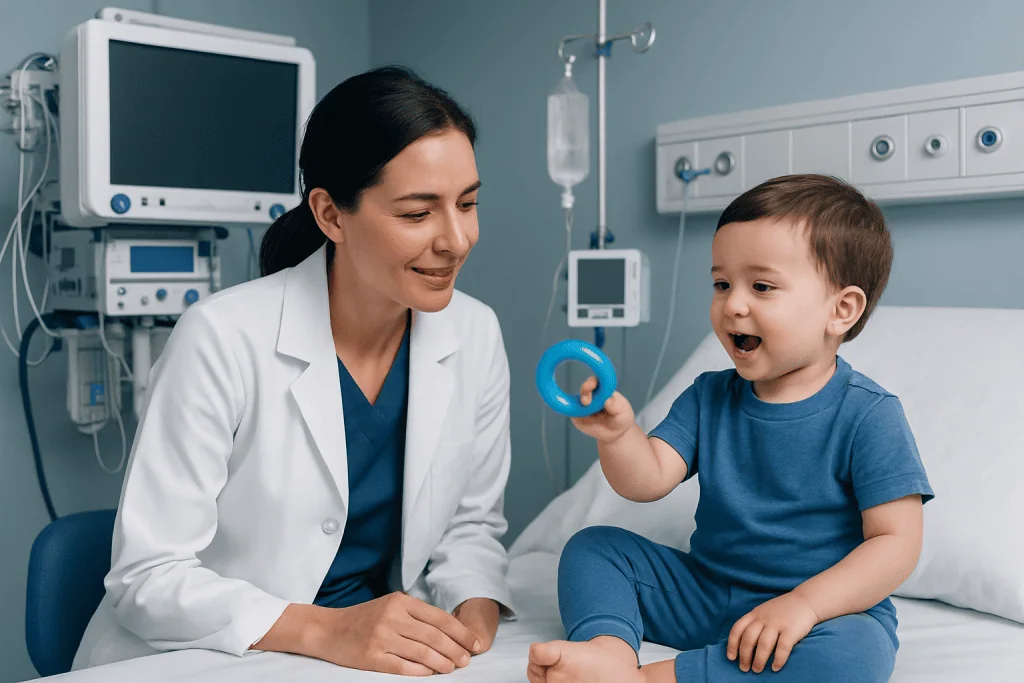
Language development often becomes more noticeable by age 2. Many children can say several words and begin combining them into simple phrases such as “more milk” or “mommy come.” They may point to familiar objects when named, follow simple one-step directions, and understand far more words than they can speak. Speech may still be unclear to unfamiliar listeners, which can be normal at this stage.
Social and emotional milestones also expand quickly. A 2-year-old often looks to caregivers for reassurance, notices when others are upset, and may show increasing independence by insisting on doing tasks alone. Tantrums can also become more common, partly because feelings are strong while language and self-control are still developing. This is a normal part of toddler growth for many children.
Play at this age usually shifts from simple exploration to more purposeful imitation and pretend. A child may feed a doll, talk on a toy phone, stack objects, sort by shape or color, or imitate household activities. Interest in other children may grow, although true cooperative play is still developing. If a child rarely makes eye contact, shows little interest in interaction, or has significant difficulty with communication, a pediatric assessment may help rule out developmental concerns such as autism.
- Uses words to label familiar people or objects
- Points to body parts or pictures in a book
- Copies adults during chores or play
- Shows simple pretend play
- Begins to express wants, choices, and frustration more clearly
Movement, Hand Skills, and Everyday Independence
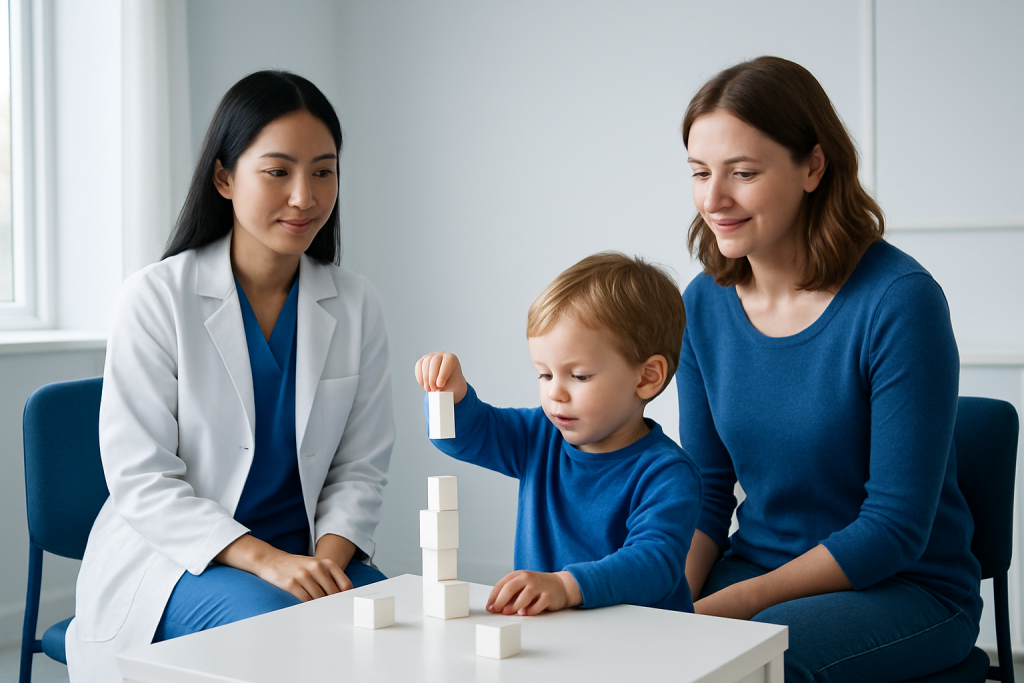
Gross motor development at age 2 usually includes more stable walking, faster running, climbing onto furniture, kicking a ball, and beginning to jump with both feet. Many children can walk up or down a few stairs with support. Balance and coordination are still developing, so falls remain common even in healthy toddlers.
Fine motor skills also improve. A child may turn pages in a book, stack several blocks, use a spoon with less spilling, scribble with a crayon, and start helping with dressing. These small hand movements support later writing, self-feeding, and daily independence.
Parents often notice a strong desire to “do it myself” at this stage. A 2-year-old may help wash hands, remove simple clothing, try to brush teeth, or attempt to put toys away. Encouraging these efforts with patience and supervision helps build confidence. If a child seems unusually stiff, floppy, very unsteady, or has persistent trouble with basic movement, a clinician may consider evaluation for motor or neurological issues, sometimes with support from pediatric rehabilitation.
How Pediatricians Assess Development
Development is assessed through a combination of caregiver observations, medical history, physical examination, and standardized screening tools. Pediatricians often ask practical questions: how many words the child uses, whether the child points to show interest, how the child moves, and how the child plays with others. These details are often more useful than comparing one child directly with another.
Routine well-child visits are an important opportunity to review milestones because development is not judged by a single skill alone. A child who is advanced in motor ability may be slower in expressive speech, while another child may speak well but be more cautious with physical tasks. A balanced view helps identify normal variation while still recognizing patterns that deserve closer follow-up.
When a concern is present, doctors may recommend hearing testing, speech and language assessment, developmental screening, or referral to pediatric specialists. For example, delayed speech should not automatically be blamed on personality or a multilingual home environment without proper assessment. If there are broader concerns involving attention, behavior, social communication, or learning patterns, further evaluation may help clarify the cause.
What Influences 2 Year Old Milestones
Development is shaped by many factors, including genetics, temperament, opportunities for play and conversation, sleep quality, hearing and vision, nutrition, and overall health. Some children are naturally cautious and observant, while others are highly active and verbal. These differences can influence when certain milestones become obvious.
Premature birth, chronic medical conditions, frequent ear infections, hearing problems, and environmental stress can affect development. Limited language exposure, reduced interactive play, or inconsistent routines may also influence progress, especially in communication and self-regulation. This does not mean a caregiver has caused a delay, but it does show why the child’s whole environment matters.
In some cases, delayed or uneven milestones are linked to a neurodevelopmental condition. Doctors may consider possibilities such as hearing loss, speech-language disorder, global developmental delay, or cerebral palsy when movement or coordination is significantly affected. Identifying concerns early can open the door to supportive therapies that improve function and participation in everyday life.
Supporting Healthy Development at Home
Families can encourage 2 year old milestones through simple, repeated daily interactions. Talking during meals, naming objects, reading aloud, singing songs, and responding to a child’s attempts to communicate all support language growth. Children learn especially well through back-and-forth interaction rather than passive screen viewing.
Active play is just as important. Safe climbing, pushing toys, ball play, drawing, stacking, and pretend games build coordination, planning, and problem-solving. Everyday routines such as dressing, bathing, and tidying up can also become learning moments when adults give the child small, manageable choices and tasks.
Healthy habits provide the foundation for development. Adequate sleep, regular meals, hearing and vision checks when needed, vaccinations, and a stable routine can all support learning and behavior. If a child has a confirmed delay, care may include speech therapy and rehabilitation or developmental support tailored to the child’s needs. Near the end of the care pathway, families may also seek multidisciplinary evaluation; Acibadem International’s JCI-accredited hospitals provide diagnosis and treatment for international patients through pediatric specialists working together.
- Read picture books every day
- Name emotions and actions during play
- Limit background distractions during conversation
- Offer chances to climb, draw, stack, and pretend
- Praise effort rather than perfection
When to Seek Medical Care
It is reasonable to seek medical advice if a 2-year-old is not using words meaningfully, does not follow simple directions, shows little interest in people, or is not walking steadily. Parents should also ask for help if the child does not point, rarely imitates actions, seems unable to hear well, or has very limited play skills compared with expected development. These signs do not confirm a serious problem, but they deserve a professional review.
Urgent assessment is especially important if a child loses skills that were already learned, such as words, social interaction, or motor abilities. Regression is not considered a normal milestone pattern. Sudden weakness, seizures, major balance changes, or signs of serious illness also require prompt medical attention.
When concerns persist, early intervention can make a meaningful difference. Depending on the child’s symptoms, care may involve developmental pediatrics, neurology, hearing evaluation, or supportive therapies such as physical therapy and rehabilitation. Families do not need to wait until problems become severe before asking questions; early evaluation is often the most helpful step.
Frequently asked questions
What are normal 2 year old milestones?
Normal 2 year old milestones usually include walking and running more confidently, using words and short phrases, following simple directions, and beginning pretend play. Children also often show more independence, imitate adults, and use their hands better for tasks like stacking blocks or turning pages.
How many words should a 2-year-old say?
There is a wide range of normal, but many 2-year-olds use multiple words and begin combining them into simple phrases. What matters most is not only the number of words, but also whether the child understands language, uses words meaningfully, and keeps making progress over time.
Is it normal for a 2-year-old to have tantrums?
Yes. Tantrums are common at this age because toddlers have strong feelings but limited language and self-control. Frequent or intense tantrums should still be discussed with a pediatrician if they are paired with poor communication, poor social engagement, or developmental concerns.
When should parents worry about speech delay at age 2?
Parents should ask a doctor about speech if a child is not using meaningful words, does not try to communicate needs, or does not seem to understand simple language. Hearing problems, developmental differences, and speech-language disorders can all affect communication, so assessment is important.
Do all children reach milestones at the same time?
No. Developmental milestones happen within a range, and healthy children often differ in when they achieve specific skills. Doctors look for steady progress and overall patterns rather than expecting every child to follow the exact same timeline.
What if a 2-year-old loses skills they already had?
Loss of previously learned skills is not considered typical and should be evaluated promptly. A doctor can help identify whether the change relates to hearing, neurological issues, developmental conditions, or another medical cause.
References
- American Academy of Pediatrics
- Centers for Disease Control and Prevention
- National Institute of Child Health and Human Development
- World Health Organization
This article is for general information only and is not a substitute for professional medical advice. Please consult a qualified doctor about your individual situation.
Explore treatments in Turkey — costs, top hospitals & a free quote
JCI-accredited · board-certified surgeons · reply within 24h