Atherosclerosis vs Arteriosclerosis: Key Differences and How Doctors Tell Them Apart

Arteriosclerosis is an umbrella term for artery wall thickening or loss of elasticity. Atherosclerosis is a type of arteriosclerosis caused by plaque made of cholesterol, fats, inflammatory cells, and calcium.
Key Takeaways
- Arteriosclerosis is an umbrella term for artery wall thickening or loss of elasticity.
- Atherosclerosis is a type of arteriosclerosis caused by plaque made of cholesterol, fats, inflammatory cells, and calcium.
- Doctors tell them apart by combining symptoms, risk factors, physical examination, blood tests, and vascular imaging.
- Atherosclerosis is more likely to cause blocked blood flow, heart attack, stroke, or leg pain with walking.
- Both conditions are managed by treating risk factors such as high blood pressure, high cholesterol, diabetes, smoking, and inactivity.
- Urgent medical care is needed for chest pain, stroke-like symptoms, or sudden severe limb pain.
Atherosclerosis and arteriosclerosis are not the same thing. Arteriosclerosis is a broad term for thickening or stiffening of arteries, while atherosclerosis is one specific type caused by fatty plaque building up inside the artery wall.
A quick side-by-side comparison
In everyday medical use, these terms are sometimes confused, but they do not mean the same thing. Arteriosclerosis describes arteries that have become thicker, harder, or less flexible over time. Atherosclerosis is a specific form of arteriosclerosis in which plaque builds up inside medium and large arteries.
This distinction matters because the cause, the way doctors confirm the diagnosis, and the complications can differ. A person may be told they have age-related arterial stiffening, high blood pressure-related vascular changes, or true plaque disease that raises the risk of heart attack or stroke.
- Arteriosclerosis: general hardening or stiffening of arteries
- Atherosclerosis: plaque buildup within the artery wall that narrows blood flow
- Main concern in arteriosclerosis: reduced elasticity, often linked with aging and high blood pressure
- Main concern in atherosclerosis: narrowing, blockage, or plaque rupture leading to cardiovascular events
- Typical diagnosis tools: blood pressure assessment, blood tests, ultrasound, CT, MRI, and angiography depending on the artery involved
- Treatment focus for both: control risk factors and protect blood vessels; for atherosclerosis, medicines or procedures may also be needed to restore blood flow
Put simply, all atherosclerosis falls under the broader category of arteriosclerosis, but not all arteriosclerosis is atherosclerosis. That is why clinicians look beyond the name and define what type of arterial change is present and whether it is affecting blood flow.
What each term means in the body
Arteries are blood vessels that carry oxygen-rich blood from the heart to the body. Healthy arteries are strong but flexible, allowing them to expand and recoil with each heartbeat. When their walls become thicker, less elastic, or damaged, circulation can become less efficient and the heart may need to work harder.
Arteriosclerosis is the broad term for this loss of normal artery flexibility. It can happen with aging, long-standing high blood pressure, diabetes, chronic inflammation, and other conditions that change the structure of the vessel wall. In some people, calcium deposits can also contribute to stiffness.
Atherosclerosis develops when fats, cholesterol, inflammatory cells, and other substances collect within the inner lining of an artery and form plaque. Over time, that plaque can enlarge, harden, and narrow the vessel. If a plaque ruptures, a blood clot may form suddenly and block blood flow.
Atherosclerosis often affects the coronary arteries, carotid arteries, aorta, and leg arteries. It may overlap with related vascular problems such as coronary artery disease or peripheral artery disease, depending on where plaque is located.
Symptoms and why many people have none at first

Both arteriosclerosis and atherosclerosis can progress quietly for years. Many people have no clear symptoms until blood flow becomes limited or a complication develops. This is one reason routine checkups and risk-factor screening are so important.
Arteriosclerosis itself may not cause specific symptoms early on. Instead, it may show up indirectly through related problems such as high blood pressure, reduced exercise tolerance, or evidence of vascular aging on imaging or examination. The symptoms often depend on which arteries are affected and how much stiffness is present.
Atherosclerosis is more likely to produce symptoms once plaque significantly narrows an artery or causes a clot. Examples include chest pressure with activity, shortness of breath, leg cramping while walking, dizziness, weakness, or sudden neurologic symptoms. If it affects the kidney arteries, it may contribute to difficult-to-control blood pressure or kidney problems.
- Possible heart-related symptoms: chest pain, pressure, shortness of breath
- Possible brain-related symptoms: transient weakness, numbness, speech trouble, vision changes
- Possible leg-related symptoms: pain with walking, cold feet, slow-healing wounds
- Possible abdominal symptoms: pain after eating in some vascular conditions
Because these symptoms overlap with other illnesses, clinicians do not rely on symptoms alone. They use the full clinical picture to determine whether symptoms are due to plaque-related disease, generalized arterial stiffening, or another cause altogether.
How doctors tell them apart
Doctors begin with the medical history and physical examination. They ask about smoking, high cholesterol, diabetes, kidney disease, family history, blood pressure, exercise habits, and symptoms such as chest pain or leg pain with walking. On examination, they may listen for bruits, compare pulses, check blood pressure in both arms, and look for signs of poor circulation.
Blood tests help identify risk factors rather than diagnose plaque directly. A lipid profile, blood glucose or HbA1c, kidney function tests, and sometimes inflammatory markers help estimate cardiovascular risk. An electrocardiogram may be useful if heart-related symptoms are present.
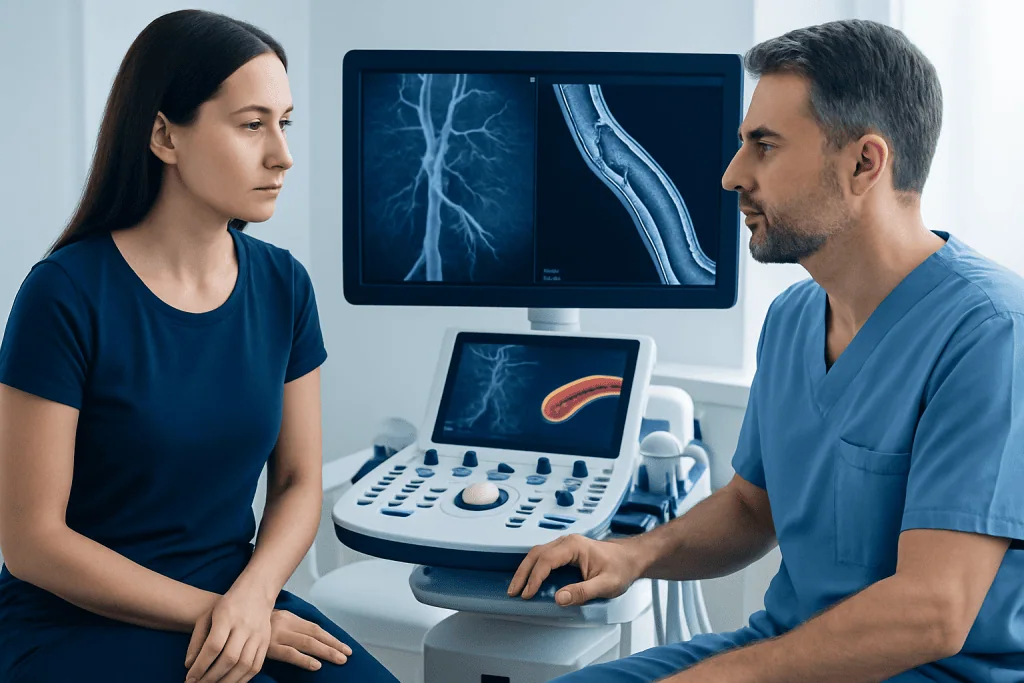
Imaging is often what separates generalized arterial stiffening from clinically significant atherosclerosis. Ultrasound can show plaque in the carotid arteries or reduced blood flow in the legs. An ankle-brachial index compares blood pressure in the ankle and arm to look for leg artery disease. CT calcium scoring can detect coronary calcification, while CT or MR angiography can show areas of narrowing. In some situations, catheter-based angiography gives the clearest view of the artery lumen and guides treatment decisions.
Doctors also look at the pattern of disease. If testing mainly shows reduced arterial elasticity or age-related vessel wall changes, the condition may be described broadly as arteriosclerosis. If imaging shows discrete plaque, narrowing, ulcerated lesions, or clot-prone areas, atherosclerosis is the more precise diagnosis. This distinction helps determine whether treatment should focus mainly on prevention or whether procedures to open blocked arteries may be needed.
Causes and risk factors for both conditions
The two conditions share many risk factors because both involve long-term injury or stress to artery walls. High blood pressure places mechanical strain on vessels. High LDL cholesterol supports plaque formation. Diabetes affects the lining of blood vessels and promotes inflammation. Smoking damages arteries directly and speeds vascular disease.
Age is a major contributor to arteriosclerosis because blood vessels naturally lose some elasticity over time. However, age alone does not fully explain severe or early disease. Genetics, chronic kidney disease, obesity, poor sleep, inactivity, and diets high in saturated fat or sodium may all play a role.
Atherosclerosis is especially linked with lipid abnormalities, inflammation, and endothelial injury. Plaque development is a biological process, not simply a matter of “wear and tear.” This is why a younger person with diabetes, smoking exposure, or a strong family history may develop plaque earlier than expected.
- High blood pressure
- High LDL cholesterol or low HDL cholesterol
- Diabetes or insulin resistance
- Smoking or tobacco exposure
- Older age
- Family history of early cardiovascular disease
- Obesity and physical inactivity
- Chronic kidney disease
Understanding these risk factors helps clinicians estimate overall cardiovascular risk and choose the right prevention strategy, even before symptoms appear.
What to do for each case
Treatment depends on whether the main issue is arterial stiffness, plaque buildup, or a complication caused by reduced blood flow. For generalized arteriosclerosis, care usually centers on blood pressure control, cholesterol management, diabetes care, exercise, weight management, and smoking cessation. These steps can reduce further vessel damage and lower the risk of future cardiovascular disease.
For atherosclerosis, treatment often includes the same lifestyle measures plus medicines to reduce plaque-related risk. A doctor may recommend lipid-lowering therapy, antiplatelet medicines in selected patients, blood pressure treatment, and strict diabetes management. The exact plan depends on the artery involved, symptom severity, bleeding risk, and overall health profile.
If plaque significantly limits blood flow, procedures may be considered. Depending on the location, doctors may use angioplasty and stent placement to open a narrowed artery, or bypass surgery when blockages are extensive or not suitable for stenting. In leg arteries, endovascular or surgical options may be discussed if walking pain is severe or tissue is at risk.
Self-care remains important in both conditions. A heart-healthy eating pattern, regular physical activity as advised by a clinician, adequate sleep, stress management, and taking prescribed medicines consistently can make a meaningful difference. Near the end of the care pathway, some international patients may seek evaluation at centers such as Acibadem International, where multidisciplinary specialists in JCI-accredited hospitals diagnose and treat vascular conditions using medical therapy, imaging, and procedures when appropriate.
When to seek medical care
Non-urgent medical care is appropriate for symptoms such as chest discomfort with exertion, new leg pain while walking, poorly controlled blood pressure, or a strong family history of early heart disease. A routine appointment is also reasonable for people with diabetes, high cholesterol, or smoking exposure who want a cardiovascular risk review before symptoms develop.
Urgent care is needed right away for possible signs of a blocked artery. These include chest pain or pressure that does not quickly improve, sudden shortness of breath, stroke-like symptoms such as facial drooping or trouble speaking, sudden severe leg pain, or a cold pale limb. These symptoms may signal a medical emergency and should not be observed at home.
Even if symptoms pass, they should still be discussed with a qualified doctor. Temporary neurologic symptoms or brief chest discomfort can sometimes be warning signs rather than harmless episodes. Early assessment often provides the best chance to prevent more serious complications.
Frequently asked questions
Is atherosclerosis the same as arteriosclerosis?
No. Arteriosclerosis is the broad term for thickening or stiffening of arteries, while atherosclerosis is one specific type in which plaque builds up inside the artery wall. Doctors use the more precise term when imaging or other findings show plaque-related disease.
Which condition is more dangerous?
Atherosclerosis usually causes more direct concern because plaque can narrow arteries, reduce blood flow, or rupture and trigger a clot. Arteriosclerosis can still matter, especially when it contributes to high blood pressure or reflects widespread vascular aging. The level of risk depends on the artery involved and the person's overall health.
Can someone have arteriosclerosis without atherosclerosis?
Yes. Arteries can become stiff or less elastic from aging, high blood pressure, diabetes, or calcification without having major plaque buildup. That said, the two conditions often overlap, especially in older adults or people with cardiovascular risk factors.
How do doctors check for atherosclerosis?
Doctors combine a medical history, physical examination, blood tests for risk factors, and imaging when needed. Ultrasound, ankle-brachial index testing, CT calcium scoring, CT angiography, MR angiography, or catheter angiography may be used depending on symptoms and the arteries being evaluated.
Can lifestyle changes help both conditions?
Yes. Stopping smoking, improving diet, being physically active, controlling blood pressure, managing cholesterol, and treating diabetes all support artery health. These measures help slow progression and reduce the risk of complications, even when medication is also needed.
Does arteriosclerosis always cause symptoms?
No. Many people have no symptoms for years. Symptoms usually appear only when blood flow is affected, blood pressure becomes difficult to control, or a complication such as angina, stroke, or leg ischemia develops.
References
- American Heart Association
- National Heart, Lung, and Blood Institute
- Centers for Disease Control and Prevention
- Society for Vascular Surgery
- European Society of Cardiology
This article is for general information only and is not a substitute for professional medical advice. Please consult a qualified doctor about your individual situation.
Explore treatments in Turkey — costs, top hospitals & a free quote
JCI-accredited · board-certified surgeons · reply within 24h
Check your numbers in seconds
BMI, calories, due date, blood pressure and 30+ more clinical calculators — free, instant, doctor-reviewed ranges.