Good Diet for Pregnant Lady Explained: Causes, Management, and When to See a Doctor
A healthy pregnancy diet centers on vegetables, fruits, whole grains, protein foods, dairy or fortified alternatives, and healthy fats. Key nutrients in pregnancy include folate, iron, calcium, vitamin D, iodine, choline, omega-3 fats, and protein.
Key Takeaways
- A healthy pregnancy diet centers on vegetables, fruits, whole grains, protein foods, dairy or fortified alternatives, and healthy fats.
- Key nutrients in pregnancy include folate, iron, calcium, vitamin D, iodine, choline, omega-3 fats, and protein.
- Some foods should be limited or avoided during pregnancy, including alcohol, high-mercury fish, and unpasteurized products.
- Small, frequent meals can help manage nausea, heartburn, constipation, and changing appetite.
- Prenatal vitamins support nutrition but do not replace a balanced diet.
- Medical advice is important if there is severe vomiting, poor weight gain, special diets, diabetes, or signs of anemia.
A good diet for pregnant lady means eating a balanced variety of foods that support both maternal health and baby’s growth, with extra attention to folate, iron, calcium, protein, iodine, and hydration. The best pregnancy diet is not about perfection or strict rules, but about steady, safe, nutrient-rich choices adjusted to each trimester and individual medical needs.
What is a good diet for pregnant lady?
A good diet for pregnant lady is a practical eating pattern that provides enough energy, protein, vitamins, minerals, fiber, and fluids for pregnancy without relying on any single “superfood.” Most pregnant women benefit from regular meals built around vegetables and fruit, whole grains, beans or lentils, eggs, fish or lean meats, dairy or fortified alternatives, nuts, seeds, and healthy oils. This approach helps support the baby’s development while also helping the mother maintain strength, digestion, and overall well-being.
Pregnancy nutrition is not the same in every person. Appetite, nausea, activity level, medical history, cultural eating habits, and pre-pregnancy weight can all affect what a healthy plan looks like. Some people need more focused guidance because of conditions such as gestational diabetes or iron deficiency, while others may need support if severe nausea makes it hard to eat enough.
Rather than “eating for two,” current advice usually focuses on eating for quality. In early pregnancy, nutrient density matters more than large increases in portion size. Later in pregnancy, energy needs rise gradually, but the emphasis remains on balanced meals and safe food choices rather than excess calories.
Why nutrition matters during pregnancy
Nutrition during pregnancy helps build the placenta, support the baby’s brain and body development, and protect the mother’s health. Adequate intake of folate, iron, calcium, iodine, protein, and other nutrients lowers the risk of some nutrition-related problems and supports healthy growth. Good eating habits may also help with energy levels, bowel regularity, and recovery after birth.
Each nutrient plays a different role. Folate supports early neural tube development. Iron helps make red blood cells and carry oxygen. Calcium and vitamin D support bones and teeth. Protein provides building blocks for tissues. Iodine and choline are important for brain development, and omega-3 fats, especially DHA, support the developing nervous system.
A healthy pregnancy diet can also make common symptoms easier to manage. Meals with fiber and fluids may improve constipation, while smaller meals may reduce nausea and heartburn. Steady eating patterns with protein and complex carbohydrates can help avoid large swings in hunger or blood sugar.
- Folate: leafy greens, beans, citrus, fortified grains
- Iron: lean red meat, beans, lentils, fortified cereals, spinach
- Calcium: milk, yogurt, cheese, calcium-fortified plant drinks
- Protein: eggs, poultry, fish, beans, tofu, yogurt, nuts
- Healthy fats: avocado, olive oil, nuts, seeds, low-mercury fish
What to eat each day
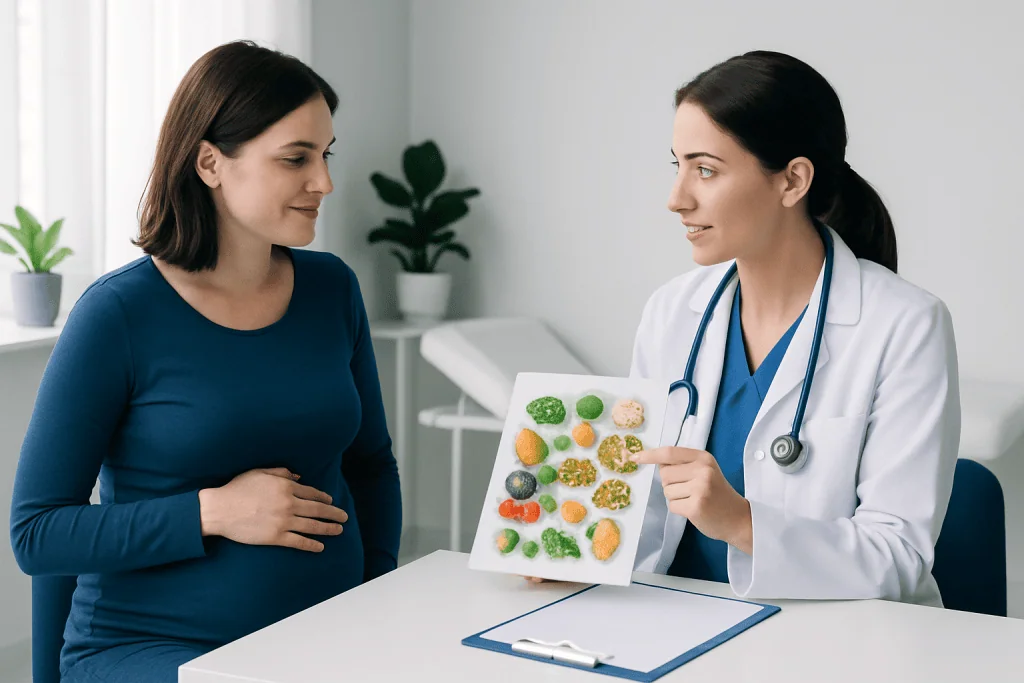
A useful way to plan pregnancy meals is to think in food groups rather than strict menus. Aim for a colorful plate that includes vegetables and fruit, a source of protein, a whole grain or other high-fiber carbohydrate, and a healthy fat. Dairy foods or fortified alternatives can be added through meals and snacks to support calcium intake.
Protein should appear regularly across the day, not only at dinner. Eggs, yogurt, beans, lentils, tofu, chicken, turkey, fish, and lean meat are common options. Whole grains such as oats, brown rice, quinoa, and whole-grain bread can help with fullness and digestion. Fruits and vegetables add fiber, potassium, vitamin C, and many other nutrients that are useful in pregnancy.
Healthy snacks can be especially helpful when appetite is unpredictable. Examples include yogurt with fruit, hummus with vegetables, whole-grain toast with nut butter, cheese with crackers, or a boiled egg with fruit. People who cannot tolerate large meals often do better with smaller, frequent portions spread through the day.
Prenatal vitamins are usually recommended because it can be difficult to get enough folic acid, iron, or iodine from food alone. Even so, supplements work best as a backup to food, not a replacement. A doctor or dietitian may also advise individualized nutrition support during pregnancy follow-up and delivery care.
Foods and drinks to limit or avoid
Some foods are avoided in pregnancy because they increase the risk of infection or expose the baby to potentially harmful substances. Alcohol should be avoided. Unpasteurized milk, cheese, and juice, as well as raw or undercooked meat, fish, eggs, and shellfish, can carry bacteria or parasites and are generally not considered safe during pregnancy.
Fish can be part of a healthy pregnancy diet because it provides protein and omega-3 fats, but lower-mercury choices are preferred. Options such as salmon, sardines, trout, and cod are commonly recommended, while high-mercury fish should be limited or avoided. Caffeine usually does not need to be eliminated completely, but it is wise to keep intake within the limits advised by a doctor.
Highly processed foods, sugary drinks, and foods very high in salt are best kept occasional rather than daily habits. They may crowd out more nutrient-rich choices and can worsen bloating or blood sugar swings. Good food hygiene also matters: wash produce well, store foods safely, and avoid foods that have been left out too long.
- Avoid alcohol
- Avoid unpasteurized dairy and juices
- Avoid raw or undercooked animal foods
- Choose lower-mercury fish
- Limit excess caffeine and sugary drinks
Managing common pregnancy nutrition challenges
Many pregnant women find that symptoms, rather than lack of knowledge, are the biggest barrier to healthy eating. Nausea may be easier to manage with dry foods, bland snacks, ginger, small frequent meals, and eating before getting very hungry. Some people tolerate cold foods better than hot meals when smells trigger nausea.
Heartburn often improves when meals are smaller and less fatty, and when lying down soon after eating is avoided. Constipation may improve with more fluids, fiber-rich foods, and regular movement if approved by a doctor. For fatigue, eating enough iron-rich foods and pairing plant iron sources with vitamin C foods may help the body absorb iron more efficiently.
Food aversions and cravings are common and usually not harmful by themselves. A person does not need to eat perfectly every day for the diet to be healthy overall. What matters most is the pattern over time. If eating becomes very limited, severe vomiting develops, or dehydration is suspected, medical advice is important because it may point to a condition such as hyperemesis gravidarum.
Women with vegetarian, vegan, gluten-free, or allergy-restricted diets can still have a healthy pregnancy diet, but they may need careful planning for protein, iron, vitamin B12, calcium, iodine, and omega-3 fats. In these situations, referral for nutrition and diet support can be especially helpful.
Special situations and medical conditions
Some pregnancies need more individualized nutrition planning. If a woman has diabetes before pregnancy, develops gestational diabetes, has high blood pressure, carries multiples, or starts pregnancy underweight or overweight, her dietary needs may differ from general advice. The goal is not restriction for its own sake, but a safe, balanced plan that supports both mother and baby.
Iron-deficiency anemia is also common in pregnancy and can cause tiredness, weakness, and shortness of breath. A doctor may recommend blood tests and discuss whether diet changes alone are enough or whether supplements are needed. Women with thyroid disease, digestive disorders, kidney problems, or a history of eating disorders may also benefit from closer monitoring.
People with a higher chance of blood sugar problems may need structured meal timing, balanced carbohydrate intake, and regular follow-up. In some cases, clinicians may recommend consultation through diabetes treatment services or coordinated maternity care. Individual medical guidance is particularly important because the “best” diet can vary depending on test results, symptoms, and pregnancy progress.
Building a realistic meal routine
A healthy pregnancy diet is easier to maintain when it fits real life. Planning simple meals, keeping nutritious snacks available, and preparing foods in advance can reduce reliance on less healthy convenience options. Batch-cooking soups, grains, beans, or chopped vegetables may be useful during busy weeks or when fatigue is high.
Hydration is another basic part of pregnancy nutrition. Water is usually the main drink of choice, though milk, soups, and some herbal beverages approved by a doctor may also contribute to fluid intake. Clear or pale yellow urine often suggests adequate hydration, but individual needs can vary with weather, activity, and vomiting.
Cultural food traditions can absolutely be part of a healthy pregnancy diet. The key is balance, food safety, and variety. There is usually no need to abandon familiar cuisines if meals include suitable proteins, vegetables, whole grains or other nourishing starches, and safe preparation methods. For women needing specialist support, Acibadem International’s multidisciplinary specialists in JCI-accredited hospitals care for international patients with pregnancy-related nutrition and medical concerns.
When to seek medical care
Pregnant women should contact a doctor if they cannot keep food or fluids down, lose weight unexpectedly, feel faint, or notice signs of dehydration such as very dark urine or very little urination. Medical advice is also important if there is persistent diarrhea, severe constipation, or symptoms that make daily eating difficult for more than a short time.
A review with a healthcare professional is also wise if there are concerns about poor appetite, restrictive eating, anemia, food allergies, or special diets that may limit key nutrients. Women with diabetes, thyroid disease, kidney disease, digestive disorders, or previous pregnancy complications often benefit from earlier and more detailed nutrition guidance.
Urgent care is needed for warning signs such as severe abdominal pain, vaginal bleeding, fever, reduced fetal movement later in pregnancy, or persistent vomiting with weakness and dizziness. Diet advice online can be useful for general education, but it should not replace individual prenatal care and medical assessment when symptoms are significant.
Frequently asked questions
What is the best good diet for pregnant lady in simple terms?
The best pregnancy diet is a balanced mix of vegetables, fruits, whole grains, protein foods, dairy or fortified alternatives, and healthy fats. It should also include key nutrients such as folate, iron, calcium, iodine, and protein, along with safe food handling and enough fluids.
Do pregnant women need to eat much more than usual?
Not usually in early pregnancy. Energy needs rise gradually later on, but the main goal is to improve food quality rather than simply eat much larger amounts. A doctor or dietitian can give more specific guidance based on body size, activity, and pregnancy progress.
Can prenatal vitamins replace healthy food?
No. Prenatal vitamins help fill common nutrient gaps, but they do not provide the full range of fiber, protein, healthy fats, and plant compounds that come from food. They work best alongside a balanced diet, not instead of one.
Which foods should be avoided during pregnancy?
Alcohol should be avoided during pregnancy. Raw or undercooked meat, fish, shellfish, and eggs, as well as unpasteurized dairy products and juices, are also generally avoided because of infection risk. Some fish high in mercury should be limited or avoided.
How can nausea affect a good diet for pregnant lady?
Nausea can make healthy eating harder, especially in the first trimester, but small frequent meals and bland foods often help. Many women tolerate crackers, toast, rice, bananas, yogurt, or cold meals better than rich or strongly scented foods. If vomiting is severe or fluids cannot be kept down, medical advice is important.
Is a vegetarian or vegan diet safe in pregnancy?
Yes, a vegetarian or vegan diet can support a healthy pregnancy if it is carefully planned. Extra attention is usually needed for protein, iron, vitamin B12, calcium, iodine, and omega-3 fats. A clinician or dietitian may recommend blood tests or supplements.
References
- World Health Organization
- American College of Obstetricians and Gynecologists
- Centers for Disease Control and Prevention
- National Institutes of Health
- Academy of Nutrition and Dietetics
This article is for general information only and is not a substitute for professional medical advice. Please consult a qualified doctor about your individual situation.
Explore treatments in Turkey — costs, top hospitals & a free quote
JCI-accredited · board-certified surgeons · reply within 24h