How to Cut? Causes, Explanations, and Next Steps

Most small skin cuts can be managed at home with gentle cleaning, pressure, and a protective dressing. A cut may need urgent care if bleeding does not stop, the wound is deep or gaping, or a tendon, fat, or bone may be involved.
Key Takeaways
- Most small skin cuts can be managed at home with gentle cleaning, pressure, and a protective dressing.
- A cut may need urgent care if bleeding does not stop, the wound is deep or gaping, or a tendon, fat, or bone may be involved.
- Redness that spreads, pus, fever, or worsening pain can suggest infection and should be checked by a doctor.
- Tetanus protection matters, especially after dirty wounds, animal bites, or injuries caused by metal or soil.
- Doctors assess how the cut happened, examine depth and function, and may recommend closure, imaging, antibiotics, or specialist care.
How to cut most often means how to deal with a skin cut, and in many cases the injury is small, stops bleeding with pressure, and heals well with basic first aid. Medical review is important when a cut is deep, keeps bleeding, shows signs of infection, or affects movement, feeling, or a sensitive area such as the face, hand, or genitals.
Overview: what “how to cut” usually means
The phrase “how to cut” can mean different things online, but in health information it is most helpful to understand it as a question about a skin cut or laceration: what it is, why it happens, and what to do next. Most everyday cuts are minor. They happen in the kitchen, at work, during shaving, sports, or hobbies, and they usually improve with simple first aid.
The key is to separate common, harmless cuts from the smaller number that need medical attention. A shallow cut that stops bleeding within several minutes of steady pressure and has clean edges can often be cared for at home. A cut that is deep, dirty, widely open, or located near a joint, the eye, or the hand deserves more careful assessment.
It also helps to remember that the appearance of a cut does not always show the full extent of injury. Some wounds can affect nerves, tendons, or blood vessels under the skin. That is why persistent bleeding, numbness, weakness, trouble moving a finger, or loss of normal sensation are important warning signs rather than details to ignore.
What a normal minor cut looks like

A minor cut usually involves only the top layers of skin. It may sting, bleed lightly, and look red or slightly swollen for a short time. The edges are often close together, and the bleeding slows with direct pressure using a clean cloth or bandage.
Over the next few days, a normal healing wound may form a small scab or stay pink and moist under a dressing. Mild tenderness is common at first. As healing continues, discomfort should gradually improve rather than worsen.
Small cuts are especially common on the hands and fingers because these areas are used constantly. Even then, proper cleaning and protection matter. A wound that looked minor at the start can become irritated or infected if dirt remains inside it or if it keeps reopening.
- Usually shallow and short
- Bleeding slows with pressure
- No visible fat, muscle, or bone
- No numbness or loss of movement
- Pain and redness improve over time
Common causes and why some cuts are more serious
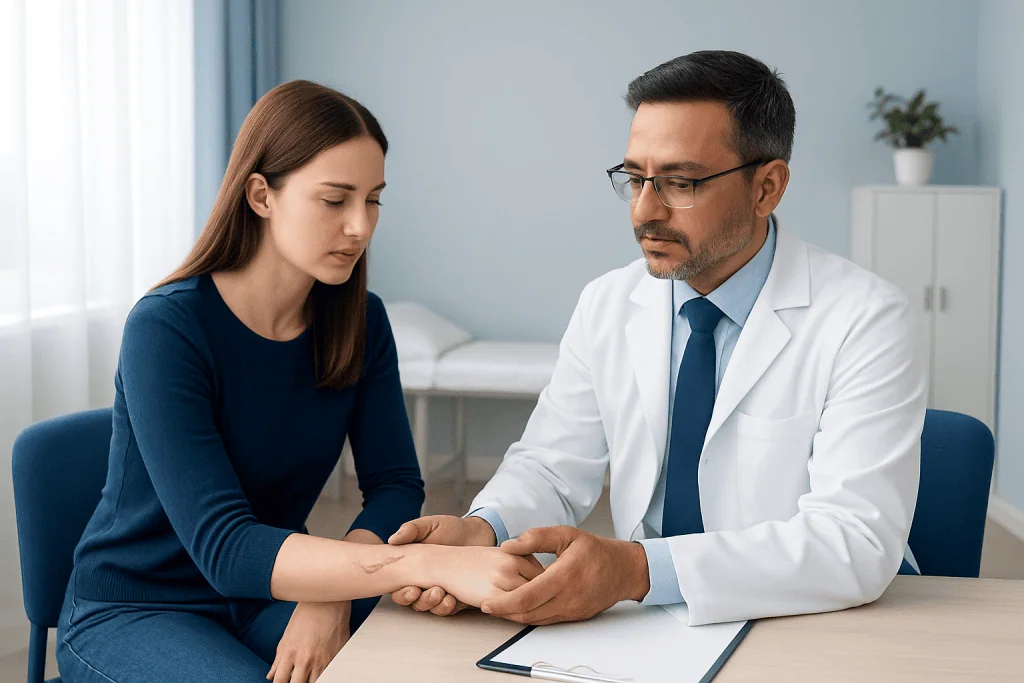
Cuts can happen from knives, broken glass, metal edges, paper, tools, falls, machinery, and sports injuries. The cause matters because it affects both wound contamination and the chance of deeper injury. A clean kitchen knife cut may differ greatly from a wound caused by rusty metal, gravel, or shattered glass.
Some situations carry extra concern. Animal or human bites can introduce bacteria deep into the tissue. Crush injuries can damage structures under the skin even when the surface wound seems limited. Glass-related injuries may leave small fragments behind, and puncture-like wounds can look smaller than they really are.
Certain health conditions also affect healing. People with diabetes, poor circulation, immune suppression, chronic skin disease, or nerve damage may need earlier medical review. A cut on the foot in someone with diabetes, for example, should never be dismissed as routine and may overlap with concerns seen in diabetic foot problems.
Location is another factor. Cuts on the face, scalp, eyelid, lip, hand, fingers, genitals, or over a joint may require careful closure to protect appearance, function, and comfort. In some cases, doctors may involve specialists in plastic and reconstructive surgery or hand care depending on the wound pattern.
Red flags that mean a cut should be checked
A cut should be medically assessed if bleeding continues despite 10 to 15 minutes of firm, direct pressure. Heavy bleeding, blood that spurts, or blood soaking through repeated dressings can indicate injury to a larger blood vessel. Emergency care is also important if the person feels faint, weak, or unwell after the injury.
Depth and function matter as much as bleeding. A wound may need stitches or another form of closure if it is gaping open, longer than expected, or deep enough to show yellow fat, muscle, or other tissue. If a finger cannot bend normally, a limb feels numb, or movement causes unusual weakness, the cut may involve a tendon or nerve.
Signs of infection are another reason to seek care. These include spreading redness, warmth, increasing swelling, bad smell, pus, fever, or pain that is getting worse instead of better. Infection can range from a local skin problem to a more serious issue such as cellulitis, especially if redness spreads beyond the wound.
Medical review is also sensible after dirty wounds, bites, injuries containing glass or debris, cuts over the face or joints, and wounds in people with diabetes or immune system problems. Tetanus status should be reviewed whenever the cut was caused by soil, metal, animal exposure, or another potentially contaminated source.
How doctors evaluate a cut
When a doctor examines a cut, the first steps are usually straightforward: how and when it happened, whether the object was clean or dirty, and whether the wound may contain glass, gravel, or metal. They also ask about tetanus vaccination, current medicines such as blood thinners, allergies, and medical conditions that can affect healing.
The wound itself is then inspected closely. The clinician checks the depth, length, and shape of the cut, looks for contamination, and assesses the surrounding skin. They may gently test feeling, circulation, and movement in the area to see whether nerves, tendons, or blood vessels are involved.
Not every cut needs imaging, but sometimes it is useful. An X-ray may help if there is concern about a retained foreign body such as glass or if the injury is near bone. If there is extensive tissue damage or uncertainty about deeper structures, a specialist assessment may be arranged. This may be coordinated with services such as emergency medicine when immediate wound care is needed.
Doctors also decide whether the wound is suitable for closure. Timing matters because some wounds can be stitched safely soon after injury, while others are left open or only partially closed if infection risk is high. The goal is not only to close the skin, but also to support safe healing and preserve function.
Treatment options and home care
For a small, uncomplicated cut, home care often begins with washing hands, applying gentle pressure if bleeding is present, and rinsing the wound with clean running water. Mild soap can be used on the surrounding skin. Harsh scrubbing, strong chemicals, or repeated irritation can slow healing, so a simple, gentle approach is usually best.
After cleaning, a thin layer of suitable protective ointment may be used if advised, followed by a clean dressing. The dressing should be changed if it becomes wet or dirty. Keeping the wound covered for the first phase of healing can reduce friction and help the skin repair itself in a protected environment.
Medical treatment may include wound closure with adhesive strips, skin glue, sutures, or staples, depending on the cut. In more complex cases, the wound may need deeper repair, cleaning under local anesthesia, or surgical exploration. If there is concern about tendon or nerve injury, referral to a surgical team may be appropriate, sometimes with support from orthopedics and traumatology.
Antibiotics are not needed for every cut, but they may be considered for bites, heavily contaminated wounds, or established infection. Pain relief, elevation of the injured area, and checking tetanus protection are common parts of care. Near the end of the care pathway, some international patients may also seek follow-up through Acibadem International, where multidisciplinary specialists in JCI-accredited hospitals evaluate and treat wound-related conditions when needed.
Prevention and self-care after a cut
Good wound care continues after the initial injury. The area should be kept reasonably clean and protected from repeated impact or stretching. Picking at a scab or soaking the wound for long periods can delay healing. Once the skin has closed, moisturization and sun protection may help reduce visible scarring over time, especially on exposed areas.
Handwashing before changing dressings is one of the simplest ways to lower infection risk. Dressings do not always need to stay on for a long time, but the wound should remain protected while it is still vulnerable to reopening. If the cut is near a joint, reducing strain for a short period may help the wound stay closed.
Prevention is often practical rather than medical. Using sharp knives carefully, wearing protective gloves when handling glass or tools, storing blades safely, and using proper sports or workplace equipment can reduce risk. For children, adult supervision and safe storage of sharp objects are especially important.
People with diabetes, circulation problems, or reduced feeling in the feet and hands should inspect their skin regularly. Even a small unnoticed cut can worsen if pressure, poor healing, or infection develops. In these cases, early advice is often better than waiting to see if the problem settles on its own.
When to seek medical care
Medical care should be sought promptly if a cut keeps bleeding after firm pressure, if the wound is deep or widely open, or if there is visible fat, tendon, or bone. Cuts involving the face, eyelid, lip, hand, fingers, genitals, or a major joint should also be assessed because these areas affect function and appearance.
A doctor should also review a cut if there is numbness, weakness, reduced movement, a possible foreign body, or concern about infection. Fever, spreading redness, bad-smelling drainage, pus, and worsening pain are all signs that healing may not be going normally.
Urgent care is especially important after bites, dirty injuries, crush wounds, and cuts in people who take blood thinners or have diabetes or immune system problems. If the person has not had a recent tetanus vaccination or is unsure of their vaccination status, that is another good reason to seek medical advice.
If a wound is severe, bleeding heavily, or associated with dizziness, pallor, or trouble using the affected limb, emergency assessment is safest. When in doubt, it is reasonable to let a qualified clinician decide whether the cut is simple or whether it needs closure, infection prevention, or specialist care.
Frequently asked questions
How do people know if a cut needs stitches?
A cut may need stitches if it is deep, gaping, located on the face or over a joint, or if the edges do not stay together after gentle pressure. Continued bleeding, visible deeper tissue, or trouble moving the nearby area also suggest the wound should be assessed by a doctor.
Can a small cut become infected even if it seemed minor at first?
Yes. Even a small cut can become infected if dirt remains in the wound, the skin keeps reopening, or bacteria enter during healing. Increasing redness, warmth, swelling, pus, fever, or worsening pain are signs that medical review is needed.
Should a cut be left open to air or covered?
Many minor cuts heal better when they are gently cleaned and covered with a clean dressing during the early healing phase. Covering helps protect the wound from friction, dirt, and repeated injury. The dressing should be changed if it becomes wet or dirty.
When is tetanus a concern after a cut?
Tetanus is more concerning after dirty wounds, puncture-type injuries, cuts involving soil or metal, and animal bites. A doctor can advise whether a booster is needed based on the type of wound and the person’s vaccination history.
What should be done first if a cut is bleeding?
The first step is usually firm, direct pressure with a clean cloth or dressing. Elevating the area can help in some cases, but pressure is the most important immediate action. If bleeding does not stop after about 10 to 15 minutes, medical care is important.
Is it safe to remove glass or debris from a cut at home?
Very small, loose surface debris may rinse away with clean running water, but digging into a wound is not recommended. If glass, metal, gravel, or another object may be embedded, a doctor should examine the cut to avoid further injury and reduce infection risk.
References
- American Academy of Dermatology
- Centers for Disease Control and Prevention
- National Health Service
- Mayo Clinic
- World Health Organization
This article is for general information only and is not a substitute for professional medical advice. Please consult a qualified doctor about your individual situation.
Explore treatments in Turkey — costs, top hospitals & a free quote
JCI-accredited · board-certified surgeons · reply within 24h
Add us as a Preferred Source to see more of our trusted health content across Google Search, AI Overviews and Discover.

More from the Health Library


Related Specialists

Prof. Dr. İlkan Dünder
Gynecology & Obstetrics
Ody. Asime Kurter
Audiology
Dr. Ahmet Varolan
Gynecology & Obstetrics
Dr. Berkun Koncay
Pediatrics