Dental bridge in Turkey: Hospitals, Safety & What to Expect

A dental bridge replaces missing teeth by attaching an artificial tooth or teeth to supporting teeth or dental implants. Suitability depends on oral health, gum health, bite alignment, bone support and the condition of the supporting teeth.
Key Takeaways
- A dental bridge replaces missing teeth by attaching an artificial tooth or teeth to supporting teeth or dental implants.
- Suitability depends on oral health, gum health, bite alignment, bone support and the condition of the supporting teeth.
- Treatment commonly involves assessment, tooth preparation when needed, impressions or digital scans, a temporary bridge and fitting of the final restoration.
- Short-term sensitivity and gum soreness can occur; good cleaning and regular dental reviews help a bridge last longer.
- International patients should plan enough time for appointments, laboratory work, possible adjustments and follow-up care.
A dental bridge in Turkey may be an appropriate option for replacing one or more missing teeth when a qualified dentist confirms that the teeth and gums can support it. Safe care depends on an individual assessment, clear treatment planning, appropriate materials, infection-control standards and a realistic plan for aftercare at home.
Overview: Dental Bridge Treatment in Turkey
A dental bridge in Turkey is a restorative dental treatment used to fill a gap left by one or more missing teeth. It can help restore chewing, speech and the appearance of a complete smile, while helping to limit movement of nearby teeth into the empty space. The right approach is individual: a dentist first needs to assess the mouth, the bite and the health of possible supporting teeth or implants.
A conventional bridge usually consists of a replacement tooth, called a pontic, held in place by crowns on teeth next to the gap. Other designs include resin-bonded bridges, which may require less tooth preparation, and implant-supported bridges, which are supported by dental implants rather than natural teeth. Learn more about dental bridge treatment and the options that may be discussed during a dental consultation.
For people travelling for care, safety is not defined by location alone. It relies on an appropriately qualified dental team, a full clinical examination, suitable imaging, documented materials, hygienic clinical processes and a clear aftercare plan. Patients should be able to ask questions, understand alternatives and take time to make an informed decision.
How a Dental Bridge Works and Who May Be a Candidate
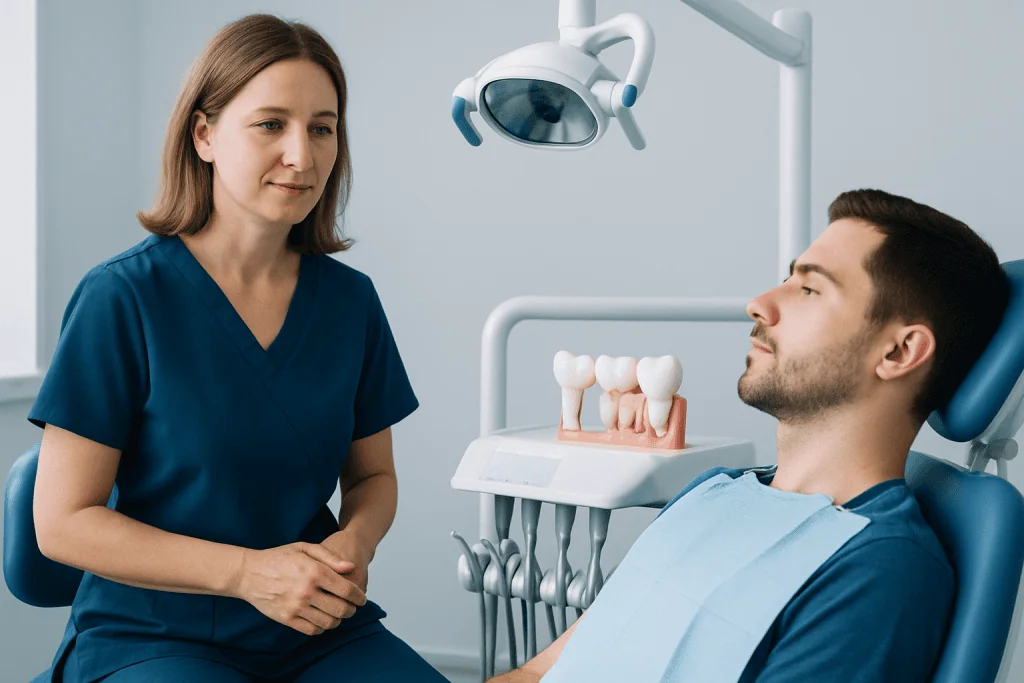
A bridge closes a tooth gap by transferring chewing forces to its supports. With a traditional fixed bridge, the adjacent teeth are shaped to receive crowns, and the replacement tooth is joined between them. With an implant-supported bridge, implants are placed in the jawbone and later support the restoration. The most suitable design depends on the number and position of missing teeth, the bite, and the condition of the gums and jawbone.
Potential candidates usually have stable gum health, adequate support from nearby teeth or implants, and a commitment to daily oral hygiene. A dentist will also consider untreated decay, gum disease, tooth grinding, bite problems, dry mouth, smoking and medical conditions that may affect healing. Existing dental work and the amount of healthy tooth structure are important when deciding whether crowns are advisable.
A bridge is not always the best solution. In some situations, a single implant, a removable partial denture, orthodontic treatment, or no replacement may be discussed. If gum disease is present, it should usually be treated and stabilised before a final bridge is placed. The aim is to choose a restoration that protects long-term oral health rather than simply filling a visible space.
Assessment and Treatment Planning Before Travel

Before travelling, patients can usually share recent dental records, photographs and X-rays if available. These can help an initial discussion, but they do not replace an in-person examination. A final treatment recommendation should be made only after the dentist has assessed the teeth, gums, bite and relevant imaging directly.
At the first visit, the dental team may take dental X-rays, photographs, impressions or an intraoral digital scan. They will check for decay, gum inflammation, loose teeth, infection, cracks, wear and changes in bite. If implants are being considered, three-dimensional imaging may be needed to assess bone and nearby anatomical structures. Any findings that affect the plan should be explained before treatment proceeds.
International patients should ask for a written plan that identifies the bridge type, the teeth or implants that will support it, the planned material and the expected appointment sequence. It is also helpful to clarify what may change if hidden decay, gum disease, root problems or an unsuitable support tooth is found. Travel plans should allow time for any necessary changes, laboratory work and bridge adjustments rather than relying on an inflexible timetable.
Step-by-Step: What the Dental Bridge Procedure Involves
For a conventional bridge, the dentist first numbs the area if needed and prepares the supporting teeth by removing a small amount of enamel so crowns can fit over them. If old fillings, decay or other dental problems are found, these may need treatment before the bridge can be completed. In some cases, root canal treatment or a different restoration plan may be recommended.
Next, the dentist records the shape of the teeth and bite using a digital scan or conventional impression. This information is sent to a dental laboratory to create the bridge. A temporary bridge may be placed to protect prepared teeth and help maintain appearance and function while the final bridge is made. Temporary restorations require care, as they are not designed to withstand the same forces as the final bridge.
At the fitting appointment, the dentist checks the bridge’s appearance, margins, contact points and bite. Small adjustments may be needed to ensure that the teeth meet comfortably and cleaning access is practical. The bridge is then cemented or otherwise secured. Implant-supported bridges follow a different sequence because implant placement and healing may be needed before the final teeth are attached.
Patients travelling for a dental bridge should not assume every case can be completed in one visit. The number of appointments depends on the bridge type, laboratory process, whether additional care is needed and whether the bite requires adjustment. A responsible plan includes time to review comfort and fit before departure.
Recovery Timeline, Benefits and Possible Risks
After tooth preparation or bridge fitting, mild sensitivity to temperature, pressure or biting can occur for a short time. The gums may also feel tender, particularly around prepared teeth. Most people can return to usual daily activities quickly, but it is sensible to choose softer foods until numbness has worn off and the bite feels comfortable.
During the first days, patients should follow the dental team’s advice, avoid testing the bridge with very hard or sticky foods and contact the clinic if the bite feels high or uneven. A bridge that meets first when biting can cause discomfort and should be adjusted. If a temporary bridge comes loose, it should be reviewed promptly rather than glued back at home.
Benefits of a well-planned bridge can include improved chewing, clearer speech, better smile appearance and prevention of neighbouring teeth drifting into the gap. However, bridges also have limitations. Preparing support teeth is irreversible, and the bridge does not prevent future decay or gum disease around its edges. The replacement tooth itself cannot decay, but the natural teeth beneath the crowns can.
Possible complications include persistent sensitivity, inflammation of the gums, decay around crown margins, fracture or loosening of the bridge, bite discomfort and failure of a supporting tooth. Implant-supported bridges also carry surgical and healing-related considerations. Regular dental checks and prompt attention to new pain, swelling or looseness can help address problems early.
Safety, Hospital Standards and Travel Planning
Patients considering dental care abroad should look for transparent clinical governance rather than relying only on testimonials or photographs. Helpful questions include who will perform each stage, what diagnostics are included, how infection prevention is managed, which materials and laboratory are used, and how records will be provided. The clinic should explain benefits, limitations, alternatives and potential complications in a language the patient understands.
JCI accreditation applies to healthcare organisations and reflects assessment against international standards for quality and patient safety. It does not replace the need to assess the individual dentist, the proposed treatment and the suitability of the patient’s case. Patients can ask whether care will take place within a JCI-accredited hospital setting and how dental services, laboratory work, emergency support and post-treatment reviews are coordinated.
Travel planning should include sufficient time in the destination for assessment, treatment and any planned adjustment visit. Patients should bring a list of medicines, allergies and relevant medical history, and should avoid scheduling important travel immediately after a procedure if they may need review. Accommodation should be practical for attending appointments and resting comfortably, especially if treatment is extensive.
Before returning home, patients should request copies of X-rays or scans when appropriate, a summary of treatment, material information and aftercare instructions. They should also identify a local dentist who can provide routine check-ups or urgent assessment if needed. Acibadem International’s multidisciplinary specialists and JCI-accredited hospitals support diagnosis and treatment planning for international patients, with coordination around the clinical process and travel arrangements.
Caring for a Dental Bridge and When to Seek Medical Care
A bridge needs the same careful daily cleaning as natural teeth, with extra attention where the bridge meets the gums and support teeth. Brushing twice daily with fluoride toothpaste, cleaning between teeth, and using bridge-cleaning aids recommended by the dentist can reduce plaque buildup. Regular professional reviews help identify early signs of gum disease, decay or bite changes.
It may be helpful to avoid repeatedly biting very hard objects, using teeth as tools, or chewing ice. People who clench or grind their teeth may benefit from assessment for a protective night guard. Tobacco use can increase risks for gum health and healing, so stopping or reducing tobacco is beneficial for oral and general health.
When to seek medical care: Patients should contact a dentist promptly for increasing pain, facial or gum swelling, fever, persistent bleeding, a loose or broken bridge, a bad taste with discharge, or difficulty biting normally. Urgent medical assessment is needed for severe swelling, trouble breathing or swallowing, or signs of a serious allergic reaction. These symptoms are uncommon but should not be ignored.
Routine follow-up after a dental bridge is also important when there are no symptoms. A local dentist can check the bridge margins, gums, supporting teeth and bite over time. Consistent maintenance is one of the most important factors in preserving the health of the bridge and the tissues around it.
Frequently asked questions
Is a dental bridge in Turkey safe?
A dental bridge can be provided safely when the patient has a thorough assessment, treatment is delivered by appropriately qualified professionals, and appropriate infection-control and quality processes are in place. Patients should also have a clear plan for follow-up, including routine care once they return home. JCI accreditation of a hospital can be one useful quality indicator, but it does not replace individual clinical assessment.
How long does it take to get a dental bridge?
The timing depends on the bridge type, the condition of the teeth and gums, and the laboratory workflow. A conventional bridge often requires at least an assessment and preparation visit followed by a fitting visit, with a temporary bridge in between. More complex cases or implant-supported bridges may require a longer staged plan.
Will getting a dental bridge hurt?
Tooth preparation is commonly performed with local anaesthesia, so patients should not feel pain during that stage. Some temporary sensitivity or gum tenderness may occur afterward, especially when prepared teeth have been exposed to temperature changes or bite pressure. Ongoing or worsening pain should be assessed by a dentist.
Can a dental bridge replace several missing teeth?
Yes, some bridges can replace more than one missing tooth. However, longer bridges place greater demands on their support teeth or implants, so the dentist will assess whether this is predictable for the individual bite and oral health. In some cases, implants or another option may be more suitable.
How should a dental bridge be cleaned?
A bridge should be brushed twice daily using fluoride toothpaste, with careful cleaning along the gumline and around the supporting teeth. The space beneath the replacement tooth may need cleaning with floss threaders, interdental brushes or another device recommended by the dentist. Regular dental hygiene visits can support long-term maintenance.
What should a patient ask before travelling for a dental bridge?
Patients should ask about the proposed bridge type, supporting teeth or implants, materials, expected appointment sequence and possible alternatives. It is also sensible to ask how unexpected findings will be managed, what documents will be provided, and how urgent concerns after returning home should be handled. Sufficient time for final fitting and bite adjustment should be built into travel plans.
References
- American Dental Association
- FDI World Dental Federation
- National Institute of Dental and Craniofacial Research
- Joint Commission International
- NHS
This article is for general information only and is not a substitute for professional medical advice. Please consult a qualified doctor about your individual situation.
Dental Bridge in Turkey — costs, top hospitals & a free quote
JCI-accredited · board-certified surgeons · reply within 24h