Lithotripsy Meaning: An Evidence-Based Patient Guide

Lithotripsy refers to breaking urinary stones using focused shock waves, laser energy, or other specialized instruments. The best technique depends on the stone’s size, location, composition, and the person’s anatomy and overall health.
Key Takeaways
- Lithotripsy refers to breaking urinary stones using focused shock waves, laser energy, or other specialized instruments.
- The best technique depends on the stone’s size, location, composition, and the person’s anatomy and overall health.
- Shock wave lithotripsy treats some stones from outside the body, while laser lithotripsy is performed through a scope passed through the urinary tract.
- Blood in the urine, soreness, and passing stone fragments are common short-term effects; urgent symptoms should be assessed promptly.
- Follow-up imaging and stone-prevention planning are important because lithotripsy treats existing stones but does not prevent new ones.
Lithotripsy is a minimally invasive stone-treatment method that breaks kidney or urinary tract stones into smaller fragments. The fragments may then pass in urine naturally or be removed during an endoscopic procedure.
Overview: lithotripsy meaning and purpose
Lithotripsy meaning is the medical process of breaking a stone into smaller pieces so it can leave the body more easily or be removed. It is most often used for kidney stones and stones in the ureter, the tube that carries urine from the kidney to the bladder. Depending on the method, energy is delivered from outside the body or through a small instrument placed through the natural urinary passage.
Stones can cause no symptoms, but they may also lead to severe side or back pain, nausea, blood in the urine, urinary blockage, or infection. Lithotripsy is considered when a stone is unlikely to pass safely on its own, is causing significant symptoms, blocks urine flow, or is linked with recurrent infection or impaired kidney function.
Lithotripsy is not a single identical treatment. The main approaches are extracorporeal shock wave lithotripsy (ESWL or SWL), which uses sound-wave shock waves outside the body, and laser lithotripsy, usually performed during ureteroscopy. A urologist helps select the most suitable method after reviewing imaging, symptoms, stone features, and individual health needs.
This lithotripsy patient education guide explains what the procedure involves, who may be a candidate, and what recovery commonly looks like. It is general information and cannot replace individualized advice from a qualified clinician.
What is the medical definition of lithotripsy?
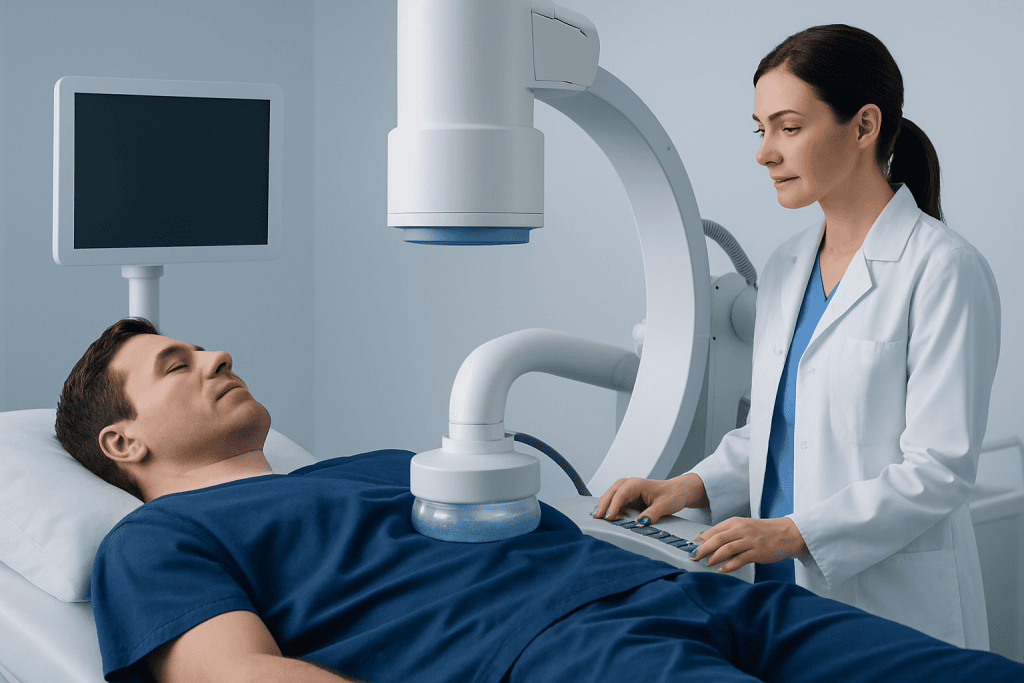
The medical definition of lithotripsy is the fragmentation of a calculus, or stone, within the body using physical energy. In urology, it usually means breaking urinary stones in the kidney or ureter. The word comes from Greek terms referring to stone and crushing.
With shock wave lithotripsy, a machine focuses brief, high-energy sound waves on the stone. These waves travel through the body and create forces within the stone that cause it to crack into smaller fragments. No incision is needed, although imaging is used to locate and target the stone accurately.
With laser lithotripsy, a urologist passes a thin viewing instrument called a ureteroscope through the urethra and bladder to the ureter or kidney. A laser fiber is placed near the stone to dust it into fine particles or break it into pieces that can be retrieved. This technique is part of kidney stone treatment when endoscopic access is appropriate.
Other stone procedures may be recommended instead of lithotripsy in certain circumstances. For example, larger or complex kidney stones may require percutaneous nephrolithotomy, in which instruments reach the kidney through a small opening in the back.
How doctors decide whether lithotripsy is suitable

Lithotripsy requirements vary by technique. A clinician usually confirms the stone’s size, location, and density using imaging such as ultrasound, X-ray, or CT. Urine testing helps identify infection, while blood tests may be used to assess kidney function and overall procedural safety.
Shock wave lithotripsy may be particularly useful for selected kidney stones or upper-ureter stones that are not excessively large or dense. Results can be less predictable for stones in some locations, for very hard stones, or where body anatomy makes accurate shock-wave targeting difficult. Laser lithotripsy is often considered for ureter stones and for stones that need direct treatment or removal.
The urology team also considers symptoms, obstruction, prior stone events, medicines, bleeding risk, pregnancy status, and whether there is an active urinary infection. The aim is not simply to fragment a stone, but to relieve obstruction safely and achieve the best possible chance of becoming stone-free.
- Stone size, number, location, and composition or density
- Whether urine flow is blocked and whether kidney function is affected
- Current pain, infection risk, and previous stone treatments
- Pregnancy, use of blood-thinning medicines, and anesthesia considerations
People with recurrent stones may also benefit from an evaluation for kidney stones and their underlying causes. Identifying the stone type can guide practical prevention measures after treatment.
When is lithotripsy not recommended?
Lithotripsy is not recommended in every situation. An untreated urinary tract infection, especially one accompanied by obstruction, needs urgent medical management before elective stone fragmentation because manipulating an infected, blocked urinary system can allow infection to worsen.
Shock wave lithotripsy is generally avoided during pregnancy because the effects of shock waves on a developing fetus are not considered acceptable. It may also be unsuitable for people with certain bleeding disorders or those who cannot safely pause anticoagulant or antiplatelet medicines. Medication changes must be directed by the prescribing clinician and procedural team.
Some stones are less likely to respond well to shock waves, including particularly large, very dense, or complex stones. Abnormal drainage anatomy, inability to position or target the stone reliably, and certain vascular conditions near the treatment pathway may also affect eligibility. In these situations, ureteroscopy with laser treatment or another procedure may offer a more appropriate option.
A urologist will discuss alternatives and explain why one approach is favored. A decision to avoid lithotripsy does not mean a stone cannot be treated; it means another route may be safer or more effective for that individual stone.
What happens during a lithotripsy procedure?
Before treatment, the care team reviews imaging, allergies, current medicines, and test results. Patients may be asked not to eat or drink for a specified period if sedation or anesthesia is planned. The exact preparation instructions should come from the treating hospital because they depend on the planned technique and medical history.
For shock wave lithotripsy, the patient lies on a padded treatment table, often on the back or side. This lithotripsy patient position is chosen to align the stone with the machine’s focal point while maintaining comfort and safety. X-ray or ultrasound guides targeting, and the machine delivers a series of shock waves over the treatment session.
For ureteroscopic laser lithotripsy, the urologist introduces a slender scope through the urethra into the bladder and ureter, without a skin incision. The stone is visualized directly, then laser energy is used to break it. Fragments may be removed in a small basket, and a temporary ureteral stent may be placed to support urine drainage while swelling settles.
Procedure length varies with the technique, stone burden, and whether additional steps are necessary. Many procedures are performed as day treatment, although observation or admission can be needed when there are medical concerns, a complex procedure, or infection risk.
Do doctors typically put you to sleep for a lithotripsy procedure?
Whether a person is put to sleep depends mainly on the type of lithotripsy, the expected duration, the individual’s comfort, and local anesthesia practice. Ureteroscopic laser lithotripsy is commonly done under general anesthesia, meaning the patient is asleep and does not feel the procedure.
Shock wave lithotripsy may be performed with sedation, pain medicine, regional anesthesia, or general anesthesia, depending on the equipment used and the individual situation. Some people need only light sedation, while others benefit from deeper anesthesia to remain comfortable and still enough for precise targeting.
An anesthesiology professional reviews relevant health conditions, previous reactions to anesthesia, fasting status, and medicines before the procedure. Patients should ask in advance which anesthetic plan is expected and what arrangements are needed for going home, including having a responsible adult accompany them if sedatives or anesthesia are used.
Good lithotripsy patient teaching includes understanding that anesthesia is tailored rather than one-size-fits-all. The care team can explain the anticipated benefits, side effects, and alternatives before consent is given.
Recovery, benefits, and possible risks
The main benefit of lithotripsy is that it can treat a problematic stone without traditional open surgery. Shock wave treatment avoids internal instruments, while ureteroscopic laser treatment uses the body’s natural urinary passage. Both approaches can relieve blockage, reduce stone-related symptoms, and lower the risk of ongoing complications from an untreated obstructing stone.
After shock wave lithotripsy, mild bruising or soreness in the treated area, temporary blood in the urine, and discomfort as fragments pass can occur. After ureteroscopy, burning with urination, urinary urgency, mild blood in the urine, or stent-related discomfort are possible. The treating team may recommend pain relief, fluid intake appropriate to the person’s health, and straining urine to collect fragments for analysis.
Potential risks include incomplete stone clearance, the need for an additional procedure, urinary infection, bleeding, ureter injury, and obstruction by multiple fragments. A cluster of fragments causing blockage is sometimes called steinstrasse. Although significant complications are uncommon, prompt evaluation is important if concerning symptoms develop.
Follow-up imaging checks whether fragments remain and whether urine is draining well. Stone analysis and metabolic testing may be advised for recurrent stones, helping the clinician develop a tailored plan that may include dietary changes or preventive medicines.
How long do you pass kidney stones after lithotripsy? When to seek medical care
After shock wave lithotripsy, kidney stone fragments may begin to pass within days, but passage can continue for several weeks. The timeframe depends on the original stone’s size and location, how completely it fragmented, and how easily the urinary tract can clear the pieces. Some fragments remain without symptoms and may require monitoring or further treatment.
After laser lithotripsy, fine dust may pass in the urine for a short period, while larger pieces may be removed during the procedure. If a temporary stent is used, urinary symptoms can continue until it is removed. The urology team will provide a specific follow-up plan and tell the patient when to expect stent removal, if applicable.
Medical care should be sought promptly for fever or chills, worsening or severe pain not controlled by the prescribed plan, persistent vomiting, inability to urinate, heavy bleeding or blood clots in urine, fainting, or feeling significantly unwell. These symptoms may indicate infection, obstruction, or another issue that requires timely assessment.
For international patients, Acibadem International’s multidisciplinary specialists and JCI-accredited hospitals provide assessment and treatment for urinary stone conditions. Long-term prevention commonly includes adequate fluid intake when medically appropriate, individualized dietary guidance, and follow-up with a urologist.
Frequently asked questions
Is lithotripsy the same as surgery?
Lithotripsy is a procedure rather than traditional open surgery. Shock wave lithotripsy is performed from outside the body, while laser lithotripsy uses a scope passed through the urinary tract without a skin incision. Some people may still need another procedure if fragments do not clear.
Is shock wave lithotripsy painful?
Shock waves can cause discomfort, which is why pain relief, sedation, or anesthesia may be used. The level of discomfort varies by person and by treatment method. The care team will discuss comfort measures before the procedure.
How successful is lithotripsy for kidney stones?
Success depends on the stone’s size, location, hardness, and the type of lithotripsy used. Some stones clear after one treatment, while others require repeat treatment or a different procedure. Follow-up imaging is used to assess the result.
Can a kidney stone come back after lithotripsy?
Yes. Lithotripsy breaks or removes a current stone but does not eliminate the tendency to form stones. Testing of stone fragments and urine may help identify prevention strategies suited to the individual.
Should a person drink lots of water after lithotripsy?
Many people are advised to drink fluids to support urine flow and fragment passage, but the amount should follow the treating clinician’s advice. Fluid targets may need adjustment for people with heart, kidney, or other medical conditions. Patients should ask their urology team for individualized guidance.
How long is recovery after lithotripsy?
Many people return to light daily activities within a few days, though this depends on the procedure, anesthesia, pain level, and whether a stent was placed. Passing fragments can cause intermittent discomfort for days to weeks after shock wave treatment. The treating team can advise when it is safe to resume work, exercise, and driving.
References
- National Institute of Diabetes and Digestive and Kidney Diseases
- American Urological Association
- European Association of Urology
- National Health Service
- Mayo Clinic
This article is for general information only and is not a substitute for professional medical advice. Please consult a qualified doctor about your individual situation.
Explore treatments in Turkey — costs, top hospitals & a free quote
JCI-accredited · board-certified surgeons · reply within 24h