Broken Collarbone Recovery: A Week-by-Week Timeline
Most uncomplicated collarbone fractures begin improving in pain within the first few weeks, but the bone needs several more weeks to regain strength. A sling, pain management and carefully timed movement are common parts of non-surgical treatment.
Key Takeaways
- Most uncomplicated collarbone fractures begin improving in pain within the first few weeks, but the bone needs several more weeks to regain strength.
- A sling, pain management and carefully timed movement are common parts of non-surgical treatment.
- Surgery may be recommended when fracture pieces are significantly displaced, the skin is threatened, an open fracture is present or healing is unlikely to occur in a good position.
- Follow-up examinations and X-rays help confirm that the fracture is healing before a return to strenuous activity.
- New numbness, breathing difficulty, a cold or pale arm, worsening pain or skin pressure over the fracture requires urgent medical assessment.
Broken collarbone recovery time is commonly about 6-12 weeks for bone healing, although returning to heavy lifting, contact sports or unrestricted activity may take longer. Recovery varies with the fracture location, amount of displacement, treatment approach, age, overall health and whether complications occur.
Overview: how long does a broken collarbone take to heal?
A broken collarbone, also called a clavicle fracture, occurs when the long bone between the breastbone and shoulder breaks. It is often caused by a fall onto the shoulder, a sports injury, a direct blow or a road traffic accident. Pain, swelling, bruising and difficulty moving the arm are common soon after the injury.
For many adults, broken collarbone recovery time is approximately 6-12 weeks for the bone to unite. Children often heal more quickly, while older adults, people who smoke, and those with more complex fractures may need longer. Even after the bone has healed on an X-ray, rebuilding shoulder strength, motion and confidence can take additional weeks or months.
Most clavicle fractures can be treated without surgery. A clinician assesses the injury promptly because the collarbone sits near important nerves, blood vessels and the top of the lung. The treatment plan is based on the fracture pattern, alignment, skin condition, activity needs and the person’s overall health.
The recovery timeline: what to expect week by week
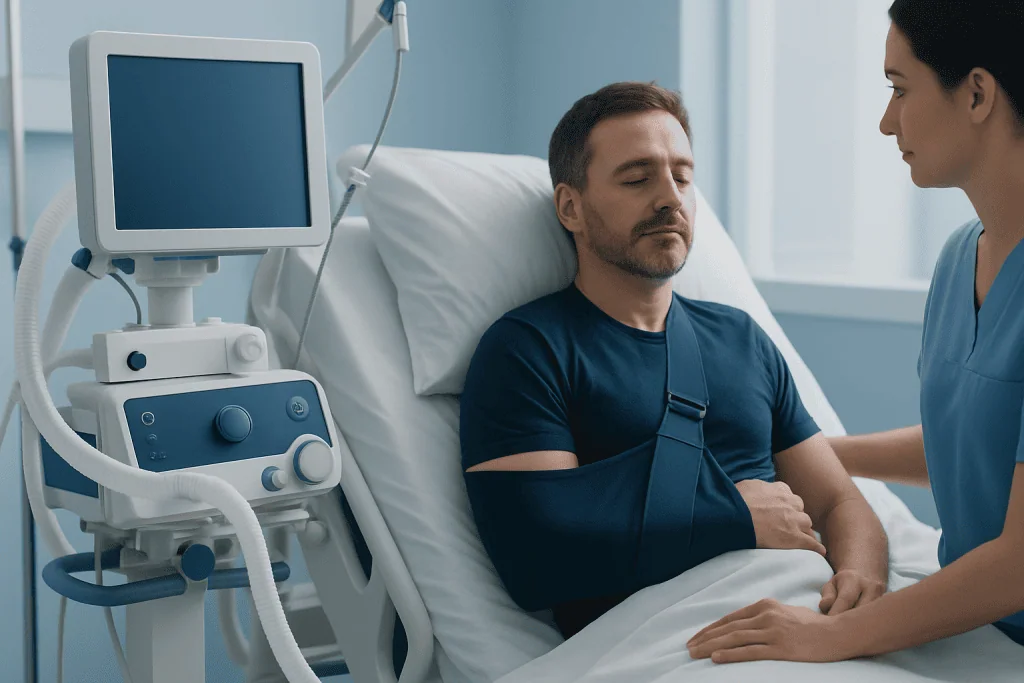
Week 0-1: The main priorities are assessment, pain control and protecting the fracture. An arm sling is commonly used to support the shoulder. Swelling and bruising may become more noticeable over the first few days, and sleeping propped up with pillows may be more comfortable. The hand, wrist and elbow can usually be moved gently if the clinician agrees.
Weeks 2-3: Pain often begins to settle, although sudden movements, coughing or rolling in bed may still hurt. A follow-up appointment may include an X-ray to review alignment. Depending on the injury and medical advice, gentle shoulder and pendulum exercises may begin to reduce stiffness. The sling should not be stopped early without guidance.
Weeks 4-6: Early healing tissue, called callus, develops around the break. Many people are more comfortable with daily activities below shoulder level, but lifting, pushing, pulling and overhead activity are generally still restricted. A visible or palpable bump may form over the fracture; this is often part of normal healing and may flatten over time.
Weeks 6-12 and beyond: X-rays and examination help determine whether the bone has joined sufficiently. Range-of-motion and strengthening exercises may gradually progress under professional advice. Return to manual work, weight training, cycling, skiing or contact sports should wait until healing is confirmed and shoulder movement and strength are close to normal. Complex fractures and fractures treated surgically can follow a different schedule.
Symptoms, diagnosis and factors that affect healing

Typical signs of a clavicle fracture include sudden pain over the collarbone, tenderness, swelling, bruising, a drooping shoulder, and pain when trying to raise the arm. Some people notice a bump, a grinding sensation or an obvious change in contour. Children may hold the arm close to the body and avoid using it.
Diagnosis usually starts with a physical examination and X-rays of the collarbone and shoulder. Further imaging, such as CT, may be used when the fracture is complex, extends toward a joint, or when surgical planning is being considered. Clinicians also check skin integrity, circulation, sensation and movement in the arm and hand.
Healing can take longer when fracture ends are widely separated, the fracture is broken into several pieces, or blood supply and stability are reduced. Smoking and nicotine use, poorly controlled diabetes, inadequate nutrition and premature stress on the injury can also interfere with bone healing. A previous shoulder condition may influence rehabilitation needs.
Collarbone injuries can occur alongside other shoulder trauma. A doctor may assess for related problems such as shoulder dislocation when the mechanism of injury or examination suggests it.
Treatment options: sling care, rehabilitation and surgery
For a stable fracture with acceptable alignment, non-surgical care is usually appropriate. This commonly includes a sling for comfort and protection, ice in the early stage when advised, suitable pain relief recommended by a clinician, and follow-up imaging. Figure-of-eight braces are used less often because they may be uncomfortable and do not routinely provide better outcomes than a sling.
Rehabilitation is introduced in stages. Early movement of the fingers, wrist and elbow helps prevent stiffness. Shoulder exercises are added only when the fracture is sufficiently protected and pain allows. A physiotherapist can tailor the program to restore shoulder blade control, range of motion and strength without overloading the healing bone. Physical therapy and rehabilitation may be especially useful for athletes, people with physically demanding work and those with persistent stiffness.
Surgery may be considered when the fracture is open, the skin is under pressure from the bone, there is injury to nearby nerves or blood vessels, or the pieces are substantially displaced or shortened. It can also be considered for selected fractures that are unlikely to heal well without fixation. The usual procedure aligns the bone and holds it with a plate and screws, or less commonly a device placed within the bone.
The aim of surgery is to restore alignment and stability so that healing and rehabilitation can proceed. However, surgery is not automatically the best option for every fracture; it involves anesthesia, an incision and potential implant-related issues. An orthopedic surgeon can explain the expected benefits and limitations for the individual fracture.
If surgery is recommended: candidacy, steps, benefits and risks
People may be candidates for collarbone fracture surgery when imaging shows marked displacement, several fracture fragments, substantial shortening, a fracture near the outer end of the clavicle with poor stability, or a high risk of nonunion. Urgent surgery may be needed for an open injury, threatened skin, or a nerve or blood-vessel concern. Personal goals, hand dominance, work requirements and medical conditions are also part of shared decision-making.
During fixation surgery, the patient receives anesthesia and the surgeon makes an incision over or near the collarbone. The bone fragments are carefully repositioned, then secured with a plate and screws or another suitable fixation device. The wound is closed and the arm is supported in a sling afterward. The exact approach depends on the fracture pattern and the person’s anatomy.
Potential benefits include improved alignment and stability, and in selected displaced fractures, a lower risk of healing in a poor position or failing to unite. Potential risks include infection, bleeding, numbness near the incision, stiffness, scar sensitivity, blood clots, delayed union or nonunion, and irritation from the plate or screws. Some people later need implant removal because of discomfort, though this is not always necessary.
For patients seeking coordinated orthopedic evaluation and follow-up, Acibadem International’s multidisciplinary specialists and JCI-accredited hospitals diagnose and treat clavicle fractures for international patients. A surgeon should provide individualized advice about the expected recovery plan after any procedure.
What supports a healthy recovery?
Protection and patience are important. The sling should be worn and adjusted as instructed, and lifting, pushing, pulling and contact activity should be avoided until the treating clinician confirms it is safe. A person should not test the fracture by lifting weights or returning to sport simply because pain has improved; pain relief can occur before the bone is strong enough for those demands.
A balanced diet with adequate protein, calories, calcium and vitamin D supports general bone health. A doctor may advise testing or supplementation when there is a known deficiency or another medical reason. Avoiding tobacco and nicotine products is particularly important, as they can impair blood flow and bone healing. Alcohol should be limited, especially when taking pain medicines or during early recovery.
Keeping follow-up appointments is one of the most useful ways to monitor progress. The clinician can adjust activity restrictions, check movement and review X-rays when needed. Exercises should be performed at the recommended stage and stopped if they cause sharp or worsening pain. Gradual rehabilitation is safer and more effective than pushing through pain.
When to seek medical care
A suspected broken collarbone should be assessed promptly, especially after a significant fall, collision or direct shoulder impact. Until care is available, the arm can be supported in a comfortable position, but the person should avoid trying to straighten the shoulder or push a visible bump back into place.
Urgent medical attention is needed for trouble breathing, chest pain, severe or increasing swelling, an open wound, bone visible through the skin, or skin that appears tightly stretched or pale over the fracture. Immediate assessment is also important if the hand or arm becomes numb, weak, cold, pale or blue, as these symptoms can indicate compromised circulation or nerve function.
During recovery, a doctor should be contacted for pain that suddenly worsens after improving, fever or wound drainage after surgery, increasing redness, new deformity, or persistent inability to make progress. These symptoms do not always mean there is a serious problem, but timely review helps identify complications such as infection, loss of fixation, delayed union or nonunion.
Frequently asked questions
Is 7 weeks enough time for my fractured collarbone to heal?
Seven weeks is enough for some collarbone fractures to show substantial healing, particularly in children and in uncomplicated fractures. However, many adults need 6-12 weeks or longer for reliable bone union, and feeling better does not necessarily mean the bone is ready for heavy activity. A follow-up examination and, when appropriate, an X-ray are the safest ways to confirm progress.
Can you lift your arm with a broken collarbone?
A person may be able to move the arm a little, but lifting it is often painful and should not be forced immediately after the injury. The shoulder muscles attach around the collarbone, so raising the arm can move and stress the fracture. A clinician or physiotherapist can advise when gentle range-of-motion exercises are appropriate.
What speeds up collarbone healing?
There is no safe shortcut that can force a collarbone to heal faster. The most helpful steps are protecting the fracture, following the recommended rehabilitation plan, eating adequately, avoiding nicotine and attending follow-up appointments. Treating underlying health issues, such as vitamin deficiencies or poorly controlled diabetes, may also support normal healing when relevant.
Will my collarbone be weaker after healing?
Once a fracture has fully united and shoulder strength has been rebuilt, the collarbone is generally expected to function well. The healing area may remain enlarged or prominent, especially in the first months, but this does not necessarily mean it is weak. Full strength and confidence can take longer to return than the initial bone-healing period, so strenuous activity should resume gradually with medical clearance.
How long should a sling be worn for a broken collarbone?
Sling duration varies by age, fracture pattern, pain level and whether surgery was performed. Many adults wear a sling mainly for comfort and protection in the early weeks, then reduce use as directed by their clinician. It should not be discontinued based solely on feeling better, because the fracture may still need protection.
Can a broken collarbone heal without surgery?
Yes. Many collarbone fractures heal successfully without surgery using a sling, activity modification, pain management and guided rehabilitation. Surgery is more likely to be discussed when the fracture is open, significantly displaced, unstable, threatening the skin or associated with nerve or blood-vessel injury. The decision should be based on imaging and an orthopedic assessment.
References
- American Academy of Orthopaedic Surgeons
- OrthoInfo
- National Health Service
- Mayo Clinic
- MedlinePlus
This article is for general information only and is not a substitute for professional medical advice. Please consult a qualified doctor about your individual situation.
Joint and spine care in Turkey — expert assessment & treatment
JCI-accredited · board-certified surgeons · reply within 24h