Ed Therapy: How It Works, Results and What to Expect

Erectile dysfunction is common and can have physical, emotional or mixed causes. A medical assessment can identify treatable contributors such as diabetes, cardiovascular disease, medication effects or low testosterone.
Key Takeaways
- Erectile dysfunction is common and can have physical, emotional or mixed causes.
- A medical assessment can identify treatable contributors such as diabetes, cardiovascular disease, medication effects or low testosterone.
- Oral medicines are often an effective first treatment when they are medically appropriate.
- Low-intensity shockwave therapy for ED is still being studied and is not suitable for everyone.
- Urgent assessment is important for chest pain, neurological symptoms or a prolonged painful erection.
ED therapy refers to treatments that help a person achieve or maintain an erection suitable for sexual activity. The most appropriate option depends on the cause of erectile dysfunction, overall health, preferences and whether medicines are safe to use.
Overview: What Does ED Therapy Mean?
ED therapy means treatment for erectile dysfunction (ED), a persistent difficulty getting or keeping an erection firm enough for satisfying sexual activity. It is not one single procedure. ED therapy may include health and lifestyle support, prescription medicines, psychological or relationship counseling, vacuum erection devices, injections, hormone treatment in selected cases, or surgery.
An erection depends on healthy blood flow, nerve signaling, hormones and emotional wellbeing. For that reason, effective therapy for erectile dysfunction starts with understanding what may be contributing. ED can sometimes be an early sign of vascular disease or another health condition, so it should not simply be self-treated with unregulated products.
The aim of treatment is to improve sexual function safely and in a way that suits the person and, where relevant, their partner. Many people respond well to treatment, but the time to benefit and the best option vary widely.
How ED Therapy Works
Most ED treatments work by supporting one or more parts of the erection process. Oral phosphodiesterase type 5 (PDE5) inhibitors increase blood flow to the penis in response to sexual stimulation. They do not create an automatic erection and should only be used after a clinician has checked that they are safe, particularly for people with heart disease or those taking nitrate medicines.
Vacuum erection devices use gentle suction to draw blood into the penis, followed by a soft constriction ring to help maintain the erection. Penile injections or a urethral medicine may be options when tablets are not effective or cannot be used. These treatments require careful instruction from a qualified clinician.
Counseling can be valuable when anxiety, stress, depression, relationship concerns or performance worries contribute to symptoms. Lifestyle measures, such as stopping smoking, regular physical activity, improving sleep and managing blood pressure, diabetes and cholesterol, can improve vascular health and may support other ED treatments.
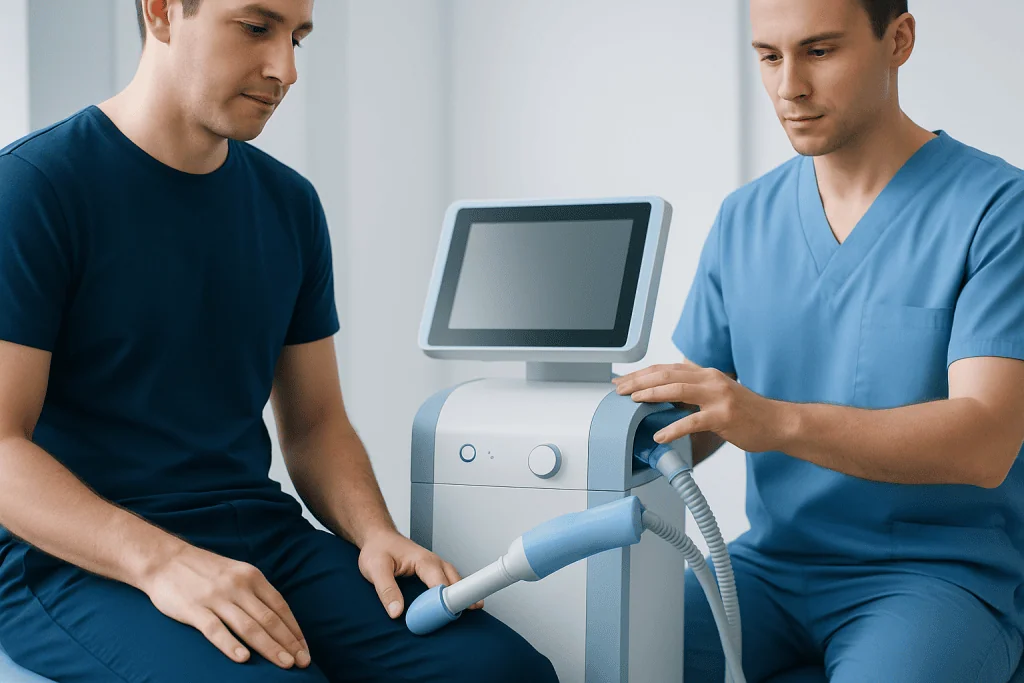
Low-intensity extracorporeal shockwave therapy uses sound waves applied to the penis in a series of outpatient sessions. It is intended to stimulate tissue repair and blood-vessel changes, but research results and treatment protocols remain variable. Professional organizations have generally considered it investigational or insufficiently established for routine ED care, so patients should discuss the evidence, suitability and alternatives with a urologist.
Causes, Assessment and Candidacy for Treatment

ED may be related to reduced blood flow, diabetes, high blood pressure, high cholesterol, obesity, smoking, nerve injury, pelvic surgery, hormonal conditions, medication side effects, alcohol or substance use, depression and anxiety. It is also common for several factors to occur together. Information about erectile dysfunction can help patients understand the condition and its potential causes.
A clinician usually asks about symptoms, sexual and medical history, current medicines, mood and lifestyle. They may check blood pressure and perform a focused examination. Blood tests may be used when appropriate to assess diabetes, cholesterol, testosterone or other possible contributors. Further cardiovascular evaluation may be recommended for some people, because ED and heart and blood-vessel disease can share risk factors.
Good candidates for treatment are people whose symptoms have been properly assessed and whose chosen option is medically safe. Treatment selection should account for whether erections occur during sleep or masturbation, whether the problem began suddenly or gradually, and whether there is pain, curvature, surgery history or neurological disease.
People taking nitrates for chest pain should not use PDE5 inhibitor tablets because the combination can cause a dangerous fall in blood pressure. A clinician can discuss safer alternatives. Men with penile curvature or painful erections may also need assessment for related conditions before starting treatment.
What Happens During ED Treatment?
The experience depends on the treatment selected. For oral medicines, a clinician reviews medical history and medication interactions, explains how and when the medicine is used, and arranges follow-up to assess response and side effects. More than one attempt under the right conditions may be needed before deciding that a medicine is not helpful.
For a vacuum device, the clinician or trained healthcare professional explains device placement, suction and safe use of the constriction ring. For injection therapy, patients are taught the injection technique in a supervised setting and given clear guidance on managing a prolonged erection. It should never be started using medicines obtained outside regulated medical care.
Shockwave therapy, when offered after an informed discussion, is usually performed in clinic without anesthesia. A handheld device is placed at several points along the penis to deliver low-intensity sound waves. Appointments are commonly scheduled across several weeks, although there is no single evidence-based schedule used by every clinic. Normal activities can usually resume the same day.
For severe ED that has not improved with less invasive approaches, penile prosthesis surgery may be considered. This is an operation that places an internal device to create an erection when desired, and it requires a detailed discussion of surgical risks, recovery and expectations.
Benefits, Risks and Recovery Timeline
The potential benefit of ED therapy is improved ability to have sexual activity and greater confidence or quality of life. Outcomes depend on the cause of ED, the treatment used, correct technique and overall health. Addressing underlying conditions may provide broader benefits beyond sexual function.
Oral ED medicines can cause headache, flushing, nasal congestion, indigestion, dizziness or visual changes. Vacuum devices may cause temporary bruising, numbness or discomfort. Injection treatments can cause pain, bruising, scarring or priapism, which is an erection lasting more than four hours and requires urgent medical care.
Shockwave therapy is generally reported to have few short-term side effects, such as temporary local discomfort or skin redness. However, the key limitation is uncertainty: studies differ in device type, treatment sessions, patient selection and follow-up. It should not be presented as a guaranteed replacement for established treatments.
Recovery is often minimal for medicines, counseling, vacuum devices and shockwave sessions. Surgical options require more time for wound healing and a planned return to sexual activity. A urologist provides individualized aftercare instructions and explains when treatment effects can realistically be assessed.
How Long Does It Take for Shockwave Therapy for ED to Work?
When low-intensity shockwave therapy appears helpful, changes are usually assessed weeks to months after completing a treatment course rather than immediately after a session. Some studies have reported improvement after several weeks, but the timing and degree of benefit are not predictable for an individual.
Not everyone responds, and treatment effects may not be lasting. Because protocols and research findings vary, it is important to ask the treating urologist what type of device is used, what evidence applies to the individual situation, what outcomes are realistic and what established options are available.
Shockwave therapy should not delay evaluation of diabetes, high blood pressure, cardiovascular risk or emotional health concerns. A shared decision with a qualified clinician is the safest way to decide whether it has a role in a broader ED care plan.
What Is the Two Finger Trick for ED?
The “two finger trick” for ED is not a recognized medical treatment or diagnostic technique. This phrase is often used online to describe unproven exercises, massage methods or claims about stimulating circulation. There is no reliable evidence that a finger technique can safely cure erectile dysfunction.
Pelvic floor muscle training, guided by a qualified physiotherapist or clinician, may help some people with ED by improving pelvic muscle function. This is different from internet “tricks,” and it is usually combined with management of vascular risk factors, medication review and other clinically appropriate treatment.
Anyone considering an online remedy should be cautious about products or methods that promise immediate, permanent results. A confidential consultation with a healthcare professional can identify options with better evidence and a clearer safety profile.
What Is the Most Successful Treatment of Erectile Dysfunction?
There is no single most successful treatment for every person with erectile dysfunction. PDE5 inhibitor tablets are commonly an effective first-line option for many people, but they are not suitable for everyone and require sexual stimulation to work. Their success depends on the cause of ED, other health conditions, medication interactions and correct use.
For some people, treating diabetes, high blood pressure, sleep problems, depression, low testosterone or medication side effects is central to improving erections. Counseling may be particularly helpful when anxiety or relationship factors are present. Devices, injection therapy and surgery can provide effective alternatives when tablets do not work or cannot be used.
Penile prosthesis surgery can offer a high level of reliability for carefully selected patients with severe, treatment-resistant ED, but it is irreversible surgery and is not usually the first treatment tried. The best treatment is therefore the option that is safe, evidence-based and aligned with the individual’s cause of ED and goals.
How Long Does ED Treatment Take to Work?
How long ED treatment takes to work depends on the therapy. Oral medicines may work within a planned window around sexual activity, while counseling, lifestyle changes and management of underlying health conditions often take weeks or months. Vacuum devices and injection therapy can work at the time of use once the person has been properly trained.
It is reasonable to allow time for follow-up and adjustment. A treatment may need to be used correctly on several occasions, or a clinician may adjust the plan after reviewing side effects, response and possible contributing factors. Patients should not increase doses or combine therapies without medical advice.
Acibadem International’s multidisciplinary specialists and JCI-accredited hospitals assess and treat erectile dysfunction for international patients, with care coordinated according to individual medical needs. A urologist can help develop an evidence-based plan that considers both sexual health and general wellbeing.
When to Seek Medical Care
Medical care is appropriate when erection difficulties persist, cause distress, occur alongside reduced sexual desire, or begin after a new medicine, illness or surgery. An assessment is also helpful for people with diabetes, high blood pressure, high cholesterol, cardiovascular disease or symptoms of depression or anxiety.
Urgent care is needed for an erection lasting longer than four hours, especially if it is painful. Emergency assessment is also necessary for chest pain, fainting, sudden weakness, trouble speaking or other symptoms that could indicate a heart or neurological emergency.
Patients should avoid buying ED medicines from unregulated sources. Products marketed as “natural” sexual enhancers may contain undisclosed prescription ingredients and can interact dangerously with other medicines. A qualified doctor can offer confidential ed therapy info and explain which approaches may safely provide therapy ED help.
Frequently asked questions
Can erectile dysfunction be cured?
In some cases, ED improves substantially when an underlying cause is identified and treated, such as medication effects, smoking, uncontrolled diabetes, anxiety or low testosterone. In other cases, it may be managed successfully with ongoing treatment. A clinician can help identify realistic goals based on the cause of symptoms.
Are ED pills safe for everyone?
No. PDE5 inhibitor medicines can be unsafe when combined with nitrates and may need extra caution in people with certain heart conditions, low blood pressure or significant medication interactions. A healthcare professional should review medical history and current medicines before prescribing them.
Does shockwave therapy permanently cure ED?
Shockwave therapy does not reliably or permanently cure ED. Some studies suggest potential benefit for selected people, particularly those with vascular ED, but research methods and results are inconsistent. Its role should be discussed with a urologist alongside established treatments.
Can stress cause erectile dysfunction?
Yes. Stress, anxiety, depression, relationship difficulties and fear of sexual performance can contribute to ED or make a physical cause more difficult to manage. Counseling or sex therapy may be useful, often together with treatment of any physical contributors.
What lifestyle changes can help erectile dysfunction?
Regular activity, a balanced diet, smoking cessation, limiting alcohol, adequate sleep and management of blood pressure, diabetes and cholesterol can support erectile and cardiovascular health. These changes may take time, but they can improve overall wellbeing and help other treatments work more effectively.
When should a person see a urologist for ED?
A person should consider seeing a urologist when ED is persistent, distressing, does not improve with initial care, or occurs after pelvic surgery, injury or neurological illness. A urologist can evaluate complex causes and discuss devices, injections, surgery and other specialist options.
References
- American Urological Association
- European Association of Urology
- National Institute of Diabetes and Digestive and Kidney Diseases
- U.S. Food and Drug Administration
- Mayo Clinic
This article is for general information only and is not a substitute for professional medical advice. Please consult a qualified doctor about your individual situation.
Explore treatments in Turkey — costs, top hospitals & a free quote
JCI-accredited · board-certified surgeons · reply within 24h
Check your numbers in seconds
BMI, calories, due date, blood pressure and 30+ more clinical calculators — free, instant, doctor-reviewed ranges.

More from the Health Library



Related Specialists

Dr. Emel Uçar
Clinical Laboratory
Dr. Meltem Hüner
Infectious Diseases & Clinical Microbiology
Prof. Dr. Tuğçin Bora Polat
Pediatric Cardiology
Dr. Özden Zeki Pinar
Dermatology