UCL Brace: An Evidence-Based Patient Guide
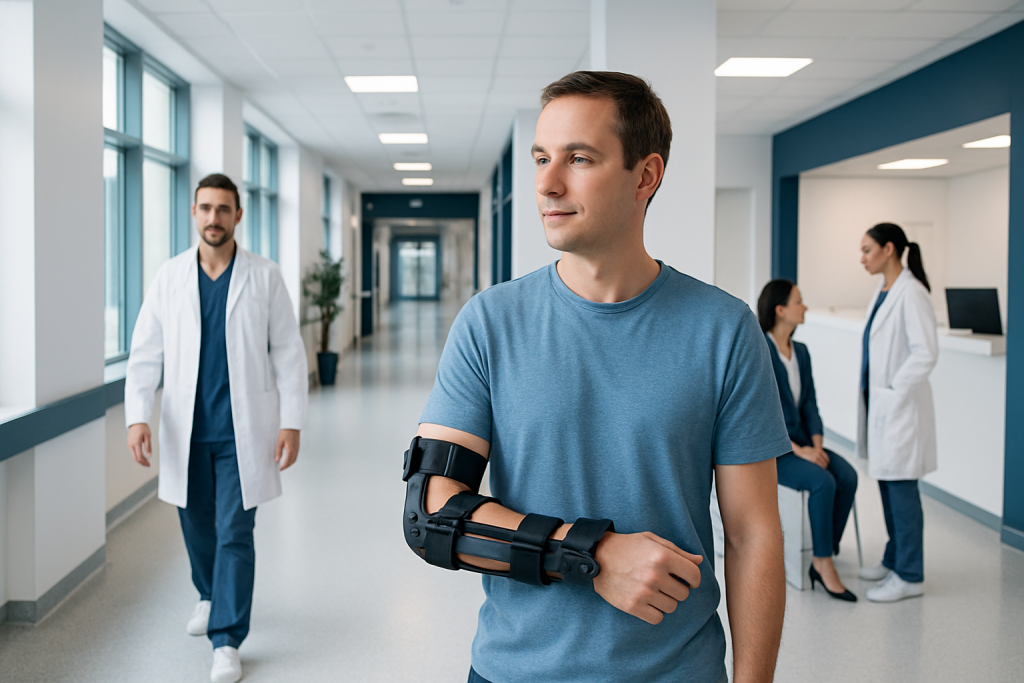
The elbow UCL is an important stabilizing ligament, especially during overhead throwing. A hinged brace may protect the elbow by limiting its range of motion while allowing guided rehabilitation.
Key Takeaways
- The elbow UCL is an important stabilizing ligament, especially during overhead throwing.
- A hinged brace may protect the elbow by limiting its range of motion while allowing guided rehabilitation.
- Complete tears and ongoing instability in high-demand athletes may require UCL repair or reconstruction.
- Internal brace augmentation is a surgical technique used in selected patients with repairable UCL tears.
- Return to throwing should be gradual and based on healing, strength, movement and clinical assessment.
A UCL brace is used to limit stressful elbow movement and support healing after an ulnar collateral ligament injury or surgery. It can be helpful during non-surgical treatment and rehabilitation, but it does not repair a complete tear on its own and should be selected with guidance from an orthopedic specialist.
Overview: What Is a UCL Brace?
A UCL brace is an elbow support designed to protect the ulnar collateral ligament (UCL), also called the medial collateral ligament of the elbow. The UCL runs along the inner side of the elbow and helps keep the joint stable during movements that place a valgus force on it, particularly overhead throwing. A brace may reduce painful or risky movement while the ligament and surrounding tissues recover.
Most clinical UCL braces are hinged braces rather than simple elastic sleeves. Their hinges can be adjusted to limit how far the elbow bends or straightens, which helps a clinician tailor protection to the stage of healing. The brace is usually one part of a wider plan that may include rest from throwing, physiotherapy, strengthening and a staged return to sport.
Online searches may show many products described as a “UCL brace Amazon” option, but a product listing alone cannot determine whether a person has a sprain, partial tear, complete tear, fracture, nerve irritation or another cause of medial elbow pain. A qualified assessment is important before choosing a brace or returning to sport.
How a UCL Injury Affects the Elbow
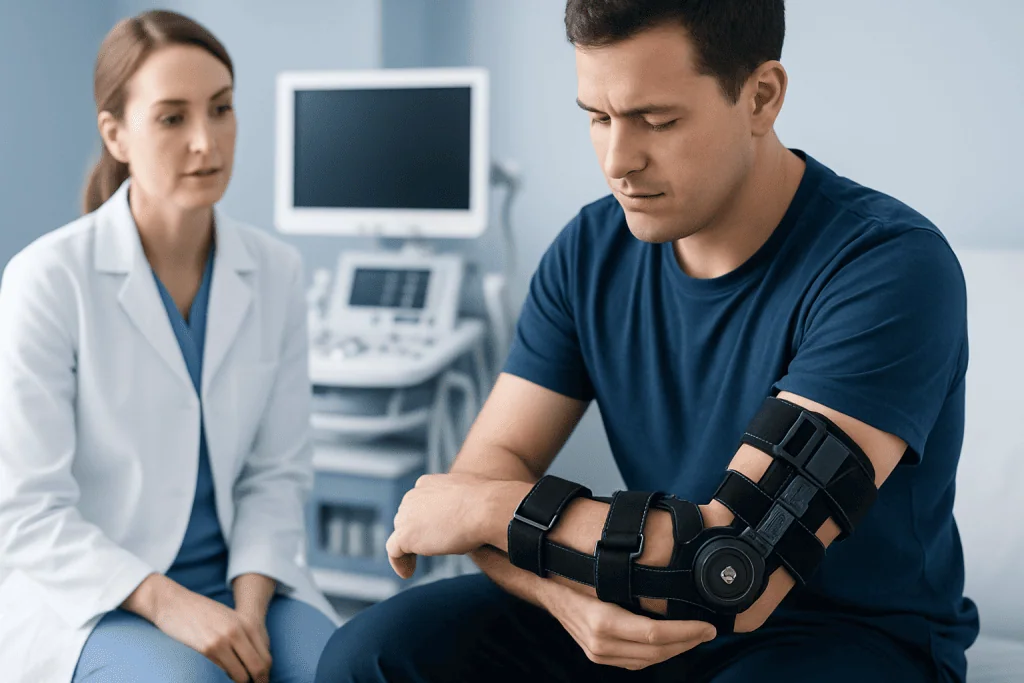
UCL injuries commonly develop through repeated stress rather than one clear accident. Baseball pitchers, javelin throwers, tennis players and other overhead athletes may be affected because throwing repeatedly loads the inner elbow. A fall, elbow dislocation or direct trauma can also injure the ligament.
Symptoms can include pain or tenderness on the inner elbow, reduced throwing speed or control, a feeling of looseness or instability, swelling, and pain during forceful gripping or throwing. Some people notice tingling or numbness in the ring and little fingers when the nearby ulnar nerve is irritated. The severity of symptoms does not always show the full extent of a ligament injury.
A person with a suspected tear should avoid activities that reproduce medial elbow pain, especially throwing, pitching, serving or heavy pressing. Continuing to throw through pain can worsen tissue damage and may delay recovery. Medial elbow pain may also be caused by tendinopathy, stress injury, nerve conditions or other elbow problems, so an accurate diagnosis matters.
What Is the Best Brace for a UCL Injury?
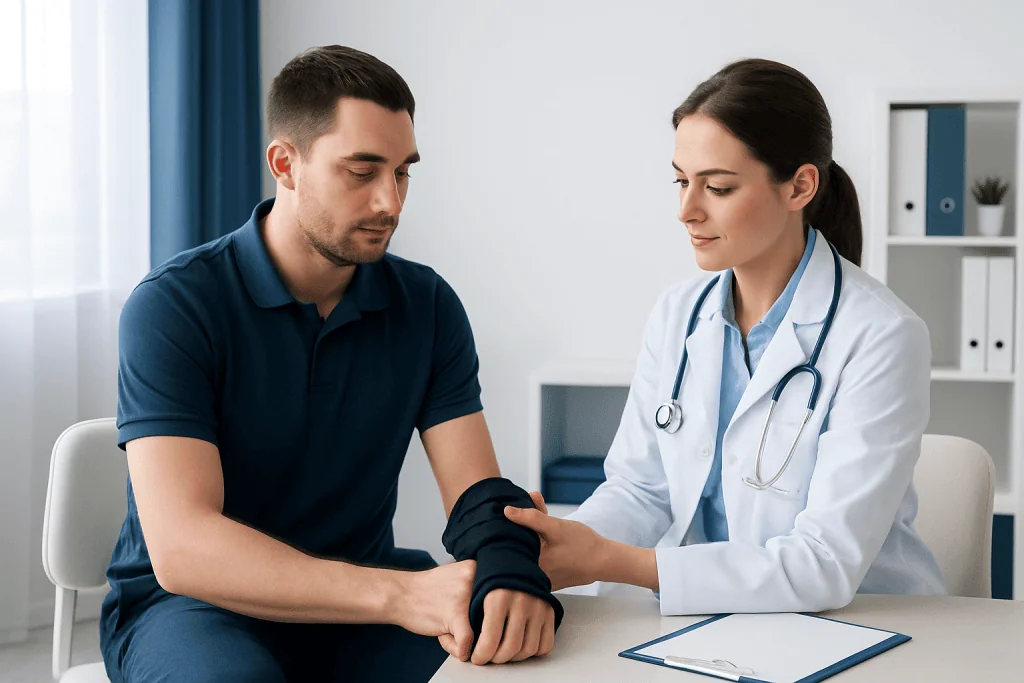
The best brace for a UCL injury depends on the diagnosis, the degree of instability, pain level, occupation and sporting goals. For an acute sprain or after surgery, clinicians often use a hinged elbow brace because it can control the range of motion while allowing gradual movement. A simple compression sleeve may provide warmth or comfort, but it generally does not give the same mechanical protection against stressful elbow movement.
A brace should fit securely without causing numbness, skin pressure, color changes in the hand or worsening pain. It should be fitted according to the treating clinician’s instructions. The elbow position and motion limits are adjusted over time; using an incorrect setting may either expose the ligament to stress or contribute to unnecessary stiffness.
For a UCL brace for baseball, the goal is usually protection during early rehabilitation rather than unrestricted pitching. Bracing does not make it safe to throw before the ligament, muscles and throwing mechanics are ready. Athletes should follow an individualized return-to-throwing program developed by their orthopedic team and physiotherapist.
Brace Evidence and Non-Surgical Care
Brace evidence for elbow UCL injuries is more limited than many patients expect. Braces are widely used to protect the elbow and support rehabilitation, particularly in the early phase after an injury or operation. However, a brace is not a stand-alone cure, and evidence does not support relying on a brace to restore a severely unstable ligament in an athlete who must return to high-velocity throwing.
Non-surgical management may be appropriate for some low-grade sprains, partial tears, lower-demand patients or people whose symptoms improve after stopping the provoking activity. Treatment often includes relative rest, ice for short-term symptom relief when appropriate, physiotherapy, and progressive strengthening of the shoulder, upper back, forearm and core. Throwing mechanics and training volume may also need review.
Patients may encounter unrelated search terms such as “UCLA evidence based practice.” Evidence-based care means combining the best available research with clinical expertise and the individual patient’s goals, examination findings and preferences. In practice, this means that the decision to use a brace, continue rehabilitation or consider surgery is individualized rather than based on one product or one protocol.
UCL Repair With Internal Brace: How It Works and Who May Be a Candidate
UCL repair with internal brace augmentation is an operation that may be considered for selected patients with a repairable tear, often near the ligament’s attachment to the bone and with tissue of suitable quality. Rather than replacing the ligament with a tendon graft, the surgeon repairs the patient’s own ligament and reinforces it with a strong tape-like construct fixed to bone. This augmentation is sometimes called an internal brace.
It is different from an external UCL brace worn on the arm. The internal brace remains inside the elbow and is intended to support the healing repair. It is not appropriate for every UCL tear. Chronic injuries, poor-quality ligament tissue, tears in locations unsuitable for repair, or certain high-demand situations may instead require UCL reconstruction using a tendon graft.
Evaluation usually includes a medical history, physical examination and imaging such as X-rays and MRI when needed. The orthopedic specialist also considers age, skeletal maturity, sport, throwing demands, hand dominance, prior treatment, symptoms and the person’s goals. Treatment planning for ligament injuries may involve orthopedic care alongside sports rehabilitation and imaging specialists.
Step by Step: UCL Repair Surgery and Recovery Timeline
UCL repair is performed under anesthesia. The surgeon makes an incision on the inner elbow, carefully protects nearby nerves, assesses the ligament and repairs suitable torn tissue to its attachment. If internal brace augmentation is planned, the reinforcing material is secured according to the surgical technique. The incision is then closed, and the arm is protected in a splint or brace.
During the first days after surgery, the focus is on protecting the repair, managing discomfort, caring for the incision and monitoring circulation and nerve symptoms. A hinged brace is commonly introduced or adjusted as directed. Guided movement generally begins in a controlled way, followed by gradual exercises to restore motion and strength. The exact protocol varies by repair type and surgeon preference.
UCL brace surgery recovery time is not the same for everyone. Daily activities may resume in stages once the elbow is comfortable and adequately protected, while strengthening and sport-specific rehabilitation take longer. Throwing athletes typically need a structured progression before returning to competitive throwing. A return to high-level sport should be based on medical review, strength, range of motion, stability, throwing tolerance and sport-specific testing rather than the calendar alone.
Acibadem International’s multidisciplinary specialists at JCI-accredited hospitals evaluate and treat elbow ligament injuries for international patients, coordinating orthopedic assessment, imaging, surgery when indicated and rehabilitation.
What Is the Success Rate of UCL Repair With an Internal Brace?
Published studies of carefully selected athletes report high rates of return to sport after UCL repair with internal brace augmentation. However, reported results differ between studies because patients, tear patterns, definitions of return to sport, follow-up periods and rehabilitation protocols vary. A single success rate cannot reliably predict an individual outcome.
In appropriate candidates, repair with internal brace augmentation may allow a faster return-to-sport pathway than traditional reconstruction. This does not mean it is automatically better for every patient. A durable result depends on selecting the right injury for repair, using sound surgical technique, following rehabilitation carefully and addressing throwing workload and mechanics.
Potential benefits include restoration of elbow stability, relief of symptoms related to instability and a possible earlier progression through rehabilitation in selected cases. Risks include infection, stiffness, persistent pain, nerve irritation or numbness, recurrent instability, failure of the repair, blood clots, anesthesia-related complications and the possible need for further treatment. The surgeon can explain how these considerations apply to the individual case.
How Long Are You in a Brace After UCL Surgery?
After UCL surgery, many patients wear a splint initially and then a hinged elbow brace for several weeks, with motion gradually increased as healing progresses. The exact duration depends on whether the procedure was a repair, repair with internal brace augmentation or reconstruction, as well as the surgeon’s protocol and the patient’s progress. The brace should not be stopped early without approval from the surgical team.
During bracing, patients are usually asked to avoid lifting, pushing, pulling, throwing and activities that forcefully stress the inner elbow. Physiotherapy helps prevent excessive stiffness while protecting the healing ligament. Shoulder, wrist, hand and core exercises may be added at the appropriate stage.
Contact the surgical team promptly for increasing redness, drainage, fever, severe or worsening pain, new weakness, persistent numbness, a cold or discolored hand, or a brace that causes significant pressure. These symptoms do not always indicate a serious problem, but they should be assessed rather than managed by adjusting the brace independently.
What Can You Not Do With a Torn UCL?
With a torn UCL, a person should avoid activities that cause pain, instability or a sense of giving way at the inner elbow. This often includes pitching, throwing, serving, javelin throwing, heavy lifting, forceful pushing, pull-ups and contact activities that could twist or strike the elbow. The restrictions depend on the injury and should be clarified with the treating clinician.
It is also important not to test the elbow repeatedly by throwing “just one pitch” or returning to drills before clearance. Pain may settle before the ligament has recovered enough to tolerate high forces. Athletes should avoid self-directed return-to-play decisions, especially if their performance has declined or the elbow feels unstable.
A doctor or physiotherapist can provide safe alternatives for maintaining general fitness while the elbow heals. Rehabilitation may include lower-body and core training, as well as carefully selected shoulder and forearm exercises, provided these do not stress the injured ligament or conflict with post-operative restrictions.
When to Seek Medical Care
Medical assessment is advisable for inner elbow pain that lasts more than a few days, returns with throwing, limits sport or work, or is accompanied by a pop, bruising, swelling or loss of throwing control. An evaluation is particularly important for competitive athletes, young athletes with ongoing growth, and anyone with a prior elbow injury or surgery.
Urgent care is appropriate after a major injury with deformity, severe swelling, inability to move the elbow, a pale or cold hand, or new and significant numbness or weakness in the hand or fingers. These symptoms may indicate an injury requiring prompt examination.
Early assessment can help distinguish a UCL injury from other causes of elbow pain and guide safe treatment. A clinician can also advise whether a hinged brace is appropriate, how long it should be worn and when return to normal activities or sport can begin.
Frequently asked questions
Can a UCL brace heal a torn UCL?
A brace can protect the elbow and reduce stress on the UCL while healing takes place, especially in some sprains and partial tears. It cannot reliably restore a completely torn or unstable ligament by itself. The need for rehabilitation or surgery depends on the injury pattern, symptoms and activity demands.
Can I wear a UCL brace while pitching?
A brace should not be used to continue pitching through pain or instability. Some braces may be used during selected stages of rehabilitation, but return to pitching requires medical clearance and a progressive throwing program. The elbow must be stable and strong enough for throwing demands.
Is an internal brace the same as an elbow brace?
No. An internal brace is a surgical reinforcement placed inside the elbow during a UCL repair. An elbow brace is an external device worn around the arm to limit motion or provide support during recovery.
Do all UCL tears need surgery?
No. Some partial tears and lower-grade injuries improve with rest from aggravating activity, bracing when recommended and structured rehabilitation. Surgery is more often considered when instability persists, non-surgical treatment has not helped, or a person needs to return to high-demand throwing sports.
How do doctors diagnose a UCL tear?
Doctors use the person’s symptoms, injury history and a focused physical examination of elbow stability. X-rays may help identify bone-related problems, while MRI can assess the ligament and nearby soft tissues. Imaging findings are interpreted alongside the examination and activity history.
What should I do if my brace causes tingling in my fingers?
Loosen or remove the brace only as instructed by the treating team, especially after surgery, and contact the clinician promptly for advice. Tingling may occur from pressure on the ulnar nerve or from a brace that is too tight. New weakness, a cold hand or color change requires urgent medical assessment.
References
- American Academy of Orthopaedic Surgeons
- American Orthopaedic Society for Sports Medicine
- National Institute of Arthritis and Musculoskeletal and Skin Diseases
- American Medical Society for Sports Medicine
This article is for general information only and is not a substitute for professional medical advice. Please consult a qualified doctor about your individual situation.
Joint and spine care in Turkey — expert assessment & treatment
JCI-accredited · board-certified surgeons · reply within 24h