

West Gables Rehab: An Evidence-Based Patient Guide

Inpatient rehabilitation combines medical oversight with intensive physical, occupational, and speech-language therapy when appropriate. Admission usually requires a clinical referral, review of medical information, confirmation of eligibility, and insurance or financial clearance.
Key Takeaways
- Inpatient rehabilitation combines medical oversight with intensive physical, occupational, and speech-language therapy when appropriate.
- Admission usually requires a clinical referral, review of medical information, confirmation of eligibility, and insurance or financial clearance.
- Public patient reviews can offer personal perspectives but should be interpreted alongside current quality, safety, staffing, and accreditation information.
- Insurance coverage and visiting policies may change, so patients and families should confirm details directly with the hospital before admission or travel.
- Recovery plans are individualized and may continue after discharge through outpatient therapy, home health, or community rehabilitation services.
West Gables Rehab generally refers to West Gables Rehabilitation Hospital, a facility providing inpatient rehabilitation for people recovering from conditions such as stroke, serious injury, surgery, or neurological illness. The right rehabilitation setting depends on a person’s medical stability, functional goals, insurance authorization, and need for coordinated therapy and nursing care.
West Gables Rehab: what it is and who it may help
West Gables Rehab, commonly used to refer to West Gables Rehabilitation Hospital, is associated with inpatient rehabilitation care. This level of care is intended for people who are medically stable after an illness, injury, operation, or neurological event but still need coordinated medical support and structured therapy to regain daily function. It is different from an emergency department, an acute-care hospital stay, a skilled nursing facility, or routine outpatient therapy.
Rehabilitation focuses on practical goals that matter to the individual: moving safely, transferring in and out of bed, dressing, bathing, communicating, swallowing safely, managing medicines, and preparing for a return home or to another setting. A typical team may include rehabilitation physicians, nurses, physical therapists, occupational therapists, speech-language pathologists, dietitians, case managers, and mental health professionals.
People are often referred after a stroke, brain or spinal injury, major orthopedic surgery, complex medical hospitalization, or a decline in independence caused by neurological or musculoskeletal disease. Whether inpatient rehabilitation is appropriate depends on the diagnosis, ability to participate in therapy, expected benefit, medical needs, and available support after discharge.
How inpatient rehabilitation works
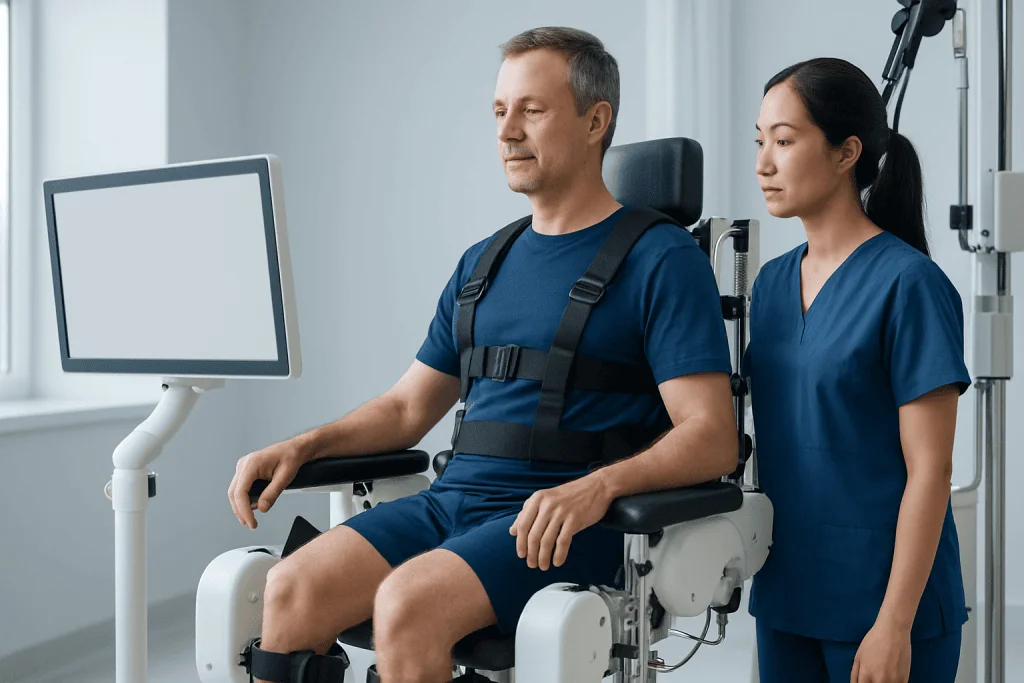
Inpatient rehabilitation is a goal-directed program rather than a single procedure. After admission, the team completes assessments of mobility, self-care, cognition, speech and swallowing, nutrition, pain, skin health, mood, and medical stability. These findings help create an individualized plan that outlines treatment priorities and anticipated discharge needs.
Therapy is usually delivered on a regular schedule and may include physical therapy for balance, strength, walking, and transfers; occupational therapy for everyday tasks and adaptive equipment; and speech-language therapy for communication, cognition, or swallowing concerns. Medical and nursing teams manage conditions that could interfere with recovery, such as pain, blood pressure changes, diabetes, wounds, bowel or bladder problems, or medication effects.
Family education is an important part of rehabilitation. Relatives or caregivers may be taught safe transfer techniques, use of mobility aids, medication routines, communication approaches, and warning signs that need medical attention. Discharge planning begins early so that equipment, follow-up appointments, community services, and the next level of therapy can be arranged safely.
- Potential benefits: improved function, greater confidence with daily tasks, coordinated care, and a structured transition plan.
- Possible limitations: recovery varies, and rehabilitation cannot always restore previous abilities or eliminate the need for ongoing support.
- Common goals: returning home safely, reducing fall risk, improving independence, and continuing recovery after discharge.
Candidacy, admission, and the step-by-step process

Candidates for inpatient rehabilitation are usually medically stable enough to participate in a structured therapy program, while having functional limitations that require more support than outpatient care can provide. They may need more than one rehabilitation discipline, ongoing nursing care, physician supervision, or careful coordination after a complex hospitalization. The referring medical team assesses whether rehabilitation goals are realistic and whether this setting is the best match.
What is the admission process for West Gables? The precise process should be confirmed directly with the hospital, but admission commonly begins with a referral from a hospital clinician, physician, case manager, or another qualified provider. The rehabilitation team reviews diagnoses, recent medical records, therapy evaluations, medicines, functional status, and discharge needs. If the program is clinically appropriate, administrative staff typically verify coverage or discuss financial arrangements before a planned admission.
Once admitted, patients can expect an initial medical evaluation, nursing assessment, therapy assessments, and a discussion of goals. The care team then develops a treatment schedule and communicates with the patient and family about likely needs after discharge. Individuals requesting west gables rehabilitation hospital medical records should contact the facility’s Health Information Management or medical records department and follow its identity-verification and authorization process.
For people whose rehabilitation follows a neurological event, a coordinated program that includes stroke rehabilitation may address mobility, communication, cognition, mood, and prevention of complications. The specific therapy plan should always be based on a clinician’s assessment rather than on a diagnosis alone.
Recovery timeline, expected progress, and safety considerations
There is no single recovery timeline. Some people make rapid gains in the first days or weeks after an acute illness or surgery, while others improve gradually over months. Progress depends on the original condition, severity of functional changes, pre-existing health conditions, pain, fatigue, cognition, emotional well-being, access to follow-up care, and participation in the rehabilitation plan.
During an inpatient stay, the team regularly reassesses goals and adjusts therapy. A patient may transition to home with outpatient rehabilitation, home-based services, a skilled nursing setting, or caregiver support. Exercises and safety recommendations should be followed as instructed; doing more than advised can increase the risk of falls, overuse injury, or excessive fatigue.
Rehabilitation is generally designed to reduce complications and build safe independence, but risks can still occur. These may include falls, skin injury, fatigue, pain flares, medication side effects, infection, blood clots in people with reduced mobility, or worsening of an underlying medical condition. Staff should be told promptly about chest pain, shortness of breath, new weakness, severe headache, confusion, fever, sudden swallowing difficulty, or a fall.
For recovery after surgery or musculoskeletal injury, physical therapy and rehabilitation can help restore movement and function while taking account of surgical precautions and individual healing. A rehabilitation clinician can explain what activities are safe at each stage.
What are the patient reviews of West Gables Rehabilitation Hospital?
What are the patient reviews of West Gables Rehabilitation Hospital? Online reviews may describe individual experiences with communication, therapy, nursing care, food, cleanliness, discharge planning, or visiting arrangements. They can be useful for identifying questions to ask, but they cannot reliably predict one person’s experience or measure clinical quality on their own. Reviews may be incomplete, outdated, or shaped by circumstances that are not visible to readers.
When considering west gables rehab hospital reviews, patients and families may find it helpful to look for consistent themes across several recent sources rather than relying on a single rating or comment. It is also reasonable to ask the facility about rehabilitation services for the relevant condition, therapy availability, physician coverage, caregiver training, discharge planning, interpreter services, and how concerns are handled.
Important details should be verified directly. This includes the west gables rehabilitation hospital address, transportation and parking arrangements, current west gables rehab visiting hours, visitor health requirements, and whether family training can be scheduled. Policies may vary by unit, patient needs, infection-control guidance, and local regulations.
What insurance plans does West Gables accept? What accreditations does it have?
What insurance plans does West Gables accept? Insurance participation, authorization requirements, covered services, deductibles, and out-of-pocket costs can change over time and vary by individual plan. The most reliable approach is to contact both the hospital admissions or financial counseling team and the insurance provider before admission. Patients should ask whether inpatient rehabilitation is covered, whether prior authorization is required, which physicians and services are in network, and what post-discharge therapy benefits are available.
What accreditations does West Gables have? Accreditation and certification status should be verified using the hospital’s current official information and the relevant accrediting organization’s directory. Accreditation may reflect review against standards for quality and safety, but it does not replace a personal assessment of whether a facility meets an individual’s clinical and practical needs. Patients can also ask about condition-specific programs, quality reporting, emergency transfer procedures, and patient-rights policies.
For families comparing rehabilitation options, it can be useful to request clear answers in writing where possible. A practical checklist includes the expected therapy schedule, medical coverage after hours, medication management, infection-prevention practices, discharge criteria, how complaints are addressed, and whom to contact with questions before and during the stay.
When to seek medical care
Rehabilitation needs should be discussed with a qualified clinician after a hospital stay, surgery, stroke, serious fall, or new loss of independence. Prompt assessment is important when a person cannot safely walk, transfer, eat, swallow, communicate, manage essential self-care, or take medicines without help. Early rehabilitation planning can support a safer transition from acute care and help prevent avoidable complications.
Emergency medical care is needed for possible stroke symptoms, including sudden face drooping, arm weakness, speech difficulty, new loss of vision, severe sudden headache, or abrupt confusion. Emergency assessment is also important for chest pain, significant breathing difficulty, fainting, uncontrolled bleeding, a serious fall with possible injury, or sudden worsening after surgery or illness.
International patients seeking a broader rehabilitation assessment can consult Acibadem International, where multidisciplinary specialists in JCI-accredited hospitals evaluate and treat neurological, orthopedic, and complex recovery needs. Rehabilitation plans may also involve occupational therapy when daily activities, home safety, hand function, or adaptive strategies are central to recovery.
Frequently asked questions
Is West Gables Rehab the same as a nursing home?
Inpatient rehabilitation and nursing home care are different levels of care. Inpatient rehabilitation generally provides coordinated medical oversight and structured therapy for people expected to benefit from intensive functional recovery work. The appropriate setting depends on the person’s health status, therapy tolerance, safety needs, and discharge goals.
How can a family request West Gables Rehabilitation Hospital medical records?
Families should contact the hospital’s medical records or Health Information Management department. The hospital will typically require a signed authorization from the patient or legal representative and verification of identity. Request forms, processing times, and permitted delivery methods should be confirmed directly with the facility.
How long does inpatient rehabilitation last?
Length of stay varies substantially according to the condition, functional goals, medical needs, progress, and insurance authorization. The rehabilitation team reassesses progress regularly and plans discharge when the next care setting is safe and appropriate. Ongoing therapy may continue after discharge.
Can family members visit a patient at West Gables Rehab?
Visiting is often possible, but current West Gables Rehab visiting hours and visitor requirements should be checked directly with the hospital. Policies can change due to patient care needs, infection-control measures, or unit-specific routines. Families may also ask about caregiver training visits and video-call options.
What should patients bring for a rehabilitation admission?
Patients commonly need identification, insurance information, a current medication list, comfortable clothing and supportive footwear, and any relevant medical documents requested by the admissions team. Personal mobility aids or communication devices may be useful if approved by staff. Valuables should generally be minimized unless the facility advises otherwise.
Does inpatient rehabilitation guarantee a return to previous function?
No rehabilitation program can guarantee a specific outcome. Many people improve in mobility, self-care, communication, or safety skills, but the degree and pace of recovery vary. The care team can explain realistic goals, likely barriers, and options for continuing support after discharge.
References
- Centers for Medicare & Medicaid Services
- American Heart Association
- American Stroke Association
- Commission on Accreditation of Rehabilitation Facilities
- Agency for Healthcare Research and Quality
This article is for general information only and is not a substitute for professional medical advice. Please consult a qualified doctor about your individual situation.
Explore treatments in Turkey — costs, top hospitals & a free quote
JCI-accredited · board-certified surgeons · reply within 24h
Check your numbers in seconds
BMI, calories, due date, blood pressure and 30+ more clinical calculators — free, instant, doctor-reviewed ranges.

More from the Health Library



Related Specialists

Assoc. Prof. Dr. İzzet Doğan
Medical Oncology
Dr. Sinem Bostan Kayaoğlu
Gynecology & Obstetrics
Prof. Dr. Lütfi Telci
Anesthesiology
Dyt. Zeynep Ondur
Nutrition & Diet