Osd Treatment: How It Works, Results and What to Expect

Most young people with Osgood-Schlatter disease improve without surgery. Treatment commonly includes activity modification, ice, suitable pain relief and guided exercises.
Key Takeaways
- Most young people with Osgood-Schlatter disease improve without surgery.
- Treatment commonly includes activity modification, ice, suitable pain relief and guided exercises.
- Complete rest is not always necessary; activities can often be adjusted according to pain.
- A bony bump below the kneecap may remain after symptoms improve and is usually harmless.
- Medical assessment is important when pain is severe, follows a major injury, or causes marked limping, swelling or fever.
OSD treatment usually focuses on easing pain and protecting the knee while an adolescent remains as active as symptoms allow. Osgood-Schlatter disease is a common growth-related cause of pain below the kneecap and generally settles as skeletal growth is completed.
Overview: What Is OSD Treatment?
OSD treatment refers to care for Osgood-Schlatter disease, a growth-related condition that causes pain and tenderness at the top of the shinbone, just below the kneecap. It most often affects active children and teenagers during growth spurts, particularly those who run, jump, kick or change direction frequently.
The condition develops when repeated pulling from the thigh muscle and patellar tendon irritates the growth area where the tendon attaches to the tibial tubercle. Although the pain can limit sport for a time, Osgood-Schlatter disease is not usually dangerous and does not generally cause long-term damage to the knee.
The main aim of treatment is to reduce symptoms while helping the young person stay safely active. Care is individualized according to pain, sport demands, growth stage and everyday function. Symptoms commonly settle gradually as growth finishes, though the process may take months and occasionally longer.
How OSD Treatment Works
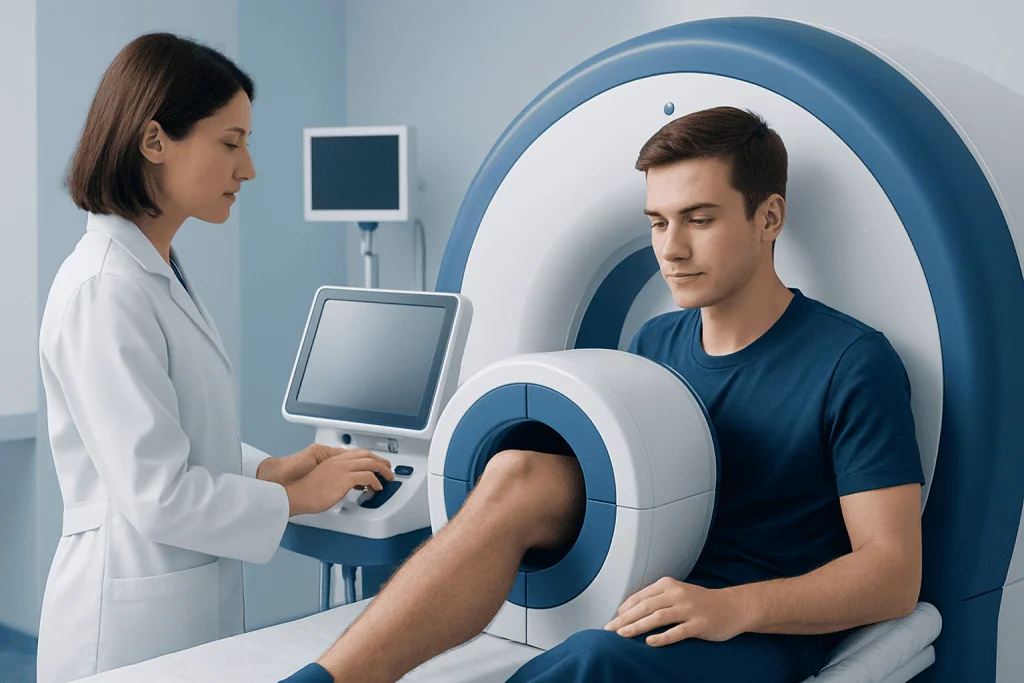
Osgood-Schlatter treatment works by reducing repeated stress on the sensitive tendon attachment while maintaining strength, flexibility and confidence with movement. Rather than trying to remove the bony prominence below the knee, treatment addresses the irritation and overload that make it painful.
A clinician may recommend reducing or temporarily avoiding the activities that reliably trigger pain, such as repeated jumping, sprinting, deep squatting or kneeling. This does not necessarily mean stopping all exercise. Lower-impact activities, including swimming or cycling, may be more comfortable for some young people while symptoms are active.
Physiotherapy can help address tightness and weakness that may contribute to knee loading. A program may include gentle stretching for the quadriceps, hamstrings and calf muscles, as well as progressive strengthening of the hips, thighs and core. The plan should be tailored to the child or teenager rather than based on a fixed timeline.
Simple comfort measures may also be useful. Ice after activity, a protective knee pad for kneeling, or a patellar tendon strap may reduce symptoms for some people. A doctor or pharmacist can advise whether age-appropriate pain medication is suitable and how it should be used safely.
Who May Benefit and How the Diagnosis Is Made

OSD treatment is most relevant for children and adolescents with pain, swelling or tenderness over the bony bump below the kneecap. Symptoms often begin gradually and may be worse during or after sport, stair climbing, squatting, running or jumping. Pain may occur in one knee or both.
Diagnosis is usually made through a clinical assessment. A doctor will ask about the pattern of pain, recent growth, sport participation and any injury. They will examine the knee, check the tender area, assess movement and muscle flexibility, and look for features that could suggest another cause of knee pain.
Imaging is not always required. An X-ray may be considered when symptoms are unusual, pain is severe, there has been a significant injury, or the clinician needs to rule out another condition. Other causes of front-of-knee pain can include patellar tendinopathy, fracture, infection, inflammatory disease or other growth-plate conditions.
Young people with Osgood-Schlatter disease can often continue selected activities if discomfort remains mild and settles afterward. A healthcare professional or physiotherapist can help define practical limits, especially for athletes training frequently or preparing for competition.
What to Expect: A Step-by-Step Care Plan
There is usually no invasive procedure for Osgood-Schlatter disease. Treatment begins with an assessment and a discussion of the young person’s symptoms, daily activities and goals. The clinician will identify movements that increase pain and create a plan that balances symptom relief with an appropriate level of activity.
In the first phase, the focus is often on reducing painful loading. This may involve shortening training sessions, taking breaks from high-impact drills, improving warm-up routines and using ice after activity. If walking, school activities or sleep are affected, the plan may need to be more protective for a period.
Once pain is becoming more manageable, a physiotherapist may introduce mobility and strengthening exercises. Progression is gradual: exercises should challenge the muscles without producing substantial or persistent knee pain. Training volume and intensity can then be increased step by step as the knee tolerates more load.
Return to full sport is generally based on function rather than a calendar date. A young person should be able to walk, climb stairs, squat, jog and perform sport-specific movements with minimal symptoms and without a meaningful flare-up afterward. Families should follow the advice of the treating clinician for individualized decisions.
- Assessment of pain, function and activity triggers
- Temporary adjustment of high-impact or painful activities
- Comfort measures such as ice, padding or clinician-approved medication
- Progressive flexibility, strength and movement training
- Gradual return to sport guided by symptoms and function
Recovery Timeline, Benefits and Expected Results
Recovery from Osgood-Schlatter disease is often gradual because the irritated attachment remains sensitive while the body is growing. Some young people notice improvement within several weeks after changing activity and starting exercises, while others have symptoms that come and go over many months. The condition usually resolves as the growth plate matures.
The benefits of a well-managed plan include less pain during daily life and sport, improved muscle flexibility and strength, and a safer return to preferred activities. It can also help prevent the cycle of doing too much during a good week and then experiencing a painful flare after sudden increases in training.
A small, firm bump at the top of the shinbone may remain even after pain has resolved. This is a common residual feature and generally does not interfere with normal knee use. In a small number of people, kneeling discomfort or localized tenderness can persist into adulthood.
There is no reliable way to predict exactly how long OSD will last for an individual. Consistent activity pacing and rehabilitation are often more helpful than complete inactivity. The treating team can revise the plan if symptoms are not improving, if sport demands change, or if pain begins to affect normal walking and day-to-day life.
Risks, Surgery and Other Treatment Considerations
Conservative OSD treatment is low risk when guided appropriately. The main challenge is avoiding both extremes: continuing painful, high-load activity without adjustment may prolong symptoms, while prolonged complete rest may lead to loss of conditioning, muscle weakness and difficulty returning to sport.
Pain medicines should not be used to allow a child or teenager to push through substantial pain during sport. Non-steroidal anti-inflammatory medicines and other pain relievers may not be appropriate for everyone, particularly people with certain medical conditions or medication interactions. Advice from a doctor or pharmacist is important before use.
Surgery is rarely needed for Osgood-Schlatter disease. It is generally considered only after skeletal maturity when persistent, significant pain is linked to a problematic bone fragment or ongoing tendon irritation despite thorough non-surgical care. A specialist orthopedic assessment is needed before surgery is discussed.
For international patients who need assessment of persistent knee symptoms, Acibadem International’s multidisciplinary specialists and JCI-accredited hospitals provide diagnostic evaluation and treatment planning. Most children and adolescents, however, improve with non-surgical support and a carefully paced return to activity.
When to Seek Medical Care
A child or teenager with ongoing pain below the kneecap should be assessed by a qualified healthcare professional, particularly if the pain limits sport, walking, school participation or sleep. An evaluation can confirm whether Osgood-Schlatter disease is the likely explanation and ensure other causes of knee pain are not overlooked.
Prompt medical attention is important after a significant fall, collision or twisting injury, especially if the young person cannot bear weight, cannot straighten the knee, or has sudden severe pain. A knee that is very swollen, red, hot or associated with fever also needs urgent medical assessment.
Families should arrange review if symptoms steadily worsen despite activity adjustments, if pain occurs at rest or at night, or if there is unexplained weight loss, persistent fatigue or pain in other joints. These features are not typical of uncomplicated Osgood-Schlatter disease and deserve further investigation.
It is also reasonable to seek physiotherapy advice when a young athlete is struggling to return to sport, repeatedly flares after training, or needs an individualized strengthening and return-to-play plan. Early guidance can make activity changes feel more manageable and realistic.
Frequently asked questions
Can Osgood-Schlatter disease be cured?
Osgood-Schlatter disease usually improves naturally as the young person finishes growing. Treatment does not need to "cure" the bony bump; it aims to control pain, maintain function and support a safe level of activity while the irritated area settles.
Should a child stop playing sports with Osgood-Schlatter disease?
Not always. Many children can continue sport with adjustments to training intensity, frequency or specific painful movements. If pain causes limping, affects daily activities, or remains significant after exercise, a doctor or physiotherapist should help guide a temporary reduction and return plan.
How long does OSD treatment take to work?
Some symptom relief may occur within weeks after activity changes and rehabilitation begin, but recovery is often gradual. Symptoms can recur during growth spurts or after sudden increases in training, and may last for months until growth is completed.
Is the lump below the knee permanent?
A visible or palpable bump at the top of the shinbone may remain after symptoms have resolved. It is usually harmless and does not require treatment unless it causes persistent pain or kneeling discomfort after skeletal maturity.
Does Osgood-Schlatter disease require an MRI or X-ray?
Most cases can be diagnosed through the history and physical examination. X-rays or other imaging may be used if symptoms are atypical, severe, associated with trauma, or if the clinician needs to exclude another cause of knee pain.
Can stretching make Osgood-Schlatter pain better?
Gentle stretching of tight thigh, hamstring and calf muscles can be helpful as part of a broader rehabilitation plan. Stretching should not cause sharp pain at the tibial tubercle, and exercises are best individualized by a qualified clinician or physiotherapist.
References
- American Academy of Orthopaedic Surgeons
- American Academy of Pediatrics
- National Institute of Arthritis and Musculoskeletal and Skin Diseases
- NHS
- OrthoInfo
This article is for general information only and is not a substitute for professional medical advice. Please consult a qualified doctor about your individual situation.
Joint and spine care in Turkey — expert assessment & treatment
JCI-accredited · board-certified surgeons · reply within 24h