Broviac Catheter: An Evidence-Based Patient Guide
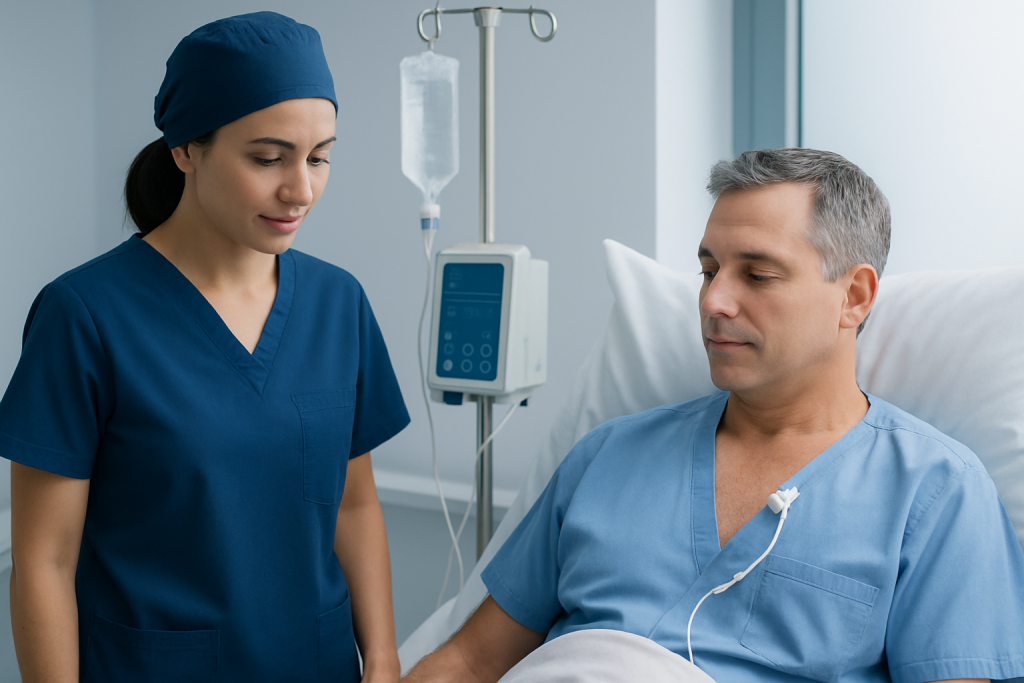
A Broviac catheter is a tunneled central line with its tip positioned in a large central vein near the heart. It may be used for long-term intravenous medicines, chemotherapy, parenteral nutrition, transfusions, or repeated blood tests.
Key Takeaways
- A Broviac catheter is a tunneled central line with its tip positioned in a large central vein near the heart.
- It may be used for long-term intravenous medicines, chemotherapy, parenteral nutrition, transfusions, or repeated blood tests.
- Placement is usually image-guided and involves creating a tunnel beneath the skin before the catheter enters a vein.
- Careful hand hygiene, dressing care, flushing as instructed, and prompt attention to symptoms help reduce complications.
- Possible complications include infection, blockage, bleeding, catheter damage, blood clots, and movement of the catheter tip.
- The catheter should be removed or replaced when it is no longer needed or if there is a complication that cannot be safely managed.
A Broviac catheter is a type of tunneled central venous catheter designed to provide dependable access to a large vein over weeks, months, or longer. It can make repeated treatments, intravenous nutrition, blood sampling, or transfusions more practical while reducing the need for frequent needle sticks.
Overview: what is a Broviac catheter?
A Broviac catheter is a soft, flexible tube placed into a large central vein. It is a type of tunneled central venous catheter: part of the tube travels beneath the skin before entering a vein, while an external segment remains outside the body for connection to intravenous treatment. The internal tip usually rests in a large vein close to the heart, where blood flow can safely dilute many medicines and fluids.
It is intended for people who need reliable venous access for an extended period. Broviac catheters are commonly used in children and adults, although the most suitable device depends on the person’s age, treatment plan, vein access, activity level, and expected duration of therapy. A healthcare team may also discuss other central lines, such as a peripherally inserted central catheter (PICC) or implanted port.
The catheter has a cuff under the skin that encourages tissue to grow around it. This helps anchor the line and provides an additional barrier against bacteria. Because the line exits through the skin, consistent Broviac catheter care is important throughout the time it remains in place.
How it works and common indications
The external end of a Broviac catheter has a connector and clamp. A trained healthcare professional can use it to give fluids, medicines, blood products, or intravenous nutrition, and in some circumstances to collect blood samples. The line avoids repeated placement of short peripheral intravenous cannulas, which can be difficult or uncomfortable when treatment is frequent.
Broviac catheter indications include treatment that requires central venous access for weeks or months. Examples may include long-term antibiotic therapy, chemotherapy, stem cell or transplant-related care, frequent transfusions, and total parenteral nutrition when nutrition must be provided intravenously. The exact indication should be individualized; not every patient receiving intravenous treatment needs a tunneled catheter.
Central venous access is often coordinated by a multidisciplinary team that may include the treating specialist, nursing staff, anesthesiology, surgery, and interventional radiology. For people receiving cancer treatment, the choice of line is usually considered alongside the overall cancer care plan.
Who may be a candidate?

A clinician may recommend a Broviac catheter when peripheral veins are difficult to access or when planned therapy is frequent, prolonged, or unsuitable for small peripheral veins. The decision weighs the expected benefit of stable access against the responsibilities and possible complications of having a central line. The healthcare team will consider whether a single- or multi-lumen catheter is needed.
Before placement, the team reviews medical history, medicines, allergies, prior central lines, bleeding risk, heart or vascular conditions, and any current infection. Blood tests may be requested when clinically appropriate, particularly if there is concern about blood clotting or low platelet levels. People taking anticoagulants or antiplatelet medicines should not stop them independently; the prescribing clinician and procedural team will provide individualized instructions.
Placement may be postponed or adapted if there is an active infection, skin problem at the proposed insertion area, or an anatomical issue affecting the veins. Ultrasound and other imaging help the team select an appropriate vein and plan the safest route.
Broviac catheter procedure: placement step by step
The Broviac catheter procedure is commonly performed in an operating room, procedure suite, or interventional radiology department. Depending on the patient, it may be done with local anesthetic and sedation or with general anesthesia. The clinician explains the planned approach, obtains consent, and gives instructions about eating, drinking, medicines, and arranging transport home when relevant.
After the skin is cleaned and covered with sterile drapes, the clinician uses ultrasound to locate a suitable vein, often in the neck or upper chest. The catheter is introduced into the vein and tunneled beneath the skin to a separate exit site on the chest. The cuff is positioned under the skin, and the external segment is secured and covered with a sterile dressing.
Broviac catheter radiology has an important safety role. Ultrasound guidance supports vein access, while fluoroscopy or a chest X-ray may be used to confirm that the catheter tip is in the intended position and to check for certain immediate complications. The line is flushed and tested before use. Patients can ask their team whether the catheter may be used immediately or whether a short waiting period is recommended.
Image-guided venous access is part of broader interventional radiology care, which uses imaging to support minimally invasive procedures. The precise technique can vary according to age, anatomy, the underlying condition, and the facility’s clinical protocols.
Recovery timeline and everyday Broviac catheter care
After placement, mild tenderness, bruising, or pulling discomfort around the chest, neck, or exit site can occur for a few days. The team will provide individualized advice on pain relief, wound care, showering, activity, and when the dressing can be changed. The exit site and tunnel need time to heal, so strenuous upper-body activity may be limited initially.
Once healed, many people can continue everyday activities with reasonable precautions. The catheter and dressing should be kept clean and dry. Before handling the line, hands should be washed thoroughly, and only trained patients, caregivers, or healthcare professionals should connect, flush, or access it. The line should be clamped and capped as instructed, and the dressing should be changed using the technique and schedule provided by the care team.
Flushing helps maintain catheter patency, but the method and frequency depend on the device and treatment plan. Patients should use only the supplies and instructions provided by their care team. They should not force fluid into a catheter that will not flush, attempt to repair a cracked line at home, or use scissors near the tubing.
Swimming, baths, and water exposure require specific advice because the external exit site creates an infection risk. A clinician may recommend protective coverings for showering and may advise avoiding submersion. Contact sports or activities that could pull, snag, or damage the line should be discussed before returning to them.
Benefits, risks, and catheter replacement
The principal benefit of a Broviac catheter is dependable long-term central access. It can reduce repeated peripheral needle insertions and allow treatment to be delivered more consistently. For people who need intravenous nutrition, complex medicines, or frequent blood sampling, it can support a treatment plan that would otherwise be more difficult to manage.
As with any central venous catheter, complications are possible. These include bleeding or bruising after insertion, infection at the exit site or in the bloodstream, blockage, leakage, breakage, accidental pulling out of the catheter, blood clots, and movement of the catheter tip. Rare procedure-related complications can include injury to nearby structures or air around the lung. Image guidance and careful technique help reduce risk, but cannot eliminate it.
A Broviac catheter is removed when treatment is complete or when it is no longer the safest option. Broviac catheter replacement may be considered if the line becomes damaged, repeatedly blocked, displaced, or infected, or if a different type of access is needed. In some cases, a problem can be managed without replacement; the decision depends on the cause, the person’s condition, and whether the line is still essential.
Anyone with a central line should keep emergency contact information provided by their treating team. Prompt reporting of changes allows clinicians to assess whether the catheter can be preserved or needs treatment, removal, or replacement.
When to seek medical care
Patients should contact their healthcare team promptly if they develop fever or chills, new redness, warmth, swelling, pain, drainage, bleeding, or an unusual odor around the catheter exit site. They should also report difficulty flushing the line, leaking fluid, a loose dressing, a cracked or damaged catheter, new swelling of the neck, face, chest, or arm, or pain during infusion.
Urgent medical assessment is appropriate for severe shortness of breath, chest pain, fainting, uncontrolled bleeding, sudden confusion, or signs of a serious allergic reaction. If the catheter comes out partly or completely, it should not be pushed back in. The site should be covered with a clean dressing and urgent guidance sought from the treating team or local emergency services, as appropriate.
Planned follow-up enables the team to review the exit site, dressing routine, line function, and continuing need for the catheter. Acibadem International’s multidisciplinary specialists and JCI-accredited hospitals support diagnosis and treatment planning for international patients who require central venous access and related care.
Frequently asked questions
Is a Broviac catheter the same as a PICC line?
No. Both are central venous catheters, but a PICC line is inserted through a vein in the arm, while a Broviac catheter is tunneled beneath the skin and typically exits on the chest. The best option depends on treatment duration, the medicines needed, vein access, lifestyle factors, and clinical history.
How long can a Broviac catheter stay in place?
A Broviac catheter may remain in place for months or longer if it is functioning well, needed for treatment, and free of serious complications. There is no single timeframe that applies to everyone. The healthcare team reviews whether it is still needed at regular intervals.
Does Broviac catheter placement hurt?
Local anesthetic, sedation, or general anesthesia is used depending on the procedure plan. Some tenderness or bruising can occur after placement, usually improving over several days. The care team can advise on suitable pain relief and what level of discomfort should be reported.
Can a Broviac catheter be used for blood tests?
In many cases, a Broviac catheter can be used to collect blood samples, but this depends on the catheter type, treatment plan, and local clinical protocol. Some blood tests or situations may require a separate sample. The treating team will explain how the line should be used.
What should a patient do if the Broviac catheter will not flush?
The catheter should never be forced. A clamp may be closed, the tubing may be kinked, or a blockage may be present. The patient should stop and contact the healthcare team for instructions rather than trying to clear the line independently.
Can a person shower with a Broviac catheter?
Many people can shower once their team confirms it is safe, usually using a waterproof covering to protect the dressing and exit site. Baths, swimming pools, and other water submersion may increase infection risk and should be discussed with the care team. Instructions can differ based on healing, dressing type, and individual circumstances.
References
- Centers for Disease Control and Prevention
- National Cancer Institute
- Infusion Nurses Society
- Society of Interventional Radiology
- NHS England
This article is for general information only and is not a substitute for professional medical advice. Please consult a qualified doctor about your individual situation.
Explore treatments in Turkey — costs, top hospitals & a free quote
JCI-accredited · board-certified surgeons · reply within 24h