Do Sunglasses Block Uv Rays: An Evidence-Based Patient Guide
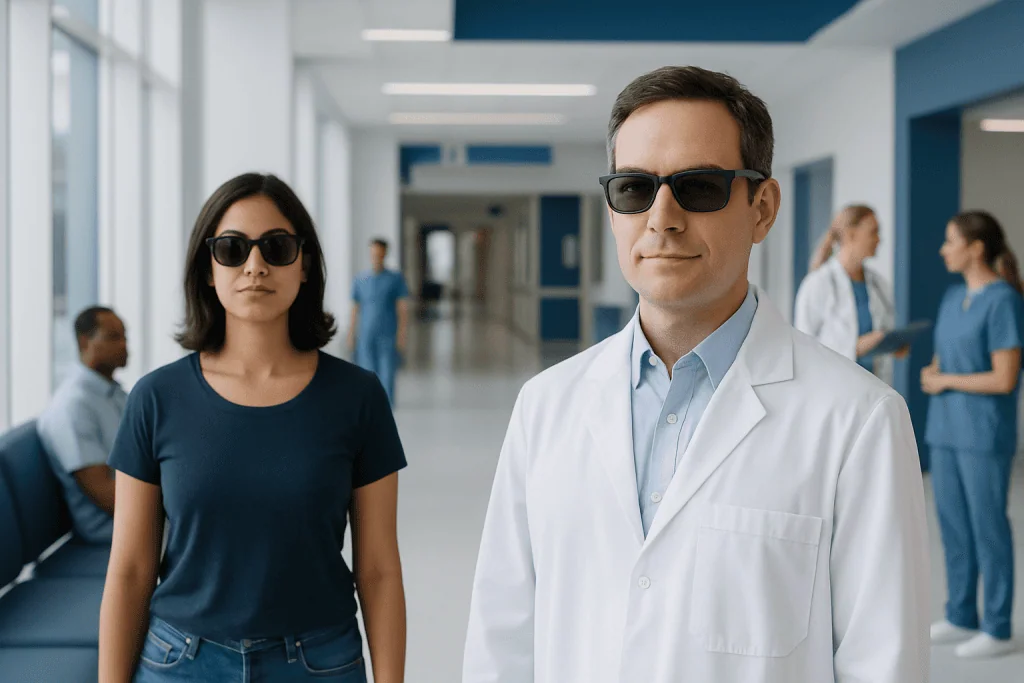
Look for a label stating “100% UVA/UVB protection” or “UV400” when choosing sunglasses. Lens darkness and polarization reduce glare or visible light but do not, by themselves, confirm UV protection.
Key Takeaways
- Look for a label stating “100% UVA/UVB protection” or “UV400” when choosing sunglasses.
- Lens darkness and polarization reduce glare or visible light but do not, by themselves, confirm UV protection.
- Wraparound frames and larger lenses can reduce UV exposure entering from the sides, above, and below the frame.
- Children and adults benefit from regular eye sun protection outdoors, including on cloudy days and around reflective surfaces.
- New vision changes, persistent eye discomfort, flashes, floaters, or sudden vision loss need prompt medical assessment.
Yes. Sunglasses labeled “100% UV protection” or “UV400” are designed to block both UVA and UVB radiation, helping protect the eyes and surrounding skin from cumulative sun damage. The quality of UV filtering is determined by the lens material or coating, not by how dark, fashionable, or expensive the sunglasses are.
Do sunglasses block UV rays?
Yes—sunglasses can block UV rays when they are specifically made and labeled to do so. A reliable label will state “100% UV protection,” “100% UVA and UVB protection,” or “UV400.” UV400 means the lenses block ultraviolet wavelengths up to 400 nanometers, covering both UVA and UVB radiation.
Not every dark lens provides this protection. Tint makes a lens more comfortable in bright visible light, but it does not necessarily filter ultraviolet radiation. For dependable eye sun protection, the label matters more than lens color, brand, or price.
Ultraviolet exposure is cumulative over a lifetime. Wearing appropriately protective sunglasses outdoors can help limit UV reaching the eye and the delicate skin around it. A brimmed hat adds another useful layer of protection, especially during prolonged time outside.
How ultraviolet light affects the eyes
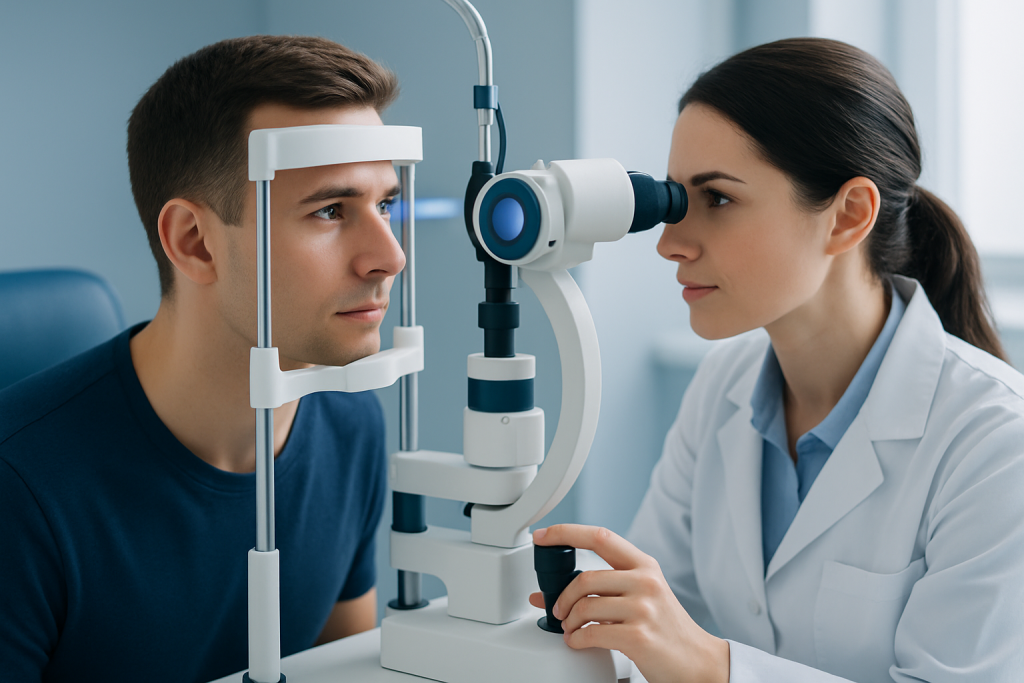
Sunlight contains invisible ultraviolet radiation, including UVA and UVB rays. UVB is strongly linked with surface sunburn and is partly filtered by the atmosphere, while UVA penetrates more deeply and remains present throughout daylight hours. Both types can reach the eyes and surrounding tissues.
Short, intense exposure can irritate the surface of the eye. Over many years, repeated UV exposure may contribute to certain eye and eyelid conditions, including growths on the eye surface, lens changes associated with cataracts, and damage to light-sensitive tissues. UV exposure is one factor among many; age, family history, smoking, health conditions, and other environmental exposures also affect eye health.
Water, snow, sand, concrete, and even light-colored surfaces reflect sunlight. This can increase the amount of UV that reaches the eyes, which is why sun protection may be useful during outdoor activities, winter sports, beach visits, and driving as well as on sunny summer days.
Do sunglasses actually block 100% UV?
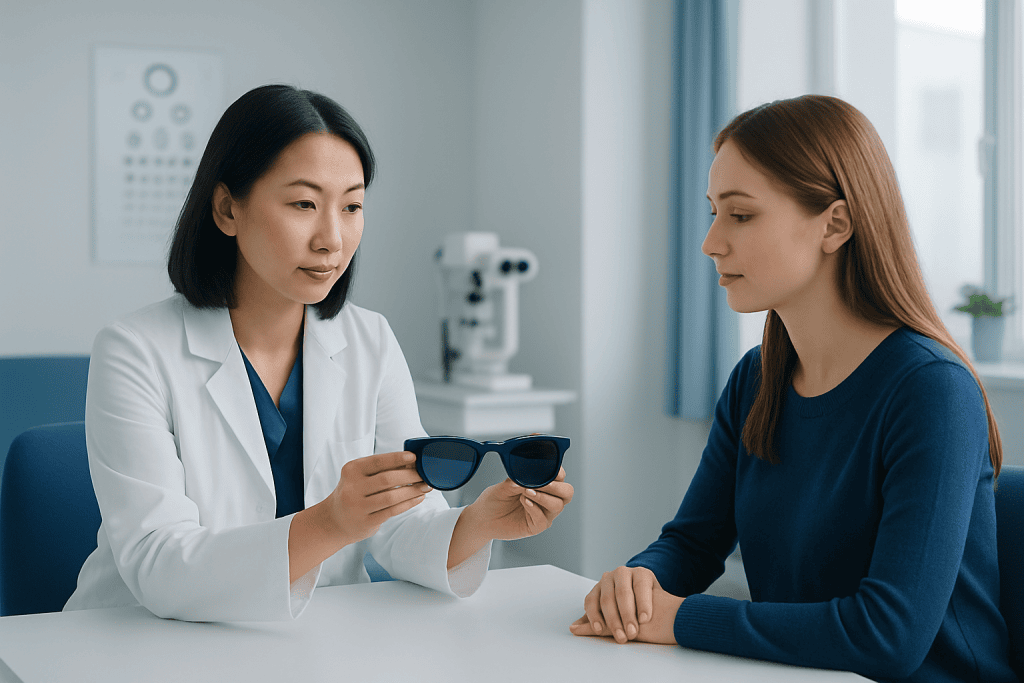
Sunglasses marketed as “100% UV protection” or “UV400” are intended to block essentially all UVA and UVB radiation within the relevant ultraviolet range. No ordinary pair of sunglasses can shield every possible angle of light, however. UV can enter around the edges of a frame, particularly with small lenses or frames that sit far from the face.
For this reason, protection depends on both the lens specification and the frame design. Larger lenses, close-fitting frames, and wraparound styles provide better coverage from side light than narrow or loosely fitted designs. A hat with a broad brim can further reduce overhead exposure.
Scratches, damage, or age do not automatically remove UV filtering, because protection is often built into the lens material. Still, heavily damaged lenses may affect visual clarity and comfort. Replacing worn sunglasses is sensible if vision through them is distorted or if the UV-protection label cannot be confirmed.
Do eye doctors recommend sunglasses?
Eye doctors commonly recommend wearing sunglasses with verified UVA and UVB protection when outdoors in daylight. This is a practical preventive measure for people of all ages, including children, whose eyes may receive substantial lifetime sun exposure over time.
Recommendation is especially relevant for people who spend long periods outdoors, work near reflective surfaces, participate in snow or water sports, or take medicines that increase light sensitivity. People with certain eye conditions or following eye procedures may receive more individualized advice from an ophthalmologist.
Sunglasses do not replace routine eye examinations. Regular checks can identify refractive errors and eye diseases that may not cause noticeable symptoms in their earlier stages. An eye specialist can also recommend the most suitable lenses for a person’s work, hobbies, vision needs, and eye health.
Is it healthier to not wear sunglasses?
No. There is no evidence that avoiding protective sunglasses is healthier for the eyes. Natural daylight supports normal body rhythms and general wellbeing, but the eyes do not need to receive unfiltered ultraviolet radiation to gain those benefits. Outdoor time can be enjoyed while using appropriate eye protection.
Some people prefer not to wear sunglasses in low light because dark lenses may reduce visual clarity. In those situations, removing sunglasses may be appropriate for safety, such as when entering a darker indoor area or driving at night. The goal is to use sunglasses when bright outdoor conditions make UV exposure and glare relevant, not to wear dark lenses at all times.
People should avoid looking directly at the sun, including during eclipses, whether or not they are wearing ordinary sunglasses. Standard sunglasses are not safe for direct solar viewing; certified solar eclipse viewers are required for that purpose.
Do cheap sunglasses actually block UV?
Cheap sunglasses can block UV effectively if they are accurately labeled as providing 100% UVA/UVB protection or UV400 protection. Cost alone does not determine whether a lens filters ultraviolet radiation. Conversely, an expensive pair should not be assumed to provide adequate protection unless its UV specification is clear.
It is helpful to buy from a trusted retailer or optical provider, particularly when labeling is unclear. Very dark lenses without UV filtration are not an ideal choice, because the eyes may adapt to dimmer visible light while ultraviolet radiation is still able to pass through the lens.
Polarized lenses are useful for reducing reflected glare from roads, water, or snow. This can improve comfort and visibility, but polarization is separate from UV blocking. The best choice for most outdoor use combines verified UV protection with a frame shape that covers the eyes well; polarization may be added based on personal activities.
Choosing and using sunglasses effectively
A practical starting point is to choose lenses labeled UV400 or 100% UVA and UVB protection. Larger frames or wraparound styles can offer more complete coverage. Sunglasses should fit comfortably without slipping, because protection works best when the lenses remain positioned in front of the eyes.
- Wear sunglasses outdoors during daylight, including on hazy or cloudy days.
- Use a wide-brimmed hat for additional protection during long outdoor activities.
- Choose sport-specific eyewear with impact protection where relevant, such as cycling or racquet sports.
- Keep sunglasses clean and replace lenses that cause blur, distortion, or discomfort.
- Provide children with comfortable, properly fitting sunglasses labeled for UV protection.
Prescription sunglasses, photochromic lenses, and contact lenses with UV filtering may be helpful for some people. Contact lenses that include UV filtering do not cover the entire eye or the surrounding skin, so sunglasses remain important outdoors. An optometrist or ophthalmologist can advise on options when a person has prescription needs or a known eye condition.
When to seek medical care
Routine eye care is appropriate for questions about sunglasses, light sensitivity, prescription lenses, or preventive eye health. An eye professional can examine the eyes and advise whether symptoms may relate to dryness, allergies, a refractive issue, inflammation, medication effects, or another cause.
Prompt assessment is important for sudden vision loss, a curtain or shadow in the vision, severe eye pain, marked redness, new flashes of light, a sudden increase in floaters, or an eye injury. These symptoms are not usually caused simply by ordinary sun exposure and should not be managed by changing sunglasses alone.
People with cataracts, retinal conditions, prior eye surgery, or persistent sensitivity to light may benefit from individualized ophthalmology care. Acibadem International’s multidisciplinary specialists and JCI-accredited hospitals diagnose and treat eye conditions for international patients.
Frequently asked questions
Do sunglasses block UVA and UVB rays?
They can, but only when the lenses are labeled for full UV protection. Look for “100% UVA/UVB protection” or “UV400,” which indicates protection across the UVA and UVB range. Lens tint alone does not confirm this protection.
Do sunglasses block all UV rays?
UV400 or 100% UV-protection lenses are designed to block UVA and UVB radiation passing directly through the lenses. However, some light may still enter from the sides, top, or bottom of the frame. Larger, close-fitting, or wraparound frames can reduce this exposure.
Are polarized sunglasses better for UV protection?
Polarization reduces reflected glare, especially from water, snow, wet roads, and other flat surfaces. It does not automatically mean the lenses block UV radiation. For protection, check separately for a UV400 or 100% UVA/UVB label.
Can cloudy weather still damage the eyes from UV exposure?
Yes. Clouds may reduce brightness but do not block all ultraviolet radiation. Wearing UV-protective sunglasses outdoors can still be helpful on cloudy, hazy, or overcast days.
Should children wear sunglasses?
Children can benefit from sunglasses that fit properly and have verified UVA and UVB protection. A hat and shade are also useful, especially for babies and younger children. Adults should select comfortable frames that a child is likely to keep on.
Can regular sunglasses be used to look at an eclipse?
No. Ordinary sunglasses do not provide sufficient protection for direct viewing of the sun during an eclipse. Certified eclipse viewers that meet the appropriate safety standard are needed for direct solar viewing.
References
- American Academy of Ophthalmology
- National Eye Institute
- World Health Organization
- U.S. Food and Drug Administration
- American Optometric Association
This article is for general information only and is not a substitute for professional medical advice. Please consult a qualified doctor about your individual situation.
Explore treatments in Turkey — costs, top hospitals & a free quote
JCI-accredited · board-certified surgeons · reply within 24h

More from the Health Library

Fda Approved Cellular and Gene Therapy Products Hemophilia List 2024: How It Works, Results and What to Expect

Hand Foot and Mouth Disease Blister Treatment: How It Works, Results and What to Expect
Rehab for Brain Injury: An Evidence-Based Patient Guide
Related Specialists

Prof. Dr. Can Çalışkan
Gastrointestinal Oncology Unit Clinical Service
Dr. Korkut Bozan
Emergency Service
Assoc. Prof. Dr. Emine Karabük
Gynecology & Obstetrics
Dr. Nuri Soysal
Aesthetic Plastic & Reconstructive Surgery