Colonoscopy for Men: Preparation, Procedure and Results
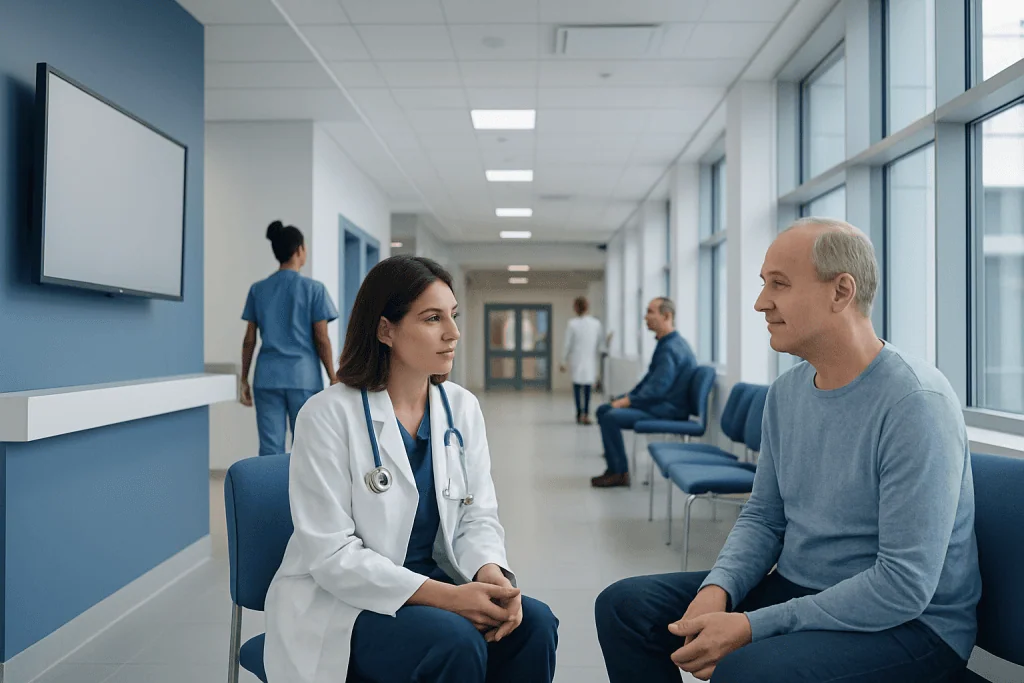
Colonoscopy can screen for colorectal cancer and often allows polyps to be removed during the same examination. Most average-risk adults should begin colorectal cancer screening at age 45, although individual timing may differ.
Key Takeaways
- Colonoscopy can screen for colorectal cancer and often allows polyps to be removed during the same examination.
- Most average-risk adults should begin colorectal cancer screening at age 45, although individual timing may differ.
- Bowel preparation causes frequent loose stools, but following the prescribed instructions gives the clearest and safest examination.
- Sedation is commonly used, so patients need a responsible adult to take them home and should avoid driving until the next day.
- Most people return to usual activities within a day, but persistent severe pain, heavy bleeding or fever needs urgent medical advice.
Colonoscopy for men is a common examination that allows a gastroenterologist to inspect the lining of the large bowel, remove many polyps and investigate symptoms such as rectal bleeding or a lasting change in bowel habits. Good bowel preparation is essential, while sedation and careful privacy measures help make the procedure as comfortable and dignified as possible.
Overview: what colonoscopy for men involves
Colonoscopy for men is an examination of the rectum and colon, also called the large intestine. A gastroenterologist passes a flexible, narrow instrument with a camera through the anus to view the bowel lining. It is used both for screening—finding changes before they become cancer—and for assessing symptoms that may need investigation.
The examination can detect polyps, which are growths on the bowel lining. Many polyps are harmless, but some can become cancer over time. If it is safe and appropriate, the doctor can remove a polyp or take a small tissue sample during the same procedure. This makes colonoscopy an important tool in colon cancer prevention as well as diagnosis.
Colorectal cancer affects people of all sexes, and screening recommendations are based mainly on age, personal history and family history rather than sex alone. Men should discuss their individual screening plan with a qualified clinician, especially if a close relative has had colorectal cancer or advanced polyps.
Who may need a colonoscopy?
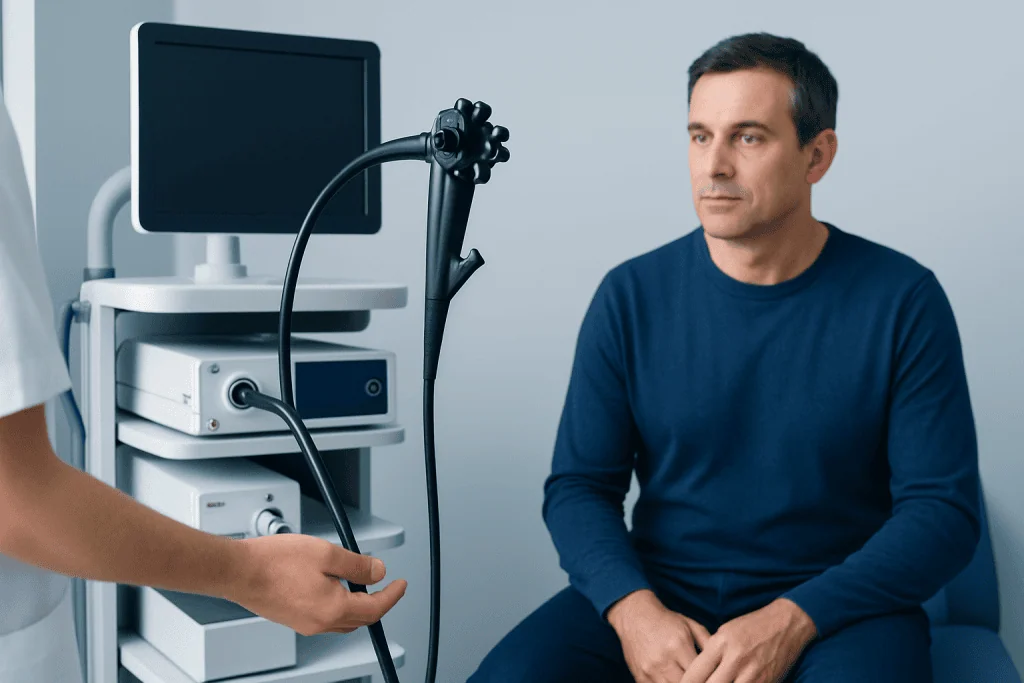
For adults at average risk, many guidelines recommend starting colorectal cancer screening at age 45. Colonoscopy is one screening option; the best test is one that is suitable for the individual and completed at the recommended interval. A normal result may mean the next test is not needed for several years, but the timing depends on the quality of preparation, findings and personal risk.
A doctor may recommend colonoscopy earlier or more often for someone with a parent, sibling or child affected by colorectal cancer or certain polyps; a personal history of polyps; inflammatory bowel disease; or an inherited cancer syndrome. It may also be advised to investigate unexplained iron-deficiency anaemia, blood in the stool, persistent bowel changes, unexplained weight loss or ongoing abdominal symptoms.
Age alone does not decide whether screening should continue. In later life, clinicians consider overall health, previous screening results, other medical conditions and life expectancy. Screening is generally individualized between ages 76 and 85, while routine screening is usually not recommended after age 85. These are general principles, so a person should make the decision with their doctor.
Preparing for colonoscopy: diet, medicines and bowel cleansing
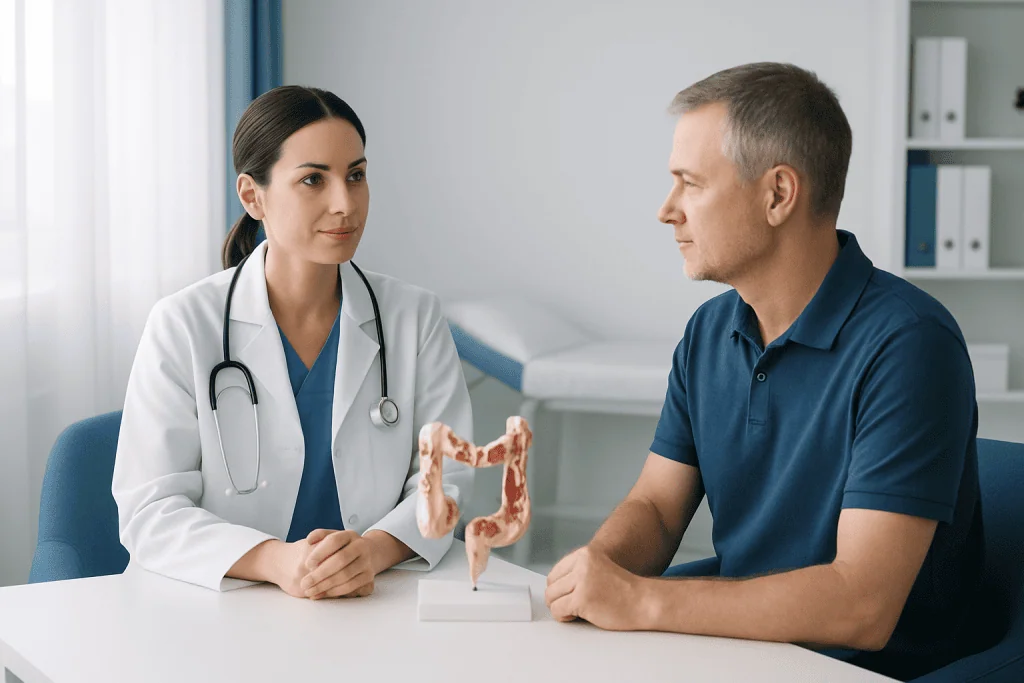
A clean colon is necessary because remaining stool can hide small polyps or other abnormalities. The clinical team provides written instructions, often including a temporary low-fibre diet and then clear liquids on the day before the examination. The exact plan varies, so the prescribed instructions should always take priority over general online advice.
The bowel-cleansing medicine causes repeated, watery bowel movements. Many people spend a number of hours close to a toilet, particularly after each portion of a split-dose preparation. It does not always mean being awake all night: taking the preparation at the instructed times, staying near a bathroom and arranging a calm evening can make the process more manageable.
Patients should tell the team about all medicines and supplements, particularly blood thinners, diabetes medicines, iron products and medicines that affect the kidneys. Changes should only be made with medical advice. It is also important to report allergies, heart or lung conditions, sleep apnoea, kidney disease, prior bowel surgery and any previous difficulty with sedation or bowel preparation.
- Drink permitted clear fluids as instructed to reduce the risk of dehydration.
- Use soft toilet paper, gentle cleansing or a barrier cream if the skin becomes irritated.
- Arrange transport home in advance if sedation is planned.
- Contact the endoscopy unit promptly if vomiting prevents completion of the preparation or if instructions are unclear.
Step by step: how the procedure works
Before colonoscopy, the care team reviews the medical history, checks vital signs and confirms consent. An intravenous line may be placed for fluids and sedation. Most people receive sedative medication that makes them sleepy and relaxed; some may receive deeper sedation or anaesthesia depending on their health, the planned procedure and local practice.
The patient lies on their side and is covered with a drape or gown. Only the area needed for the examination is uncovered, and staff protect privacy throughout. The colonoscope is gently inserted through the anus and advanced through the colon. Air or carbon dioxide is introduced to open the bowel slightly and improve visibility, which can cause a sensation of pressure or temporary cramping.
The doctor examines the lining while slowly withdrawing the scope. Small polyps can often be removed using instruments passed through the scope, and biopsies may be taken if an area needs laboratory assessment. Tissue sampling is usually painless because the bowel lining does not sense cutting in the same way as the skin.
For patients seeking coordinated assessment and endoscopic care, colonoscopy services can be part of a broader gastroenterology plan. Acibadem International’s multidisciplinary specialists and JCI-accredited hospitals diagnose and treat digestive conditions for international patients.
Recovery timeline, benefits and possible risks
After the procedure, the patient rests in a recovery area while the sedative wears off. Mild bloating, gas or brief cramps are common because of air used during the examination and usually improve after passing gas. Most people can eat and drink again according to their care team’s advice and return to usual routines the following day.
Because sedation can temporarily affect judgement, coordination and memory, patients should not drive, operate machinery, drink alcohol, sign important documents or make major decisions for the rest of the day. A responsible adult should take them home and, when advised, remain available afterwards. The care team will provide individual instructions if a polyp was removed or a biopsy was taken.
The main benefit of colonoscopy is direct inspection of the colon and the opportunity to remove many potentially precancerous polyps immediately. Complications are uncommon but can include reactions to sedation, bleeding after polyp removal, a tear in the bowel wall and, rarely, infection. The clinician explains relevant risks before the examination and balances them against the reason for testing.
Understanding colonoscopy results
A doctor may be able to share the visual findings after the sedative has worn off, although the patient may not remember every detail immediately. It can be helpful for the accompanying adult to listen to the discussion or for the patient to request written discharge information. The result may be normal, may show polyps, or may identify findings such as inflammation, diverticular disease or haemorrhoids.
If a biopsy or polyp is sent to a laboratory, the final result takes longer. The report determines whether further treatment or surveillance is needed and when the next colonoscopy should occur. A polyp does not automatically mean cancer; its type, size, number and microscopic features guide the follow-up plan.
If testing identifies bowel inflammation, a clinician may assess for conditions including ulcerative colitis or other causes of colitis. If a concerning growth is found, further tests and consultations may be arranged. Patients should ask when and how they will receive pathology results, and should keep a copy of the endoscopy report for future care.
When to seek medical care
Before a planned colonoscopy, a person should contact their medical team if they cannot complete the preparation, have repeated vomiting, become very dizzy, or have questions about diabetes medicines, blood thinners or other essential treatment. New illness, fever or significant breathing problems before the appointment should also be reported because the procedure may need to be adjusted or postponed safely.
After colonoscopy, urgent medical assessment is appropriate for severe or worsening abdominal pain, a hard or swollen abdomen, fever, fainting, persistent vomiting, black stools, or heavy rectal bleeding. A small amount of blood can occur after a biopsy or polyp removal, but the team should explain what is expected and when to call.
Outside of screening, anyone with visible blood in stool, a persistent change in bowel habits, unexplained weight loss, ongoing abdominal pain or symptoms of anaemia should arrange a medical review. These symptoms have many possible causes, but timely assessment helps identify the right next step.
Frequently asked questions
Will I be up all night pooping with colonoscopy prep?
Bowel preparation commonly causes frequent watery bowel movements for several hours, especially after each dose. Some people may need to use the toilet during the night, but this varies with the preparation schedule and individual response. Following the timing supplied by the endoscopy team is the best way to achieve a clean colon without changing the plan on one’s own.
Are your private parts exposed during a colonoscopy?
No. Patients wear a gown and are covered with drapes, with only the small area needed for the examination exposed. Endoscopy staff are trained to protect privacy and dignity throughout the procedure.
What if you have to pee during a colonoscopy?
It is usually possible to use the toilet before the procedure begins, and the team can help if there is an urgent need beforehand. During a sedated colonoscopy, many people do not feel the need to urinate. If there are urinary symptoms, an enlarged prostate, or concern about being unable to pass urine, it is sensible to tell the care team before the examination.
At what age are colonoscopies no longer recommended for men?
There is no single stopping age that applies to every man. Routine colorectal cancer screening is generally individualized from ages 76 to 85 based on health, previous screening and personal preferences, and is usually not recommended after age 85. A doctor may still recommend diagnostic colonoscopy at any age if symptoms require investigation and the expected benefit outweighs the risks.
How long does a colonoscopy take?
The examination itself often takes less than an hour, although removing polyps or addressing technical factors can make it longer. Patients should allow additional time for admission, preparation, sedation and recovery. The endoscopy unit can provide the most accurate time estimate for the planned procedure.
Is colonoscopy painful?
Most people receive sedation and do not experience significant pain or remember much of the examination. Some pressure, cramping or bloating can occur because the colon is gently expanded to allow inspection. Patients should discuss prior painful procedures, anxiety, sleep apnoea or medical conditions with the team so sedation can be planned safely.
References
- American Cancer Society
- U.S. Preventive Services Task Force
- National Institute of Diabetes and Digestive and Kidney Diseases
- American Society for Gastrointestinal Endoscopy
- World Health Organization
This article is for general information only and is not a substitute for professional medical advice. Please consult a qualified doctor about your individual situation.
Persistent digestive symptoms? Get evaluated in Turkey
JCI-accredited · board-certified surgeons · reply within 24h

More from the Health Library



Related Specialists

Assoc. Prof. Dr. Müjdat Kara
Endocrinology
Dr. Mehmet Tayfun Osmanağaoğlu
Gynecology & Obstetrics
Dr. G. Pınar Özeren
Gynecology & Obstetrics
Prof. Dr. Ertuğrul Seyrek
Internal Medicine