Hip Replacement Precautions: Procedure, Recovery and Results

Hip precautions vary by surgical approach; some people need strict movement limits while others have fewer restrictions. The first several weeks commonly require help with mobility, household tasks and safe daily routines.
Key Takeaways
- Hip precautions vary by surgical approach; some people need strict movement limits while others have fewer restrictions.
- The first several weeks commonly require help with mobility, household tasks and safe daily routines.
- Regular physiotherapy, safe walking progression, good nutrition and following medication instructions can support recovery.
- A hip replacement can reduce pain and improve mobility, but recovery is gradual and requires attention to warning signs.
- Sudden worsening pain, wound drainage, fever, breathing difficulty or calf swelling needs prompt medical assessment.
Hip replacement precautions are temporary movement, wound-care and activity guidelines designed to protect the new joint while tissues heal. The exact precautions, their duration and the recovery plan depend on the surgical approach, the reason for surgery and the individual’s health, so the surgeon and physiotherapist’s instructions should always take priority.
Overview: what are hip replacement precautions?
Hip replacement precautions are practical instructions followed after hip arthroplasty, a procedure in which damaged parts of the hip joint are replaced with artificial components. They aim to allow the incision, muscles and soft tissues around the hip to heal while reducing the risk of complications such as a joint dislocation, a fall or delayed wound healing.
The type and length of precautions differ. They may depend on whether surgery was performed through the back of the hip (posterior approach), the front (anterior approach) or the side, as well as the stability of the new joint and the person’s strength and balance. Many people have fewer restrictions than in the past, but they should not assume that one person’s hip replacement precautions apply to another.
Instructions may be supplied in writing, sometimes as a hip precautions after surgery PDF, before discharge. These should be kept accessible at home and reviewed with the physiotherapist, particularly when learning how to sit, dress, get into a car and use stairs safely.
How hip replacement works and who may benefit

The hip is a ball-and-socket joint. In a total hip replacement, the surgeon removes damaged bone and cartilage from the ball at the top of the thigh bone and the socket in the pelvis. These surfaces are replaced with components made from materials such as metal, ceramic and durable plastic, selected according to clinical needs.
Hip replacement may be considered when persistent hip pain and reduced movement substantially affect sleep, work, walking or daily activities, and non-surgical measures have not provided adequate relief. Osteoarthritis is a common reason, but inflammatory arthritis, previous injury, loss of bone blood supply and certain hip deformities may also lead to joint damage. People can learn more about osteoarthritis and its effects on joints.
Before recommending surgery, the orthopaedic team considers symptoms, examination findings, X-rays or other imaging, medical history, medications and general fitness for anaesthesia. Weight management, smoking cessation, treatment of dental or skin infections and strengthening exercises may be recommended before surgery to reduce preventable risks.
What happens during hip replacement surgery?
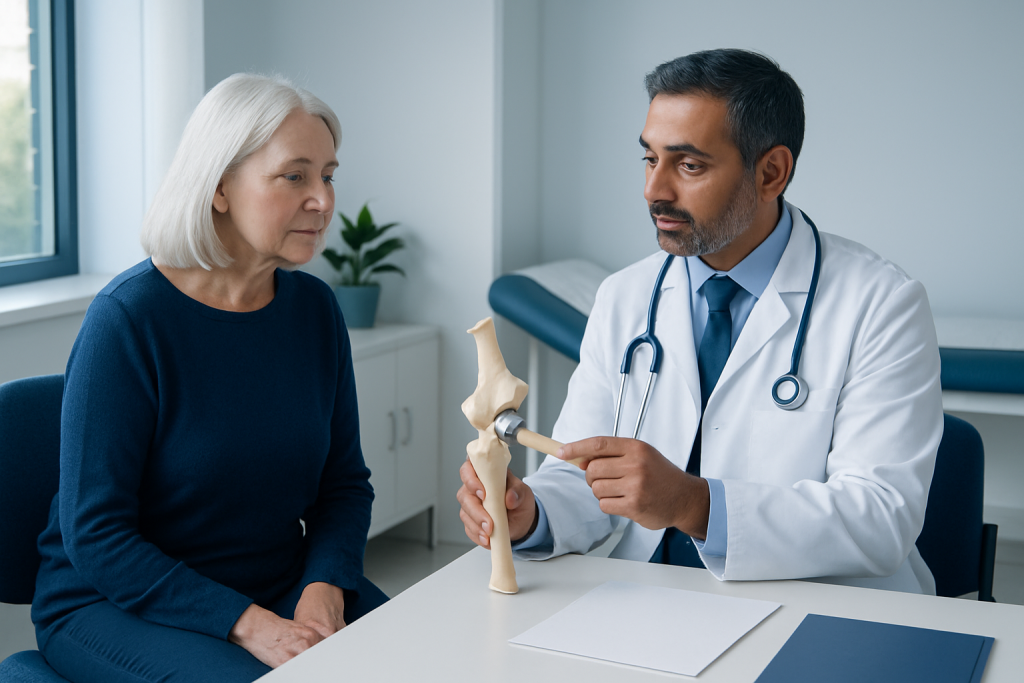
Before surgery, the patient has an anaesthetic assessment and receives instructions about eating, drinking and regular medicines. Hip replacement is performed under spinal anaesthesia, general anaesthesia or a combination, depending on the clinical situation and anaesthetist’s plan. Preventive measures against infection and blood clots are routinely used.
During the operation, the surgeon makes an incision, accesses the joint using the planned surgical approach, removes damaged joint surfaces and positions the replacement components. The components may be secured with bone cement or designed for bone to grow into them over time. The surgeon then checks the hip’s stability and movement before closing the wound.
Many patients begin standing and taking assisted steps on the day of surgery or the following day, when medically appropriate. Early movement is part of recovery, but it must be guided by staff because pain control, dizziness, muscle weakness and unfamiliarity with mobility aids can increase fall risk. For detailed planning, patients may discuss hip replacement treatment with an orthopaedic team.
Hip replacement precautions timeline and daily movement
During the first days and weeks, the priority is safe movement, protecting the wound and gradually restoring independence. A physiotherapist teaches transfers in and out of bed, walking with a walker or crutches, stair technique and exercises tailored to the surgical plan. Hip replacement precautions physical therapy sessions are not simply about exercise; they also teach safe habits for everyday life.
For some posterior-approach procedures, people may be advised temporarily not to bend the hip deeply, cross the legs or turn the operated leg far inward. Anterior-approach precautions may focus on avoiding excessive backward extension or outward rotation. These examples are not universal rules. The individual surgeon’s restrictions should be followed, including guidance on sleeping positions, low chairs, toilet seats and car travel.
Many precautions are eased after about 6 to 12 weeks as healing and muscle control improve, but hip replacement precautions for how long can only be answered by the treating team. Certain people need longer protection because of muscle weakness, complex surgery, revision surgery or other medical factors. Long-term, the emphasis usually shifts from strict positions to fall prevention, strengthening and choosing activities appropriate for the artificial joint.
- Use prescribed walking aids until the care team confirms it is safe to reduce them.
- Keep pathways clear, use supportive footwear and consider raised seating or grab bars if advised.
- Avoid driving until pain control, reaction time, strength and the ability to perform an emergency stop are adequate, and the surgeon approves.
- Follow wound-care, showering and medication instructions exactly as provided.
What is the hardest part of hip replacement recovery?
For many people, the hardest part of hip replacement recovery is the early period when pain, tiredness, swelling, sleep disruption and reduced independence occur at the same time. Even when joint pain improves quickly, the surrounding muscles and soft tissues still need time to recover. Progress may feel uneven from one day to the next.
Regaining confidence in walking, climbing stairs and carrying out personal care can also be challenging. It is common to need a walker or crutches initially and to move more slowly than usual. Assistance with meals, shopping, laundry, pet care and transport can make this transition safer and less stressful.
Emotional adjustment matters as well. A realistic recovery plan, clear goals and regular contact with the rehabilitation team can help people recognize gradual improvements. Ongoing severe pain, a sudden loss of function or a recovery that is not progressing as expected should be discussed with the surgeon rather than managed alone.
How long will I need someone with me after hip replacement?
Many patients benefit from having a responsible adult with them for at least the first several days after returning home, especially if they live alone or have stairs, limited mobility or other health conditions. The need for help often continues for one to two weeks for practical tasks, although the exact period varies widely according to mobility, pain control, home setup and available support.
Someone may be needed to help prepare food, collect medicines, manage household tasks, accompany the person to appointments and ensure they can move safely. They should not lift the patient or encourage movements that conflict with the care plan. If reliable home support is unavailable, the healthcare team can advise about suitable rehabilitation or home-care arrangements.
Before discharge, the patient should be able to perform essential movements safely at the level expected for their home environment. This includes getting in and out of bed or a chair, using the bathroom and walking with the recommended aid. Family members or caregivers should attend discharge teaching whenever possible.
What helps speed up hip replacement recovery?
Recovery cannot be rushed beyond normal tissue healing, but consistent, safe habits can help a person make steady progress. Taking pain medicine as prescribed can make it easier to walk and participate in therapy. Completing the recommended exercises, increasing walking gradually and attending follow-up appointments help rebuild strength, flexibility and balance.
A balanced diet with adequate protein, fluids and fibre supports healing and may reduce constipation related to reduced activity or some pain medicines. Avoiding smoking and limiting alcohol can also support wound and bone health. Rest is important, but long periods of inactivity should be avoided unless specifically advised by the medical team.
After the early recovery period, low-impact activities such as walking, swimming once the wound is fully healed and approved, stationary cycling and prescribed strengthening work are commonly encouraged. Running, jumping, contact sports and high-impact activities may not be suitable for every implant or patient. A personalized physical therapy and rehabilitation plan can guide the safest return to activity.
Benefits, risks and when to seek medical care
For appropriate candidates, hip replacement can relieve pain, improve mobility and make daily activities easier. Results are influenced by the underlying condition, overall health, surgical factors and commitment to rehabilitation. While modern hip replacement is widely performed, it remains major surgery and carries potential risks including infection, blood clots, bleeding, nerve or blood vessel injury, fracture, leg-length differences, stiffness, dislocation and implant wear or loosening over time.
When to seek medical care: Patients should contact their surgical team promptly for increasing redness, warmth, swelling or drainage from the wound; a fever; pain that is worsening rather than improving; new numbness or weakness; or difficulty taking prescribed medicines. Urgent assessment is needed for chest pain, shortness of breath, coughing blood, fainting, or new pain and swelling in the calf or thigh, as these can indicate serious complications.
Acibadem International’s multidisciplinary specialists and JCI-accredited hospitals diagnose and treat hip conditions for international patients, with care coordinated across orthopaedics, anaesthesia and rehabilitation. Follow-up remains important even after recovery, particularly if new hip pain, instability, clicking with pain or a change in walking develops years after surgery.
Frequently asked questions
What are the lifelong precautions I should take after having a hip replacement?
After the initial healing restrictions end, most people can return to many normal daily activities. Lifelong precautions generally focus on maintaining a healthy weight, preventing falls, keeping leg and hip muscles strong, and choosing activities that do not repeatedly expose the joint to high impact. Patients should also tell healthcare professionals about the hip replacement before procedures and seek medical advice for new or persistent hip pain.
Can I bend down after hip replacement surgery?
Whether bending is allowed depends on the surgical approach and the surgeon’s instructions. Some patients are temporarily advised not to bend the hip beyond a certain range, while others have fewer limitations. A physiotherapist can show safer ways to reach lower items, dress and pick up objects during early recovery.
When can I sleep on my side after hip replacement?
Side sleeping may be possible after surgery, but timing and positioning vary. Some patients are advised to sleep on their back initially or to use a pillow between the legs when lying on the non-operated side. The surgical team should confirm when side sleeping is appropriate for the individual.
How long does it take to walk normally after a hip replacement?
Many people begin walking with an aid within a day or two of surgery, but walking without a limp can take several weeks or months. The pace depends on preoperative strength, pain, balance, surgical details and participation in rehabilitation. It is safer to continue using a walking aid until the care team advises otherwise.
What activities should be avoided after hip replacement?
In early recovery, patients should avoid movements and positions specifically restricted by their surgeon, as well as falls, heavy lifting and activities that strain the wound. Over the longer term, high-impact or collision activities may not be recommended because they can place extra stress on the implant. The best activity choices should be reviewed with the orthopaedic surgeon and physiotherapist.
Is swelling normal after hip replacement?
Mild to moderate swelling in the hip, thigh, knee, lower leg or ankle can be common during the first weeks of recovery. Elevation, ankle movements, gentle walking and compression measures may be recommended by the care team. Sudden one-sided calf swelling, worsening pain, redness, chest pain or shortness of breath requires urgent medical evaluation.
References
- American Academy of Orthopaedic Surgeons
- National Institute for Health and Care Excellence
- National Health Service
- American Association of Hip and Knee Surgeons
This article is for general information only and is not a substitute for professional medical advice. Please consult a qualified doctor about your individual situation.
Hip Replacement in Turkey — costs, top hospitals & a free quote
JCI-accredited · board-certified surgeons · reply within 24h
Add us as a Preferred Source to see more of our trusted health content across Google Search, AI Overviews and Discover.

Orthopedics & Spine
Care for bones, joints and the musculoskeletal system, including joint replacement, sports injuries and trauma.
125 specialists in this unit