Children’s Music Therapy: How It Works, Results and What to Expect
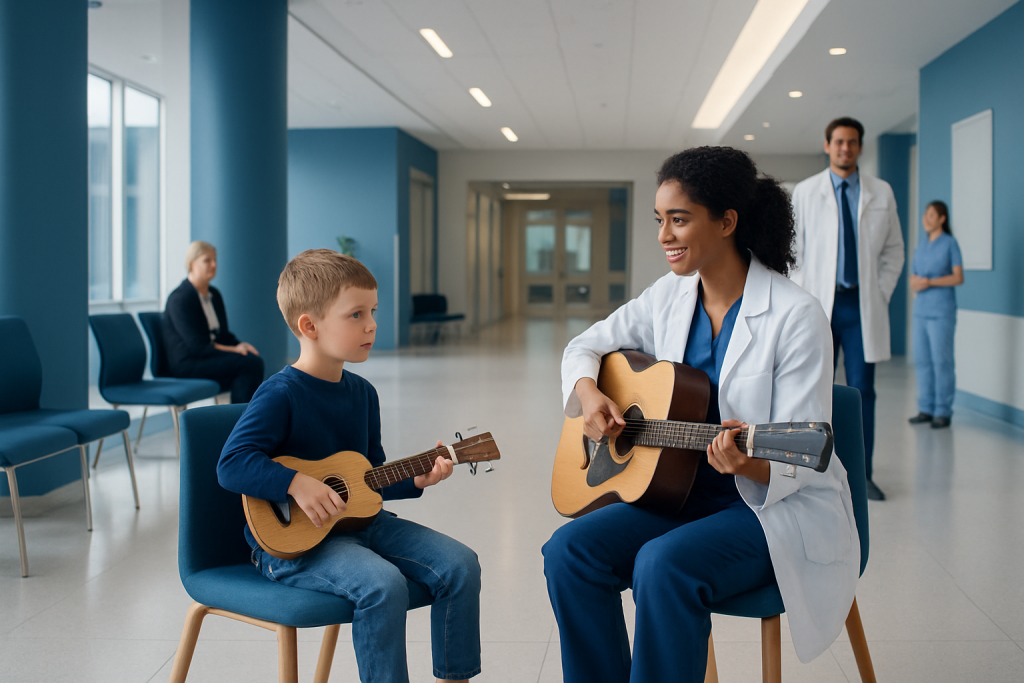
Children's music therapy uses planned musical activities to support individualized developmental, emotional, communication or rehabilitation goals. A child does not need musical ability, singing skills or instrument experience to take part.
Key Takeaways
- Children's music therapy uses planned musical activities to support individualized developmental, emotional, communication or rehabilitation goals.
- A child does not need musical ability, singing skills or instrument experience to take part.
- Sessions are tailored to the child's age, strengths, sensory preferences, health needs and therapy goals.
- Benefits may include improved engagement, self-expression, social interaction, coping and participation, but progress varies between children.
- Music therapy is usually low risk when provided by a qualified professional, although sound sensitivity, fatigue or frustration should be addressed.
- It complements, rather than replaces, medical care and other recommended therapies such as speech, occupational or psychological therapy.
Children's music therapy is a clinical, goal-focused therapy delivered by a qualified music therapist. Through listening, singing, playing instruments, movement and music-making, it can help children express themselves and build skills in a supportive, developmentally appropriate way.
Overview: What Is Children's Music Therapy?
Children’s music therapy is a healthcare and therapeutic approach that uses music intentionally to support a child’s physical, emotional, cognitive, communication and social needs. It is provided by a trained music therapist who assesses the child, agrees goals with the family and care team, and adapts activities to the child’s abilities and interests. The child does not need to be musical or able to play an instrument.
Music may be used through singing, listening, playing simple instruments, movement, songwriting, musical games or improvisation. For some children, music provides a nonverbal way to participate and communicate. For others, it can make practicing a skill feel more structured, motivating and manageable.
Music therapy may be offered in hospitals, rehabilitation settings, schools, clinics, mental health services or community programs. It can be individual or group-based and may be one part of a broader care plan involving pediatricians, psychologists, speech and language therapists, occupational therapists, physiotherapists or educators.
What does music therapy do for kids?
Music therapy helps children work toward specific goals using experiences that are engaging and suited to their developmental stage. Depending on the child’s needs, goals may include expressing feelings, improving attention and participation, practicing turn-taking, supporting communication, developing coping strategies, or improving movement and coordination.
In healthcare settings, familiar songs, preferred sounds and predictable rhythms may help a child feel calmer and more secure during stressful experiences. Guided music-making may also create opportunities for choice-making and a sense of control. A therapist observes how the child responds and adjusts the musical activity in real time.
For children with communication differences, music can support shared attention, imitation, vocalization and interaction. For children undergoing rehabilitation, rhythm and movement-based activities may be used alongside other therapies to encourage participation. Results are individual, and music therapy does not cure developmental, neurological, mental health or medical conditions.
- Emotional expression and coping with worry, sadness or frustration
- Social interaction, shared play and turn-taking
- Communication and nonverbal self-expression
- Attention, engagement and routine-building
- Movement, coordination and rehabilitation participation
- Comfort and quality of life during illness or hospital care
Who May Be a Candidate for Music Therapy?
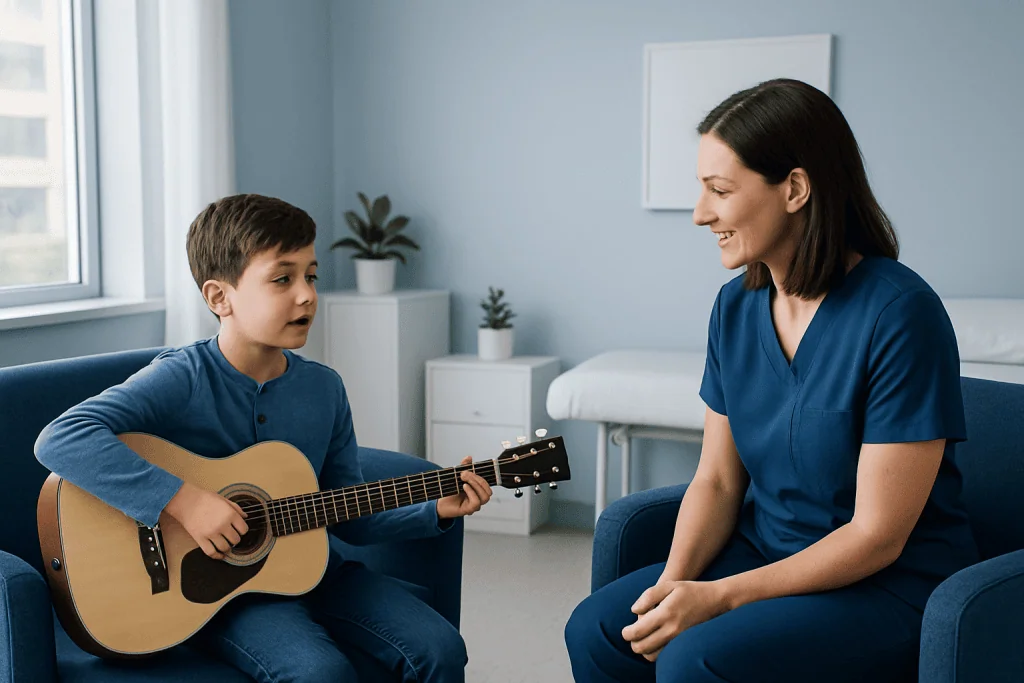
Children’s music therapy may be considered for children with a wide range of needs, including emotional distress, behavioral challenges, developmental differences, communication difficulties, chronic illness, pain, hospitalization, disability or recovery after illness or injury. It may also support children who are finding it hard to engage in more language-based therapies.
A referral may come from a pediatrician, psychologist, school professional or rehabilitation clinician, but referral requirements vary by setting. Parents and caregivers can ask the child’s healthcare team whether music therapy is available and whether it could fit the child’s goals. A qualified therapist should explain what music therapy can realistically address and how progress will be reviewed.
Music therapy should be individualized. A child with hearing differences, sensory sensitivities, seizure concerns, trauma experiences, behavioral dysregulation or complex medical needs may still be able to participate, but the therapist should adapt sound, pacing, environment and activities carefully. Existing care plans should be shared with the therapy team when appropriate.
What Happens During a Music Therapy Session?
A music therapy session usually begins with a brief check-in. The therapist may speak with the child and caregiver, observe the child’s mood and energy, and identify any changes since the previous session. The session plan is then adapted to the child’s therapy goals and current capacity.
Activities can include choosing a song, singing together, matching sounds, playing drums or other accessible instruments, moving to a beat, listening to calming music, using music in imaginative play, or creating simple lyrics. The therapist uses these activities purposefully rather than as entertainment alone. For example, a musical pause may encourage turn-taking, while a familiar song may support transitions or communication.
The therapist watches for signs of comfort, attention, stress, enjoyment and participation. A session often ends with a predictable closing activity and a short discussion with the caregiver, when appropriate. The therapist may suggest simple ways to use music safely at home, but home activities are not a substitute for professional treatment.
There is no invasive procedure, anesthesia or physical recovery period. Children can usually return to school, play or other appointments immediately after a session. Some children may be tired, emotionally reflective or more settled afterward, particularly after a session involving difficult feelings or sustained concentration.
Benefits, Limitations and What Results to Expect
The possible benefits of children’s music therapy depend on the child’s goals, regular attendance, relationship with the therapist and wider support system. Families may notice small changes first, such as increased willingness to engage, more eye contact or shared attention, improved ability to settle, or new ways of expressing preferences and feelings.
Progress is not always linear. Some children respond quickly to the structure and familiarity of musical activities, while others need time to build trust and become comfortable with the setting. Therapists should use observable goals and review whether the approach remains useful. If goals are not being met, the plan may be changed or another form of support may be recommended.
Music therapy is best understood as a complementary intervention. It may work alongside medical treatment, counseling, speech and language therapy, occupational therapy, physiotherapy or educational support. It should not be used instead of assessment or treatment for symptoms that may have a medical, developmental or mental health cause.
What are the downsides of music therapy?
Music therapy is generally considered low risk when it is delivered by an appropriately trained professional and tailored to the child. However, it is not suitable in exactly the same form for every child. Loud sounds, unfamiliar instruments, crowded group settings or sudden changes in rhythm can be uncomfortable or overwhelming for children with sensory sensitivities.
Music can also bring up strong emotions or memories. A child may become frustrated if an activity feels difficult, reluctant to participate, or fatigued after concentrating. These responses do not necessarily mean therapy is harmful, but they should be communicated to the therapist so that the session environment, sound level, expectations and activities can be adjusted.
Other limitations include access, availability of qualified therapists and the fact that research findings vary by population and outcome. Families should be cautious about claims that music therapy can cure autism, eliminate anxiety, restore lost abilities or replace recommended medical care. A qualified clinician can help determine whether it is an appropriate addition to the child’s care plan.
How long does it take to see results from play therapy?
Play therapy and music therapy are related but distinct approaches. Both may use play-based, child-centered methods, but music therapy specifically uses music and musical interaction as the therapeutic medium. The time needed to see change varies widely and depends on the child’s needs, goals, frequency of sessions, home and school environment, and any coexisting health concerns.
Some children show early changes in comfort, engagement or willingness to communicate within a few sessions. More complex goals, such as managing anxiety, building social skills, improving emotional regulation or supporting rehabilitation, often require a longer period of consistent work. There is no single timetable that applies to every child.
Parents can ask the therapist how goals will be measured and when progress will be reviewed. Useful signs of progress may include changes noticed at home, school or healthcare visits, not only during the session. If a child appears increasingly distressed, disengaged or unchanged over time, the family and therapist can discuss modifying the approach or considering additional assessment and support.
When to Seek Medical Care
Music therapy can be a helpful supportive service, but new, severe or worsening symptoms should be assessed by a healthcare professional. Parents and caregivers should seek medical advice if a child has a sudden change in behavior, persistent low mood, major sleep or appetite changes, developmental regression, frequent unexplained pain, concerns about hearing, or difficulties that significantly affect daily life, learning or relationships.
Urgent medical care is needed if a child is at immediate risk of harm, expresses thoughts of self-harm, has severe breathing difficulty, has a seizure that is new or prolonged, becomes unresponsive, or shows other acute symptoms. Local emergency services should be contacted in an emergency.
For families seeking coordinated support, Acibadem International’s multidisciplinary specialists and JCI-accredited hospitals can assess children’s health needs and help plan appropriate care for international patients. Music therapy, where available, should be integrated with the child’s established pediatric and specialist care rather than used in isolation.
Frequently asked questions
Is children's music therapy the same as music lessons?
No. Music lessons are designed to teach musical skills, such as playing an instrument or reading music. Children's music therapy uses music to support health, development, communication, emotional wellbeing or rehabilitation goals. A child may learn musical skills during therapy, but this is not usually the main purpose.
Does a child need to be able to speak to benefit from music therapy?
No. Music therapy can be adapted for children who communicate verbally, nonverbally or through a combination of methods. Shared rhythm, musical choices, movement, facial expression and instrument play can all provide ways to participate and communicate.
Can music therapy help a child with anxiety?
Music therapy may help some children identify feelings, practice coping skills and feel more regulated in a supportive setting. It is not a replacement for mental health assessment or treatment when anxiety is persistent or affects daily life. A pediatrician or qualified mental health professional can advise on the most appropriate care plan.
How often are music therapy sessions held?
Frequency varies by setting, the child’s goals and service availability. Some children attend weekly sessions, while others receive therapy as part of hospital, rehabilitation or school support. The therapist should explain the proposed schedule and review whether it is meeting the child’s needs.
Can parents stay during a music therapy session?
This depends on the child’s age, needs, setting and therapeutic goals. Parent or caregiver involvement can be useful for supporting comfort and learning how to use appropriate musical activities at home. In some cases, individual time with the child may better support independence or open expression.
How can families choose a music therapist for their child?
Families should look for a therapist with recognized professional training and credentials required in their country or region. It is reasonable to ask about experience with the child’s age group and needs, how goals are set, how progress is reviewed and how the therapist coordinates with other professionals. The child’s comfort and safety should remain central to the plan.
References
- American Music Therapy Association
- World Federation of Music Therapy
- American Academy of Pediatrics
- National Institute of Mental Health
- World Health Organization
This article is for general information only and is not a substitute for professional medical advice. Please consult a qualified doctor about your individual situation.
Explore treatments in Turkey — costs, top hospitals & a free quote
JCI-accredited · board-certified surgeons · reply within 24h
Add us as a Preferred Source to see more of our trusted health content across Google Search, AI Overviews and Discover.

More from the Health Library



Related Specialists

Prof. Dr. Hale Göksever Çelik
Gynecology & Obstetrics
Assoc. Prof. Dr. Özgür Timurkaynak
Dermatology
Dr. Emine Çiğdem Kırçiçeği Çiçekdağ
Anesthesiology
Dr. Sirri Özkan
General Surgery