Neck Strain Recovery: A Week-by-Week Timeline

Most mild neck strains begin improving within several days and settle within a few weeks. Stiffness, local tenderness and pain when turning the head are common signs of a neck muscle strain.
Key Takeaways
- Most mild neck strains begin improving within several days and settle within a few weeks.
- Stiffness, local tenderness and pain when turning the head are common signs of a neck muscle strain.
- Avoid prolonged complete rest; gradual, comfortable movement usually supports recovery.
- Massage may help some people after the acute phase, but it should be gentle and avoided when pain is severe or symptoms are unexplained.
- Urgent assessment is important after significant trauma or when neck pain occurs with weakness, numbness, severe headache, fever or balance changes.
Neck strain recovery time is commonly a few days to several weeks, depending on the severity of the injury, daily activities and whether nerve symptoms are present. Most uncomplicated strains improve with relative rest, gentle movement and appropriate symptom management, but persistent or severe symptoms need medical assessment.
Neck Strain Recovery Time: What to Expect
Neck strain recovery time is usually a few days to a few weeks for a mild injury. A strain can take longer to settle when muscles are repeatedly irritated by poor posture, demanding work, sleep disruption, stress or an early return to strenuous activity. Recovery is not always linear: symptoms may ease, then briefly flare after an unfamiliar movement or a long period at a desk.
A neck strain affects muscles or tendons that support and move the head and neck. It may follow an awkward sleeping position, prolonged screen use, sudden turning, sport, lifting, or a low-speed collision. The pain can feel sharp at first or more like tightness and aching, often with reduced ability to look over one shoulder.
Most neck strains are not dangerous and improve without invasive treatment. However, neck pain can also arise from joints, discs, nerves or other conditions. A clinician can help distinguish a simple strain from causes such as cervical disc herniation when symptoms do not follow a typical recovery pattern.
How Long Does It Take for a Strained Neck to Feel Better?
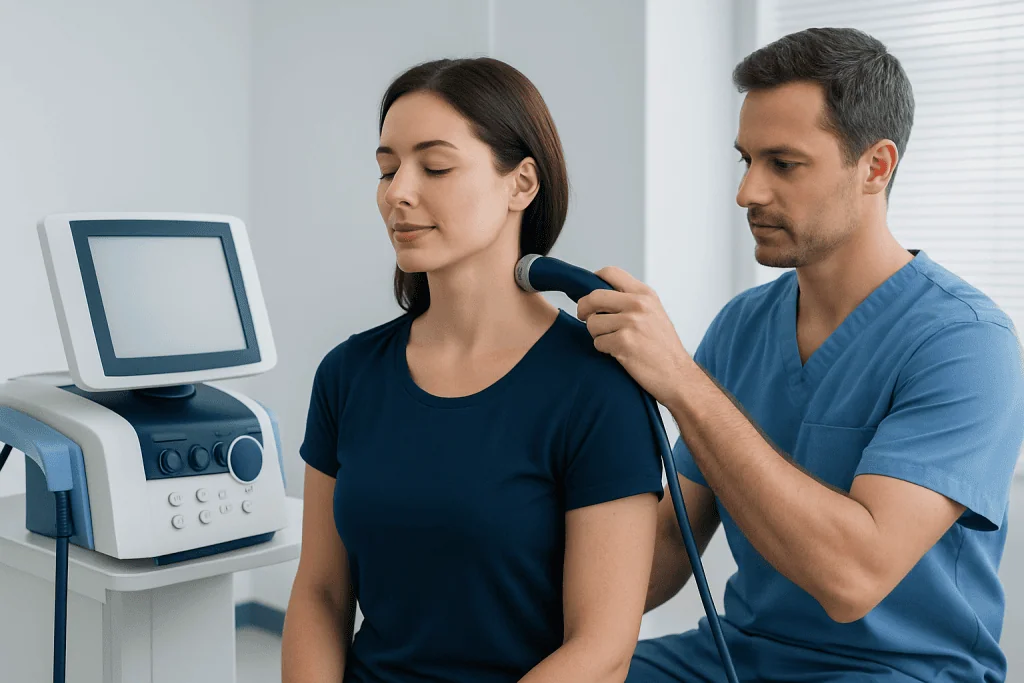
Many people notice some improvement in a mild strained neck within two to seven days. Symptoms often resolve or become much easier to manage within two to four weeks. A moderate strain may take several weeks, especially if it causes marked spasm, limits normal movement or is repeatedly aggravated during recovery.
Recovery can be slower after whiplash-type injuries, previous neck problems, poor sleep, high physical demands or reduced activity caused by pain. Pain lasting beyond several weeks does not automatically mean serious damage, but it is a reason to arrange a medical review. The clinician may assess posture, neck movement, muscle strength, reflexes and sensation, and decide whether imaging or rehabilitation is appropriate.
The most useful marker is a gradual return of comfortable movement and everyday function. Someone should seek advice if pain is worsening rather than improving, if it continues to interfere with work or sleep, or if they are relying heavily on pain medicines to get through the day.
How Do I Tell if I Pulled a Muscle in My Neck?

A pulled muscle in the neck commonly causes pain and tenderness in one area, tightness or spasm, and discomfort when turning, bending or holding the head in one position. The person may wake with a stiff neck, find it difficult to check traffic while driving, or notice that the shoulder muscles feel tense. Headaches beginning at the back of the head can also occur with neck muscle tension.
Symptoms are often linked to a clear trigger, such as sleeping awkwardly, carrying a heavy bag, reaching suddenly, exercising, or sitting with the head forward for a long time. Pain generally stays around the neck, upper shoulder or upper back. It may be worse with movement and improve somewhat with changes of position, warmth or gentle activity.
Radiating arm pain, persistent tingling, numbness or weakness are not typical features of a simple muscle strain and should be assessed. These symptoms can suggest nerve irritation. A clinician may recommend physical therapy to restore movement, build strength and address contributing movement habits when symptoms are persistent or recurrent.
What Are the Stages of a Neck Strain?
In the first 24 to 72 hours, the acute stage, the injured muscle may be painful, tight and protective of movement. Mild inflammation and muscle spasm can make ordinary motions uncomfortable. Relative rest is sensible at this stage, but complete immobility for long periods can increase stiffness.
During the early recovery stage, often over the following days to two weeks, pain generally becomes less intense and neck motion gradually returns. Short, frequent periods of gentle movement and a gradual return to ordinary activities can be more helpful than forcing stretches or avoiding all movement. Symptoms may temporarily increase after activity, but should settle rather than steadily worsen.
In the later recovery and return-to-activity stage, the focus is on comfortable full-range movement, normal daily tasks and rebuilding tolerance for work, exercise or sport. This may take several more weeks for a more substantial injury. If stiffness or fear of movement persists, supervised rehabilitation can provide an individualized progression and help reduce recurrence.
Should I Massage a Pulled Muscle in My Neck?
Gentle massage may provide short-term comfort for some people with a pulled neck muscle, particularly once the sharpest pain has settled. Light pressure around tense muscles, rather than forceful work directly on the most painful spot, may reduce the sense of tightness. It should never be painful, and it is reasonable to stop if symptoms increase during or after massage.
In the first day or two after a sudden injury, a person may prefer gentle movement, a comfortable position and either cool or warm packs depending on what feels better. Heat is often soothing for muscle spasm, while a cool pack may be preferred after a recent aggravation. Packs should be wrapped in cloth and used for short periods to protect the skin.
Forceful neck manipulation, deep pressure and devices that pull or twist the neck are not suitable for everyone. Massage should be avoided until medical advice is obtained after trauma, with unexplained severe pain, fever, a severe headache, dizziness, arm symptoms or known bone fragility. A qualified clinician or physiotherapist can advise whether hands-on treatment is appropriate.
Treatment Options and a Week-by-Week Recovery Plan
Treatment for an uncomplicated neck strain aims to relieve pain while keeping the neck safely mobile. A clinician may recommend simple pain relief or anti-inflammatory medicine when medically suitable, based on the individual’s health history and other medicines. A soft collar is generally not needed for routine strains unless specifically advised, because prolonged use can contribute to stiffness and muscle deconditioning.
During week one, it is usually helpful to avoid painful heavy lifting, high-impact exercise and long static postures. Gentle head turns, nodding and shoulder movements within a comfortable range can be repeated through the day. Ergonomic adjustments, such as raising a screen toward eye level, supporting the arms and taking brief movement breaks, can reduce repeated strain.
In weeks two to four, activities can be increased gradually as symptoms allow. Walking, light aerobic exercise and progressive strengthening may be useful when they do not cause a prolonged flare. A physiotherapist can assess movement and provide targeted exercise where recovery has stalled; this may be part of orthopedic rehabilitation for ongoing musculoskeletal symptoms.
Benefits of conservative care include preserving mobility, reducing pain and supporting return to normal activity without procedures. The main risk is doing too much too soon or, conversely, avoiding movement for too long. A plan should be adjusted if pain sharply increases, new neurological symptoms appear, or function is not gradually improving.
Prevention, Self-Care and When to Seek Medical Care
To help prevent another neck strain, regular movement matters more than finding a single perfect posture. People can vary their position throughout the day, take breaks from screens and driving, keep frequently used items close, and build upper-back, shoulder and neck strength gradually. A pillow that keeps the neck in a neutral, comfortable position may also improve sleep comfort, although there is no single pillow type that suits everyone.
Medical care should be sought promptly after a significant fall, sports impact, motor vehicle collision or other injury involving the neck. Urgent evaluation is also important for new arm or leg weakness, numbness, loss of coordination, difficulty walking, loss of bladder or bowel control, severe or unusual headache, fever, unexplained weight loss, fainting, or severe pain that does not ease with rest.
A non-urgent medical appointment is appropriate when neck pain persists beyond a few weeks, frequently returns, disrupts sleep or work, or does not respond to sensible self-care. Acibadem International’s multidisciplinary specialists and JCI-accredited hospitals can assess neck symptoms and coordinate treatment for international patients when needed.
Frequently asked questions
What is the usual neck strain recovery time?
A mild neck strain often improves within several days and may settle within two to four weeks. More significant strains, repeated aggravation or injuries involving whiplash can take longer. Recovery should show an overall trend toward less pain and better movement.
Can I exercise with a neck strain?
Gentle movement is usually preferable to prolonged bed rest or complete immobility. Walking and comfortable neck and shoulder movements may be suitable, while heavy lifting, contact sport and activities that sharply worsen pain should wait. A clinician or physiotherapist can advise on returning to a specific sport or job.
Is heat or ice better for a strained neck?
Either may help, depending on the person and timing of symptoms. Some people prefer a cool pack shortly after an aggravation, while others find gentle heat more soothing for stiffness and muscle spasm. Use a cloth barrier and short sessions to avoid skin injury.
Why does my neck strain feel worse in the morning?
Neck muscles can stiffen after remaining in one position during sleep. Pillow height, sleeping posture and an already-irritated muscle may contribute. If morning pain is persistent, severe or accompanied by neurological symptoms, medical assessment is advised.
When should I worry that neck pain is not just a strain?
Pain after major trauma, progressive pain, numbness, weakness, balance problems, severe headache, fever or unexplained symptoms should not be assumed to be a strain. These features need prompt medical evaluation. Persistent pain that is not improving over several weeks also deserves assessment.
Can stress make a neck strain take longer to recover?
Stress can increase muscle tension, disrupt sleep and make pain feel more difficult to manage. Relaxation, regular movement, sleep routines and pacing activities may support recovery alongside physical care. Persistent pain should still be reviewed by a qualified healthcare professional.
References
- National Institute of Arthritis and Musculoskeletal and Skin Diseases
- American Academy of Orthopaedic Surgeons
- National Health Service
- Mayo Clinic
This article is for general information only and is not a substitute for professional medical advice. Please consult a qualified doctor about your individual situation.
Joint and spine care in Turkey — expert assessment & treatment
JCI-accredited · board-certified surgeons · reply within 24h
Add us as a Preferred Source to see more of our trusted health content across Google Search, AI Overviews and Discover.