UCL Tear Recovery: A Week-by-Week Timeline

Mild or partial UCL tears may respond to rest, bracing and rehabilitation, while complete tears in high-demand throwers may require surgery. Pain may settle before the ligament and surrounding muscles are ready for throwing or heavy overhead activity.
Key Takeaways
- Mild or partial UCL tears may respond to rest, bracing and rehabilitation, while complete tears in high-demand throwers may require surgery.
- Pain may settle before the ligament and surrounding muscles are ready for throwing or heavy overhead activity.
- UCL reconstruction uses a tendon graft to create a new stabilizing ligament and usually requires many months of staged rehabilitation.
- Recovery timelines are individualized according to tear pattern, treatment, sport, position, age and progress in rehabilitation.
- New numbness, marked swelling, loss of movement, weakness or pain after a fall should be assessed promptly by a clinician.
UCL tear recovery time varies widely: a mild elbow sprain may improve over several weeks, while recovery after UCL reconstruction commonly takes 9 to 12 months before return to overhead throwing sports. A structured rehabilitation plan and gradual return to activity help protect the healing ligament and restore arm function.
UCL Tear Recovery Time: The Short Answer
UCL tear recovery time depends on whether the ligament is strained, partially torn or fully torn, as well as the person’s activity demands. Many mild or partial injuries improve with non-surgical care over several weeks to a few months, while return to competitive overhead throwing after UCL reconstruction often takes around 9 to 12 months.
The ulnar collateral ligament (UCL) is on the inner side of the elbow. It helps keep the joint stable during overhead motions, especially the high-speed throwing action used in baseball, javelin, tennis and similar activities. Although it is sometimes called the “Tommy John ligament,” a UCL injury is not limited to athletes.
Recovery should be guided by symptoms, elbow stability, strength, range of motion and sport-specific testing rather than by the calendar alone. Returning to forceful throwing too soon can place the healing tissue under excessive stress and may increase the risk of ongoing symptoms or reinjury.
How Long Does an UCL Tear Take to Heal?
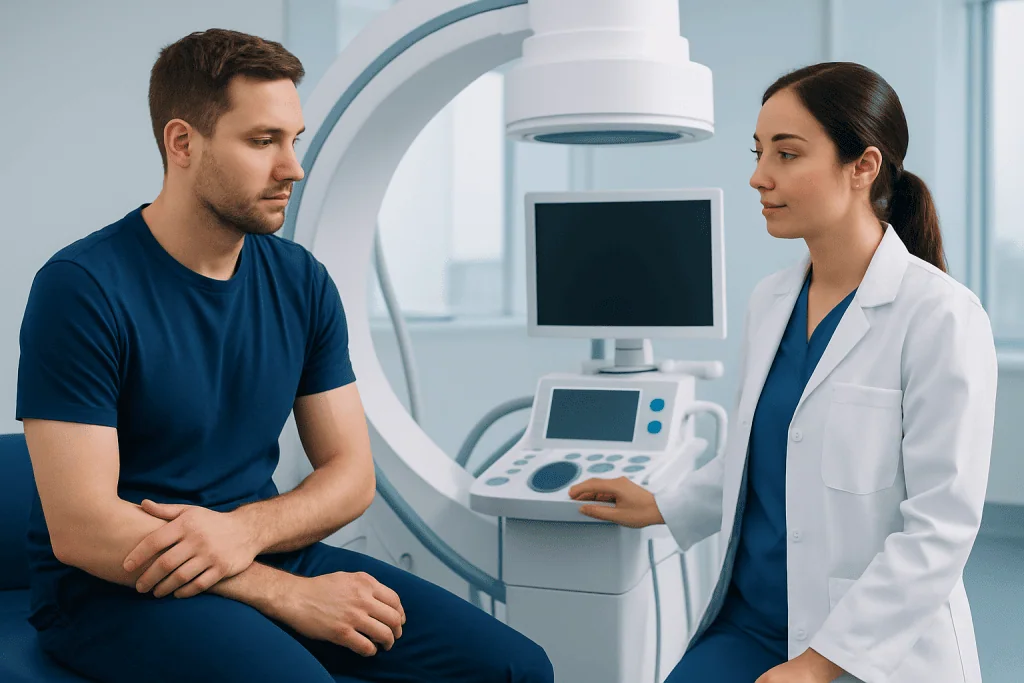
There is no single healing time for every UCL injury. A low-grade sprain may improve in a few weeks with activity modification and rehabilitation. A partial tear can take several months to settle and may require a carefully supervised throwing progression before an athlete returns to competition.
A complete UCL tear may not provide enough stability for repetitive overhead throwing, particularly in professional, collegiate or highly competitive athletes. Some people can manage daily life without surgery, but an unstable elbow may remain limiting for throwing, racquet sports or physically demanding work.
After surgical repair or reconstruction, the biological healing process and progressive strengthening take time. Everyday use is usually reintroduced first, followed by strengthening, controlled throwing drills and eventually sport-specific performance training. Clearance for unrestricted competition is individualized and generally comes later than clearance for light throwing.
- Mild sprain: often weeks, depending on symptoms and activity demands.
- Partial tear treated without surgery: often several weeks to months.
- UCL repair with internal brace: may allow a faster return in selected patients, but still requires staged rehabilitation.
- UCL reconstruction: commonly 9 to 12 months or longer for return to high-level throwing.
Symptoms, Causes and Diagnosis
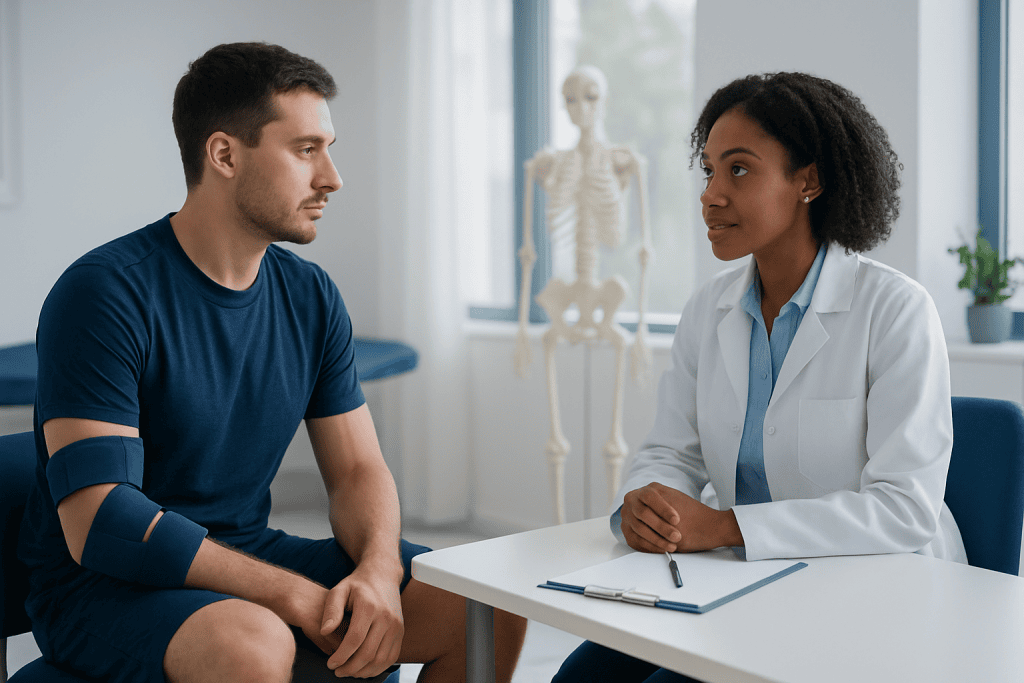
A UCL tear may cause pain or tenderness on the inner side of the elbow, often during the late-cocking or acceleration phase of throwing. Some people describe a sudden pop, while others develop gradually worsening discomfort, reduced throwing velocity or control, stiffness, and a feeling that the elbow is unstable.
Pain is not always constant. Symptoms may appear mainly during throwing, lifting, pushing or other movements that place a valgus force across the elbow. Irritation of the nearby ulnar nerve can also cause tingling or numbness in the ring and little fingers. A sudden traumatic injury, such as a fall, can injure the UCL, but repetitive high-force throwing is a common cause in athletes.
Diagnosis starts with a medical history and physical examination. A clinician assesses tenderness, range of motion, strength, joint stability and nerve symptoms. X-rays can help identify bone changes or avulsion injuries, while MRI may be used to evaluate the ligament and nearby soft tissues. The diagnosis and treatment plan should also consider shoulder motion, throwing mechanics and workload, since these can contribute to elbow stress.
Non-Surgical Recovery and How to Speed Up UCL Recovery
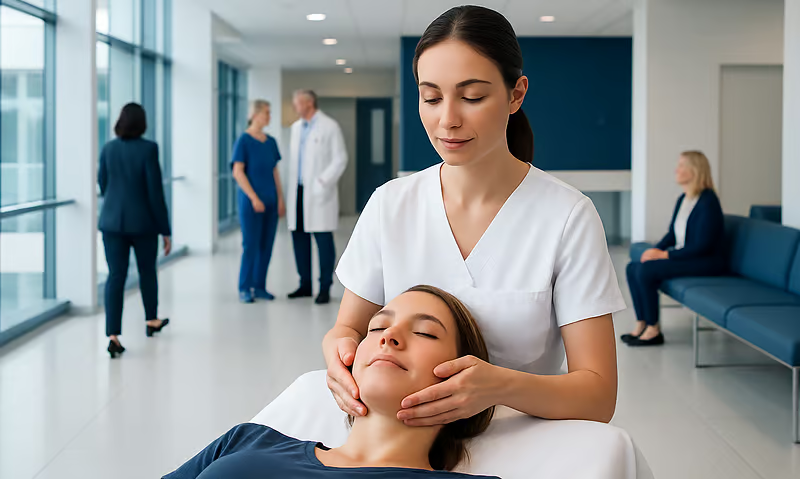
Non-surgical care may be appropriate for a sprain, some partial tears, people with lower throwing demands, or those whose elbow remains stable. The plan commonly includes a temporary break from painful activity, guided physiotherapy, gradual restoration of motion and progressive strengthening of the forearm, upper arm, shoulder blade and core muscles.
There is no safe shortcut that makes a ligament heal faster than its biology allows. However, following the rehabilitation program consistently, protecting the elbow from painful throwing, sleeping well, eating a balanced diet and addressing whole-body strength and movement control can support recovery. Pain-relieving medicines or anti-inflammatory treatment may be considered by a clinician when appropriate, but they should not be used to mask pain and continue high-stress activity.
A gradual throwing program is especially important for athletes. It usually begins only after pain has improved and movement, strength and elbow control meet the rehabilitation team’s criteria. Throwing volume, distance and intensity are increased step by step; soreness that persists, returns repeatedly or worsens should be discussed with the treating clinician.
People searching for an ACL recovery timeline week by week should note that the ACL is a knee ligament and has a different operation, rehabilitation plan and return-to-sport pathway. Likewise, ACL tear recovery time with surgery and an ACL weekly recovery timeline cannot be used to estimate healing after an elbow UCL injury.
UCL Surgery: Candidacy, How It Works and Recovery Timeline
Surgery may be considered when a complete tear causes persistent instability, when structured non-surgical treatment has not restored function, or when a competitive overhead athlete needs a stable elbow for return to sport. The decision is individualized. It takes account of the location and pattern of the tear, tissue quality, symptoms, sport or occupation, prior treatment and the person’s goals.
In selected acute tears with healthy tissue, a surgeon may repair the native ligament, sometimes reinforcing it with an internal brace. More commonly for chronic or complex tears, UCL reconstruction is performed. In this procedure, a tendon graft—taken from the patient or donor tissue—is positioned through carefully created bone tunnels or anchors to form a new stabilizing ligament. This is often known as Tommy John surgery.
Early recovery focuses on protecting the elbow in a brace, controlling swelling and gradually restoring safe movement. During the following weeks and months, rehabilitation adds strength, flexibility, shoulder and core conditioning, and movement retraining. A throwing program is introduced later, then advanced gradually from short, controlled throws to higher-intensity sport-specific work. The exact schedule differs between UCL repair and reconstruction and should be set by the operating surgeon and rehabilitation team.
Potential benefits include improved stability and the possibility of returning to demanding throwing activities. Risks can include stiffness, persistent pain, nerve irritation, infection, blood clots, graft or repair failure, and the possibility of not returning to the same level of performance. UCL reconstruction should be discussed with an orthopedic surgeon experienced in elbow and sports injuries.
Week-by-Week UCL Recovery Timeline After Surgery
Weeks 0–2: The elbow is protected in a splint or brace. The care team provides instructions on wound care, swelling control, pain management and safe hand, wrist and shoulder movement. Heavy lifting, forceful gripping and throwing are avoided.
Weeks 2–6: The brace is adjusted gradually according to the surgical protocol. Supervised exercises aim to restore controlled elbow motion while protecting the repair or graft. Gentle strengthening may begin for surrounding muscles, but the reconstructed ligament is not ready for throwing stress.
Weeks 6–12: Many patients work toward fuller range of motion and build strength in the forearm, upper arm, shoulder blade and trunk. Daily activities become easier, but recovery is still in an early phase. Rehabilitation also addresses posture, shoulder motion and mechanics that affect elbow loading.
Months 3–6: Strength, endurance and dynamic arm control are progressed. Depending on the procedure and clinical assessment, a clinician may begin a carefully structured interval throwing program later in this period. Throwing is not advanced simply because a certain week has passed; it is progressed when objective milestones are met.
Months 6–12 and beyond: Throwing distance, intensity and sport-specific drills are increased gradually. Pitchers and other high-demand throwers commonly need the longer end of the recovery range before unrestricted competition. Follow-up assessments help determine whether strength, stability, mechanics and workload tolerance support a safe return.
Can a Fully Torn UCL Heal Itself?
A fully torn UCL does not always heal back to its original strength and position on its own, particularly when the tear is in the middle of the ligament or the elbow is repeatedly exposed to throwing forces. Some people with a complete tear can have acceptable comfort and function for everyday activities without surgery, especially if they do not need repetitive overhead throwing.
Whether non-surgical treatment is reasonable depends on elbow stability, the site of the injury, associated damage, symptoms and personal goals. Tears close to the bone may sometimes have a better healing potential than tears in other locations, but this must be assessed individually using examination and imaging findings.
A person should not test a suspected complete tear by returning to hard throwing. An orthopedic or sports medicine clinician can explain the likely benefits and limitations of rehabilitation, repair or reconstruction and help create a plan that matches the person’s needs.
Is a UCL Tear Constant Pain? When to Seek Medical Care
A UCL tear is not necessarily constantly painful. Some people have pain only during throwing or other forceful movements, while others notice aching after activity, reduced accuracy, a loss of power or a feeling of looseness in the elbow. Symptoms can also fluctuate as activity level changes.
Medical assessment is advisable for inner-elbow pain that does not improve after rest, pain that returns with throwing, a pop at the time of injury, visible swelling or bruising, reduced range of motion, weakness, or tingling in the ring and little fingers. Urgent assessment is appropriate after a significant injury with deformity, severe pain, loss of sensation, a cold or pale hand, or inability to move the arm normally.
For international patients, Acibadem International’s multidisciplinary specialists and JCI-accredited hospitals evaluate and treat elbow ligament injuries with orthopedic assessment, imaging and rehabilitation planning. A qualified clinician can help distinguish a UCL injury from other causes of medial elbow pain and advise on a safe return to work, exercise or sport.
Frequently asked questions
What is the average UCL tear recovery time without surgery?
Recovery without surgery varies with the severity and location of the tear, elbow stability and the person’s activity requirements. Mild injuries may improve over several weeks, while partial tears often need several months of rehabilitation and a gradual return to throwing. A clinician should confirm that movement, strength and elbow stability are adequate before return to demanding activity.
How long is recovery after Tommy John surgery?
Recovery after UCL reconstruction commonly takes about 9 to 12 months before a return to competitive overhead throwing, although some athletes need longer. Daily activities return much earlier, but the graft and surrounding muscles need progressive rehabilitation before high-speed throwing is safe. The schedule differs according to the procedure, sport and individual progress.
How can someone speed up UCL recovery?
The safest approach is to protect the elbow from painful throwing, follow the prescribed rehabilitation plan and progress activity only when clinical milestones are met. Consistent sleep, nutrition, conditioning and attention to shoulder, core and throwing mechanics can support recovery. Trying to push through pain or increasing throwing workload quickly can delay progress.
Can a partial UCL tear heal without surgery?
Many partial UCL tears can be managed without surgery using rest from aggravating activity, bracing when recommended and structured physiotherapy. Success depends on the tear pattern, symptoms, stability and the demands of the person’s sport or work. Persistent pain or instability despite rehabilitation may lead to a discussion about surgical options.
Can a fully torn UCL heal itself?
A complete UCL tear may not heal sufficiently to support repetitive, high-force overhead throwing without treatment. Some people who do not participate in demanding throwing sports can function well with non-surgical management if the elbow is stable and symptoms are controlled. An orthopedic assessment is needed to determine the most appropriate approach.
Is a UCL tear constant pain?
No. UCL pain may occur mainly while throwing, lifting, pushing or performing another activity that stresses the inner elbow. Some people instead notice reduced throwing control, weakness, stiffness or instability. Persistent symptoms, a pop, numbness in the fingers or loss of elbow motion should be evaluated by a healthcare professional.
References
- American Academy of Orthopaedic Surgeons
- American Orthopaedic Society for Sports Medicine
- OrthoInfo
- Hospital for Special Surgery
This article is for general information only and is not a substitute for professional medical advice. Please consult a qualified doctor about your individual situation.
Joint and spine care in Turkey — expert assessment & treatment
JCI-accredited · board-certified surgeons · reply within 24h
Add us as a Preferred Source to see more of our trusted health content across Google Search, AI Overviews and Discover.