

Apheresis Procedure: An Evidence-Based Patient Guide

Apheresis separates blood into components so that a harmful substance, abnormal cells, or excess cells can be removed. Therapeutic plasma exchange is one of the most common forms of apheresis and replaces plasma with an appropriate fluid.
Key Takeaways
- Apheresis separates blood into components so that a harmful substance, abnormal cells, or excess cells can be removed.
- Therapeutic plasma exchange is one of the most common forms of apheresis and replaces plasma with an appropriate fluid.
- The procedure is planned by a specialist team and may be given once, urgently, or as a series of treatments.
- Most side effects are temporary and manageable, but patients should report symptoms such as breathing difficulty, chest pain, fainting, or bleeding promptly.
- Apheresis treats specific disease processes but does not always replace treatment for the underlying condition.
An apheresis procedure is a treatment in which blood is temporarily removed, separated by a specialized machine, and returned after a targeted component has been removed or replaced. It is used for selected conditions affecting the blood, immune system, nervous system, kidneys, and metabolism, with the exact approach tailored to the person’s diagnosis.
Overview: What Is an Apheresis Procedure?
An apheresis procedure is a blood-based treatment performed with a machine that separates blood into its components, such as plasma, red blood cells, white blood cells, and platelets. Depending on the medical purpose, the machine removes a selected component or substance and returns the remaining blood components to the body.
The term comes from a Greek word meaning “to take away.” In clinical care, apheresis may help remove disease-causing antibodies, abnormal proteins, excess blood cells, very high blood fats, or other harmful materials circulating in the bloodstream. It is not a single treatment for one disease; rather, it is a technique used in carefully selected situations.
Therapeutic plasma exchange, also called plasmapheresis, is a common type. It removes plasma, the liquid part of blood that carries proteins and antibodies, and replaces it with albumin solution, donor plasma, or another prescribed replacement fluid. Other forms include red cell exchange, leukapheresis, plateletpheresis, and LDL apheresis.
How Apheresis Works and Why It Is Used
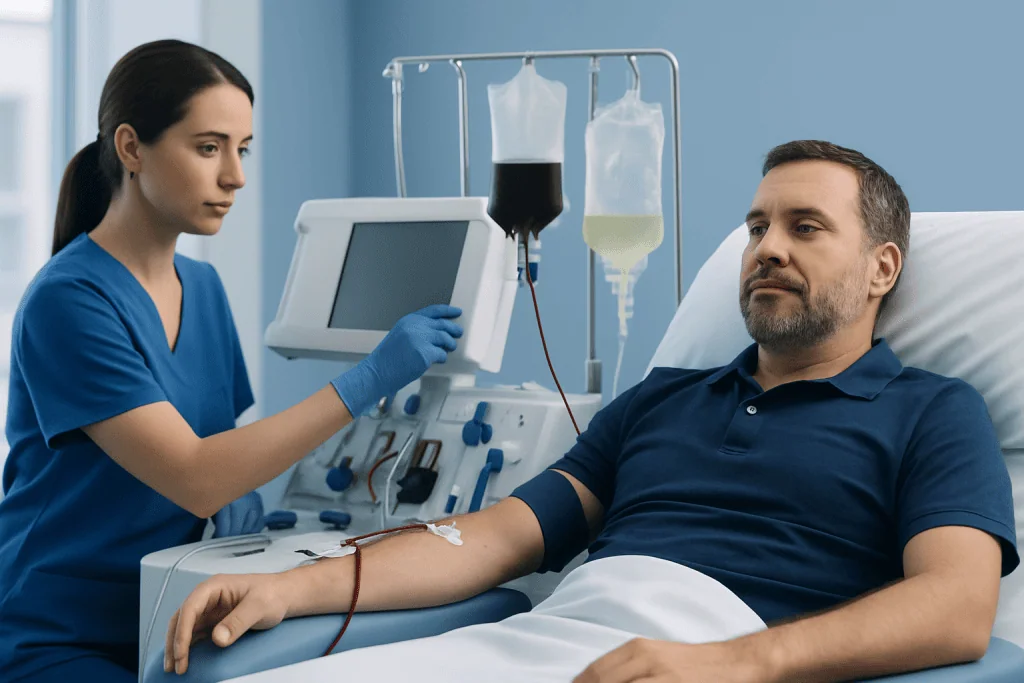
During apheresis, blood travels through sterile tubing to a machine called a cell separator. The machine uses centrifugation or filtration to separate components by their physical properties. The desired component is collected or discarded, while the rest of the blood is combined with any needed replacement fluid and returned through the tubing.
Doctors may recommend apheresis when a substance in the blood is contributing directly to illness and needs to be lowered relatively quickly. For example, plasma exchange may be used in some autoimmune and neurologic disorders, certain kidney diseases, and selected blood disorders. Red blood cell exchange can be used for specific complications of sickle cell disease, while leukapheresis may be considered when extremely high white blood cell counts cause urgent symptoms.
Apheresis can also collect blood components from donors or from a patient for later treatment, including stem cell collection. The expected benefit depends strongly on the diagnosis, timing, and whether apheresis is combined with medicines, surgery, transfusion support, or other therapies.
Candidacy and Treatment Planning

A specialist decides whether a person is a suitable candidate after reviewing the diagnosis, symptoms, laboratory results, medications, medical history, and treatment goals. Apheresis is generally considered when there is good clinical evidence that removing or exchanging a blood component is likely to help, or when it is needed as urgent supportive treatment.
The treatment team also evaluates vascular access. Some people can have the procedure through two peripheral intravenous lines in the arms. Others require a temporary or longer-term central venous catheter, particularly if veins are difficult to access or repeated treatments are expected. The choice balances treatment needs with the risks of catheter placement.
An individualized apheresis protocol specifies the treatment type, number and frequency of sessions, amount of plasma or blood processed, replacement fluid, laboratory monitoring, and medicines used to reduce side effects. Professional apheresis guidelines are primarily written for clinicians; people looking for an apheresis guidelines PDF should use materials from recognized medical societies and discuss how general guidance applies to their own case.
Before treatment, patients should tell the team about pregnancy, allergies, bleeding disorders, low blood pressure, heart or lung disease, recent infections, and all prescribed medicines, supplements, and anticoagulants. Some medicines may need timing adjustments around the procedure, but changes should only be made on the advice of the treating clinician.
What Happens During the Procedure?
Before starting, a nurse or clinician confirms identity, reviews symptoms and consent, checks vital signs, and establishes intravenous or catheter access. Blood samples may be taken to measure blood counts, electrolytes, clotting factors, kidney function, or disease-specific markers. The team explains what sensations to expect and how to call for help during treatment.
Once the machine is connected, blood is drawn in small cycles, separated, and returned continuously. Anticoagulant is commonly added to the tubing to prevent clotting in the circuit. During plasma exchange, the removed plasma is replaced as prescribed. A session often lasts a few hours, although the duration varies with body size, access, treatment type, and clinical goals.
Patients usually remain awake and can rest, read, listen to music, or use a device if permitted. Nurses monitor pulse, blood pressure, temperature, comfort, and the access site throughout. Mild tingling around the lips or fingers can occur because citrate anticoagulant may temporarily lower calcium levels; staff can respond promptly if this happens.
Administrative terms such as an apheresis procedure CPT code or apheresis procedure code are used for clinical documentation and insurance billing. The correct code depends on the exact service, indication, setting, and local billing rules, so patients should ask their care provider or insurer about coverage rather than relying on a general code found online.
Recovery Timeline and Expected Results
Many patients can go home after an outpatient apheresis session once vital signs are stable and they feel well. It is common to feel tired, chilled, lightheaded, or mildly weak for the rest of the day. Drinking fluids if permitted, eating a balanced meal, and avoiding strenuous activity until energy returns may be helpful.
Recovery varies with the type of apheresis and the underlying illness. Some people notice improvement in symptoms within days when the target substance is effectively removed, while others need several treatments before benefit can be assessed. In some conditions, apheresis acts as a bridge while other treatments begin working rather than providing a lasting cure on its own.
After plasma exchange, some blood proteins and clotting factors may be temporarily lower. Follow-up blood tests help the clinical team decide whether further sessions are needed and whether medicines or replacement fluids should be adjusted. If a central line is used, it needs careful care to reduce infection and clotting risks.
Benefits, Risks, and Side Effects
The main potential benefit of apheresis is targeted removal of a component that is contributing to disease. In appropriate circumstances, it may reduce harmful antibodies, abnormal proteins, excess cells, or certain circulating fats more rapidly than medicines alone. However, it cannot remove substances that are already in tissues, and the body may produce more of the targeted material after treatment.
Most side effects are mild and treatable. They can include tiredness, dizziness, nausea, temporary low blood pressure, chills, bruising at an intravenous site, or tingling related to citrate. Resting, fluids, warming measures, calcium supplementation when clinically appropriate, and close monitoring often help manage these effects.
Less common but more serious risks include allergic reactions to replacement fluids, bleeding related to reduced clotting factors, infection or clotting associated with a central catheter, irregular heartbeat, and significant blood pressure changes. Donor plasma can rarely cause transfusion reactions. The team takes precautions by screening, monitoring, and selecting replacement fluids based on the patient’s needs.
Patients should ask their clinician about the expected benefit for their particular condition, alternatives to apheresis, the plan for managing side effects, and how treatment success will be measured. This is an important part of effective apheresis patient education and informed decision-making.
Preparing for Treatment and Caring for Yourself
Preparation instructions differ between hospitals and treatment types. In general, patients should attend well hydrated unless they have fluid restrictions, eat as advised, wear comfortable clothing, and bring a current medication list. It may be useful to arrange transportation home if prior sessions have caused fatigue or lightheadedness.
Patients should not stop medicines independently. The team may provide specific guidance about blood pressure medicines, anticoagulants, supplements, or medicines that affect calcium balance. People with diabetes may also need individualized meal and glucose-monitoring plans, especially for longer sessions.
After treatment, the access site should be kept clean and observed for redness, warmth, swelling, drainage, or persistent bleeding. Those with a central line should follow the catheter-care instructions closely. Keeping scheduled blood tests and specialist appointments is essential because apheresis is usually one part of a broader care plan.
Acibadem International’s multidisciplinary specialists and JCI-accredited hospitals provide assessment and treatment planning for international patients who may need apheresis as part of care for an appropriate underlying condition.
When to Seek Medical Care
During an apheresis session, patients should immediately tell staff about chest pain, shortness of breath, severe dizziness, faintness, widespread itching or rash, swelling of the face or throat, severe chills, new confusion, or worsening pain. These symptoms need prompt assessment, even though serious reactions are uncommon.
After leaving the treatment unit, urgent medical evaluation is appropriate for trouble breathing, chest pain, fainting, uncontrolled bleeding, a high fever, or signs of a serious allergic reaction. Patients with a catheter should contact their care team promptly for fever, increasing redness, tenderness, swelling, drainage, or pain around the line.
They should also contact their treating team if symptoms of the underlying condition worsen, if unusual bruising develops, or if persistent nausea, weakness, tingling, or lightheadedness does not improve. The care team can determine whether these symptoms are expected, require blood testing, or need changes to the treatment plan.
Frequently asked questions
Is apheresis the same as dialysis?
No. Both treatments use a machine and tubing outside the body, but they have different purposes. Dialysis mainly removes waste products and excess fluid when the kidneys cannot do this adequately, whereas apheresis selectively removes or exchanges particular blood components.
How long does an apheresis procedure take?
Many therapeutic apheresis sessions take a few hours, but timing varies by procedure type, body size, vascular access, and treatment goal. The care team can provide a more accurate estimate before each session. Some people need one treatment, while others need a planned series.
Does apheresis hurt?
The insertion of an intravenous line or catheter may cause brief discomfort. During treatment, many people feel little pain, although they may experience coolness, tingling, mild fatigue, or temporary lightheadedness. Staff monitor closely and can treat discomfort or side effects.
Can apheresis cure an autoimmune disease?
Apheresis may reduce circulating antibodies or inflammatory factors in some autoimmune diseases, which can improve symptoms or help control an acute episode. It does not usually cure the underlying immune condition because the body may continue making antibodies. Other treatments are often needed to control the disease over time.
What should a patient eat or drink before apheresis?
Instructions depend on the person’s health and the specific treatment. Many patients are advised to have a light meal and stay hydrated if they do not have fluid restrictions. The treating team should provide individualized advice for people with diabetes, kidney disease, heart failure, or dietary limitations.
Are there long-term side effects from apheresis?
Most treatment effects are temporary, but repeated sessions can affect blood proteins, clotting factors, electrolytes, or iron status depending on the type of apheresis. Central venous catheters also carry ongoing risks of infection and clotting. Regular monitoring helps the team identify and manage these issues.
References
- American Society for Apheresis
- U.S. Food and Drug Administration
- National Heart, Lung, and Blood Institute
- National Institute of Neurological Disorders and Stroke
- AABB
This article is for general information only and is not a substitute for professional medical advice. Please consult a qualified doctor about your individual situation.
Medical weight-loss options in Turkey — costs & eligibility
JCI-accredited · board-certified surgeons · reply within 24h
Add us as a Preferred Source to see more of our trusted health content across Google Search, AI Overviews and Discover.
Check your numbers in seconds
BMI, calories, due date, blood pressure and 30+ more clinical calculators — free, instant, doctor-reviewed ranges.

More from the Health Library



Related Specialists

Dr. Sünkar Kaya Bayrak
Anesthesiology
Prof. Dr. Meltem Serin
Radiation Oncology
Prof. Dr. Vahit Emre Özden
Orthopedic Surgery & Traumatology
Prof. Dr. Yavuz Atar
Otorhinolaryngology