Papilloma Eye Treatment: How It Works, Results and What to Expect
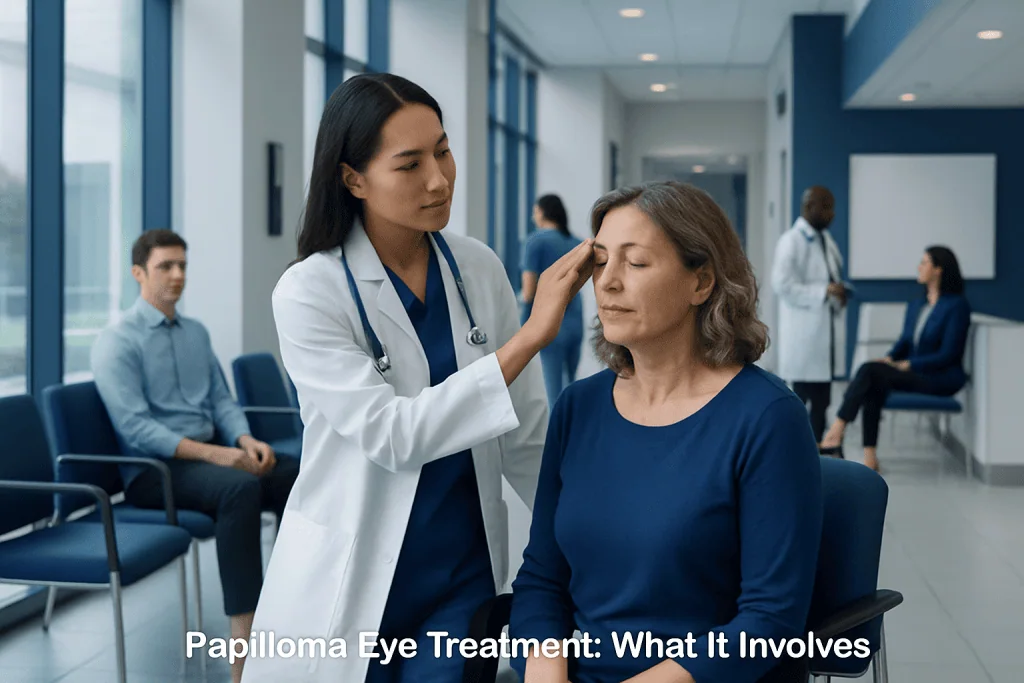
Most eyelid papillomas are benign growths, but a new or changing lesion should be examined by an eye specialist. Treatment may involve observation, minor in-office removal, freezing, cautery, or surgical excision depending on the lesion.
Key Takeaways
- Most eyelid papillomas are benign growths, but a new or changing lesion should be examined by an eye specialist.
- Treatment may involve observation, minor in-office removal, freezing, cautery, or surgical excision depending on the lesion.
- Local anesthetic is commonly used for removal, so discomfort during the procedure is usually limited.
- A removed lesion may be sent for pathology when its diagnosis is uncertain or it has concerning features.
- Recovery is often straightforward, but patients should follow eye-care instructions and attend review appointments if advised.
Papilloma eye treatment is tailored to the location, appearance, symptoms, and cause of the growth. Many eyelid papillomas are benign and can be monitored, while removal may be recommended if a lesion irritates the eye, affects vision, causes cosmetic concern, changes in appearance, or requires laboratory assessment.
Papilloma Eye Treatment: What It Involves
Papilloma eye treatment generally refers to assessing and, when appropriate, removing a small growth on the eyelid, eyelid margin, or nearby skin. In everyday use, “papilloma” often describes a benign, wart-like or skin-tag-like lesion. However, several different conditions can look similar around the eye, so an ophthalmologist should confirm the likely diagnosis before treatment is chosen.
Not every papilloma needs to be removed. A stable lesion that is clearly benign and does not rub the eye, interfere with blinking, affect vision, or cause distress may be monitored. Removal is more often considered when the growth becomes irritated, bleeds, grows, changes color or shape, turns lashes inward, causes tearing, or makes contact lens wear difficult.
For suitable lesions, removal is usually a minor outpatient procedure. The clinician may use a small surgical excision, a snip technique, cautery, freezing treatment, or another method selected for the lesion’s size and precise location. The aim is to remove or reduce the growth while protecting the eyelid margin, eyelashes, tear drainage structures, and surface of the eye.
How It Works and Who May Be a Candidate
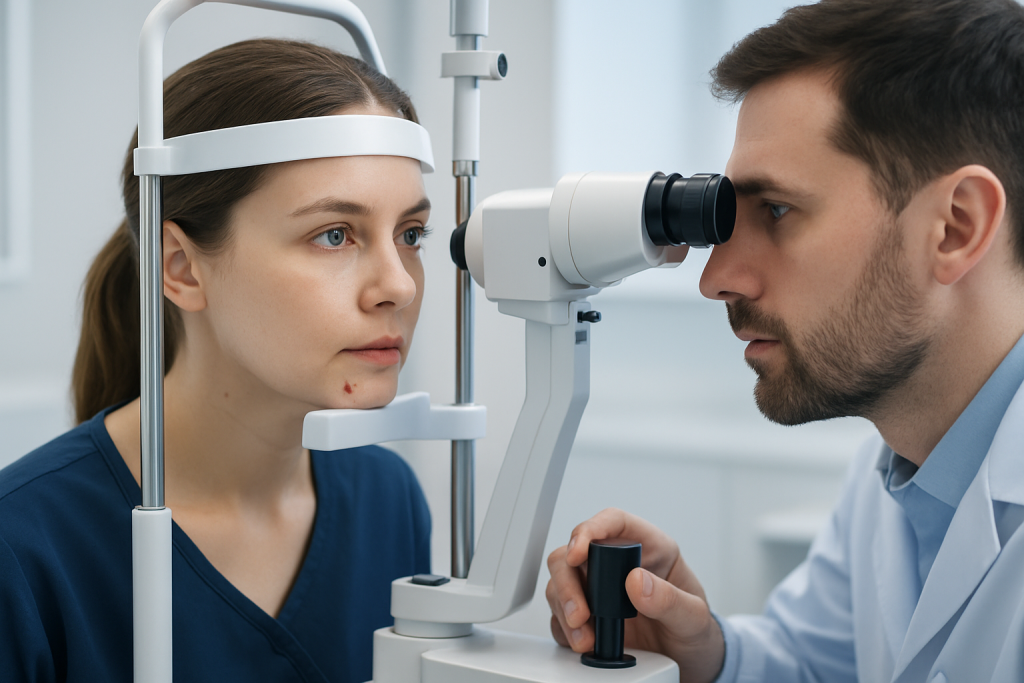
Before treatment, the eye specialist examines the eyelid under magnification and asks about the lesion’s duration, symptoms, previous skin growths, medications, and relevant health conditions. Photographs may be useful for documenting a lesion that is being observed. If the growth has an unusual appearance, is recurrent, or raises concern for another diagnosis, removal with laboratory examination may be advised.
A person may be a candidate for eyelid papilloma removal when the lesion is symptomatic, enlarging, repeatedly inflamed, cosmetically troubling, or diagnostically uncertain. Growths close to the lashes or inner corner of the eye need particular care because these areas contain structures important for eyelid function and tear drainage.
Some people may need treatment planned differently. Blood-thinning medicines, bleeding disorders, allergy to local anesthetics, active eyelid infection, poorly controlled medical conditions, or a history of abnormal scarring should be discussed in advance. Patients should not stop prescribed medicines on their own; the treating clinician will explain whether any changes are needed before the procedure.
- Observation may be appropriate for a typical, unchanged benign lesion.
- Removal may be appropriate when symptoms, change, uncertainty, or eyelid-function concerns are present.
- Pathology testing may help confirm the diagnosis after excision.
Step by Step: What Happens During Eyelid Papilloma Removal
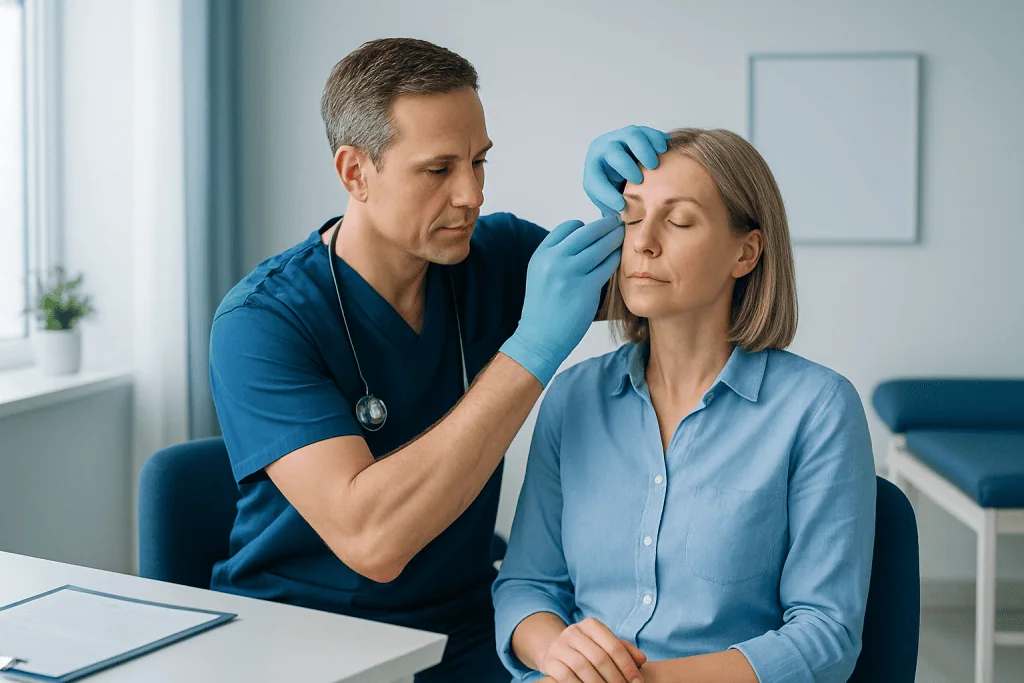
Minor eyelid papilloma treatment is commonly performed in an outpatient clinic or day-procedure setting. The specialist first confirms the treatment plan, reviews consent, and cleans the skin around the eye. Numbing drops may be used if the lesion is very close to the eye surface, followed by a small injection of local anesthetic into the eyelid skin when needed.
After the area is numb, the clinician removes the lesion using the technique best suited to it. A narrow-based skin-tag-like lesion may be carefully clipped or shaved. A broader lesion may require excision with fine instruments, and some lesions can be treated with cautery or freezing. If a tissue sample is needed, it is placed in a container and sent to a pathology laboratory.
Bleeding is usually controlled during the procedure with gentle pressure or cautery. Small wounds may heal without stitches, while lesions that require a larger excision or involve delicate eyelid structures may need fine sutures. A protective ointment or dressing may be applied. The clinician will provide individual instructions about cleansing, ointment use, driving, contact lenses, makeup, and follow-up.
Benefits, Risks and Expected Results
The main benefits of treatment are relief from rubbing or irritation, improved eyelid comfort, restoration of a smoother eyelid contour, and confirmation of the diagnosis when tissue is examined. Removal can also help when a lesion disrupts lash direction, blinking, or vision. For many people, the visible result improves as redness and swelling settle during healing.
Even minor eyelid procedures have potential risks. These can include temporary swelling, bruising, tenderness, bleeding, infection, dry-eye symptoms, temporary changes in eyelid sensation, scarring, lash loss near the treatment site, or incomplete removal. Recurrence is possible, especially when a lesion is related to a viral wart or when microscopic tissue remains.
Less common but important risks depend on the lesion location and depth. Procedures near the lid margin, tear ducts, or eye surface require specialist technique to reduce the risk of eyelid-notching, lid-position changes, tear drainage problems, or injury to the eye. The clinician should explain the expected benefit and the specific risks for the individual lesion before treatment.
Results also depend on the final diagnosis. A lesion that only resembles a papilloma may need different care, which is why prompt review of changing or atypical growths is important. If pathology identifies a condition needing additional treatment, the ophthalmologist will discuss the next steps and coordinate care as needed.
Recovery Timeline and Self-Care After Treatment
Following simple removal, mild soreness, redness, tearing, swelling, or bruising can occur during the first few days. Most people can return to light daily activities soon after an uncomplicated procedure, although the eyelid may look bruised or swollen for a short period. Healing time varies with the treatment method, lesion size, and whether stitches were used.
Patients should use any prescribed ointment or drops exactly as instructed, keep hands clean before touching the eye area, and avoid rubbing or picking at the healing site. Makeup, contact lenses, swimming, and strenuous activity may need to be avoided temporarily, depending on the procedure. A cool compress can sometimes help swelling, but it should be used only as advised and without direct pressure on the eye.
If stitches are placed, they are commonly checked or removed at a follow-up visit. A pathology result, when requested, may take additional time. The clinician will explain when normal washing can resume and whether sun protection or scar care is appropriate once the wound has closed.
Contact the treating team promptly if there is worsening pain, increasing redness, pus-like discharge, fever, significant bleeding, marked swelling, reduced vision, double vision, or difficulty closing the eye. These symptoms do not necessarily mean a serious problem, but they need timely assessment.
Do Eye Papillomas Go Away?
Some small eyelid papillomas remain unchanged for years, while others slowly grow or become more noticeable. They do not always disappear without treatment. A lesion caused by a viral wart may occasionally regress, but it may also persist or recur, and it should not be treated at home with over-the-counter wart products because these products can injure the delicate skin and surface of the eye.
A clinician may recommend watchful waiting when a lesion looks benign and is not causing symptoms. During observation, patients should be aware of changes in size, color, border, surface, bleeding, lash loss, or irritation. New symptoms or visible changes should prompt reassessment rather than self-treatment.
Removal is an option when a papilloma is persistent, bothersome, changing, or difficult to diagnose by examination alone. Even after removal, follow-up may be useful if the lesion recurs or if pathology indicates that further evaluation is needed.
How Did I Get a Papilloma on My Eyelid?
Eyelid papillomas can arise for different reasons. Some are common benign skin growths associated with aging or normal changes in skin cells. Others may be related to irritation, a blocked or altered skin gland, or, less commonly, infection with certain strains of human papillomavirus (HPV). Having an eyelid growth does not automatically mean that a person has a sexually transmitted infection.
Because several benign and more serious lesions may resemble one another, appearance alone cannot always establish the cause. An ophthalmologist, particularly one experienced in eyelid conditions, can distinguish common benign lesions from growths that need removal, biopsy, or referral.
Good eyelid hygiene and avoiding eye rubbing can support general eyelid health, but they cannot prevent every papilloma. Patients should avoid sharing eye makeup and should replace eye cosmetics regularly, especially if they have recurrent eye irritation or infection. A growing, bleeding, crusting, or non-healing lesion should be examined.
Is Eyelid Papilloma Removal Painful? Is Papilloma Surgery Painful?
Most people feel little pain during eyelid papilloma removal because local anesthetic is used to numb the area. The anesthetic injection can cause a brief sting or pressure sensation, and patients may feel gentle pulling or movement while the lesion is removed. They should tell the clinician immediately if they feel sharp pain, as additional numbing medicine can often be given.
Afterward, mild tenderness, a scratchy sensation, or eyelid soreness is common for a short time. Discomfort is generally managed with the aftercare plan provided by the clinician. Patients should ask which pain-relief medicines are safe for them, particularly if they take anticoagulants, have stomach or kidney problems, or have other medical conditions.
More extensive eyelid surgery may involve a different recovery experience than a simple clinic-based removal. The specialist will explain the expected level of discomfort, anesthesia plan, activity restrictions, and follow-up before the procedure. Clear communication about anxiety, prior reactions to anesthesia, and pain concerns can help make treatment more comfortable.
When to Seek Medical Care
Any new eyelid lump deserves professional assessment if it persists, especially when the diagnosis is uncertain. An appointment with an ophthalmologist or qualified eye-care professional is particularly important for a lesion that grows quickly, repeatedly bleeds, becomes ulcerated or crusted, changes color, causes lash loss, distorts the eyelid, or does not heal.
Urgent assessment is appropriate if an eyelid growth is accompanied by new vision changes, significant eye pain, severe redness, sensitivity to light, inability to close the eye, or swelling that is rapidly worsening. These symptoms may have causes other than a papilloma and should not be ignored.
Acibadem International’s multidisciplinary specialists and JCI-accredited hospitals assess and treat eyelid conditions for international patients, with referral to relevant eye, dermatology, or pathology services when needed. A qualified clinician can recommend whether monitoring, removal, or further testing is the safest next step.
Frequently asked questions
What is papilloma eye treatment?
Papilloma eye treatment involves examining an eyelid or nearby eye-area growth and deciding whether it can be safely observed or should be removed. When removal is needed, it is commonly a minor outpatient procedure performed with local anesthetic. The best method depends on the lesion’s size, location, symptoms, and appearance.
Is eyelid papilloma removal painful?
The procedure is usually well tolerated because the eyelid is numbed with local anesthetic. A person may feel a brief sting from the injection and pressure or movement during removal, but sharp pain should be reported immediately. Mild tenderness afterward is common and typically temporary.
Do eye papillomas go away on their own?
Some lesions remain stable and harmless, while others persist or slowly grow. Certain viral wart-like lesions can occasionally regress, but this is not predictable. A changing, irritated, bleeding, or uncertain lesion should be assessed rather than treated at home.
How did I get a papilloma on my eyelid?
Many eyelid papillomas are common benign skin growths that develop with normal skin changes and are not caused by poor hygiene. Some wart-like lesions may be associated with HPV, but an eyelid papilloma does not automatically indicate a sexually transmitted infection. An eye specialist can help identify the likely type of lesion.
Is papilloma surgery painful?
For a simple eyelid papilloma, surgery is usually performed under local anesthetic and is not expected to be painful during removal. The level of discomfort afterward varies with the size and location of the lesion and the technique used. The treating clinician will provide individualized aftercare and pain-relief guidance.
Will an eyelid papilloma grow back after removal?
Recurrence can happen, particularly if the lesion is wart-related or if microscopic tissue remains. However, many benign lesions do not return after complete removal. Follow-up is helpful if a new growth appears in the same area or if the eyelid changes after healing.
References
- American Academy of Ophthalmology
- American Society of Ophthalmic Plastic and Reconstructive Surgery
- National Eye Institute
- Mayo Clinic
- NHS
This article is for general information only and is not a substitute for professional medical advice. Please consult a qualified doctor about your individual situation.
Explore treatments in Turkey — costs, top hospitals & a free quote
JCI-accredited · board-certified surgeons · reply within 24h
Add us as a Preferred Source to see more of our trusted health content across Google Search, AI Overviews and Discover.