Lung Cancer CT Scan Stage 4: Preparation, Procedure and Results
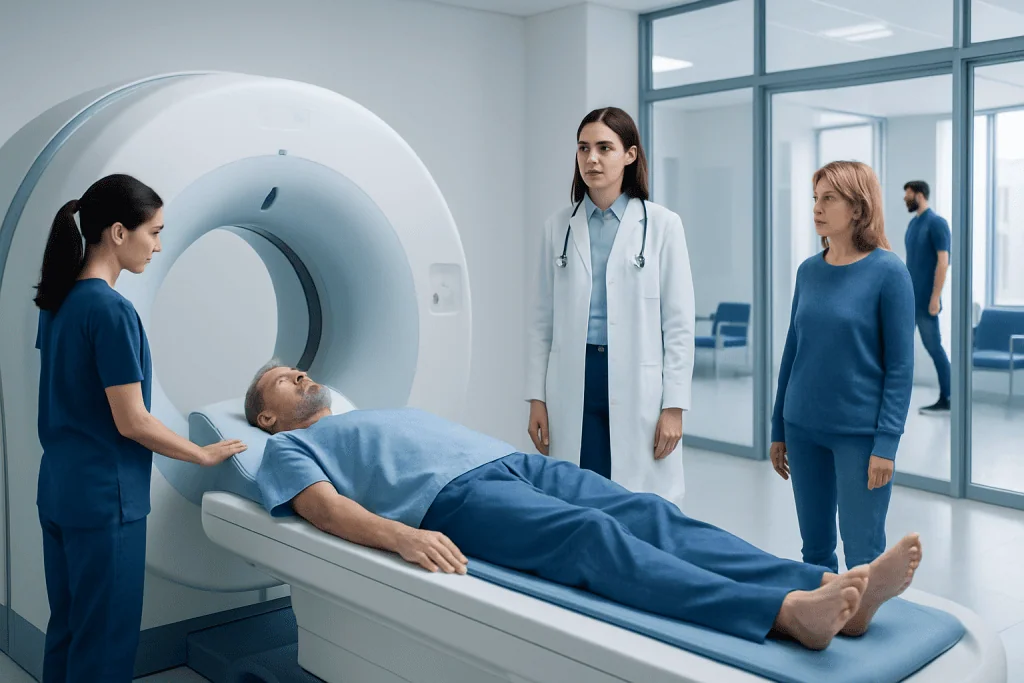
CT scans create detailed cross-sectional images and are central to evaluating suspected or known lung cancer. A CT scan alone does not always confirm stage 4 lung cancer; tissue testing and other imaging may also be needed.
Key Takeaways
- CT scans create detailed cross-sectional images and are central to evaluating suspected or known lung cancer.
- A CT scan alone does not always confirm stage 4 lung cancer; tissue testing and other imaging may also be needed.
- The scan itself usually takes only minutes, although preparation and contrast injection can make the appointment longer.
- Contrast dye can improve image detail but requires extra precautions for people with kidney disease or prior contrast reactions.
- Results are interpreted alongside symptoms, pathology and molecular testing to create an individual treatment plan.
A lung cancer CT scan stage 4 is an imaging examination used to assess the lungs and look for signs that cancer may have spread to lymph nodes or other parts of the body. CT findings contribute to staging, but doctors usually combine them with biopsy results, other scans and a person’s overall health before confirming stage 4 disease.
Lung Cancer CT Scan Stage 4: Overview
A lung cancer CT scan stage 4 assessment is used to determine the extent of lung cancer when there is concern that it may have spread beyond the lung. Computed tomography (CT) uses X-rays and computer processing to create detailed images of the chest and, when needed, the upper abdomen, brain or other areas. It can show the size and location of a lung tumour, nearby lymph nodes, fluid around the lungs, and possible areas of spread.
Stage 4, also called metastatic lung cancer, means the cancer has spread outside the original lung to distant sites, such as the other lung, distant lymph nodes, bones, liver, adrenal glands or brain. A CT scan can raise or lower concern for spread, but it is not the only test used for staging. Doctors may recommend PET-CT, brain MRI, blood tests and a biopsy of the lung lesion or another suspicious area.
Imaging is also important after diagnosis. It provides a baseline before treatment and may be repeated to assess how cancer responds over time. Related information about the diagnosis, outlook and care of lung cancer can help patients understand how imaging fits into the wider treatment pathway.
How CT Scanning Works and Who May Need It
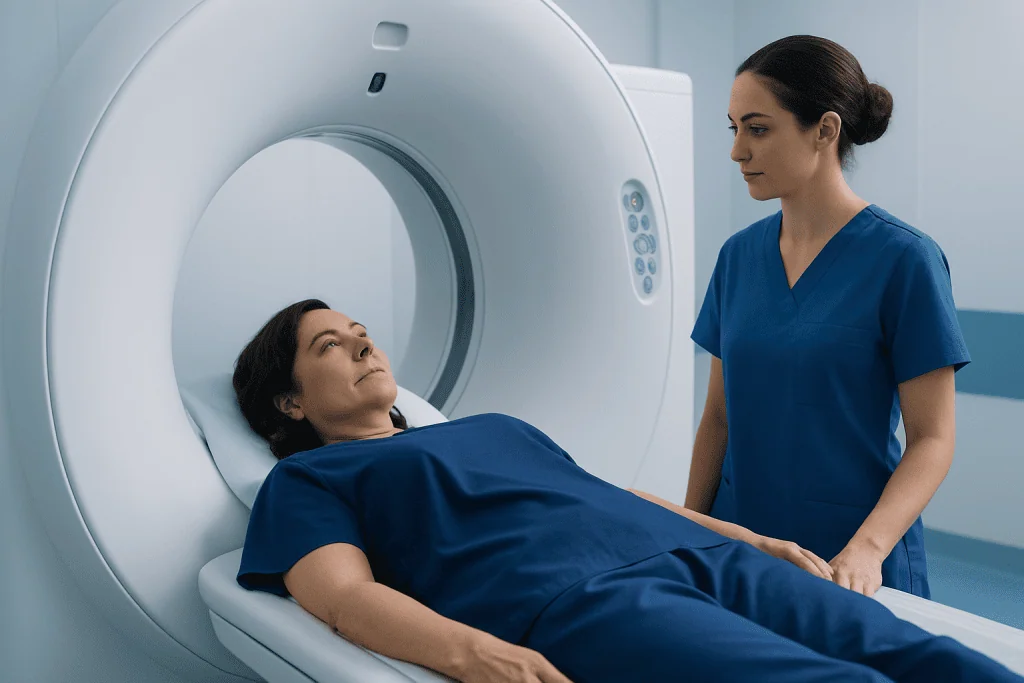
During a CT scan, the patient lies on a narrow table that moves through a large, doughnut-shaped scanner. The scanner rotates around the body and captures many X-ray images from different angles. A computer combines these images into detailed slices, allowing radiologists to examine structures that may not be clearly visible on a standard chest X-ray.
A chest CT may be requested for a new lung mass, persistent symptoms, abnormal chest X-ray findings, or known lung cancer. It is commonly used before treatment to map disease accurately, evaluate whether surgery may be appropriate, and identify areas that may need biopsy. It may also be used during follow-up when symptoms change or after a course of treatment.
Many patients have a contrast-enhanced CT scan. Contrast is an iodine-containing liquid given through a vein that can make blood vessels, lymph nodes, organs and some tumours easier to assess. The referring clinician and radiology team consider the person’s medical history, kidney function, medications and prior contrast reactions when deciding whether contrast is suitable.
Preparing for a Lung CT Scan
The imaging centre will provide instructions specific to the planned scan. For a CT scan without contrast, patients can often eat, drink and take regular medicines as usual. If intravenous contrast is planned, the centre may ask the patient not to eat for a short period beforehand. Drinking water may still be encouraged unless the care team gives different instructions.
Patients should tell the radiology team about pregnancy or possible pregnancy, kidney disease, diabetes, thyroid conditions, asthma, previous reactions to contrast dye, and all medicines and supplements. Some people may need a recent kidney blood test before contrast. A previous contrast reaction does not automatically prevent scanning, but it should be reviewed in advance so the team can plan safely.
Bring the imaging request, relevant medical records and earlier scans or reports if they were performed elsewhere. Comparing current and prior images can be particularly helpful in lung cancer because it can show whether a finding is new, stable or changing.
What not to do before a lung CT scan? Patients should not ignore the preparation instructions provided by the imaging department, especially fasting directions for contrast scans. They should not stop prescribed medicines unless a clinician specifically advises it, and should not wear metal jewellery, clothing with metal fasteners or removable metallic accessories into the scan room. It is also important not to withhold information about pregnancy, kidney problems or prior contrast reactions.
What Happens During the Procedure
On arrival, a radiographer confirms identity, reviews safety questions and explains the examination. The patient may change into a gown, especially if clothing contains metal such as zips, underwire or buttons. If contrast is required, a small intravenous cannula is placed in the arm or hand.
The patient lies on their back on the scanning table, usually with arms raised above the head. The radiographer leaves the room to operate the scanner but can see, hear and speak with the patient throughout. The table moves through the circular opening of the scanner; CT scanners are generally more open than MRI scanners.
During image capture, the patient may be asked to hold their breath briefly. When contrast is injected, a temporary warm sensation, metallic taste or feeling of needing to urinate can occur. These feelings usually pass quickly. Remaining still and following breathing instructions helps produce clear images.
How long does a CT scan for lung cancer take? The actual image acquisition often takes only a few minutes. The full appointment commonly lasts around 20 to 45 minutes, allowing time for check-in, safety screening, changing clothes, intravenous access and contrast administration when needed. More extensive staging scans may take longer.
Do I have to undress for a lung CT scan? Some patients can keep their own clothes on if they are loose and free of metal near the chest. However, many imaging centres ask patients to change into a gown to prevent metal from obscuring the images. Jewellery, glasses, dentures with metal components and removable piercings may need to be removed depending on the area being scanned.
Benefits, Risks and Recovery Timeline
A CT scan is fast, noninvasive and highly detailed. In suspected or diagnosed lung cancer, it can help clinicians identify the best area for biopsy, assess the tumour’s relationship to nearby structures, check for spread and monitor treatment response. These findings help the multidisciplinary team select appropriate next steps.
CT uses ionising radiation. The radiation dose is carefully controlled, and the expected clinical benefit is weighed against this small potential risk. For people with known cancer, the information gained from imaging is often important for making safe, informed treatment decisions. Patients can ask why a scan is recommended and whether previous imaging can be used to avoid unnecessary repeat tests.
Contrast dye is generally well tolerated, but mild effects such as warmth or nausea may occur. Allergic-like reactions are uncommon but can range from mild hives to more serious symptoms. Contrast can also be a concern for some people with significantly reduced kidney function, which is why the team reviews medical history and may check blood tests first.
There is usually no recovery period after a CT scan. Most people return to normal activities immediately. After contrast, the team may recommend drinking fluids if medically appropriate. Anyone who develops rash, swelling, breathing difficulty, severe vomiting or feels unwell after leaving should seek urgent medical advice.
Understanding Results and Stage 4 Assessment
A radiologist reviews the images and sends a report to the doctor who ordered the scan. The report may describe a lung mass, enlarged lymph nodes, pleural fluid, nodules in the other lung, or findings in nearby organs. It may also identify unrelated issues, such as emphysema, infection or benign nodules, that need clinical interpretation.
CT findings that suggest distant spread require careful confirmation. For example, an adrenal or liver spot may be benign, while a bone change may have causes other than cancer. PET-CT can help evaluate metabolically active areas, and MRI is often preferred for detailed brain imaging. A biopsy may be needed when confirming a suspected metastatic site would change treatment decisions.
Once lung cancer is confirmed, pathology is essential. The biopsy determines the cancer type, such as non-small cell or small cell lung cancer, and may be used for molecular and biomarker testing. These results can identify treatment options such as targeted therapy, immunotherapy, chemotherapy, radiation therapy or combinations of treatments.
For selected patients, care may include lung cancer treatment planning with medical oncologists, radiation oncologists, thoracic surgeons, radiologists, pathologists and supportive-care professionals. Stage 4 disease is usually treated with the aim of controlling cancer, relieving symptoms and supporting quality of life; the plan varies substantially according to cancer type, biomarkers, spread pattern and personal goals.
How Quickly Does Lung Cancer Progress to Stage 4?
How quickly does lung cancer progress to stage 4? There is no single timeline. Some lung cancers grow and spread relatively quickly, while others develop more slowly over months or years. The pace depends on the cancer type, tumour biology, genetic changes, immune factors and where the cancer begins.
Small cell lung cancer often grows and spreads faster than many non-small cell lung cancers, but individual behaviour still varies. A scan cannot reliably state exactly when a cancer became stage 4 or predict precisely how fast it will change. Comparing current images with earlier scans can provide useful clues about growth rate.
Prompt assessment is important when a suspicious finding is identified, but patients should avoid assuming the stage based on symptoms or a single scan report. A planned diagnostic work-up, including biopsy and appropriate staging tests, gives the clearest basis for decisions. The oncology team can explain the significance of each result in the context of the individual case.
When to Seek Medical Care
Medical review is appropriate for a cough that persists or changes, coughing up blood, unexplained shortness of breath, chest pain, repeated chest infections, unexplained weight loss, marked fatigue or new persistent hoarseness. These symptoms have many possible causes and do not necessarily indicate lung cancer, but they deserve timely evaluation, particularly in people with a smoking history or other risk factors.
Seek urgent care for severe or worsening breathlessness, chest pain, significant coughing of blood, sudden confusion, a new seizure, weakness on one side of the body, or severe new back pain with leg weakness or bladder or bowel changes. These symptoms can require prompt assessment regardless of their cause.
After a diagnosis, patients should contact their oncology team about new or worsening symptoms rather than waiting for the next scan. Supportive treatments can address pain, breathlessness, fatigue, nutrition and emotional wellbeing alongside cancer-directed care. Acibadem International’s multidisciplinary specialists and JCI-accredited hospitals support diagnosis and treatment planning for international patients with lung cancer.
Frequently asked questions
Can a CT scan alone diagnose stage 4 lung cancer?
A CT scan can show findings that suggest cancer has spread, but it does not always confirm stage 4 disease by itself. Doctors typically combine CT results with a biopsy, pathology findings and, when appropriate, PET-CT or MRI. This approach helps distinguish metastases from benign or unrelated abnormalities.
Is contrast always needed for a lung cancer CT scan?
No. Some chest CT scans are performed without contrast, while others use intravenous contrast to better show blood vessels, lymph nodes and organs. The choice depends on the clinical question, previous imaging and the patient’s health history. The radiology team will assess whether contrast can be given safely.
Can I drive home after a chest CT scan?
Most people can drive and resume normal activities immediately after a CT scan. CT scanning does not usually involve sedation. If a person receives a medicine for anxiety or has another reason they may be impaired, they should arrange transport according to the care team’s advice.
How soon are lung CT scan results available?
Timing varies by hospital and clinical urgency. A radiologist needs time to review the images carefully, compare them with earlier studies and prepare a report. The ordering doctor then discusses what the findings mean and whether any further tests are needed.
What does a spot on a lung CT scan mean?
A spot may refer to a nodule, scar, inflammation, infection, fluid or another imaging finding. Many lung nodules are not cancer, especially when they are small or stable over time. Its size, appearance, growth pattern and a person’s risk factors guide the next steps.
What happens if the CT suggests metastatic lung cancer?
The doctor may order additional imaging or a biopsy to confirm the extent of disease and identify the cancer type. Molecular and biomarker testing may also be performed because results can influence treatment options. The care team will discuss a personalised plan, including symptom support and follow-up.
References
- National Cancer Institute
- American Cancer Society
- Radiological Society of North America
- National Comprehensive Cancer Network
- World Health Organization
This article is for general information only and is not a substitute for professional medical advice. Please consult a qualified doctor about your individual situation.
Lung Cancer in Turkey — costs, top hospitals & a free quote
JCI-accredited · board-certified surgeons · reply within 24h
Add us as a Preferred Source to see more of our trusted health content across Google Search, AI Overviews and Discover.