Quick answer
Lung cancer is a disease in which abnormal cells grow in the lungs and may spread to nearby tissue or other parts of the body. Treatment depends on the cancer type and stage and can include surgery, chemotherapy, radiotherapy, targeted drugs, or immunotherapy; at Acibadem in Turkey, care is planned through detailed diagnosis and a multidisciplinary approach.
What is lung cancer?
Lung cancer is a disease in which abnormal cells in the lungs grow in an uncontrolled way and form a tumor (a mass of abnormal tissue). The lungs are the two spongy organs in the chest that take in oxygen when you breathe in and release carbon dioxide when you breathe out. When cancer starts in the lungs, it can interfere with breathing and, over time, may spread (metastasize) to lymph nodes and other parts of the body such as the bones, brain, or liver.
Doctors generally divide lung cancer into two main groups based on how the cells look under a microscope. Non-small cell lung cancer is the more common type and includes subtypes such as adenocarcinoma and squamous cell carcinoma. Small cell lung cancer is less common but tends to grow and spread more quickly. Knowing the type matters, because it strongly influences which lung cancer treatment options a doctor may recommend.
Lung cancer is one of the most common cancers worldwide and a leading cause of cancer-related death. It most often affects people over the age of 60, and it is strongly linked to tobacco smoking. However, people who have never smoked can also develop lung cancer, so it is not only a condition of smokers. Understanding what is lung cancer, what causes it, and how it is found and treated can help patients and families take part in decisions about their care.
Symptoms of lung cancer
Lung cancer symptoms often do not appear in the early stages of the disease. This is one reason the condition is frequently diagnosed after it has already grown or spread. When symptoms do develop, they can be vague at first and may resemble common respiratory problems, such as a lingering chest infection.
Common lung cancer symptoms include:
- A persistent cough that does not go away or that changes in character over time
- Coughing up blood (hemoptysis), even in small amounts
- Shortness of breath during activities that used to feel easy, or at rest
- Chest pain that may worsen with deep breathing, coughing, or laughing
- Hoarseness or a noticeable change in the voice
- Unexplained weight loss and loss of appetite
- Persistent fatigue or weakness
- Repeated chest infections, such as bronchitis or pneumonia, that keep coming back or do not fully clear
- Wheezing, a whistling sound when breathing
Symptoms can differ depending on the stage and type of the disease. In early-stage lung cancer, a person may have no symptoms at all, and the tumor may be discovered by chance on an imaging scan done for another reason. As the tumor grows, breathing-related symptoms such as cough and breathlessness tend to become more noticeable. If the cancer spreads beyond the lungs, symptoms may relate to the affected organs, for example, bone pain, headaches, dizziness, jaundice (yellowing of the skin), or swelling in the neck or face.
Small cell lung cancer often causes symptoms earlier and progresses faster than non-small cell lung cancer. Some lung cancers also produce hormone-like substances that cause symptoms elsewhere in the body, a group of effects doctors call paraneoplastic syndromes. It is important to remember that all of these symptoms can also be caused by conditions other than cancer. Only a medical evaluation can determine the cause.
Causes and risk factors
Lung cancer develops when the genetic material (DNA) inside lung cells becomes damaged in ways that allow the cells to grow without normal controls. In most cases, this damage builds up over many years of exposure to harmful substances, although in some people no clear cause is ever identified. The main recognized lung cancer causes and risk factors include:
- Tobacco smoking: This is by far the most important cause of lung cancer. The risk rises with the number of cigarettes smoked and the number of years of smoking. Cigars and pipes also increase risk.
- Secondhand smoke: Regularly breathing in other people’s tobacco smoke raises the risk of lung cancer, even in people who have never smoked themselves.
- Radon gas: Radon is a naturally occurring radioactive gas that can accumulate in homes and buildings, particularly in basements. Long-term exposure is a recognized cause of lung cancer.
- Occupational exposures: Substances such as asbestos, arsenic, diesel exhaust, and certain industrial chemicals can increase risk, especially with long-term workplace exposure.
- Air pollution: Long-term exposure to polluted outdoor air is associated with a higher risk of lung cancer.
- Previous radiation therapy: People who received radiation to the chest for another cancer may have an increased risk later in life.
- Family history: Having a parent or sibling with lung cancer may modestly increase risk, which may reflect shared genes, shared environment, or both.
- Chronic lung disease: Conditions such as chronic obstructive pulmonary disease (COPD) and pulmonary fibrosis (scarring of the lungs) are associated with a higher risk.
Quitting smoking lowers the risk of lung cancer over time, even for people who have smoked for many years. It also improves the outcome of treatment in people who are already diagnosed, which is why doctors strongly encourage quitting at any stage.
Diagnosis
Lung cancer diagnosis usually involves several steps. A doctor cannot confirm lung cancer from symptoms alone; a combination of imaging tests and a tissue sample is normally required.
Medical history and physical examination
The doctor will ask about symptoms, smoking history, occupational exposures, and family history, and will listen to the lungs and examine the body for signs such as swollen lymph nodes.
Imaging tests
A chest X-ray is often the first test, and it may show a mass or an abnormal shadow in the lung. A computed tomography (CT) scan, a detailed X-ray that creates cross-sectional images, provides much more information about the size and location of any suspicious area. In some situations, doctors also use a positron emission tomography (PET) scan, which highlights areas of unusually active cells, or magnetic resonance imaging (MRI), particularly to check the brain. Low-dose CT scans are also used in some countries as a screening tool for people at high risk, such as long-term heavy smokers, because they can detect lung cancer at an earlier stage.
Biopsy and laboratory tests
A biopsy, removing a small sample of tissue so it can be examined under a microscope, is the definitive way to confirm lung cancer. A biopsy may be obtained in several ways, depending on where the tumor is located. Bronchoscopy involves passing a thin, flexible tube with a camera through the mouth or nose into the airways to view them and collect tissue. A needle biopsy uses a thin needle, guided by CT imaging, passed through the chest wall into the tumor. In some cases, doctors examine sputum (coughed-up mucus) for cancer cells, or sample fluid that has collected around the lung.
Once cancer is confirmed, the laboratory identifies the type and often performs molecular testing, which looks for specific gene changes in the tumor cells. These results can determine whether certain targeted drugs are likely to work.
Staging
Staging describes how large the tumor is and how far it has spread. For non-small cell lung cancer, doctors commonly use a system with stages from I (a small tumor confined to the lung) to IV (cancer that has spread to distant parts of the body). Small cell lung cancer is often described as limited stage or extensive stage. Staging usually involves CT and PET scans and sometimes sampling of lymph nodes in the chest. The stage is one of the most important factors guiding treatment decisions.
Treatment options
Lung cancer treatment depends on the type of cancer, its stage, the results of molecular testing, and the patient’s overall health and preferences. Care is usually planned by a multidisciplinary team that may include chest surgeons, medical oncologists (cancer specialists who use medication), radiation oncologists, and lung specialists. At Acibadem, systemic cancer therapy for this condition is coordinated through the Medical Oncology Department, working together with surgical and radiation teams.
Surgery
For early-stage non-small cell lung cancer, surgery to remove the tumor often offers the best chance of long-term control. Operations range from removing a small wedge of lung tissue to removing a lobe of the lung (lobectomy) or, less commonly, an entire lung (pneumonectomy). Nearby lymph nodes are usually removed and examined as well. Whether surgery is possible depends on the tumor’s location and on whether the patient’s lungs and heart are strong enough for the operation. Minimally invasive techniques, which use small incisions and a camera, are used in suitable cases and may allow a shorter recovery.
Radiation therapy
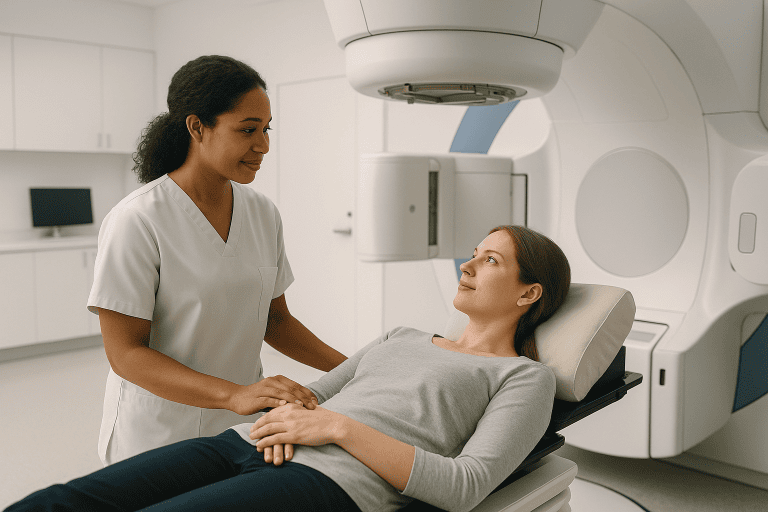
Radiation therapy uses focused high-energy beams to destroy cancer cells. It may be used instead of surgery for patients who cannot have an operation, after surgery to reduce the risk of the cancer returning, together with chemotherapy for more advanced disease, or to relieve symptoms such as pain or bleeding. A highly precise form called stereotactic body radiotherapy delivers strong doses to small tumors over a few sessions and is an option for some early-stage cancers.
Chemotherapy
Chemotherapy uses drugs that kill rapidly dividing cells. It may be given before surgery to shrink a tumor, after surgery to lower the chance of recurrence, or as a main treatment for advanced disease. It is the backbone of treatment for small cell lung cancer, which usually responds to chemotherapy initially. Side effects, such as fatigue, nausea, and lowered blood counts, vary between drugs and between patients, and supportive medicines can help manage them.
Targeted therapy
Targeted therapies are drugs designed to block specific gene changes that drive the growth of some lung cancers. If molecular testing shows that a tumor carries one of these changes, for example, in genes known as EGFR or ALK, a doctor may recommend a targeted drug, often taken as a daily tablet. These treatments do not work for tumors without the relevant gene change, which is why testing is done first.
Immunotherapy
Immunotherapy drugs help the body’s own immune system recognize and attack cancer cells. They are now used in many patients with advanced lung cancer, sometimes alone and sometimes combined with chemotherapy, and in selected earlier-stage cases. Not every patient benefits, and doctors use laboratory tests on the tumor to help predict who is most likely to respond.
Watchful waiting and supportive care
In certain situations, for example, a very small lung nodule of uncertain significance, or a slow-growing tumor in a person with other serious health problems: a doctor may recommend active monitoring with repeated scans rather than immediate treatment. At every stage of the disease, palliative care (specialized care focused on relieving symptoms such as breathlessness and pain, and on quality of life) can be provided alongside active cancer treatment; it is not limited to end-of-life care.
A general overview of how this condition is managed is also available on the Lung Cancer treatment page.
Living with lung cancer and outlook
The outlook for lung cancer varies widely. It depends most of all on the stage at diagnosis, the type of cancer, the results of molecular testing, and the person’s general health. Cancers found at an early stage and removed with surgery can, in many cases, be cured. When the disease is more advanced, treatment usually aims to control the cancer, extend life, and relieve symptoms rather than to cure it. Newer targeted drugs and immunotherapy have improved outcomes for many patients with advanced disease, but responses differ from person to person, and no doctor can guarantee a particular result.
Living with lung cancer often means managing symptoms and treatment side effects, attending regular follow-up scans, and adjusting daily life. Practical steps that many patients find helpful include stopping smoking, staying as physically active as their condition allows, eating well, protecting themselves from infections, and seeking support for anxiety or low mood, which are common and understandable reactions. Pulmonary rehabilitation, a supervised program of breathing exercises and gradual physical training, may help with breathlessness in some patients. Family members and caregivers also benefit from information and support, and patients are encouraged to discuss their goals and priorities openly with their care team so that treatment plans reflect what matters most to them.
Frequently asked questions
What is lung cancer in simple terms?
Lung cancer is a disease in which cells in the lungs become abnormal and multiply out of control, forming a tumor. Over time, these cells can damage lung tissue and spread to other parts of the body. There are two main types, non-small cell and small cell lung cancer, which behave differently and are treated differently.
What are the first signs of lung cancer?
Early lung cancer often causes no symptoms at all. When early signs do occur, they may include a cough that does not go away, shortness of breath, chest discomfort, hoarseness, or repeated chest infections. Because these symptoms overlap with many common illnesses, a persistent or worsening symptom should be evaluated by a doctor rather than assumed to be minor.
Can lung cancer be cured?
In many cases, lung cancer that is found at an early stage and treated, often with surgery, sometimes with precise radiation therapy, can be cured. When the disease is more advanced, a complete cure is less likely, and treatment focuses on controlling the cancer and maintaining quality of life. Outcomes vary greatly between individuals, so it is best to discuss the outlook in your specific situation with your treating doctor.
How serious is lung cancer?
Lung cancer is a serious condition and one of the leading causes of cancer death worldwide, largely because it is often diagnosed at a later stage. However, seriousness differs from patient to patient. Stage, cancer type, tumor genetics, and overall health all influence the outlook, and modern treatments have meaningfully improved results for many patients compared with the past.
Do non-smokers get lung cancer?
Yes. Although smoking is the most important cause, a significant number of people diagnosed with lung cancer have never smoked. Possible contributing factors in non-smokers include secondhand smoke, radon gas, air pollution, occupational exposures, and inherited susceptibility. Lung cancers in never-smokers sometimes carry gene changes that respond well to targeted drugs, which is one reason molecular testing is important.
How is lung cancer diagnosed?
Lung cancer diagnosis typically starts with imaging, such as a chest X-ray followed by a CT scan, when symptoms or a screening test raise concern. The diagnosis is confirmed with a biopsy, in which a small tissue sample is taken, often by bronchoscopy or a CT-guided needle, and examined under a microscope. Further scans and tests are then used to determine the stage and to look for gene changes that guide treatment.
What is recovery like after lung cancer treatment?
Recovery depends on the treatment received. After lung surgery, most patients spend several days in the hospital and then gradually regain strength over weeks, with breathing exercises playing an important role. Chemotherapy, radiation, targeted therapy, and immunotherapy each have their own side effects, most of which can be managed and often improve after treatment ends. Regular follow-up visits and scans continue for years to monitor for any return of the disease.
When to see a doctor
You should make an appointment with a doctor if you have any persistent respiratory symptom that does not improve within a few weeks, especially if you smoke or used to smoke. Seek medical attention promptly if you notice any of the following warning signs:
- Coughing up blood, even a small amount, on one or more occasions
- A cough lasting more than three weeks or a long-standing cough that changes or worsens
- Increasing shortness of breath that is new or getting worse
- Chest pain that persists or worsens with breathing or coughing
- Unexplained weight loss, loss of appetite, or ongoing severe fatigue
- Hoarseness lasting more than a few weeks
- Repeated chest infections that keep returning or fail to clear with treatment
- Swelling of the face or neck, new bone pain, severe headaches, or new neurological symptoms such as weakness or confusion, which need urgent assessment
Sudden severe breathlessness, heavy coughing up of blood, or crushing chest pain are emergencies that require immediate medical care. For anyone at high risk, particularly current or former heavy smokers over about age 50, it is also reasonable to ask a doctor whether lung cancer screening with a low-dose CT scan is appropriate, since finding the disease early gives treatment the best chance of success.
Our Specialists Explain
 Lung Cancer Treatment at Acibadem | Prof. Dr. Erkan Kaba
Pack-Year Calculator
Check your own numbers in seconds, free, instant and doctor-reviewed ranges.
Medically reviewed by the Acıbadem International Medical Board September 2, 2026
See our medical review board →
Update history
- PublishedJune 14, 2026
- Medical review approvedSeptember 2, 2026
- Last content updateSeptember 2, 2026