Robotic Lung Surgery
Robotic lung surgery, also called robotic thoracic surgery, is a minimally invasive technique in which the surgeon operates through several small incisions using robotic arms that hold a camera and fine instruments.…
Quick answer
Robotic lung surgery is a minimally invasive operation in which a surgeon controls robotic arms through small incisions between the ribs to remove part of a lung, most often a lobe affected by early-stage cancer. Compared with open surgery it generally involves less pain and a shorter hospital stay, with recovery over several weeks.
What is robotic lung surgery?
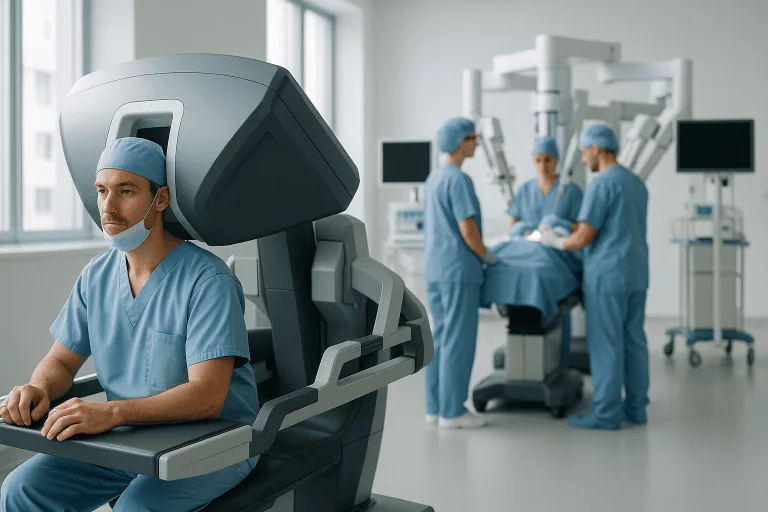
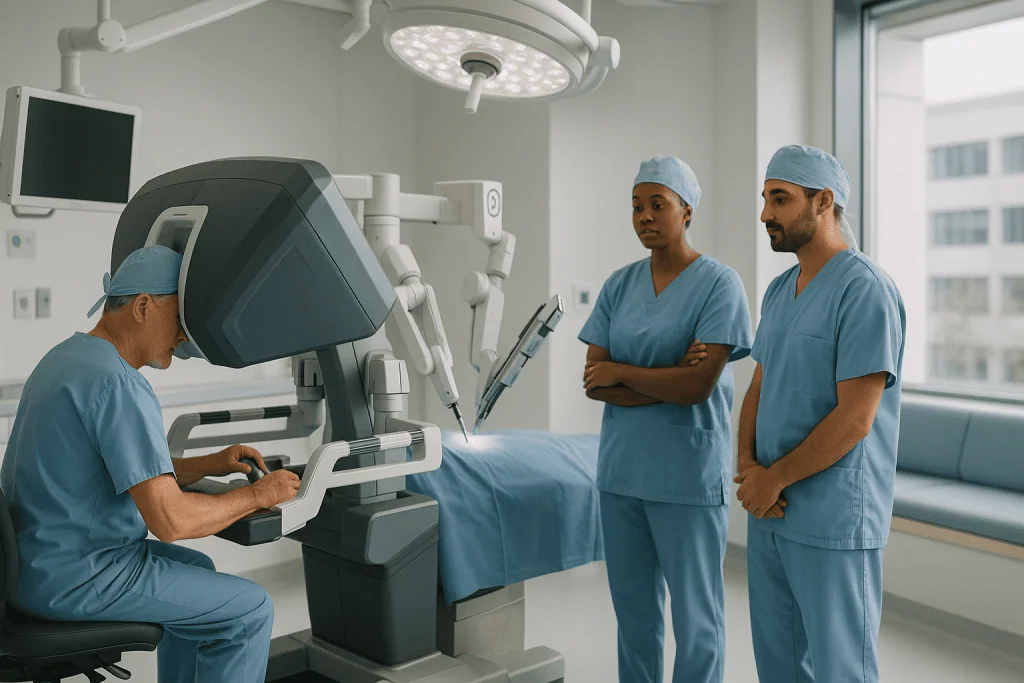
Robotic lung surgery is a form of minimally invasive chest surgery in which the surgeon operates through a few small incisions using robotic arms that hold a camera and fine instruments. The surgeon sits at a console a short distance from the patient and controls every movement of the instruments in real time. The robot does not act on its own; it translates the surgeon’s hand movements into smaller, steadier movements inside the chest. This approach is also called robotic thoracic surgery, because thoracic means relating to the chest.
The most common operation performed this way is a robotic lobectomy, which is the removal of one lobe (section) of the lung. The right lung has three lobes and the left has two. Other procedures include a wedge resection (removing a small, wedge-shaped piece of lung), a segmentectomy (removing a smaller anatomical segment of a lobe) and, less often, a pneumonectomy (removing an entire lung).
Robotic lung cancer surgery is the main use of this technique. It is used to remove early-stage lung cancers and to sample or remove lymph nodes (small glands that filter fluid from the lung) so that the cancer can be staged accurately. The same approach is sometimes used for benign (non-cancerous) lung nodules, certain infections that have damaged part of the lung, some tumors of the thymus gland and other structures in the chest, and for diagnosing lung disease when a tissue sample is needed.
Who is a candidate
Whether robotic lung surgery is appropriate depends on the condition being treated, where it is in the chest and how well the rest of the body, especially the heart and lungs, can tolerate an operation. In general, a person may be considered for this approach when:
- They have an early-stage lung cancer that has not spread outside the lung and nearby lymph nodes.
- They have a lung nodule that needs to be removed for diagnosis or treatment.
- Breathing tests show that enough lung function would remain after part of the lung is removed.
- Their heart and general health are stable enough for general anesthesia and surgery.
Robotic lung surgery may not be suitable in some situations. Tumors that are very large, that have grown into the chest wall, major blood vessels or the airway, or that sit very close to the center of the chest may be better treated with open surgery or with treatments other than surgery. Dense scar tissue from previous chest surgery, radiation or infection can make the robotic approach difficult. People with severely reduced lung function or serious heart disease may not be candidates for any lung removal, in which case radiation therapy or other treatments may be discussed instead. Your doctor may also recommend chemotherapy, immunotherapy or radiation before or after surgery depending on the stage of the disease.
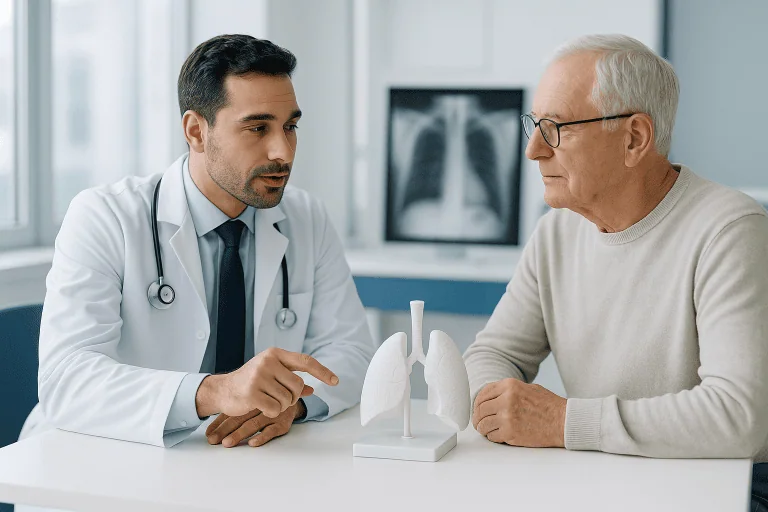
The decision is usually made by a multidisciplinary team, meaning a group of specialists including a thoracic surgeon, a lung physician, an oncologist (cancer doctor) and a radiologist who review the scans and test results together.
How the procedure works
Before the operation. You will usually have a CT scan (a detailed X-ray that produces cross-sectional images) and often a PET scan, which uses a small amount of radioactive sugar to show active tissue and help detect spread. Breathing tests measure how much air your lungs can move and how well they transfer oxygen. Blood tests, an electrocardiogram (a recording of the heart’s electrical activity) and sometimes a heart stress test are done to check your fitness for surgery. In some cases a small tissue sample (biopsy) is taken beforehand, though sometimes the diagnosis is confirmed during the operation itself.
Anesthesia. Robotic lung surgery is performed under general anesthesia, meaning you are fully asleep and feel nothing. A special breathing tube allows the anesthesiologist to ventilate one lung while the lung being operated on is allowed to deflate, which gives the surgeon room to work.
During the operation. You are positioned on your side. The surgeon makes several small incisions, typically between the ribs, each usually a few centimeters or less. Thin tubes called ports are placed through these openings, and the robotic arms are attached to them. A high-definition, three-dimensional camera is inserted through one port so the surgeon can see the inside of the chest magnified on the console screen. The surgeon then controls instruments that can rotate and bend more freely than a human wrist. The blood vessels and airway leading to the diseased part of the lung are carefully separated and sealed with surgical staplers. The section of lung is placed in a protective bag and removed through one of the incisions, which may be slightly enlarged for this purpose. Lymph nodes are removed and sent to the pathology laboratory. In a small number of cases the surgeon may need to convert to a traditional open operation, for example if bleeding is difficult to control or the anatomy is unclear; this is a safety decision, not a failure.
After the operation. One or more chest tubes are left in place to drain fluid and air so the remaining lung can re-expand. The incisions are closed with stitches or glue. You wake up in a recovery area and are then moved to a surgical ward, or occasionally an intensive care unit for closer monitoring. A chest X-ray is done to check the lung. The chest tube is usually removed within a few days once drainage has slowed and no air is leaking.
Preparation for robotic lung surgery
Good preparation can lower the risk of complications and make recovery smoother. The following steps are commonly advised, though your own team will give you specific instructions:
- Stop smoking. This is the single most important step. Even stopping a few weeks before surgery improves how the lungs clear mucus and reduces the risk of pneumonia and wound problems.
- Review your medicines. Blood thinners, some diabetes medicines and certain supplements may need to be paused. Never stop a prescribed medicine without your doctor’s guidance.
- Breathing exercises. You may be shown how to use an incentive spirometer, a simple device that encourages deep breaths, so that you already know how to use it after the operation.
- Stay active. Regular walking before surgery helps maintain fitness. Some centers offer a short structured exercise program called prehabilitation.
- Nutrition. Eating well in the weeks before surgery supports healing. Tell your team about unintended weight loss.
- Fasting. You will be told when to stop eating and drinking, usually from the night before.
- Practical planning. Arrange for someone to take you home and, ideally, to help for the first week or two.
Bring a list of all medicines and allergies, and ask any remaining questions at your pre-operative assessment visit.
Recovery and aftercare after robotic lung surgery
Robotic lung surgery recovery is generally faster than recovery after open surgery, largely because the ribs are not spread apart and the incisions are small. Timelines vary widely, so the following is a general guide rather than a promise.
In hospital. Many patients are helped out of bed and walking within a day of surgery. Early walking, deep breathing and coughing exercises help prevent pneumonia and blood clots. Pain is usually controlled with a combination of medicines, and nerve blocks placed during the operation often help in the first day or two. The hospital stay after a robotic lobectomy is typically a few nights, often shorter than after an open operation, and depends mostly on when the chest tube can be removed.
The first two weeks at home. It is normal to feel tired and to have soreness around the incisions and along the ribs. Some people notice a numb or tingling area on the chest wall, which often improves over weeks to months. Shortness of breath with exertion is common at first and usually improves as the remaining lung adapts. You will be asked to keep walking daily, gradually increasing the distance, and to continue breathing exercises. Keep incisions clean and dry as instructed.
Weeks three to six. Many patients return to light work and most daily activities during this period. Driving is usually permitted once you are off strong pain medicines and can turn and brake comfortably. Heavy lifting and vigorous exercise are typically avoided for around four to six weeks or as advised.
Beyond six weeks. Energy levels often continue to improve for several months. If a lobe was removed, lung capacity is reduced, but most people who had adequate function beforehand adapt well and return to their usual activities. Follow-up visits include a review of the pathology report, which describes the tumor and lymph nodes and guides any further treatment, and regular CT scans over the following years to monitor for recurrence.
Risks and side effects
All lung surgery carries risk, and robotic surgery is no exception. Serious complications are uncommon in well-selected patients, but they can occur. Your surgeon will discuss your individual risk based on your age, lung function and other health conditions.
- Prolonged air leak. Air escaping from the cut surface of the lung is the most frequent issue. It usually seals on its own but can keep the chest tube in place longer.
- Pneumonia and other lung infections. The risk is higher in smokers and people with chronic lung disease.
- Bleeding. Rarely, bleeding may require a return to the operating room or conversion to open surgery.
- Irregular heart rhythm. Atrial fibrillation, a fast and irregular heartbeat, can occur after chest surgery and is usually temporary and treatable.
- Blood clots in the legs or lungs.
- Pain and numbness around the incisions, which occasionally persists for months.
- Wound infection.
- Conversion to open surgery if the robotic approach cannot be safely completed.
- Reduced lung capacity, which is expected to some degree after removing lung tissue.
- Anesthesia-related risks, as with any operation under general anesthesia.
- Death, which is rare with modern minimally invasive lung surgery but cannot be excluded.
Robotic systems also have technical risks, such as equipment malfunction, though these are uncommon and teams are trained to manage them.
Results and outlook
Studies comparing robotic lung surgery with open surgery and with video-assisted thoracoscopic surgery (VATS, another keyhole technique using a camera and hand-held instruments) generally show that the robotic approach achieves similar cancer outcomes when performed by experienced surgeons. Rates of complete tumor removal and the number of lymph nodes examined are broadly comparable, and in some reports the robotic approach is associated with thorough lymph node assessment. Compared with open surgery, minimally invasive approaches are generally linked with less pain, shorter hospital stays and quicker return to normal activity.
For lung cancer, the long-term outlook depends far more on the stage of the disease, the type of cancer and the person’s overall health than on the surgical tool used. The pathology results after surgery determine whether additional treatment is recommended. Ongoing research continues to refine which patients benefit most from each approach. It is reasonable to ask your surgeon about their experience with robotic thoracic surgery, since outcomes with any technique are influenced by training and volume.
Cost considerations
The cost of robotic lung surgery varies considerably between countries, hospitals and individual cases, so no single figure applies. Factors that commonly influence the overall cost include:
- Robotic equipment and disposable instruments, which are generally more expensive than those used in conventional surgery.
- The extent of the operation, for example a wedge resection versus a lobectomy with lymph node removal.
- Length of hospital stay, including any time in intensive care.
- Pre-operative tests such as CT and PET scans, breathing tests and heart assessments.
- Pathology and laboratory work, including detailed analysis of the tumor and lymph nodes.
- Management of complications, if any occur.
- Follow-up care, including clinic visits and surveillance scans over several years.
Insurance coverage for robotic procedures varies. It is sensible to ask the hospital’s administrative team for an itemized estimate and to check with your insurer in advance. At Acibadem, robotic procedures are carried out within the Robotic Surgery unit in coordination with the thoracic surgery department.
Frequently asked questions
Is robotic lung surgery better than open surgery?
Neither approach is better for everyone. Robotic lung surgery uses smaller incisions and does not require spreading the ribs, so many patients have less pain and a shorter hospital stay. Open surgery remains the safer choice for some large or complex tumors. The right option depends on your scans, your lung function and your surgeon’s judgment.
How long does a robotic lobectomy take?
A robotic lobectomy often takes a few hours, though the exact time depends on the location of the tumor, the amount of scar tissue and how many lymph nodes need to be removed. Time in the operating room also includes anesthesia and positioning, so the total may be longer than the operation itself.
What is robotic lung surgery recovery like at home?
Many patients describe tiredness, chest wall soreness and mild breathlessness on exertion during the first couple of weeks, with steady improvement afterward. Daily walking and breathing exercises are usually encouraged. Most people resume light activities within a few weeks and more strenuous activity after roughly four to six weeks, following their team’s advice.
Is robotic lung cancer surgery a cure?
Surgery is the main treatment for many early-stage lung cancers, and removing the tumor completely offers the best chance of long-term control. However, no operation can guarantee that cancer will not return. The pathology report and stage guide whether extra treatment is advised, and regular follow-up scans are used to monitor for recurrence.
Does robotic thoracic surgery mean a robot performs the operation?
No. The robotic system is a tool controlled entirely by the surgeon, who sits at a console in the operating room. Every movement of the instruments is made by the surgeon; the system simply makes those movements more precise and steady and provides a magnified, three-dimensional view.
Can I live normally with part of a lung removed?
Many people do. The remaining lung tissue expands to fill some of the space, and the body adapts over months. People with good lung function before surgery often return to their previous activities. Those with existing lung disease may notice more breathlessness, which is one reason breathing tests are done before deciding on surgery.
When to see a doctor
You should be assessed by a specialist if a chest imaging test has shown a lung nodule or mass, if you have a persistent cough lasting more than a few weeks, coughing up blood, unexplained weight loss, chest pain, or shortness of breath that is new or getting worse, especially if you have a history of smoking. These symptoms do not necessarily mean cancer, but they need proper evaluation.
After robotic lung surgery, seek urgent medical attention if you develop any of the following:
- Sudden or severe shortness of breath, or breathing that is getting rapidly worse.
- Chest pain that is severe, new or different from your usual incision soreness.
- Coughing up more than a small streak of blood.
- Fever, chills, or a wound that becomes red, swollen, hot or leaks pus or cloudy fluid.
- A fast, pounding or irregular heartbeat, dizziness or fainting.
- Pain, swelling or redness in one leg, which can signal a blood clot.
- Confusion or extreme drowsiness.
For non-urgent concerns, such as gradually increasing pain, difficulty using the incentive spirometer, or questions about medicines and activity, contact your surgical team at the number given on your discharge paperwork. Keeping all scheduled follow-up visits allows your team to review your pathology results, monitor healing and plan any further care.
Preparation
- Stop smoking as early as possible before surgery and review all medicines, especially blood thinners, with your doctor. Complete the required tests, including CT scan, breathing tests and heart assessment. Practice deep-breathing exercises and stay physically active with regular walking. Follow fasting instructions and arrange help at home for the first week or two.
Aftercare
- Walk several times a day and continue breathing exercises to help the lungs re-expand and prevent pneumonia. Take pain medicines as prescribed and keep incisions clean and dry. Avoid heavy lifting and strenuous exercise for around four to six weeks or as advised. Attend all follow-up visits to review pathology results and plan surveillance scans.
Medically reviewed by the Acıbadem International Medical Board September 9, 2026
See our medical review board →
Update history
- PublishedSeptember 8, 2026
- Medical review approvedSeptember 9, 2026
- Last content updateSeptember 8, 2026
References2
From the Acibadem Blog

Who Is a Candidate for Robotic Lung Surgery? Tumor Size, Lung Function and Heart Health
Robotic lung surgery candidates are usually people with an early-stage lung tumor that has not spread beyond nearby lymph nodes, enough breathing reserve on…