

Fine Motor Therapy: How It Works, Results and What to Expect
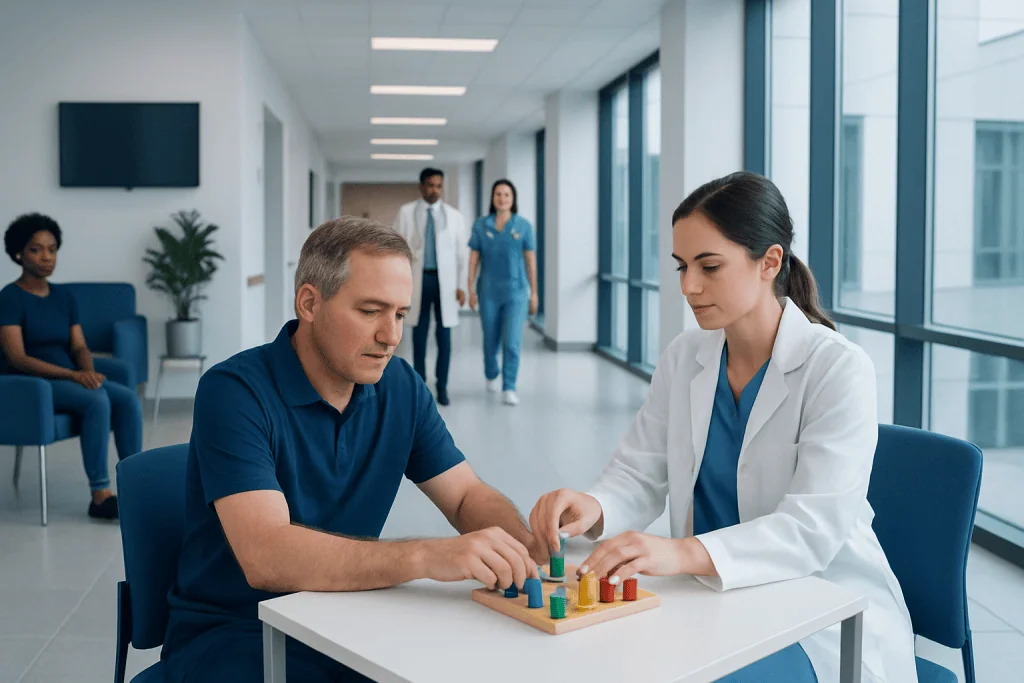
Fine motor therapy is individualized and may support children, adults and older adults. It commonly targets grasp, hand strength, dexterity, bilateral coordination and visual-motor integration.
Key Takeaways
- Fine motor therapy is individualized and may support children, adults and older adults.
- It commonly targets grasp, hand strength, dexterity, bilateral coordination and visual-motor integration.
- Improvement is usually gradual and depends on the underlying cause, goals, practice and overall health.
- Therapy may be helpful after injury, stroke, neurological illness, developmental differences or surgery affecting hand use.
- New or sudden loss of hand coordination needs prompt medical assessment, especially when accompanied by weakness, numbness or speech changes.
Fine motor therapy is a form of occupational or rehabilitation therapy that helps people improve precise hand and finger movements used for everyday tasks such as writing, dressing, eating and using devices. A therapist identifies the skills affecting function and creates structured, practical exercises that build coordination, strength, accuracy and confidence over time.
Fine Motor Therapy Overview
Fine motor therapy is a rehabilitation approach designed to improve controlled movements of the hands, fingers and wrists. These movements are needed for daily activities including fastening buttons, handling coins, preparing food, typing, drawing, using cutlery and managing personal care. It is most often provided by an occupational therapist, sometimes as part of a broader rehabilitation program involving physiotherapists, speech and language therapists, neurologists, pediatricians or hand specialists.
The aim is not simply to make the hand stronger. Fine motor therapy also addresses timing, touch sensation, hand-eye coordination, planning movements, posture and the ability to use both hands together. For example, one hand may stabilize a page while the other writes, or one hand may hold a container while the other opens it.
Fine motor results vary. Some people regain lost skills, while others learn more efficient or safer ways to complete important tasks. Progress is usually measured by meaningful functional goals, such as writing more comfortably, returning to a hobby, dressing with less assistance or improving independence at school, work or home.
Who May Benefit From Fine Motor Therapy?
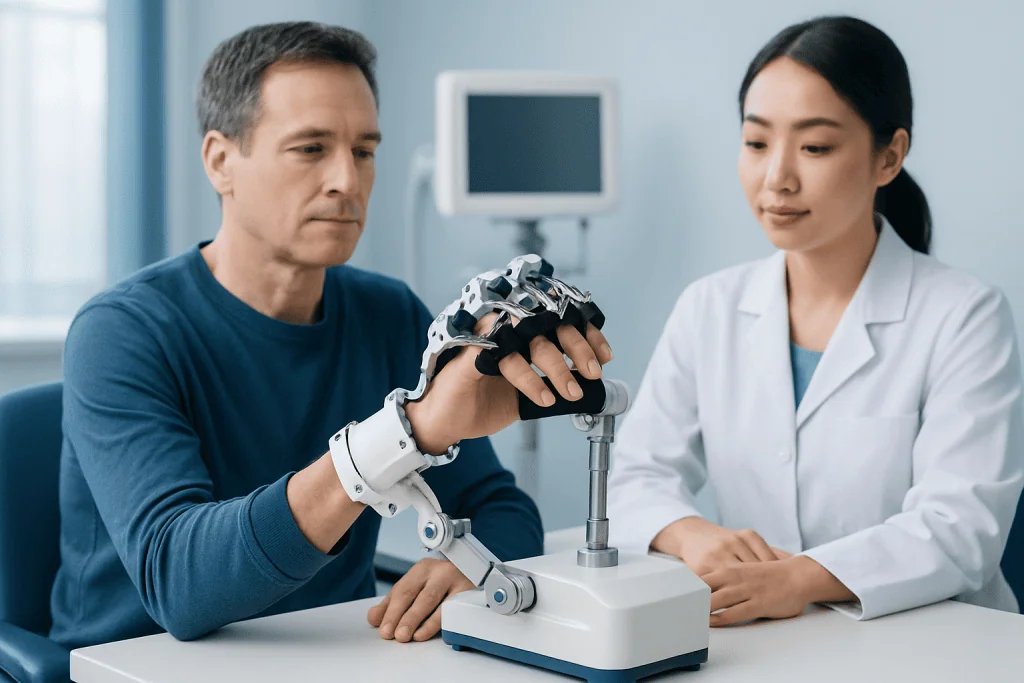
Fine motor therapy may be considered for children whose hand skills are developing more slowly than expected or who have difficulty with age-appropriate tasks. This may include trouble using scissors, holding a pencil, manipulating small objects, completing fasteners or coordinating both hands. An assessment can help distinguish normal variation from a difficulty that may benefit from targeted support.
Adults may need fine motor rehab after a hand or upper-limb injury, fracture, tendon repair, arthritis, peripheral nerve injury, stroke, traumatic brain injury or a neurological condition. It may also support people whose hand function is affected by tremor, stiffness, pain, sensory changes or reduced coordination. In some situations, management of the underlying condition is equally important, such as rehabilitation following stroke.
A referral is not always required, depending on local healthcare arrangements. However, a clinician should first assess unexplained, progressive or sudden changes in coordination. Fine motor treatment is most useful when it is connected to a clear functional concern and a realistic plan for participation at home, school, work or in the community.
How Fine Motor Therapy Works: Assessment and Planning

Therapy begins with a detailed assessment. The therapist asks about the person’s daily activities, symptoms, medical history, priorities and environment. They may observe how the person writes, reaches, picks up objects, uses tools, dresses, plays or performs work-related tasks. In children, information from parents, teachers and caregivers can help build a complete picture.
The assessment may examine grip patterns, range of motion, strength, joint stability, sensation, coordination, visual-motor skills, attention and endurance. A therapist also considers whether pain, fatigue, medication effects, vision problems, anxiety or difficulty understanding instructions may be affecting performance. Standardized tests may be used when appropriate, but day-to-day function remains central.
Goals are agreed together and are specific to the person. Rather than a general goal of “better hand skills,” a plan may focus on independently managing a zip, improving keyboard use, holding a cup securely or completing handwriting tasks with less effort. Fine motor therapy concentration can also be important: activities are paced and adjusted so attention is supported without becoming overwhelming.
- Skill practice targets a relevant hand movement or task.
- Graded activities become more complex as control improves.
- Adaptations may reduce strain and make daily tasks more manageable.
- Home practice reinforces therapy in short, achievable sessions.
What Happens During Fine Motor Therapy Sessions?
There is no single procedure for fine motor therapy. Sessions are tailored to age, diagnosis, current ability and personal goals. A therapist may use purposeful activities such as sorting small objects, manipulating putty, turning keys, opening containers, using utensils, drawing, building, folding, fastening clothing or practicing work-specific tasks. For children, therapy is commonly play-based so that activities feel engaging while targeting specific skills.
Therapists may also use exercises for wrist stability, finger isolation, pinch control, hand strength and coordination. When sensation is reduced, treatment can include sensory re-education and safety strategies. When a person has pain or stiffness, the plan may include protective movement patterns, joint-friendly techniques, splinting or referral for hand-focused rehabilitation. Some people may benefit from coordinated physical therapy and rehabilitation to address posture, balance and upper-limb movement alongside hand function.
A typical appointment includes a short review of changes since the previous session, guided practice, feedback and an updated home plan. The therapist may adjust the task by changing object size, resistance, speed, visual cues or the amount of assistance needed. The focus is on enough challenge to promote learning while maintaining safety and motivation.
Frequency and duration depend on the underlying concern and healthcare plan. Some people need a short course after an injury, while others benefit from longer-term support for neurological or developmental needs. Tele-rehabilitation or caregiver-led home activities may be appropriate in selected cases, but hands-on assessment is often valuable when symptoms are new or complex.
How Do You Fix Poor Fine Motor Skills?
Poor fine motor skills are improved by identifying the reason for the difficulty and then practicing the specific movements and tasks that matter most. A therapist may work on hand strength, finger control, coordination, visual-motor integration, sensation or the ability to plan a movement. Repetition is important, but practice should be purposeful, appropriately challenging and matched to the person’s ability.
At home, useful activities may include drawing, puzzles, crafts, using tongs, folding laundry, food preparation, keyboard practice or hobbies requiring controlled hand movements. For children, play activities such as blocks, modeling materials and age-appropriate fastening games can encourage skill development. The best activity is one that is safe, enjoyable and relevant rather than simply difficult.
Adaptations can also be part of successful fine motor treatment. Larger grips, non-slip surfaces, button hooks, adapted cutlery, voice-to-text tools or changes to workstation setup may improve independence while skills are developing. A therapist can recommend options that fit the person’s needs and help prevent unnecessary frustration or overuse.
If poor coordination is due to a medical condition, treating that condition and participating in rehabilitation may both be needed. Sudden change is not something to self-treat with exercises alone; it requires timely clinical evaluation.
What Are 5 Fine Motor Skills?
Fine motor skills are precise movements that use the small muscles of the hands and fingers in coordination with the eyes and the rest of the body. Five commonly recognized fine motor skills are grasping, pinching, releasing objects, manipulating objects within the hand and hand-eye coordination. Each contributes to practical everyday activities.
Grasping includes holding a pencil, cup or tool. Pinching uses the thumb with one or more fingers to pick up small items, such as a coin or bead. Releasing involves placing an object deliberately rather than dropping it. In-hand manipulation means moving an item within one hand, such as rotating a key or adjusting a pencil position.
Hand-eye coordination connects what a person sees with how they guide their hands, such as when threading, pouring, catching or using a touchscreen. These skills do not develop or recover in isolation. Fine motor therapy often combines them within meaningful activities, because daily tasks generally require several skills at once.
What Are the Big 6 Fine Motor Skills?
The phrase “big 6 fine motor skills” is commonly used in educational and therapy settings, although definitions can vary. It often refers to hand strength, pincer grasp, bilateral coordination, hand-eye coordination, dexterity and visual-motor integration. These foundational abilities support classroom learning, self-care, play, work tasks and hobbies.
Hand strength helps a person hold and control objects without tiring quickly. A pincer grasp supports precise picking up and placement of small items. Bilateral coordination allows both hands to work together, while dexterity refers to controlled, accurate finger movements. Hand-eye coordination and visual-motor integration help the brain use visual information to guide movement, particularly for writing, drawing, cutting and assembling objects.
Therapy may target one or several of these areas, depending on what limits daily function. For instance, a person may have good hand strength but reduced dexterity after a nerve injury, or strong finger control but difficulty coordinating both hands after a neurological event. Assessment helps avoid assuming that one exercise fits every difficulty.
At What Age Do Fine Motor Skills Decline?
Fine motor skills do not decline at one fixed age. In healthy aging, changes in speed, strength, joint flexibility, vision and reaction time may gradually make some hand tasks less efficient, often becoming more noticeable later in adulthood. However, many older adults maintain good hand function, particularly when they remain active and manage health conditions that affect mobility or sensation.
Changes can occur earlier when there is arthritis, diabetes-related nerve damage, injury, repetitive strain, medication effects, vision loss or a neurological disorder. Tremor, stiffness, weakness, numbness and reduced sensation can all affect the ability to manipulate objects accurately. The pattern and speed of change matter more than age alone.
New, rapid or worsening hand clumsiness should not be assumed to be normal aging. A clinician can assess for treatable causes and discuss whether occupational therapy, hand rehabilitation or other care is appropriate. Maintaining regular physical activity, protecting joints, addressing vision concerns and practicing meaningful hand activities may help support function over time.
Benefits, Recovery Timeline and When to Seek Medical Care
Potential benefits of fine motor therapy include improved independence, more efficient movement, better confidence in daily tasks and reduced reliance on others. It may also help people identify safer ways to complete activities when full recovery is not possible. Fine motor results can be seen as small functional gains at first, such as less effort during writing or improved ability to manage a fastener.
There is no universal recovery timeline. After a minor injury, progress may occur over weeks as pain and stiffness improve. After surgery, stroke or a significant neurological injury, recovery may take months and can continue with ongoing practice. Developmental goals in children may be reviewed over longer periods as new school and self-care demands emerge. Therapists reassess progress and update goals rather than promising a fixed outcome.
Fine motor therapy itself is generally low risk when activities are tailored properly. Possible concerns include temporary muscle fatigue, frustration, discomfort from overuse or aggravation of pain if exercises are too demanding. The therapist should be told about worsening pain, swelling, numbness, dizziness, unusual fatigue or any activity that feels unsafe, so the plan can be adapted.
When to seek medical care: prompt medical attention is important for sudden weakness, facial drooping, speech difficulty, severe headache, new loss of balance, or sudden inability to use a hand, as these can be signs of a medical emergency. Arrange a medical review for persistent or progressive clumsiness, tremor, numbness, pain, dropping objects, difficulty with self-care or delayed development of hand skills. Acibadem International’s multidisciplinary specialists and JCI-accredited hospitals can assess and treat rehabilitation needs for international patients.
Frequently asked questions
What is fine motor therapy?
Fine motor therapy is an individualized rehabilitation approach that improves precise hand and finger movements needed for everyday activities. It is commonly provided by an occupational therapist and may include guided task practice, strengthening, coordination training and practical adaptations.
How long does fine motor therapy take to work?
The timeline depends on the cause of the difficulty, the person’s starting function, the goals and the consistency of practice. Some people notice small functional changes within weeks, while recovery after neurological injury, surgery or significant trauma may take months or longer.
Can adults benefit from fine motor therapy?
Yes. Adults may benefit after hand injuries, surgery, stroke, arthritis, nerve problems or neurological conditions that affect dexterity and coordination. Therapy can also help adults find adaptive ways to manage work, self-care and household activities.
Is fine motor therapy only for children?
No. It is used across the lifespan. Children may receive support for developmental hand skills, while adults and older adults may receive therapy to restore or maintain hand function after illness, injury or age-related changes.
What should parents do if a child has difficulty with fine motor skills?
Parents can discuss concerns with the child’s pediatrician or another qualified healthcare professional, particularly if difficulties affect school, play or self-care. An occupational therapy assessment can identify strengths, challenges and useful activities for home and school.
Can fine motor therapy improve handwriting?
It may help handwriting when reduced grip control, hand strength, visual-motor integration, posture or endurance contributes to the difficulty. The therapist may combine handwriting practice with strategies that address the specific cause, such as paper positioning, pencil grip, task pacing or adaptive tools.
References
- American Occupational Therapy Association
- Centers for Disease Control and Prevention
- National Institute of Neurological Disorders and Stroke
- World Health Organization
This article is for general information only and is not a substitute for professional medical advice. Please consult a qualified doctor about your individual situation.
Joint and spine care in Turkey — expert assessment & treatment
JCI-accredited · board-certified surgeons · reply within 24h
Add us as a Preferred Source to see more of our trusted health content across Google Search, AI Overviews and Discover.

More from the Health Library



Related Specialists

Assoc. Prof. Dr. Ata Can
Orthopedic Surgery & Traumatology
Prof. Dr. İbrahim Kaya
Orthopedic Surgery & Traumatology
Dyt. Zübeyde Demet Cerit
Nutrition & Diet
Prof. Dr. Sevgi Şahin
Internal Medicine