Hip Replacement Surgery: Pain Relief, Mobility, and Rehabilitation

Hip replacement surgery replaces damaged parts of the hip joint with artificial components to reduce pain and improve movement. It is most often considered when hip arthritis, fracture, or joint damage limits daily life and non-surgical treatments no longer help enough.
Key Takeaways
- Hip replacement surgery replaces damaged parts of the hip joint with artificial components to reduce pain and improve movement.
- It is most often considered when hip arthritis, fracture, or joint damage limits daily life and non-surgical treatments no longer help enough.
- Rehabilitation begins early and focuses on safe walking, strengthening, balance, and gradual return to normal activities.
- Most people need follow-up care, infection prevention measures, and guidance on activity choices to protect the new joint.
- A qualified orthopedic specialist can explain the best surgical approach, implant type, risks, and recovery expectations for each patient.
Hip replacement surgery is a well-established procedure that can relieve severe hip pain and help people return to walking, daily activities, and a more independent life. Recovery depends on careful preparation, modern surgical care, and a structured rehabilitation plan.
Overview
Hip replacement surgery, also called hip arthroplasty, is an operation that removes damaged bone and cartilage from the hip joint and replaces them with artificial parts called implants. The goal is to reduce pain, improve joint movement, and help the person walk and perform everyday activities more comfortably.
The hip is a ball-and-socket joint. The ball is the top of the thigh bone, and the socket is part of the pelvis. When the smooth cartilage covering these surfaces wears away or the joint is damaged by injury or disease, movement can become painful and stiff. A hip replacement creates new smooth surfaces so the joint can move with less friction.
Hip replacement may be total or partial. In total hip replacement, both the ball and the socket are replaced. In partial hip replacement, usually only the ball of the thigh bone is replaced, often after certain hip fractures. The choice depends on the diagnosis, bone quality, age, activity level, and the surgeon’s assessment.
Who May Benefit from Hip Replacement Surgery
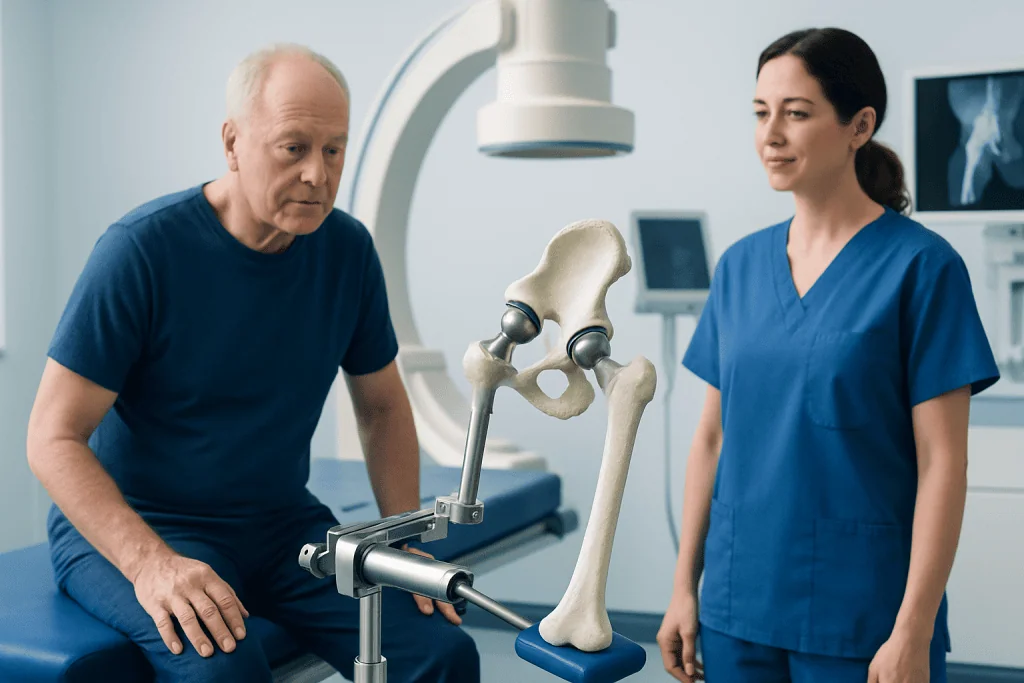
Hip replacement surgery is usually considered when hip pain and stiffness affect quality of life and non-surgical treatments do not provide enough relief. Common reasons include osteoarthritis, rheumatoid arthritis, avascular necrosis, hip fractures, congenital hip problems, and previous injuries that have damaged the joint.
People who may benefit often have pain while walking, climbing stairs, getting in and out of a chair, or turning in bed. Some people develop a limp, reduced walking distance, or difficulty putting on socks and shoes. Pain may be felt in the groin, thigh, buttock, or knee, and it may continue even at rest or during sleep.
Before recommending surgery, doctors typically review the person’s symptoms, imaging results, general health, and response to treatments such as exercise, weight management, walking aids, anti-inflammatory medicines, injections, or physiotherapy. Hip replacement is not based on X-ray findings alone; the decision is usually made when symptoms and joint damage together justify an operation.
Preparing for Surgery

Preparation helps make surgery and recovery safer and smoother. The medical team may request blood tests, heart and lung assessment, medication review, and imaging studies. Patients should tell their doctor about all prescription medicines, over-the-counter products, supplements, allergies, previous blood clots, infections, dental problems, and any reactions to anesthesia.
Some medicines may need to be adjusted before surgery, especially blood thinners, diabetes medicines, and immune-suppressing treatments. Smoking cessation, good nutrition, blood sugar control, and treating skin, urinary, or dental infections before surgery can support healing and reduce complications. Patients should not stop important medicines unless their doctor instructs them to do so.
Home planning is also important. Many people arrange a safe sleeping area, remove loose rugs, prepare frequently used items at waist height, and ensure help is available for shopping, meals, and transport. Useful equipment may include a walker or crutches, a raised toilet seat, a shower chair, and a long-handled shoehorn, depending on the rehabilitation team’s advice.
How the Procedure Is Performed
Hip replacement surgery is performed in an operating room under regional anesthesia, general anesthesia, or a combination, depending on the patient and anesthesia plan. The surgeon makes an incision to reach the hip joint, removes the damaged joint surfaces, and places the artificial components. These components may be fixed with bone cement, press-fit to allow bone to grow into the implant, or used in a hybrid combination.
Implants are commonly made from metal alloys, ceramic materials, and medical-grade polyethylene. The surgeon selects components based on anatomy, bone quality, diagnosis, and expected activity needs. There are different surgical approaches, including posterior, lateral, and anterior approaches. Each has potential advantages and precautions, and outcomes depend on patient factors, surgical technique, and rehabilitation.
The operation usually includes careful steps to restore leg length, hip stability, and range of motion as much as possible. After surgery, the patient is taken to a recovery area where pain control, blood pressure, breathing, and circulation are monitored. Early movement is encouraged when medically appropriate because it helps circulation, lung function, and confidence with walking.
Recovery and Rehabilitation
Rehabilitation begins early, often on the day of surgery or the next day, depending on the patient’s condition and the hospital protocol. A physiotherapist teaches safe ways to stand, walk with support, climb steps, and perform gentle exercises. The first goals are pain control, safe mobility, prevention of blood clots, and protection of the new hip.
Exercises usually focus on ankle movement, gentle hip and knee motion, muscle activation, and gradual strengthening. As recovery progresses, rehabilitation may include walking practice, balance training, hip and thigh strengthening, posture correction, and guidance on returning to daily tasks. The plan is individualized because age, fitness level, diagnosis, surgical approach, and other medical conditions affect recovery speed.
Patients may receive instructions about hip precautions, especially in the early weeks. These can include avoiding certain positions that place stress on the new joint, such as deep bending or twisting, depending on the surgical approach. Following these instructions helps reduce the risk of dislocation while tissues heal.
Many people notice meaningful pain relief as healing progresses, but normal recovery includes swelling, bruising, fatigue, and changing levels of discomfort. Pain medicine, icing if recommended, elevation, and regular walking in short sessions can help. Patients should follow their surgeon’s plan for wound care, showering, driving, work, travel, and return to exercise.
Benefits, Risks, and Long-Term Care
The main expected benefits of hip replacement surgery are reduced joint pain, better walking ability, improved sleep, and greater independence in daily life. Many patients return to low-impact activities such as walking, cycling, swimming, and recreational exercise after they have healed and received medical clearance. The exact outcome varies from person to person.
As with any major surgery, hip replacement has potential risks. These may include infection, bleeding, blood clots, implant loosening, dislocation, fracture, nerve or blood vessel injury, leg length difference, stiffness, or the need for revision surgery in the future. The healthcare team uses preventive measures such as sterile technique, antibiotics when appropriate, blood clot prevention, careful implant positioning, and early mobilization.
Long-term care includes maintaining a healthy weight, staying active with joint-friendly exercise, and attending follow-up visits. Patients should tell dentists and doctors that they have a hip replacement, as certain medical or dental situations may require special consideration. Sudden new hip pain, fever, wound drainage, or a fall should be assessed promptly.
When to See a Doctor and How to Choose Care
A person with persistent hip pain should seek medical advice if pain limits walking, sleep, work, or daily activities, or if stiffness makes basic movements difficult. Urgent medical assessment is needed after a fall, sudden inability to bear weight, severe swelling, fever, wound concerns after surgery, chest pain, shortness of breath, or calf swelling and tenderness.
Choosing care involves discussing the diagnosis, treatment alternatives, likely benefits, risks, implant options, surgical approach, anesthesia, expected hospital stay, and rehabilitation plan. Patients may wish to ask how pain will be managed, what support will be needed at home, when they can travel, and what activities are safe after recovery.
International patients may also need coordinated planning for medical records, imaging, travel timing, rehabilitation, and follow-up. Acibadem International’s multidisciplinary specialists and JCI-accredited hospitals diagnose and treat hip conditions, including hip replacement surgery, for international patients while coordinating care across orthopedics, anesthesia, physiotherapy, and rehabilitation.
Frequently asked questions
How long does it take to recover from hip replacement surgery?
Recovery is gradual and varies by age, general health, surgical approach, and rehabilitation progress. Many people walk with support soon after surgery and improve over several weeks, while strength and confidence may continue to develop for months. The surgeon and physiotherapist provide the safest timeline for each person.
Will hip replacement surgery completely remove hip pain?
Hip replacement surgery is designed to relieve pain caused by a damaged hip joint, and many patients experience major improvement. Some discomfort from healing, muscles, or other conditions may continue for a period after surgery. Persistent or worsening pain should be reviewed by the medical team.
What activities are safe after a hip replacement?
Low-impact activities such as walking, swimming, cycling, and supervised strengthening exercises are commonly encouraged after healing. High-impact sports, jumping, and activities with a high risk of falling may place more stress on the implant. Patients should ask their surgeon which activities are appropriate for their implant, bone health, and fitness level.
How long do hip replacement implants last?
Modern hip implants are designed for long-term use, but no implant lasts forever. Longevity depends on implant type, surgical factors, body weight, activity level, bone quality, and overall health. Regular follow-up helps monitor the joint and detect problems early.
Is rehabilitation necessary after hip replacement?
Yes, rehabilitation is an important part of safe recovery. It helps restore walking ability, strength, balance, and confidence while teaching movements that protect the new hip. Skipping rehabilitation or doing too much too soon can slow recovery or increase risk.
What symptoms after surgery should be reported quickly?
Patients should contact their doctor if they develop fever, increasing redness, drainage from the wound, severe or worsening pain, sudden leg swelling, calf tenderness, chest pain, shortness of breath, or inability to move the hip normally. These symptoms do not always mean a serious problem, but they should be assessed promptly.
References
- American Academy of Orthopaedic Surgeons
- National Institute for Health and Care Excellence
- Mayo Clinic
- American Association of Hip and Knee Surgeons
- World Health Organization
This article is for general information only and is not a substitute for professional medical advice. Please consult a qualified doctor about your individual situation.
Hip Replacement in Turkey — costs, top hospitals & a free quote
JCI-accredited · board-certified surgeons · reply within 24h