Chemotherapy Port Placement: Easier Access for Cancer Treatment

A chemotherapy port is a small device placed under the skin, usually in the upper chest, and connected to a large central vein. Ports are often recommended when cancer treatment requires repeated intravenous infusions, frequent blood tests, or medicines that can irritate smaller veins.
Key Takeaways
- A chemotherapy port is a small device placed under the skin, usually in the upper chest, and connected to a large central vein.
- Ports are often recommended when cancer treatment requires repeated intravenous infusions, frequent blood tests, or medicines that can irritate smaller veins.
- The placement procedure is usually performed with local anesthesia and imaging guidance, often on an outpatient basis.
- Proper care, flushing, and prompt attention to symptoms such as fever, swelling, redness, or pain help reduce complications.
- Most people can continue many normal activities after healing, but they should follow their oncology team’s instructions about lifting, bathing, and port access.
Chemotherapy port placement is a minor procedure that creates reliable, long-term access to a large vein for cancer treatment. A port can make repeated infusions, blood draws, and some supportive treatments more comfortable and efficient.
Overview
Chemotherapy port placement is a procedure used to provide dependable access to the bloodstream during cancer care. A chemotherapy port, also called a chemo port, implanted port, or port-a-cath, is a small medical device placed completely under the skin. It is connected to a thin flexible tube called a catheter, which sits in a large vein near the heart.
The port is most often placed in the upper chest, although other locations may be used depending on the person’s anatomy and treatment plan. When treatment is needed, a specially trained nurse or doctor accesses the port with a special needle through the skin. This allows medicines, fluids, blood products, and sometimes nutrition to be delivered without starting a new intravenous line each time.
For many patients, a port can reduce repeated needle sticks in the arms and help protect smaller veins from irritation. It may be used for chemotherapy, immunotherapy, targeted therapy, antibiotics, contrast for certain scans when appropriate, and blood sampling. The decision to place a port is individualized and made by the oncology team together with the patient.
Why a Chemotherapy Port May Be Recommended
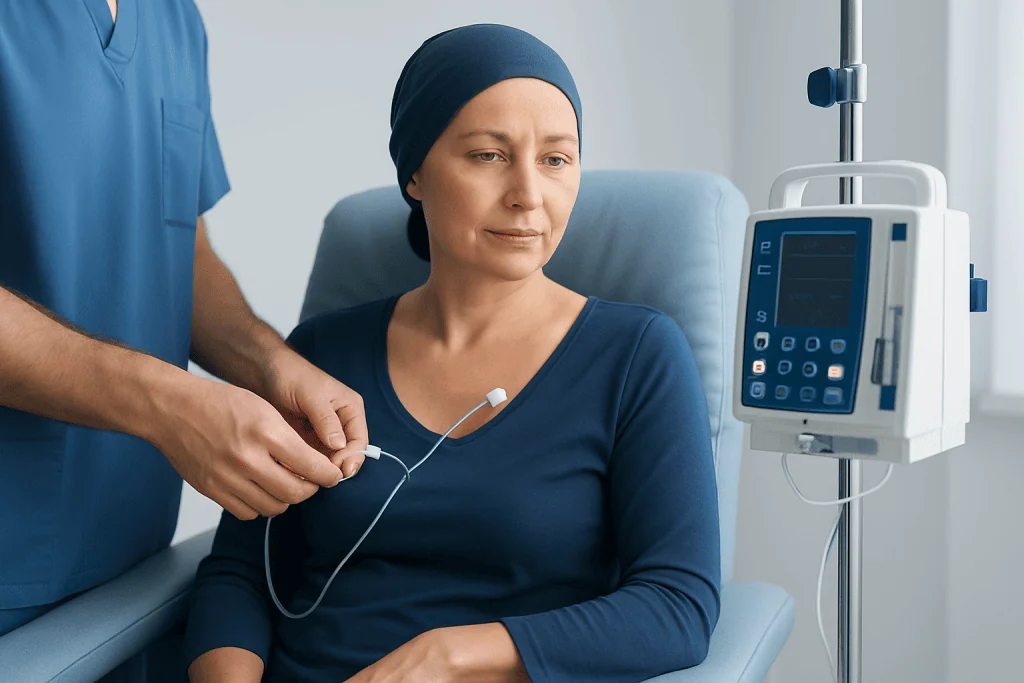
A port may be recommended when treatment is expected to continue over weeks or months, or when medicines need to be given through a large central vein. Some chemotherapy drugs can be irritating to small peripheral veins. A central venous access device can help deliver these medicines more safely and comfortably.
Ports can also be useful for people whose veins are difficult to access, or for those who need frequent blood tests or intravenous treatments. Because the device sits under the skin when not in use, it can be more convenient for daily life than an external catheter. Many patients appreciate that there are no visible tubes outside the body once the incision has healed.
Common reasons for considering a port include:
- Repeated chemotherapy or other intravenous cancer treatments
- Frequent blood draws during treatment monitoring
- Need for medicines that should be infused through a central vein
- Poor or fragile veins in the arms or hands
- Longer treatment plans where reliable access is important
A port is not necessary for every cancer treatment plan. Some patients can safely receive therapy through a regular IV line or another type of central catheter. The oncology and interventional team will consider the diagnosis, treatment schedule, vein health, infection risk, and patient preference.
What Happens During Port Placement

Chemotherapy port placement is typically performed by an interventional radiologist, surgeon, or another trained specialist. Before the procedure, the care team reviews the patient’s medical history, medicines, allergies, blood test results, and imaging needs. Patients may be asked to avoid eating or drinking for a certain period if sedation is planned, and instructions about blood thinners or diabetes medicines should be followed carefully.
During the procedure, the skin is cleaned with an antiseptic solution and sterile drapes are placed. Local anesthesia numbs the area, and mild sedation may be used to help the patient relax. Using ultrasound and X-ray guidance, the doctor places the catheter into a large vein and positions the port under the skin, usually below the collarbone. Small incisions are then closed with sutures, skin glue, or adhesive strips.
The procedure usually does not require a long hospital stay. After placement, the team checks that the port is working properly and that the catheter tip is in the correct position. Some patients can receive treatment through the port soon after placement, while others may be advised to wait until swelling or tenderness improves.
What to Expect After the Procedure
Mild soreness, bruising, or swelling near the incision is common for a few days after port placement. These symptoms usually improve gradually. The care team may recommend simple pain relief, but patients should only take medicines that are approved by their doctor, especially if they are receiving chemotherapy or taking blood thinners.
The incision area should be kept clean and dry according to the instructions provided. Patients are usually advised to avoid heavy lifting, vigorous arm movements, swimming, or soaking the wound until it has healed. Showering instructions vary depending on the dressing and closure method, so it is important to follow the discharge plan exactly.
Once healed, the port usually appears as a small raised area under the skin. It is accessed with a non-coring needle designed for implanted ports. During access, patients may feel a brief needle pinch, but many centers offer numbing cream or other comfort measures when appropriate. When the port is not being used regularly, it must be flushed at intervals recommended by the care team to help prevent blockage.
Benefits, Limitations, and Possible Risks
The main benefit of a chemotherapy port is reliable access for treatment. It can make repeated infusions and blood tests easier, reduce discomfort from frequent IV placement, and help preserve the veins in the arms. Because the port is fully implanted under the skin, it often allows more freedom in daily activities than external central lines after the incision has healed.
Like all medical procedures and implanted devices, ports have possible risks. These may include bleeding, bruising, infection, catheter blockage, catheter movement, blood clot formation, or, rarely, injury to nearby structures during placement. The team uses sterile technique, imaging guidance, and careful monitoring to reduce these risks.
Patients can help by reporting any changes early. Important symptoms include fever, chills during or after port use, increasing redness, warmth, swelling, drainage, new chest or neck swelling, shortness of breath, or pain that worsens instead of improving. Most port-related concerns can be managed more effectively when assessed promptly by a qualified medical team.
Port Care and Daily Life
After healing, many people with a port can continue normal daily activities, including walking, light exercise, work, and travel, depending on their overall health and treatment plan. The port is designed to stay under the skin and can remain in place for as long as it is needed. Patients should ask their oncology team about specific activities such as weight training, contact sports, swimming, or carrying heavy bags on the port side.
Good port care is essential. Only trained healthcare professionals should access the port using sterile technique. When the port is accessed for treatment, the dressing should remain clean, dry, and secure. If the dressing loosens, becomes wet, or the needle site looks irritated, the care team should be contacted.
Patients should keep a record of the type of port they have and bring any port identification card to appointments. This can be useful if care is needed at a different hospital or during travel. Before imaging tests, surgery, dental procedures, or emergency care, patients should tell the healthcare team that they have an implanted port.
Removal and Follow-Up
A chemotherapy port is usually removed when it is no longer needed, such as after treatment is completed and the oncology team agrees that ongoing central venous access is unnecessary. In some cases, a port may be removed earlier if it becomes infected, blocked, damaged, or associated with a blood clot. The decision depends on the patient’s overall treatment plan and safety considerations.
Port removal is generally a shorter procedure than placement. Local anesthesia is used to numb the area, and the doctor removes the port and catheter through a small incision. The wound is closed and covered with a dressing, and the patient receives instructions about keeping the area clean, limiting activity briefly, and watching for signs of infection or bleeding.
Follow-up care may include checking the incision, reviewing ongoing cancer treatment needs, and confirming whether any further venous access is required. Patients receiving international care should ensure that reports about the port placement, type of device, and removal are included in their medical records for continuity of care.
When to See a Doctor
Patients should contact their oncology team if they notice fever, chills, increasing pain, redness, warmth, swelling, fluid drainage, bleeding, or skin changes around the port. They should also seek medical advice if the port area becomes tender after previously healing, if the arm, neck, or face on the port side swells, or if treatment staff have difficulty flushing or drawing blood from the port.
Urgent medical evaluation is needed for symptoms such as sudden shortness of breath, chest pain, fainting, or severe swelling. These symptoms do not always mean a serious complication, but they should be assessed promptly. Patients should not attempt to adjust, access, or flush a port at home unless specifically trained and instructed by their medical team.
For patients traveling for cancer care, coordinated follow-up is especially important. Acibadem International’s multidisciplinary specialists and JCI-accredited hospitals diagnose and treat cancer-related conditions and provide port placement and follow-up services for international patients, while coordinating care with the patient’s oncology plan.
Frequently asked questions
Is chemotherapy port placement painful?
The area is numbed with local anesthesia, and many patients also receive mild sedation, so the procedure is usually well tolerated. Some pressure or pulling may be felt during placement, but sharp pain should be reported immediately. Mild soreness or bruising afterward is common and usually improves over several days.
How long can a chemo port stay in place?
A port can stay in place for as long as it is needed and remains safe and functional. Some ports are used for several months, while others remain longer depending on the treatment plan. The oncology team will recommend removal when central venous access is no longer necessary.
Can a person shower or swim with a chemotherapy port?
Showering rules depend on whether the incision is still healing and whether the port is currently accessed with a needle. During early healing, the area may need to stay dry or be protected as instructed. Once fully healed and not accessed, many patients can shower normally, but swimming should be discussed with the care team.
Can blood be drawn from a port?
Yes, many implanted ports can be used for blood draws when accessed by trained staff using sterile technique. This can reduce the need for repeated needle sticks in the arm. In some cases, the team may still prefer a peripheral blood draw depending on the test or port function.
What does it mean if a port will not flush or draw blood?
A port that does not flush easily or does not return blood may be kinked, blocked, positioned differently, or affected by a small clot or fibrin sheath. The patient should not force the port or allow untrained attempts to use it. A qualified healthcare team can assess the port and decide the safest next step.
Will a chemotherapy port set off airport security alarms?
Most implanted ports are small and usually do not cause problems at airport security. Patients may still wish to carry their port identification card, especially when traveling internationally or receiving care in different hospitals. They should also keep treatment documents accessible during travel.
References
- American Cancer Society
- National Cancer Institute
- European Society for Medical Oncology
- Society of Interventional Radiology
- Oncology Nursing Society
This article is for general information only and is not a substitute for professional medical advice. Please consult a qualified doctor about your individual situation.
Chemotherapy in Turkey — costs, top hospitals & a free quote
JCI-accredited · board-certified surgeons · reply within 24h