H. pylori Infection: Testing, Eradication Therapy, and Follow-Up

H. pylori infection is diagnosed with non-invasive tests such as the urea breath test or stool antigen test, or with biopsy-based tests during endoscopy when needed. Treatment usually requires a combination of acid suppression and two or more antibiotics, taken exactly as prescribed.
Key Takeaways
- H. pylori infection is diagnosed with non-invasive tests such as the urea breath test or stool antigen test, or with biopsy-based tests during endoscopy when needed.
- Treatment usually requires a combination of acid suppression and two or more antibiotics, taken exactly as prescribed.
- A follow-up test is important because symptoms alone cannot confirm that the bacteria have been eradicated.
- Certain medicines, especially proton pump inhibitors, antibiotics, and bismuth, may need to be stopped before testing under medical guidance.
- Treatment choice should consider local antibiotic resistance, previous antibiotic use, allergies, pregnancy status, and other health conditions.
H. pylori infection is a common bacterial infection of the stomach that can cause gastritis, ulcers, and ongoing indigestion in some people. Accurate testing, the right combination of medicines, and a confirmatory follow-up test are the key steps in successful care.
Overview
H. pylori, short for Helicobacter pylori, is a type of bacteria that can live in the protective mucus layer of the stomach. Many people with H. pylori infection have no symptoms, while others develop ongoing indigestion, gastritis, or peptic ulcers. The infection is medically important because it can irritate the stomach lining and, in selected cases, contribute to ulcer recurrence if it is not treated.
H. pylori infection is treatable. Care usually involves confirming the infection with an appropriate test, taking a combination of medicines known as eradication therapy, and then having a follow-up test to make sure the bacteria are gone. This step-by-step approach helps avoid unnecessary antibiotics and reduces the chance of persistent infection.
Because treatment regimens can vary by region and by a person’s medical history, patients should not self-treat H. pylori. A qualified doctor can choose the most suitable therapy, explain how to take the medicines, and plan follow-up testing at the correct time.
Symptoms and Possible Complications
H. pylori infection may be silent, and a person can carry the bacteria for years without knowing. When symptoms occur, they often resemble common digestive problems, so testing is needed to identify the cause. Symptoms may come and go and are not always related to meals.
Common symptoms can include upper abdominal discomfort or burning, bloating, nausea, early fullness after eating, frequent burping, loss of appetite, or indigestion that keeps returning. Some people develop stomach or duodenal ulcers, which may cause more persistent pain, especially when the stomach is empty or at night.
Patients should seek prompt medical assessment for symptoms such as vomiting blood, black or tarry stools, unexplained weight loss, difficulty swallowing, persistent vomiting, severe or worsening abdominal pain, or anemia. These signs do not automatically mean a serious condition is present, but they do require timely evaluation to rule out bleeding, ulcer complications, or other digestive diseases.
Causes and Risk Factors

H. pylori is usually acquired through close person-to-person contact or exposure to contaminated food or water, often earlier in life. The bacteria are adapted to survive in the acidic environment of the stomach by producing substances that help neutralize acid around them. Once present, they can trigger inflammation of the stomach lining in some people.
Risk factors may include living in crowded conditions, limited access to clean water or sanitation, and household exposure to someone with the infection. H. pylori infection is more common in some regions of the world than others, but it can affect people of any age and background.
Not everyone with H. pylori needs the same evaluation. Testing is usually considered for people with confirmed or suspected peptic ulcer disease, certain types of gastritis, dyspepsia depending on age and risk profile, a history of gastric MALT lymphoma, or before long-term use of certain medicines in selected patients. A doctor will decide whether testing is appropriate based on symptoms, age, medical history, and local clinical guidelines.
How H. pylori Infection Is Tested
There are several reliable ways to test for H. pylori infection. The most common non-invasive options are the urea breath test and the stool antigen test. Both can detect active infection and can also be used after treatment to confirm eradication when performed at the right time.
The urea breath test measures changes in a breath sample after the patient drinks a special test solution. If H. pylori is present, the bacteria break down the urea and produce a measurable signal in the breath. The stool antigen test looks for H. pylori proteins in a stool sample. Both tests are generally accurate, but results can be affected by recent use of certain medicines.
Blood antibody tests can show whether a person has been exposed to H. pylori in the past, but they cannot reliably confirm whether the infection is currently active or whether treatment has worked. For this reason, blood antibody testing is usually not preferred for test-of-cure decisions.
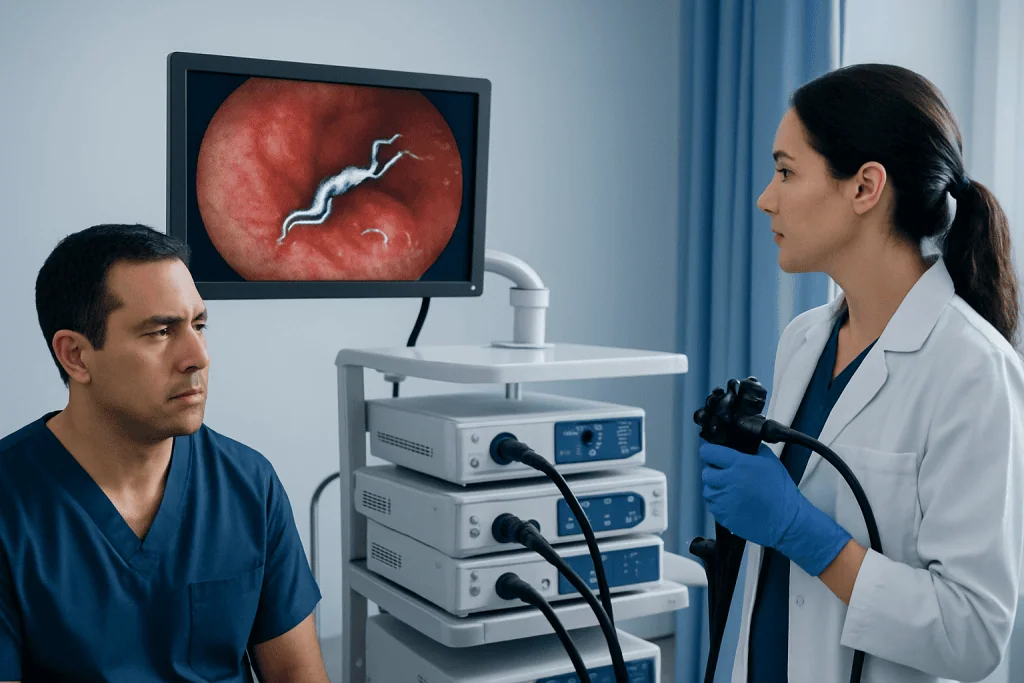
Endoscopy may be recommended when a patient has alarm symptoms, is older with new digestive symptoms, has bleeding or anemia, has previous ulcer complications, or needs direct examination of the stomach. During endoscopy, small tissue samples can be taken for rapid urease testing, histology, culture, or molecular tests. These biopsy-based methods can also help assess gastritis, ulcers, or other conditions.
Eradication Therapy: What Treatment Involves
H. pylori eradication therapy usually combines an acid-suppressing medicine with two or more antibiotics, and sometimes bismuth. Acid suppression helps the stomach lining heal and improves the effectiveness of antibiotics. Treatment is typically taken for a defined course, and completing the full regimen is essential even if symptoms improve quickly.
Common treatment approaches include bismuth quadruple therapy, which combines acid suppression, bismuth, and two antibiotics, or non-bismuth combination regimens that use acid suppression with several antibiotics. The best choice depends on local antibiotic resistance patterns, previous exposure to antibiotics such as macrolides, medication allergies, pregnancy or breastfeeding status, and other health conditions.
Antibiotic resistance is one reason H. pylori can be difficult to eradicate in some patients. A regimen that worked well in the past may not be suitable if resistance to one of its antibiotics is common in the area. If a first course does not eradicate the infection, the next regimen should generally avoid antibiotics already used, unless susceptibility testing supports their use.
Patients should tell their doctor about all medicines and supplements they take, including blood thinners, seizure medicines, heart medicines, and over-the-counter pain relievers. They should also mention any antibiotic reactions, kidney or liver disease, pregnancy plans, or prior H. pylori treatment. This information helps the clinician choose a safe and effective plan.
Taking Treatment Correctly and Managing Side Effects
H. pylori treatment can involve several tablets each day, so clear instructions are important. Patients may find it helpful to use a written schedule, a pill organizer, or phone reminders. Medicines should be taken exactly as prescribed, and patients should not stop early unless a doctor advises them to do so.
Mild side effects can occur with eradication therapy and may include nausea, loose stools, a metallic taste, dark stools with bismuth, abdominal discomfort, or temporary changes in appetite. These effects are often manageable, but patients should contact their healthcare team if symptoms are troublesome, persistent, or interfere with taking the medicines.
Urgent medical advice is needed for signs of a possible allergic reaction, such as swelling of the lips or face, breathing difficulty, widespread rash, or severe dizziness. Patients should also seek care for severe diarrhea, dehydration, persistent vomiting, or signs of gastrointestinal bleeding. A doctor can decide whether treatment should be adjusted or whether another cause needs evaluation.
Alcohol should be discussed with the prescribing doctor because some antibiotics can interact with alcohol and cause unpleasant reactions. Patients should also avoid starting new over-the-counter medicines during treatment without checking, especially anti-inflammatory pain relievers that may irritate the stomach or increase bleeding risk in some people.
Follow-Up Testing After Treatment
A follow-up test is a key part of H. pylori care. Feeling better does not always mean the bacteria have been eradicated, and some people continue to carry H. pylori even after symptoms improve. Confirming eradication helps reduce the risk of ulcer recurrence and guides next steps if treatment was not successful.
Test-of-cure is usually performed with a urea breath test or stool antigen test. It is generally done at least four weeks after completing antibiotics and bismuth. Proton pump inhibitors and some acid-suppressing medicines may need to be stopped for one to two weeks before the test if the doctor says it is safe, because they can lead to false-negative results.
If the follow-up test is negative, no further H. pylori treatment is usually needed, although other causes of digestive symptoms may still be considered if discomfort persists. If the test remains positive, the doctor may recommend a different eradication regimen or, in selected cases, endoscopy with testing for antibiotic susceptibility.
Prevention, Self-Care, and When to See a Doctor
There is no vaccine routinely used to prevent H. pylori infection, but general hygiene measures may reduce the risk of transmission. These include washing hands after using the bathroom and before preparing food, drinking safe water, and following safe food-handling practices. Household members do not always need testing unless they have symptoms or a medical reason to be evaluated.
Self-care can support recovery but does not replace eradication therapy when H. pylori infection is confirmed. Patients may benefit from avoiding smoking, limiting alcohol if advised, eating regular balanced meals, and identifying foods that aggravate their symptoms. Long-term use of non-steroidal anti-inflammatory drugs should be discussed with a doctor, especially in people with ulcer history.
A doctor should be consulted for persistent indigestion, recurring upper abdominal pain, suspected ulcer symptoms, or digestive symptoms that do not improve with initial care. Medical assessment is especially important for alarm symptoms such as weight loss, anemia, bleeding, repeated vomiting, or difficulty swallowing.
For international patients, Acibadem International provides access to multidisciplinary gastroenterology teams and JCI-accredited hospitals where H. pylori infection and related digestive conditions can be diagnosed and treated. Patients should bring previous test results, endoscopy reports, medication lists, and details of any prior H. pylori therapy to help the care team plan appropriately.
Frequently asked questions
Can H. pylori infection go away without treatment?
H. pylori usually does not reliably clear on its own once established. Some people have no symptoms, but if the infection is confirmed and treatment is recommended, eradication therapy is needed to remove it. A doctor can advise whether testing and treatment are appropriate for the individual situation.
Which test is best for H. pylori?
For many patients, the urea breath test or stool antigen test is preferred because these tests detect active infection and can be used after treatment. Endoscopy with biopsy is used when direct examination of the stomach is needed or when alarm symptoms are present. The best test depends on symptoms, age, medical history, and recent medication use.
Why must some medicines be stopped before H. pylori testing?
Proton pump inhibitors, antibiotics, and bismuth can temporarily reduce the amount of H. pylori in the stomach and cause a false-negative result. Doctors often recommend waiting after antibiotics or bismuth and stopping acid-suppressing medicines for a short period before testing if it is safe. Patients should not stop prescribed medicines without medical advice.
What happens if H. pylori treatment fails?
If follow-up testing shows that H. pylori is still present, the doctor can prescribe a different treatment regimen. The next plan usually avoids antibiotics that were already used, unless testing suggests they may still work. In some cases, endoscopy or antibiotic susceptibility testing may be considered.
Can H. pylori come back after successful treatment?
Reinfection after successful eradication can happen, but it is not the usual reason for symptoms soon after therapy. More commonly, a positive follow-up test means the first treatment did not fully eradicate the bacteria. Confirmatory testing helps separate persistent infection from other causes of digestive symptoms.
Should family members be tested for H. pylori?
Family members are not automatically tested just because one person has H. pylori. Testing may be appropriate if they have persistent digestive symptoms, a history of ulcers, or another medical indication. A healthcare professional can advise based on each person's risk factors and symptoms.
Do diet changes cure H. pylori infection?
Diet changes can help some people manage indigestion or avoid symptom triggers, but they do not eradicate H. pylori. Confirmed infection requires an appropriate medical treatment regimen when treatment is indicated. A balanced diet, good hydration, and avoiding smoking can support stomach health during recovery.
References
- American College of Gastroenterology
- World Gastroenterology Organisation
- Maastricht VI/Florence Consensus Report
- National Institute for Health and Care Excellence
- European Helicobacter and Microbiota Study Group
This article is for general information only and is not a substitute for professional medical advice. Please consult a qualified doctor about your individual situation.
Persistent digestive symptoms? Get evaluated in Turkey
JCI-accredited · board-certified surgeons · reply within 24h