Hemorrhoids: Bleeding, Pain, and Treatment Choices
Bright red bleeding during or after a bowel movement is a common hemorrhoid symptom, but any new rectal bleeding should be assessed by a doctor. Internal hemorrhoids are usually painless unless they prolapse or develop complications; external hemorrhoids can be painful, especially if a clot forms.
Key Takeaways
- Bright red bleeding during or after a bowel movement is a common hemorrhoid symptom, but any new rectal bleeding should be assessed by a doctor.
- Internal hemorrhoids are usually painless unless they prolapse or develop complications; external hemorrhoids can be painful, especially if a clot forms.
- Fiber, fluids, avoiding straining, and limiting long toilet sitting are central to prevention and symptom control.
- Office-based procedures such as rubber band ligation can help many internal hemorrhoids that do not respond to self-care.
- Surgery is reserved for selected cases, such as large prolapsing hemorrhoids, recurrent symptoms, or painful thrombosed external hemorrhoids.
Hemorrhoids are swollen blood vessels in or around the anus and lower rectum that may cause bleeding, itching, swelling, or pain. Most improve with bowel habit changes and simple care, while persistent or severe symptoms may need medical treatment.
Overview
Hemorrhoids are enlarged vascular cushions in the anal canal or just under the skin around the anus. These cushions are a normal part of anatomy and help with fine control of stool and gas. They become a medical concern when they swell, bleed, protrude, itch, or cause pain.
Hemorrhoids are commonly described as internal or external. Internal hemorrhoids develop inside the rectum, where there are fewer pain-sensitive nerves, so they often cause painless bright red bleeding. External hemorrhoids develop under the skin around the anus and may feel like a tender lump, especially if a small blood clot forms inside them.
Although hemorrhoid symptoms can be uncomfortable and embarrassing, they are very common and usually manageable. The most effective plan depends on the type of hemorrhoid, the main symptoms, the severity of prolapse or pain, and whether there are other conditions that could explain bleeding or bowel changes.
Symptoms: Bleeding, Pain, Itching, and Swelling
The most typical sign of internal hemorrhoids is bright red blood seen on toilet paper, on the surface of the stool, or in the toilet bowl after a bowel movement. The bleeding is usually small in amount and not mixed throughout the stool. Internal hemorrhoids may also prolapse, meaning they bulge out through the anus during bowel movements and may go back in on their own or need gentle guidance back inside.
External hemorrhoids may cause itching, irritation, swelling, or a firm lump near the anus. Pain is more likely when the skin over the hemorrhoid is stretched, irritated by wiping, or affected by a thrombosis, which is a clot within the external hemorrhoid. A thrombosed external hemorrhoid can be quite tender for several days, then gradually improves as the clot is reabsorbed.
Symptoms that people often attribute to hemorrhoids can sometimes come from other conditions, such as anal fissures, infections, inflammatory bowel disease, rectal polyps, or colorectal cancer. For this reason, it is important not to assume that all rectal bleeding is caused by hemorrhoids, especially when bleeding is new, recurrent, associated with anemia, or accompanied by a change in bowel habits.
Causes and Risk Factors
Hemorrhoids develop when pressure increases in the veins and supporting tissues of the lower rectum and anus. Straining during bowel movements, constipation, hard stools, and prolonged sitting on the toilet are common contributors. Diarrhea can also irritate the anal area and worsen symptoms.
Several life stages and habits can raise the chance of hemorrhoid symptoms. Pregnancy increases pelvic pressure and can slow bowel function, making hemorrhoids more likely. Aging may weaken supporting tissues, while low-fiber eating patterns, dehydration, low physical activity, and frequently lifting heavy loads can contribute to repeated pressure or straining.
Risk factors do not mean a person has done something wrong. Many people develop hemorrhoids despite healthy habits, and symptoms can come and go. The goal of treatment is to reduce pressure, keep bowel movements soft and regular, calm inflammation, and choose procedures only when they are truly needed.
Diagnosis and Evaluation
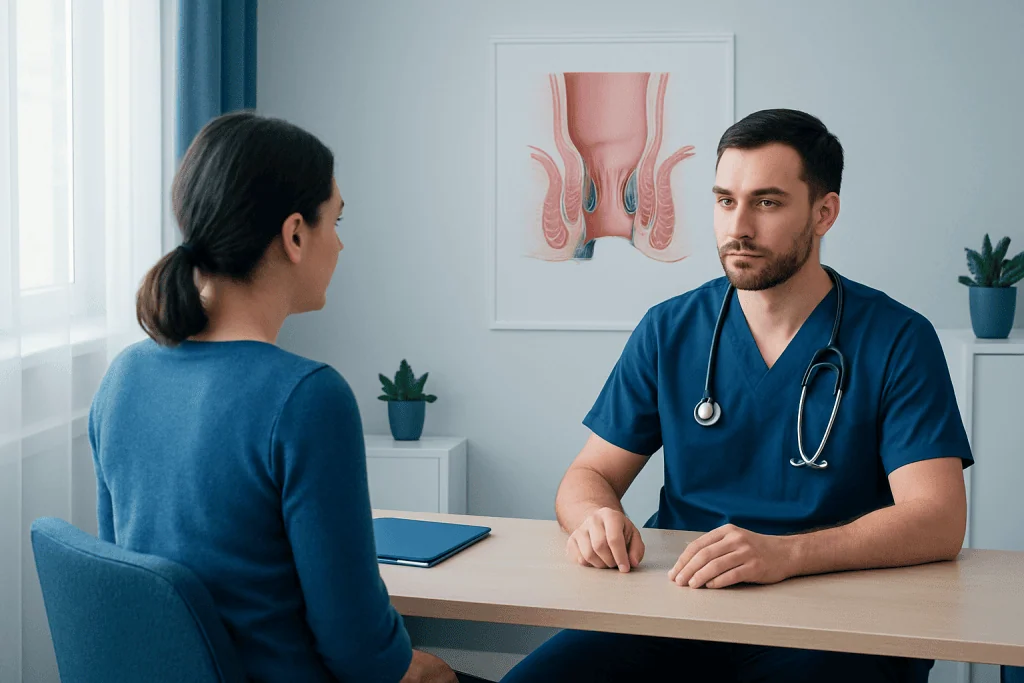
A clinician usually begins with a careful discussion of symptoms, including the appearance of bleeding, bowel habits, pain, itching, swelling, medications, pregnancy status, and personal or family history of bowel disease. This conversation helps distinguish hemorrhoids from other causes of rectal symptoms and guides whether further tests are needed.
A physical examination may include inspection of the anal area and a gentle digital rectal exam. Internal hemorrhoids may be assessed with anoscopy, a short examination using a small instrument that allows the doctor to see the lower rectum and anal canal. The exam is usually brief and can often be done in an outpatient setting.
Additional evaluation may be recommended when symptoms do not clearly fit hemorrhoids or when a person has risk factors for other conditions. Colonoscopy or another bowel test may be considered for people with unexplained rectal bleeding, iron deficiency anemia, weight loss, persistent changes in bowel habits, a family history of colorectal cancer, or those who are due for colorectal cancer screening.
Home Care and Lifestyle Treatment
Many hemorrhoids improve with conservative care. The foundation is to make stools soft, bulky, and easy to pass. A higher-fiber diet with vegetables, fruits, legumes, and whole grains can help, and some people benefit from a fiber supplement. Fluids support fiber’s effect, while regular physical activity helps bowel movement patterns.
Bathroom habits are equally important. People are advised to go when they feel the urge, avoid straining, and avoid sitting on the toilet for long periods, including while reading or using a phone. Gentle cleaning with water or unscented, non-irritating wipes may reduce irritation; vigorous wiping can worsen itching and soreness.
Short warm sitz baths may soothe discomfort, particularly after bowel movements. Over-the-counter creams or suppositories may provide temporary relief for itching or swelling, but they should be used as directed and not relied on for prolonged periods without medical advice. Pain relievers may be appropriate for some people, but individuals with stomach, kidney, liver, bleeding, pregnancy, or medication concerns should ask a clinician first.
- Increase fiber gradually to reduce gas or bloating.
- Use a footstool to support a more natural bowel movement posture if helpful.
- Keep the anal area clean and dry, but avoid harsh soaps or perfumed products.
- Contact a doctor if bleeding continues despite self-care.
Office-Based and Surgical Treatment Options
If symptoms persist despite good bowel habits and home care, a doctor may recommend a procedure. For many internal hemorrhoids, office-based treatments are effective and do not require a hospital stay. Rubber band ligation is a common option in which a small band is placed at the base of an internal hemorrhoid, reducing its blood supply so it shrinks and falls away over time.
Other office treatments may include sclerotherapy, in which a solution is injected to shrink the hemorrhoid, or infrared coagulation, which uses controlled heat to treat small internal hemorrhoids. The best choice depends on hemorrhoid grade, bleeding pattern, prolapse, comfort, medical history, and local expertise.
Surgery may be considered for large internal hemorrhoids that prolapse repeatedly, combined internal and external hemorrhoids, recurrent symptoms after less invasive procedures, or selected cases of painful thrombosed external hemorrhoids. Surgical options include hemorrhoidectomy, which removes hemorrhoidal tissue, and stapled hemorrhoidopexy for certain prolapsing internal hemorrhoids. Each approach has potential benefits and recovery considerations, so shared decision-making with a qualified colorectal or general surgeon is important.
After any procedure, prevention still matters. Fiber intake, fluid balance, regular bowel habits, and avoiding straining help reduce the chance of recurrence and support healing. Patients should follow their clinician’s instructions about activity, pain control, wound care, and when to return for review.
Prevention, Self-Care, and When to See a Doctor
Prevention focuses on reducing repeated pressure around the anus and rectum. A bowel routine that avoids both constipation and frequent irritation from diarrhea can make a significant difference. Most people do best with gradual, sustainable changes rather than short-term efforts only during flare-ups.
Medical assessment is recommended for any first episode of rectal bleeding, bleeding that keeps returning, black or tarry stools, blood mixed with stool, unexplained fatigue or anemia, fever, severe or worsening pain, drainage, a rapidly enlarging lump, unintended weight loss, or a persistent change in bowel habits. Pregnant patients, people taking blood thinners, and those with inflammatory bowel disease or a history of colorectal polyps or cancer should seek individualized advice.
Prompt care is also helpful when pain from a suspected thrombosed external hemorrhoid is significant, because timing can influence treatment choices. Even when symptoms are due to hemorrhoids, a clinician can confirm the diagnosis, offer symptom relief, and help select the least invasive effective treatment.
For international patients seeking evaluation, Acibadem International’s multidisciplinary specialists and JCI-accredited hospitals diagnose and treat hemorrhoids and related colorectal conditions. Care decisions should always be based on a personal medical assessment, current symptoms, and the patient’s overall health.
Frequently asked questions
Are bleeding hemorrhoids dangerous?
Hemorrhoid bleeding is often bright red and related to bowel movements, and it is commonly not serious. However, any new or repeated rectal bleeding should be evaluated because other conditions can look similar. A doctor can confirm the cause and decide whether further testing is needed.
Why do some hemorrhoids hurt while others do not?
Internal hemorrhoids are inside the rectum, where there are fewer pain-sensitive nerves, so they often bleed without pain. External hemorrhoids are under the skin around the anus, which has many nerve endings. They can be painful when swollen, irritated, or thrombosed.
Can hemorrhoids go away without a procedure?
Yes, many hemorrhoid flare-ups improve with fiber, fluids, avoiding straining, warm sitz baths, and gentle local care. Symptoms may settle over days to weeks depending on the type and severity. Persistent bleeding, prolapse, or significant pain should be discussed with a clinician.
What is the best treatment for hemorrhoids?
There is no single best treatment for everyone. Mild symptoms often respond to lifestyle and bowel habit changes, while ongoing internal hemorrhoid bleeding may improve with office procedures such as rubber band ligation. Large, prolapsing, or recurrent hemorrhoids may require surgical consultation.
Do hemorrhoids come back after treatment?
Hemorrhoids can recur, especially if constipation, straining, prolonged toilet sitting, or low fiber intake continue. Procedures can treat existing hemorrhoids, but prevention habits remain important. A doctor can help identify triggers and recommend a long-term plan.
When is hemorrhoid surgery needed?
Surgery is usually reserved for selected situations, such as large prolapsing hemorrhoids, combined internal and external disease, repeated symptoms after office treatments, or certain painful thrombosed external hemorrhoids. The decision depends on examination findings, symptom severity, medical history, and patient preference.
References
- National Institute of Diabetes and Digestive and Kidney Diseases
- American Society of Colon and Rectal Surgeons
- Mayo Clinic
- Cleveland Clinic
- World Gastroenterology Organisation
This article is for general information only and is not a substitute for professional medical advice. Please consult a qualified doctor about your individual situation.
Hemorrhoids in Turkey — costs, top hospitals & a free quote
JCI-accredited · board-certified surgeons · reply within 24h