Prostate Cancer Screening: PSA Testing, MRI, and Biopsy Decisions

PSA is a blood test that can help estimate prostate cancer risk, but it is not cancer-specific and can be affected by benign conditions. Screening decisions depend on age, general health, life expectancy, family history, genetic risk, and personal preferences.
Key Takeaways
- PSA is a blood test that can help estimate prostate cancer risk, but it is not cancer-specific and can be affected by benign conditions.
- Screening decisions depend on age, general health, life expectancy, family history, genetic risk, and personal preferences.
- Multiparametric prostate MRI can help identify suspicious areas and guide whether a biopsy is needed.
- A prostate biopsy is the only way to confirm prostate cancer, but not every elevated PSA result requires immediate biopsy.
- Shared decision-making helps balance the benefits of early detection with the risks of false positives, overdiagnosis, and overtreatment.
Prostate cancer screening aims to find clinically important prostate cancers early while avoiding unnecessary tests and treatment. PSA testing, MRI, and biopsy decisions are best made through shared discussion with a qualified doctor.
Overview
Prostate cancer screening is the process of looking for signs of prostate cancer before symptoms develop. The main screening tool is the prostate-specific antigen, or PSA, blood test. In selected cases, doctors may also use a digital rectal examination, prostate MRI, and risk calculators to decide whether further testing is appropriate.
The goal of screening is not simply to find any prostate cancer. Many prostate cancers grow slowly and may never affect health during a man’s lifetime. Screening aims to identify cancers that are more likely to become clinically significant, while reducing unnecessary biopsies and treatment for low-risk disease.
Because screening has both benefits and limitations, most medical organizations recommend shared decision-making. This means the doctor explains the person’s individual risk, possible next steps, and potential harms, so the patient can make an informed choice that fits his values and health goals.
Who Should Consider Prostate Cancer Screening?
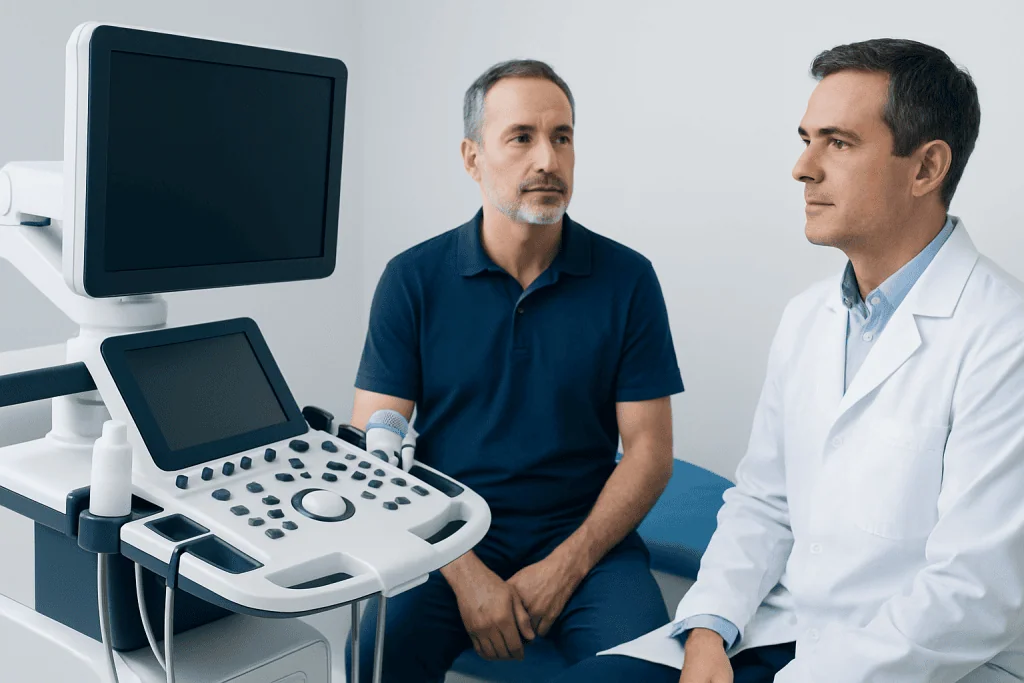
Screening is usually discussed with men in midlife and later life, but the best age to start is not the same for everyone. For many men at average risk, a conversation about PSA testing often begins around age 50. For men at higher risk, it may begin earlier, commonly around age 45, and sometimes around age 40 when risk is very high.
Higher-risk groups include men with a father, brother, or son diagnosed with prostate cancer, especially at a younger age; men with several affected relatives; and men with known inherited gene changes such as BRCA1, BRCA2, or Lynch syndrome-related mutations. Men of African ancestry also have a higher risk of developing prostate cancer and may benefit from earlier discussion with a doctor.
Screening is most useful when a person is healthy enough to benefit from early detection and possible treatment. If life expectancy is limited due to age or serious medical illness, routine screening may be less helpful because prostate cancer often grows slowly. In these situations, doctors focus on comfort, quality of life, and symptoms rather than screening tests.
PSA Testing: What the Results Mean

PSA is a protein made by prostate cells. A PSA test measures the amount of PSA in the blood. A higher PSA level can be associated with prostate cancer, but it can also rise because of benign prostate enlargement, prostatitis, urinary infection, recent ejaculation, recent catheterization, or procedures involving the prostate.
There is no single PSA number that definitively proves or rules out cancer. Doctors interpret PSA in context, considering age, prostate size, previous PSA results, rate of PSA change over time, medications, urinary symptoms, and risk factors. Sometimes a mildly elevated PSA is repeated after a short interval, especially if there is a possible temporary cause such as infection or inflammation.
Additional PSA-based measures may help refine risk. These can include free-to-total PSA ratio, PSA density, and PSA velocity. Some practices also use validated blood or urine biomarkers, although availability and use vary by country and medical setting.
Before PSA testing, it is helpful for patients to tell the doctor about urinary symptoms, recent infections, medications, supplements, cycling or vigorous exercise, and any prostate procedures. This information can prevent misinterpretation and may reduce unnecessary anxiety or testing.
The Role of Prostate MRI
Multiparametric MRI of the prostate has become an important tool in modern prostate cancer evaluation. It combines different MRI techniques to show prostate anatomy and highlight areas that may be suspicious for clinically significant cancer. MRI is not a replacement for all biopsies, but it can help decide whether biopsy is needed and where samples should be taken.
MRI findings are commonly reported using the PI-RADS system, which ranks suspicious areas from low to high likelihood of clinically significant cancer. A low PI-RADS score may support monitoring rather than immediate biopsy in selected patients, while a higher score often leads to targeted biopsy. The decision still depends on PSA level, PSA density, family history, previous biopsy results, and the patient’s overall risk.
MRI can also be useful for men who had a previous negative biopsy but continue to have concerning PSA results. In this setting, MRI may identify areas that were missed by systematic sampling. Good image quality and interpretation by experienced radiologists are important because prostate MRI is a specialized examination.
Biopsy Decisions: When and How It Is Done
A prostate biopsy is the test that confirms whether prostate cancer is present. During biopsy, small tissue samples are taken from the prostate and examined under a microscope by a pathologist. Doctors usually recommend biopsy when the overall risk of clinically significant cancer is high enough to justify the procedure.
Biopsy may be guided by ultrasound, MRI findings, or both. A systematic biopsy samples several standard areas of the prostate. A targeted biopsy focuses on suspicious areas seen on MRI. In many cases, doctors combine targeted and systematic sampling to improve accuracy.
Biopsies can be performed through the rectum, called transrectal biopsy, or through the skin between the scrotum and anus, called transperineal biopsy. The transperineal approach is increasingly used in many centers because it may reduce infection risk, though the best approach depends on local expertise, equipment, anatomy, and patient factors.
Before biopsy, patients receive instructions about blood-thinning medicines, infection prevention, anesthesia, and what to expect afterward. Mild blood in the urine, semen, or stool can occur after biopsy. A doctor should be contacted promptly for fever, chills, difficulty urinating, or heavy bleeding.
Understanding Biopsy Results and Next Steps
If cancer is found, the pathology report usually includes the Grade Group, which is based on the Gleason scoring system. Grade Group 1 generally indicates low-grade disease, while higher Grade Groups suggest a greater chance of growth or spread. The report may also describe how many biopsy cores contain cancer and how much cancer is present in each core.
Doctors combine biopsy results with PSA, MRI findings, prostate examination, and sometimes additional imaging to assign a risk category. This risk category helps guide treatment choices. Options may include active surveillance, surgery, radiation therapy, hormone therapy, or combinations of treatments, depending on the cancer’s features and the patient’s health.
Active surveillance is not the same as ignoring cancer. It is a structured plan for carefully monitoring low-risk prostate cancer with repeat PSA tests, examinations, MRI, and sometimes repeat biopsy. Treatment can be started if there are signs that the cancer is becoming more active.
Benefits, Limits, and Shared Decision-Making
The main potential benefit of screening is finding a clinically significant prostate cancer earlier, when treatment may be more effective. Screening may also provide reassurance when results are low risk. However, no screening test is perfect, and PSA testing can lead to false-positive results, additional testing, and biopsies that ultimately do not find cancer.
Another important limitation is overdiagnosis, which means finding a prostate cancer that would not have caused symptoms or shortened life. Overdiagnosis can lead to overtreatment, and treatments may affect urinary, bowel, sexual, and hormonal health. This is why careful risk assessment and active surveillance for low-risk disease are important parts of modern care.
Patients can prepare for a screening discussion by asking questions such as:
- What is my personal risk of prostate cancer?
- At my age and health status, what are the benefits and downsides of PSA testing?
- If my PSA is elevated, would MRI be considered before biopsy?
- What are the possible complications of biopsy?
- If low-risk cancer is found, could active surveillance be appropriate?
When to See a Doctor
Men should speak with a doctor if they are considering prostate cancer screening, especially if they have a family history of prostate cancer, known inherited cancer risk, or concerns about PSA testing. A medical consultation is also important for urinary symptoms such as difficulty starting urination, weak stream, frequent urination, blood in the urine, or pelvic discomfort, although these symptoms are often caused by non-cancerous conditions.
A doctor can review risk factors, explain the advantages and limitations of PSA testing, and recommend whether MRI, repeat PSA, monitoring, or biopsy is appropriate. Decisions are safest when based on the whole clinical picture rather than a single test result.
For international patients seeking evaluation, Acibadem International provides access to multidisciplinary specialists and JCI-accredited hospitals that diagnose and treat prostate conditions, including prostate cancer. Patients should always discuss individual decisions with a qualified urologist or oncology team.
Frequently asked questions
Does a high PSA always mean prostate cancer?
No. PSA can rise due to benign prostate enlargement, inflammation, infection, recent procedures, or other non-cancerous reasons. Doctors interpret PSA together with age, symptoms, prostate size, family history, and previous results.
Can prostate MRI replace a biopsy?
MRI can help identify suspicious areas and may reduce unnecessary biopsies in selected patients. However, a biopsy is still needed to confirm prostate cancer because MRI cannot diagnose cancer with complete certainty.
Is prostate biopsy painful?
Most prostate biopsies are performed with local anesthesia and are generally well tolerated. Patients may feel pressure or brief discomfort, and mild bleeding afterward is common. The doctor will explain preparation, pain control, and warning signs before the procedure.
What happens if the biopsy shows low-risk prostate cancer?
Low-risk prostate cancer may not need immediate treatment. Many men are candidates for active surveillance, which uses regular PSA tests, examinations, MRI, and sometimes repeat biopsy to monitor the cancer closely.
How often should PSA testing be repeated?
The interval depends on the PSA result, age, risk factors, and overall health. Some men may repeat testing every one to two years, while others with very low risk may test less often. The schedule should be individualized with a doctor.
Should men with no symptoms still consider screening?
Yes, screening is specifically designed to detect possible prostate cancer before symptoms appear. Whether screening is appropriate depends on age, health status, life expectancy, and personal risk. A shared decision-making conversation helps determine the best approach.
References
- American Cancer Society
- European Association of Urology
- National Comprehensive Cancer Network
- American Urological Association
- U.S. Preventive Services Task Force
This article is for general information only and is not a substitute for professional medical advice. Please consult a qualified doctor about your individual situation.
Prostate Cancer in Turkey — costs, top hospitals & a free quote
JCI-accredited · board-certified surgeons · reply within 24h