Physiotherapy After Knee Replacement: Walking, Strength, and Pain Control

Early, guided movement after knee replacement helps reduce stiffness and supports safe walking. Physiotherapy focuses on knee range of motion, muscle strengthening, balance, and daily function.
Key Takeaways
- Early, guided movement after knee replacement helps reduce stiffness and supports safe walking.
- Physiotherapy focuses on knee range of motion, muscle strengthening, balance, and daily function.
- Pain and swelling are expected after surgery, but they should gradually improve with proper care.
- Walking aids, home exercises, and pacing activities are important parts of recovery.
- Patients should contact their doctor if pain suddenly worsens, the calf becomes swollen, or there are signs of infection.
Physiotherapy after knee replacement helps patients regain safe walking, knee movement, muscle strength, and confidence in daily activities. A structured rehabilitation plan, guided by healthcare professionals, can support pain control and steady progress after surgery.
Overview
Total knee replacement, also called knee arthroplasty, is a surgery used to replace damaged knee joint surfaces with artificial components. It is commonly performed when arthritis or joint damage causes pain, stiffness, and difficulty walking that no longer improves enough with non-surgical treatments. Surgery is only one part of recovery; rehabilitation is essential for helping the new joint work well in everyday life.
Physiotherapy after knee replacement begins soon after surgery, often while the patient is still in hospital. The first goals are usually to stand safely, begin walking with an aid, control swelling, and start gentle knee bending and straightening exercises. Over time, therapy progresses toward stronger muscles, better balance, improved walking pattern, and return to normal daily activities.
Every recovery is individual. Age, general fitness, pre-surgery strength, the type of operation, pain levels, other medical conditions, and motivation with home exercises can all affect the pace of progress. A physiotherapist adapts the plan so that exercises are challenging but safe, while the orthopedic team monitors healing and overall recovery.
Walking After Knee Replacement
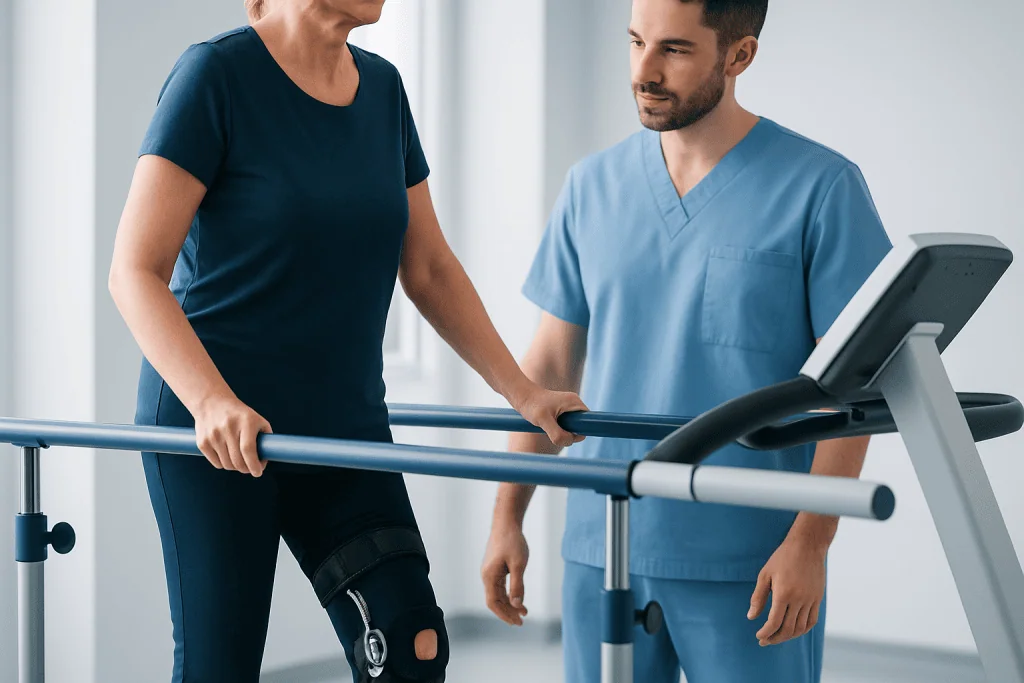
Walking is one of the earliest and most important activities after knee replacement. It helps circulation, supports joint movement, and builds confidence. Most patients begin walking with a walker, crutches, or a cane under supervision. The choice of walking aid depends on balance, strength, pain control, and the surgeon’s instructions about weight bearing.
At first, walking distances are short and frequent rather than long and tiring. A physiotherapist teaches the patient how to place the walking aid, step safely, and avoid limping as much as possible. Good walking technique matters because the hip, knee, ankle, and back all adjust to the new knee joint during recovery.
Stairs are usually introduced when the patient is ready and safe. Many rehabilitation teams teach the phrase “up with the good, down with the operated leg” in the early stage, meaning the stronger leg leads going up, while the operated leg leads going down with support. As strength and control improve, patients may gradually return to a more natural stair pattern if appropriate.
Progress should be steady, not forced. Mild discomfort and fatigue can be normal, especially after exercise, but sharp pain, sudden swelling, dizziness, or a feeling that the knee is giving way should be discussed with the healthcare team. Regular walking, combined with prescribed exercises, is usually more effective than walking alone.
Strength, Flexibility, and Exercise Goals
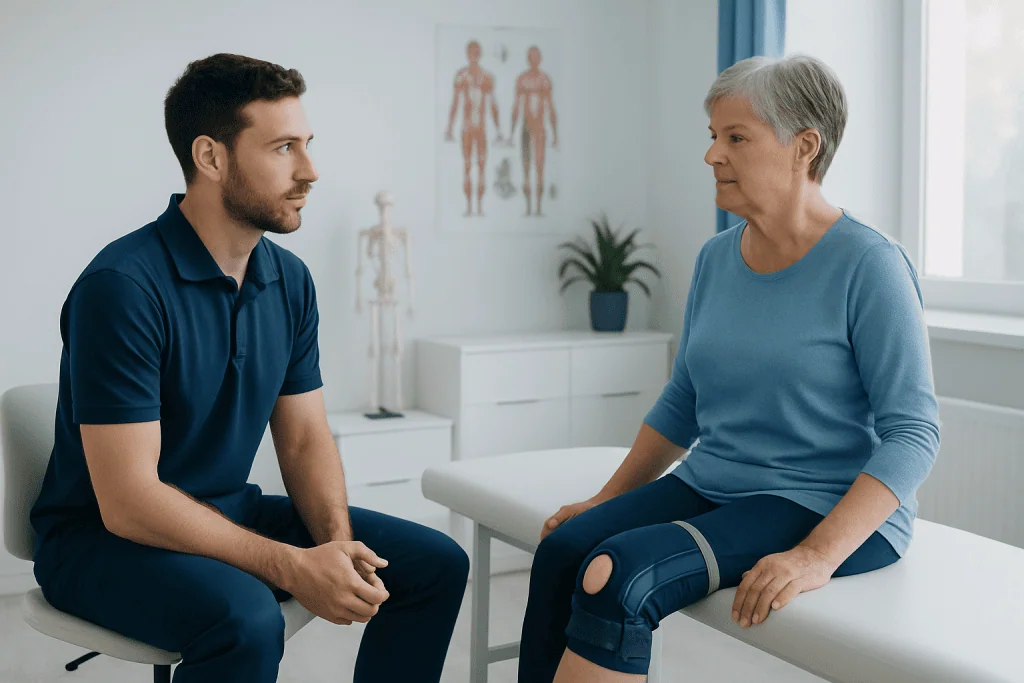
After knee replacement, the muscles around the knee, especially the quadriceps at the front of the thigh, often become weak due to pain, swelling, and reduced use before and after surgery. Strengthening these muscles helps the knee feel more stable, improves walking, and supports getting in and out of chairs, climbing stairs, and returning to daily routines.
Flexibility is also important. A new knee needs to straighten well for efficient walking and bend enough for sitting, dressing, getting into a car, and using stairs. Physiotherapy usually includes gentle range-of-motion exercises to improve extension and flexion. These exercises may feel tight or uncomfortable, but they should be performed in a controlled way and not pushed aggressively.
Common exercise categories may include:
- Gentle ankle pumps and circulation exercises soon after surgery.
- Knee straightening exercises to improve extension.
- Heel slides or assisted bending exercises to improve flexion.
- Quadriceps and gluteal muscle activation exercises.
- Progressive strengthening such as sit-to-stand practice, step-ups, or resistance exercises when appropriate.
- Balance and gait training to improve confidence and reduce fall risk.
The physiotherapist decides when to progress exercises. Doing too little can slow recovery, while doing too much too soon can increase pain and swelling. The best plan is consistent, gradual, and adjusted according to the patient’s response.
Pain and Swelling Control
Pain, warmth, bruising, and swelling are common after knee replacement and usually improve gradually. Good pain control is not only about comfort; it also helps the patient move, breathe deeply, sleep, and participate in physiotherapy. Patients should take prescribed medications only as directed by their doctor and should not add over-the-counter medicines without checking, especially if they take blood thinners or have kidney, stomach, liver, or heart conditions.
Swelling can make the knee feel tight and can limit bending. Common self-care strategies include elevating the leg as advised, using cold therapy if recommended, pacing activity, and performing ankle and gentle movement exercises to support circulation. Compression stockings or other measures may be prescribed for some patients depending on their risk factors and surgical protocol.
It is helpful to understand the difference between expected post-surgical soreness and concerning pain. Exercise-related discomfort that settles with rest, elevation, or medication may be expected. However, pain that suddenly becomes severe, calf pain with swelling, shortness of breath, chest pain, or increasing redness and drainage from the wound requires prompt medical attention.
Sleep can be difficult in the first weeks because of discomfort and changes in routine. Using pillows for support as instructed, taking pain medication according to the prescribed schedule, and avoiding overactivity late in the day may help. Patients should ask their care team about safe sleeping positions and whether placing a pillow under the knee is appropriate, as prolonged knee bending may sometimes make it harder to regain full extension.
Rehabilitation Timeline and Milestones
Rehabilitation after knee replacement is usually divided into stages, but the timeline is not identical for everyone. In the hospital or immediate post-operative phase, the focus is on safe transfers, walking with an aid, basic exercises, wound protection, and understanding home precautions. The patient may be discharged home or to an inpatient rehabilitation setting depending on medical needs and support at home.
During the first several weeks, therapy often focuses on reducing swelling, improving knee motion, strengthening key muscles, and increasing walking tolerance. The patient may move from a walker to crutches or a cane when balance, pain control, and walking quality allow. Many people can gradually increase daily activities, but they still need to avoid falls, sudden twisting, and overloading the knee.
In the later rehabilitation phase, exercises become more functional. Patients may work on stairs, longer walks, stationary cycling if approved, balance drills, and strength exercises for the hip, knee, and ankle. Goals often include walking with less limp, improving endurance, and returning to hobbies or low-impact activities.
Milestones should be viewed as guides, not strict deadlines. Some patients bend the knee quickly but need more time to build strength; others walk well early but take longer to reduce swelling. The rehabilitation team monitors progress and may communicate with the surgeon if stiffness, persistent pain, or delayed function suggests the need for further assessment.
Safety, Home Preparation, and Daily Activities
A safe home environment supports recovery and reduces the risk of falls. Before or soon after surgery, patients may be advised to remove loose rugs, improve lighting, place frequently used items within easy reach, and ensure that walking paths are clear. A stable chair with armrests, a raised toilet seat, or shower safety equipment may be useful for some patients.
Daily activities should be resumed gradually. Sitting for long periods with the knee bent can increase stiffness, while standing or walking too much can increase swelling. A balanced routine usually includes short walks, prescribed exercises, rest periods, and leg elevation. Patients should follow the surgeon’s instructions about bathing, wound care, driving, and returning to work.
Low-impact activities are generally preferred after knee replacement once the surgeon and physiotherapist confirm readiness. These may include walking, swimming after the wound has fully healed, cycling, and controlled gym exercises. High-impact activities, running, jumping, or contact sports may place more stress on the artificial joint and should be discussed carefully with the orthopedic team.
Nutrition, hydration, and general health also matter. Adequate protein, vitamins, and minerals support tissue healing, while controlling diabetes, stopping smoking, and following medical advice can reduce complications. Patients should ask their doctor before taking supplements, especially if they are on prescription medication.
When to See a Doctor
Regular follow-up visits after knee replacement are important to check the wound, assess joint function, review imaging if needed, and adjust the recovery plan. Patients should keep scheduled appointments even if they feel they are progressing well. Early discussion of concerns can prevent small issues from becoming larger obstacles to rehabilitation.
Patients should contact their doctor urgently if they develop fever, increasing wound redness, warmth, swelling, drainage, or an opening of the incision. They should also seek prompt medical help for sudden severe knee pain, new inability to bear weight, calf swelling or tenderness, chest pain, shortness of breath, or fainting. These symptoms do not always mean a serious complication, but they need medical evaluation.
Medical advice is also appropriate if knee stiffness is not improving, pain remains difficult to control, or exercises consistently worsen swelling despite rest and correct technique. The physiotherapist and surgeon can adjust activity levels, review medication, check for mechanical or healing issues, and provide additional treatment options if needed.
For international patients, Acibadem International offers evaluation and treatment through multidisciplinary teams in JCI-accredited hospitals, including orthopedic surgeons, physiotherapists, nurses, and rehabilitation specialists. Patients considering care abroad should share their medical records and discuss travel timing, rehabilitation planning, and follow-up before making arrangements.
Frequently asked questions
When does physiotherapy start after knee replacement?
Physiotherapy often starts within the first day after surgery, depending on the patient’s condition and the hospital protocol. Early therapy usually includes breathing and circulation exercises, safe standing, walking with support, and gentle knee movement. The plan is adjusted according to pain, blood pressure, balance, and the surgeon’s instructions.
How much walking is recommended after knee replacement?
Walking is usually encouraged in short, frequent sessions rather than one long walk, especially in the early weeks. The exact amount depends on pain, swelling, endurance, and the physiotherapist’s guidance. If walking causes a clear increase in swelling or limping, the patient may need to reduce distance and focus on quality of movement.
Is pain during knee replacement exercises normal?
Some tightness, soreness, or mild discomfort can be normal during rehabilitation. However, exercises should not cause sharp, severe, or worsening pain. Patients should tell their physiotherapist if pain limits movement or does not settle with rest, ice, elevation, or prescribed medication.
Why is it important to straighten the knee after surgery?
Full knee straightening helps with efficient walking, standing posture, and reducing strain on other joints. If the knee remains slightly bent, walking may require more effort and can contribute to limping. Physiotherapists often include specific extension exercises to help restore this movement safely.
When can patients stop using a walker or cane?
A walking aid can usually be reduced when the patient has enough strength, balance, pain control, and a safe walking pattern. Stopping too early may increase the risk of falls or reinforce limping. The physiotherapist or surgeon should guide the transition from walker to cane and then to walking without support.
Can physiotherapy help if the knee feels stiff weeks after surgery?
Yes, physiotherapy can help improve stiffness through range-of-motion exercises, swelling control, manual techniques when appropriate, and activity planning. Some stiffness is common, but progress should be monitored. If stiffness is persistent or severe, the surgeon may need to assess the knee and discuss additional options.
References
- American Academy of Orthopaedic Surgeons
- National Institute for Health and Care Excellence
- American Physical Therapy Association
- World Health Organization
- Mayo Clinic
This article is for general information only and is not a substitute for professional medical advice. Please consult a qualified doctor about your individual situation.
Joint and spine care in Turkey — expert assessment & treatment
JCI-accredited · board-certified surgeons · reply within 24h