Growth Delay in Children: Short Stature, Testing, and Treatment Options

Short stature is usually assessed using growth charts, growth velocity, family height patterns, and pubertal development. Common non-disease causes include familial short stature and constitutional delay of growth and puberty.
Key Takeaways
- Short stature is usually assessed using growth charts, growth velocity, family height patterns, and pubertal development.
- Common non-disease causes include familial short stature and constitutional delay of growth and puberty.
- Testing may include blood tests, bone age X-ray, screening for chronic illness, and hormone evaluation when indicated.
- Treatment depends on the cause and may include nutrition support, management of chronic disease, hormone treatment, or observation.
- Early medical review is important if a child crosses growth percentiles downward, grows very slowly, or has delayed puberty or other symptoms.
Growth delay in children means a child is growing more slowly than expected for age, sex, family pattern, or pubertal stage. Many causes are harmless variations of normal growth, but careful evaluation can identify treatable medical, hormonal, nutritional, or genetic conditions.
Overview
Growth delay in children refers to growth that is slower than expected over time. It may appear as short stature, a drop across percentile lines on a growth chart, or delayed puberty compared with peers. A single height measurement rarely tells the full story; doctors look at growth pattern, growth speed, family heights, nutrition, health history, and physical development.
Short stature is often defined as height below the 3rd percentile for age and sex, or more than two standard deviations below the average. However, some healthy children are naturally shorter because their parents are shorter, while others grow later and reach an adult height within their genetic potential. These normal patterns are different from growth failure caused by illness or hormone problems.
The goal of evaluation is not only to measure height, but to understand whether the child is following a healthy growth trajectory. When needed, a pediatrician or pediatric endocrinologist can perform targeted tests and recommend treatment. Early recognition can be helpful because some growth-related treatments work best before the growth plates in the bones close.
How Normal Growth Is Assessed
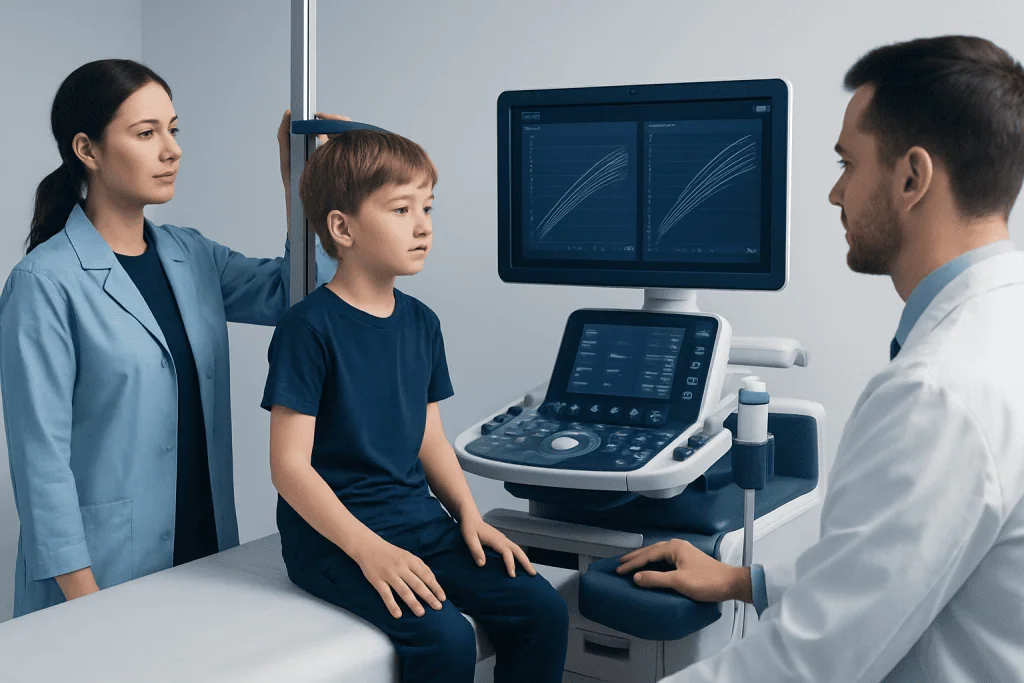
Children grow in predictable but individual patterns. Infants grow rapidly, toddlers slow down, school-aged children usually grow at a steadier pace, and puberty brings a growth spurt. Doctors compare a child’s height, weight, and body mass index with standardized growth charts for age and sex, but the pattern over months or years is often more important than one measurement.
Growth velocity means how many centimeters a child grows per year. A child who is short but growing steadily along the same percentile may simply be following a family pattern. A child who was previously average height but begins dropping across percentiles needs closer assessment, even if the current height is still within the chart range.
Doctors also estimate mid-parental target height, which is the expected adult height range based on both parents’ heights. Pubertal stage is another key factor because children who enter puberty later may temporarily look shorter than classmates. Bone age, usually checked with an X-ray of the left hand and wrist, helps show whether the skeleton is maturing at the expected pace.
Symptoms and Signs That May Accompany Growth Delay

The main sign of growth delay is height that is lower than expected or growth that slows over time. Parents may notice that clothing sizes change slowly, a child is much shorter than classmates, or a younger sibling is catching up in height. In some children, delayed tooth development or delayed puberty may also be seen.
Additional symptoms can provide clues about the cause. Poor weight gain, chronic diarrhea, abdominal pain, fatigue, frequent infections, headaches, vision changes, excessive thirst, or changes in skin and hair may suggest an underlying medical condition. A child with short stature and relatively higher weight may need evaluation for endocrine causes such as hypothyroidism or growth hormone deficiency.
Some children have physical features that suggest a genetic or chromosomal condition, such as differences in body proportions, limb length, neck shape, chest shape, or facial features. These findings do not confirm a diagnosis by themselves, but they help guide appropriate testing. The evaluation is usually stepwise and tailored to the child rather than the same for everyone.
Causes and Risk Factors
Two common causes of short stature are considered normal growth variants. Familial short stature means the child is short but growing at a normal rate and has shorter parents. Constitutional delay of growth and puberty means the child grows more slowly during childhood, has delayed bone age and puberty, and often has a family history of being a late bloomer.
Medical causes can include chronic conditions that affect nutrition, inflammation, oxygen delivery, or metabolism. Examples include celiac disease, inflammatory bowel disease, kidney disease, heart disease, poorly controlled asthma or other chronic lung disease, anemia, and long-term undernutrition. Some medicines, especially long-term systemic corticosteroids, can also affect growth.
Hormonal causes include hypothyroidism, growth hormone deficiency, and disorders of puberty. Genetic and chromosomal conditions may also play a role, including Turner syndrome in girls, skeletal dysplasias, and other rare syndromes. A child born small for gestational age may have catch-up growth in early life, but some remain shorter and may need specialist assessment.
Risk factors that make evaluation more important include a history of prematurity, low birth weight, chronic illness, poor appetite or restrictive eating, delayed puberty in the family, previous cancer treatment, brain or pituitary disorders, and significant psychosocial stress. Accurate birth history, medication history, and family growth patterns help the doctor narrow the possibilities.
Diagnosis and Testing
Diagnosis begins with careful measurement. Height should be taken with a wall-mounted stadiometer for children who can stand, and length is measured lying down for infants. Weight, body proportions, head circumference in younger children, and pubertal stage may be recorded. The doctor will review past measurements to calculate growth velocity and determine whether the child is crossing percentiles downward.
Initial tests depend on the clinical picture. Common screening may include a complete blood count, kidney and liver function tests, electrolytes, inflammatory markers, thyroid tests, celiac disease screening, urinalysis, and nutritional markers when appropriate. Insulin-like growth factor 1 and insulin-like growth factor binding protein 3 may be used as screening markers for the growth hormone pathway, but they are interpreted carefully because nutrition and chronic illness can affect results.
A bone age X-ray can help distinguish delayed maturation from other causes. If growth hormone deficiency is suspected, a pediatric endocrinologist may recommend growth hormone stimulation testing, which evaluates how the pituitary gland responds under controlled conditions. Brain imaging may be considered if there are concerns about the pituitary region, especially with headaches, vision symptoms, multiple hormone deficiencies, or abnormal test results.
Genetic testing is not needed for every child, but it may be appropriate when there are suggestive physical findings, unusual body proportions, severe short stature, or a strong clinical suspicion. Girls with unexplained short stature may be tested for Turner syndrome even if other signs are subtle. The best testing plan balances thoroughness with avoiding unnecessary procedures.
Treatment Options
Treatment depends on the cause of growth delay. If the child has familial short stature or constitutional delay and is otherwise healthy, reassurance and monitoring may be the main approach. Regular follow-up helps confirm that growth remains steady and puberty progresses appropriately. In some children with constitutional delay, specialist guidance may be considered if delayed puberty causes significant physical or emotional difficulty.
When an underlying illness is found, treating that condition is the priority. A child with celiac disease may improve after a medically supervised gluten-free diet. A child with hypothyroidism needs thyroid hormone replacement prescribed by a doctor. Better control of inflammatory disease, kidney disease, or other chronic conditions can support healthier growth and overall wellbeing.
Growth hormone treatment may be recommended for selected children, such as those with confirmed growth hormone deficiency or certain approved medical indications. It is given only under specialist supervision, with regular monitoring of height, growth velocity, pubertal development, blood tests, and possible side effects. It is not appropriate for every child with short stature, and expected benefit varies depending on diagnosis, age, bone age, and treatment timing.
Other treatments may include nutritional support, management of delayed or early puberty, or care from genetics, gastroenterology, nephrology, or other pediatric specialties. Decisions are individualized and should involve discussion of benefits, limitations, monitoring needs, and family preferences. Families should avoid unproven supplements or online hormone products, as these may be ineffective or unsafe.
Prevention, Self-care, and Family Support
Not all causes of growth delay can be prevented, especially genetic or hormonal conditions. However, healthy daily routines support a child’s growth potential. Balanced nutrition, adequate sleep, regular physical activity, and consistent management of chronic illnesses are important foundations. Routine well-child visits allow growth to be measured accurately over time.
Parents can help by keeping a record of height and weight measurements from pediatric visits and bringing previous growth charts if changing doctors. Home measurements can be useful for general awareness but may be inaccurate, so medical decisions should be based on clinic measurements. It is also helpful to share information about parental heights, the age when parents entered puberty, birth weight, and any chronic symptoms.
Emotional support matters. Children with short stature may feel self-conscious, especially during school years or delayed puberty. Families can encourage confidence by focusing on abilities, friendships, and health rather than height alone. If teasing, anxiety, or low mood occurs, teachers, counselors, and healthcare professionals can help create a supportive plan.
When to See a Doctor
Parents should speak with a pediatrician if a child appears much shorter than peers, grows very little over a year, or drops across growth chart percentiles. Medical review is also important if short stature is accompanied by poor weight gain, chronic digestive symptoms, fatigue, headaches, vision changes, excessive thirst, recurrent illness, or signs of delayed or unusually early puberty.
Girls who have not started breast development by the expected age range, boys who have not started testicular enlargement by the expected age range, or any child with stalled pubertal progress should be assessed. Children born small for gestational age who do not show adequate catch-up growth, and children with known chronic diseases, may need closer monitoring.
A pediatric endocrinologist can help when the cause is unclear, growth hormone deficiency is suspected, bone age is significantly delayed or advanced, or specialized treatment is being considered. Acibadem International’s multidisciplinary specialists and JCI-accredited hospitals diagnose and treat growth-related conditions for international patients, coordinating pediatric endocrinology, imaging, laboratory testing, and related specialties when needed.
Frequently asked questions
What is considered short stature in a child?
Short stature is commonly defined as height below the 3rd percentile for age and sex, or more than two standard deviations below the average. Doctors also consider growth velocity, family heights, and pubertal stage. A child can be short and healthy if growth is steady and consistent with genetic potential.
Can a child simply be a late bloomer?
Yes. Constitutional delay of growth and puberty is a common pattern in which a child grows more slowly and enters puberty later than peers. Bone age is often delayed, and adult height may still fall within the family target range. A doctor can help distinguish this from medical causes of growth delay.
What tests are usually done for growth delay in children?
Testing often begins with accurate height and weight measurements, review of past growth records, physical examination, and assessment of puberty. Blood tests may screen for anemia, thyroid disease, celiac disease, inflammation, kidney or liver problems, and growth hormone pathway markers. A bone age X-ray is commonly used to evaluate skeletal maturity.
Does every short child need growth hormone treatment?
No. Growth hormone treatment is used only for specific diagnoses and approved indications, and it requires careful specialist supervision. Many children with short stature do not need medication and may only need monitoring or treatment of another underlying condition. The decision depends on diagnosis, growth pattern, bone age, and expected benefit.
Can nutrition improve a child's growth?
Good nutrition supports normal growth, especially when poor intake, restrictive eating, or an absorption problem is present. However, extra calories or supplements will not usually make a healthy child grow taller than their genetic potential. If appetite, weight gain, or digestion is a concern, a pediatrician or dietitian can guide safe nutrition support.
When should delayed puberty be evaluated?
Delayed puberty should be discussed with a doctor if a girl has not begun breast development by the expected age range or a boy has not begun testicular enlargement by the expected age range. Evaluation is also important if puberty starts but does not progress. Delayed puberty can be a normal family pattern, but it may also reflect hormonal, nutritional, or chronic health issues.
References
- World Health Organization
- American Academy of Pediatrics
- Pediatric Endocrine Society
- Endocrine Society
- European Society for Paediatric Endocrinology
This article is for general information only and is not a substitute for professional medical advice. Please consult a qualified doctor about your individual situation.
Explore treatments in Turkey — costs, top hospitals & a free quote
JCI-accredited · board-certified surgeons · reply within 24h
Check your numbers in seconds
BMI, calories, due date, blood pressure and 30+ more clinical calculators — free, instant, doctor-reviewed ranges.