

Dental Implant Recovery: Week by Week
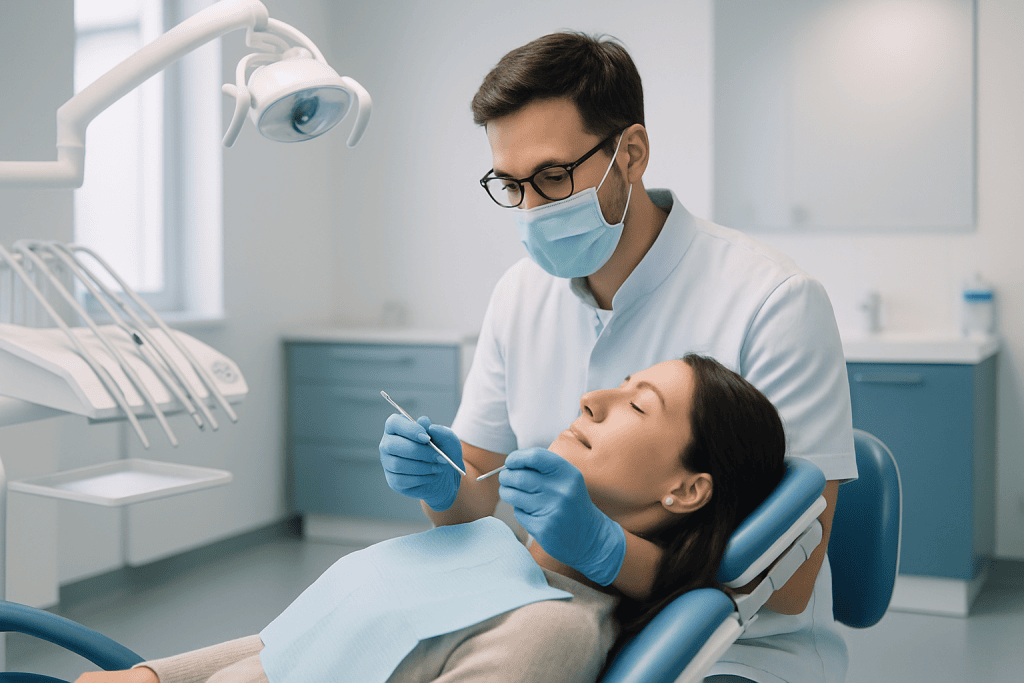
Dental implant placement is an outpatient procedure under local anaesthesia, so there is no overnight stay and most people walk out the same day. Soft foods and gentle cleaning are usual for the first week; normal washing is possible from day one. Many patients are cleared to fly within the 3 to 7 day initial healing window. Full bone integration typically takes 3 to 6 months.
Key Takeaways
- Implant placement is outpatient surgery under local anaesthesia, usually lasting 1 to 3 hours with no overnight stay.
- Gum healing takes most people 3 to 7 days; bone integration typically takes 3 to 6 months before the final teeth.
- Swelling, tenderness and minor bleeding are normal for a few days and are managed with medication and cold compresses.
- Most patients are cleared to fly within the 3 to 7 day healing window, after a fitness-to-fly check by the operating team.
- Fever, spreading swelling, discharge, uncontrolled pain or a loose implant should be reported immediately.
- Your surgeon's own instructions replace any general timeline in this guide.
What recovery from a dental implant actually involves
A dental implant replaces a missing tooth root with a small biocompatible post, usually titanium, placed in the jawbone under local anaesthesia. Although this is a surgical procedure, it is done as an outpatient: operating time is usually 1 to 3 hours and there is no overnight stay. Recovery then happens in two quite different phases. The first is healing of the gum and soft tissue around the implant, which most people complete in 3 to 7 days. The second is integration, the slow bonding of bone to the implant surface, which typically takes 3 to 6 months before the final crown, bridge or full-arch restoration can be fitted. You can read how the procedure is assessed, planned and performed on the dental implant treatment page, which covers the Dental & Oral Health department at Acibadem.
This guide describes what most people experience week by week, when it is usually safe to fly home, and which signs mean you should contact your care team without delay. Every jaw and every implant site is different, and some patients also have bone grafting at the same visit, which lengthens the early healing phase. Your surgeon’s instructions always take precedence over any general timeline.
Recovery timeline
The first 48 hours
- Pain: the local anaesthetic wears off within a few hours. Tenderness and mild swelling are expected and are usually controlled with the medication your surgeon prescribes and cold compresses applied to the cheek in short intervals.
- Movement and lifting: you can walk normally from the moment you leave the clinic. Most teams advise avoiding heavy lifting or strenuous effort for the first day or two, because raised blood pressure can encourage bleeding at the implant site.
- Wound and stitches: minor bleeding or blood-tinged saliva is common on the first day. Gentle pressure with the gauze you are given usually settles it. If stitches were placed, your team will tell you whether they dissolve or need removing.
- Eating and drinking: soft, cool or lukewarm foods only. Chew away from the implant side and avoid very hot drinks and alcohol while the tissue is fresh.
- Washing and showering: showering is fine from day one. Keep the implant area clean exactly as instructed and avoid vigorous rinsing or spitting in the first 24 hours.
- Sleeping: many people find it more comfortable to sleep with the head slightly raised on an extra pillow, which can help limit swelling.
- Driving: because only local anaesthesia is used, driving is usually possible once numbness has gone, provided your pain medication does not cause drowsiness. Ask before you take the wheel.
- Work and sport: desk-based work is often possible the next day. Sport should wait.
Week 1
- Pain: tenderness typically peaks around day two to three and then fades. Most people move from prescribed medication to simple pain relief, or to none, by the end of the week.
- Movement and lifting: light daily activity is fine. Hold off on heavy lifting and workouts that raise your heart rate sharply until your team confirms the site is settling.
- Wound and stitches: swelling and any bruising usually reduce steadily over this period. Dissolving stitches begin to loosen; non-dissolving stitches are removed at a follow-up visit.
- Eating and drinking: continue soft-food guidance. Avoid hard, crunchy, sticky or very hot food, and do not smoke, as smoking slows healing at the implant site.
- Washing and showering: normal showering. Clean the implant area gently as instructed and keep the rest of your mouth to your usual routine.
- Driving: no restriction once you are off any sedating medication.
- Work and sport: most people are back to office work within the first 3 to 7 days. Physically demanding jobs and contact sport usually wait until the end of week one or later.
Week 2
- Pain: most people are pain-free or have only occasional mild tenderness when the area is touched.
- Movement and lifting: normal lifting and moderate exercise usually resume, unless bone grafting was carried out, in which case your surgeon may extend the restrictions.
- Wound: the gum surface has usually closed. The implant itself remains under the gum or capped with a small healing cover and must not be loaded.
- Eating and drinking: gradually widen the diet, still chewing on the opposite side and avoiding hard or sticky foods over the implant.
- Washing and sleeping: no special measures beyond careful cleaning of the site.
- Driving, work and sport: usually unrestricted for non-contact sport; check before returning to contact sport or activities with a risk of a blow to the face.
Weeks 3 to 6
- Pain: none expected. New or returning pain at this stage should be reported.
- Movement, lifting and sport: normal activity. Protective mouthguards are usually advised for contact sport.
- Wound: soft tissue is healed; bone integration is underway but not yet complete, so the implant still cannot bear chewing forces.
- Eating and drinking: a normal diet is usually possible, with continued care over the implant area. Any temporary tooth your team has fitted is for appearance and should not be used for hard chewing.
- Washing and driving: unrestricted.
Months 2 to 3
- Pain: none expected.
- Wound and implant: integration continues quietly. Your follow-up plan will include checks, often with imaging, to monitor how the bone is bonding.
- Eating and drinking: normal diet; keep avoiding hard chewing directly on a temporary tooth.
- Work, sport, driving: unrestricted. Continue to avoid smoking, which affects long-term implant health as well as early healing.
Months 6 to 12
- Implant and restoration: for most people integration is judged complete somewhere between month 3 and month 6. The final crown, bridge or denture is then fitted, and you can chew on it as you would a natural tooth once your dentist confirms this.
- Pain: none expected. Pressure or pain on biting after the final restoration should be checked, as it may indicate an adjustment is needed.
- Eating and drinking: normal, with sensible care over very hard items.
- Long-term care: daily cleaning around the implant and regular dental reviews are the main factors you control.
When it is safe to fly home
Because implant placement is an outpatient procedure under local anaesthesia, the flight home is usually planned within the initial healing window of 3 to 7 days. Most surgeons prefer that bleeding has fully stopped and swelling is clearly reducing before you travel, which for many people means the earlier part of that window; a longer stay is often advised after bone grafting or several implants. Your operating team gives the final clearance, and their decision replaces any general guidance here.
Flying matters for three reasons. Cabin pressure changes can make a recently operated jaw feel more tender, especially if the implant sits close to the sinus. Long-haul flights limit movement and increase the general risk of a clot in the leg for anyone recovering from surgery. And once you are in the air you are away from the team that knows your case.
The fitness-to-fly assessment before your return flight is part of the discharge process. It usually covers the state of the implant site, control of pain and swelling, confirmation that you have your medication and written instructions, and your general health for the journey. On the plane, choose an aisle seat if you can, walk the cabin every hour or two, drink water regularly, and avoid alcohol. In hand luggage carry your prescribed medication, a small pack of gauze, a soft toothbrush, a copy of your discharge summary and imaging, and the contact route your team gave you for remote follow-up.
Warning signs: when to contact your care team immediately
- Fever or chills.
- Swelling or redness of the gum or face that spreads or gets worse after the third day instead of improving.
- Pus or discharge from the implant site, or a persistent bad taste.
- Bleeding that does not stop with gentle pressure or that restarts heavily after the first day.
- Pain that is not controlled by the medication you were prescribed.
- A loose implant, healing cap or temporary tooth.
- Pain, swelling or warmth in one calf, particularly after a long flight.
- Breathlessness or chest pain, which need emergency care wherever you are.
Recovering in Türkiye and then at home
Most international patients stay in accommodation close to the hospital for the initial healing days so that the team can see them if anything changes. The international patient team coordinates your prior reports and imaging, arranges your appointments and organises the hospital visit and the follow-up after you return home; interpreters can be arranged if you need them. Before discharge you will have a follow-up appointment at which the implant site is checked, stitches are reviewed or removed, and the fitness-to-fly assessment is completed.
After you return home, follow-up is done remotely with the operating team. Integration takes 3 to 6 months, so your plan will set out when to send photographs or local imaging, when your local dentist should check the site, and when you return or are seen for the final restoration. Take home your discharge summary, a list of medications, the make and size of your implant components, copies of all imaging, and written instructions on cleaning and diet. Your local dentist needs the implant details in particular. Acibadem’s team will tell you which of these records they hold and can resend.
Questions to ask your surgeon before you fly out
- How many implants will be placed, and will I need bone grafting at the same visit?
- Will I leave with a temporary tooth, or will there be a gap during integration?
- How many days should I plan to stay before my fitness-to-fly assessment?
- Do my stitches dissolve, or will they be removed before I travel?
- Which foods should I avoid, and for how long?
- How and when will remote follow-up take place, and what should I send?
- When and where will the final crown, bridge or denture be fitted?
- What should my local dentist know, and which records will you give me for them?
Add us as a Preferred Source to see more of our trusted health content across Google Search, AI Overviews and Discover.

Update history
- PublishedSeptember 9, 2026
- Medical review approvedSeptember 10, 2026
- Last content updateSeptember 9, 2026
More Patient Guides

Septoplasty Recovery: Week by Week
Learn what to expect after deviated septum surgery: a week-by-week septoplasty recovery timeline, when it is usually safe to fly home, and…
8
Gallbladder Surgery Recovery: Week by Week
Learn what to expect after gallbladder surgery: a week-by-week recovery timeline, pain, diet, wound care, when it is safe to fly home…
8
Robotic Hysterectomy Recovery: Week by Week
Recovery from robotic hysterectomy week by week: pain, lifting, wounds, driving, flying home safely, warning signs and questions to ask before you…
9
Breast Reconstruction Recovery: Week by Week
DIEP flap recovery week by week: hospital stay, drains, pain, walking, showering, driving, when it is usually safe to fly home, and…
8